
- Catalogs
- AB Analitica
- EQA PROGRAMME CATALOGUE

EQA PROGRAMME CATALOGUE

EQA PROGRAMME CATALOGUE
The QCMD External Quality Assessment (EQA) programmes are designed to enhance laboratory quality by evaluating the use of molecular diagnostic technologies in clinical settings. These programmes support continuous quality improvement and assist in laboratory accreditation to ISO15189 or equivalent standards. Participation is open to any clinical laboratory conducting molecular tests for infectious diseases.
Each QCMD EQA programme has specific design specifications agreed upon annually with scientific experts. The programmes vary in distribution frequency to meet regional regulatory requirements, offering between 1 to 4 challenges per year. Laboratories can select the format that best suits their needs.
Participants receive individual reports detailing their performance in EQA challenges, including method type and technology group comparisons. Supplementary reports may provide additional insights and expert commentary.
- Bloodborne Virus: Includes HIV, HBV, HCV, and others, focusing on detection, viral load, genotyping, and drug resistance.
- Central Nervous System: Covers viral, bacterial, and parasitic infections like encephalitis and meningitis, assessing detection and pathogen load estimation.
- Congenital Infections: Focuses on infections transmitted from mother to child, with programmes like CMV Dried Blood Spots.
- Drug Resistance: Evaluates the detection and interpretation of drug resistance in various pathogens.
- Exotic/Emerging Diseases: Addresses diseases like SARS and Zika virus, focusing on emerging pathogens in new regions.
- Gastrointestinal Diseases: Assesses molecular diagnostic tests for enteric pathogens, including viruses, bacteria, and parasites.
- Immunocompromised Associated Diseases: Focuses on infections in patients with compromised immune systems.
This section focuses on the challenges of managing infections due to acute infections and reactivation of latent viruses. Molecular diagnostics play a crucial role in early intervention and management of antiviral therapies.
These programmes assess laboratory capabilities in detecting and quantifying pathogens. They cover a range of pathogens significant in clinical settings, including Aspergillus spp., BK virus, CMV, Epstein-Barr virus, and others.
Highlights the use of multiplex molecular diagnostic tests for detecting multiple pathogens in a single test, aiding rapid diagnosis and treatment decisions. QCMD offers programmes for respiratory, gastroenteritis, meningitis, and sexually transmitted infections.
Discusses the prevalence and impact of respiratory tract infections (RTIs), especially in vulnerable populations. Molecular diagnostics improve the identification of causative agents, enhancing patient management and targeted therapy.
Describes the use of serology in diagnosing infectious diseases and determining immunity. QCMD's serology EQA programmes complement molecular diagnostics by monitoring laboratory performance in antibody and antigen testing.
Addresses the global public health concern of STIs, emphasizing the need for accurate diagnosis and treatment to prevent complications. QCMD programmes focus on common STI pathogens.
Highlights the risks of pathogen infections in transplant patients and the role of molecular diagnostics in monitoring viral activity post-transplant.
Discusses the importance of genotyping and sequencing technologies in managing infections and detecting drug-resistant pathogens. QCMD programmes assess laboratory proficiency in genetic determination and mutation analysis.
The document provides detailed specifications for various EQA programmes, including sample types, testing methodologies, and storage conditions. It emphasizes the accreditation of these programmes to ISO17043 standards.
- Sample Source: Cultured and/or clinical material.
- Matrix Format: Varies by virus, including dried blood spots, whole blood, transport medium, and plasma.
- Units of Measurement: Primarily IU/ml, with other units accepted.
- Panel Analysis Type: Qualitative and quantitative (for information purposes).
- Storage Conditions: Ranges from ambient to <-30°C, often requiring dry ice for shipment.
- Accreditation: All programs are accredited to ISO17043.
- Cytomegalovirus (CMV): Evaluates detection from whole blood samples, focusing on precision at clinically relevant viral loads.
- Dengue Virus: Assesses proficiency in detecting dengue virus and distinguishing it from other flaviviruses.
- Enterovirus: Tests detection of various enterovirus types and concentrations, including molecular typing capabilities.
- Epstein-Barr Virus (EBV): Evaluates detection and quantitation in both plasma and whole blood samples.
- Hepatitis Viruses (A, B, C, D, E): Each program focuses on detection, quantitation, and genotyping, with specific attention to drug resistance mutations for HBV and HCV.
- Herpes Simplex Virus (HSV): Assesses detection and quantitation of HSV types 1 and 2.
- Challenges: Each program includes a set number of challenges, varying by virus and format.
- Panel Members: Typically ranges from 4 to 12 members per panel.
- Testing Periods: Distributed across different quarters, depending on the virus and program.
The document outlines comprehensive proficiency testing programs designed to ensure laboratory accuracy and reliability in viral detection and quantitation, adhering to international standards.
The document outlines the specifications for different viral panels, including Herpes Simplex Virus, HIV-1 (DNA and RNA), Human Cytomegalovirus, Human Herpes Virus 6, Human Metapneumovirus, Human Papillomavirus, Influenza A & B, JC Virus, Measles/Mumps, MERS Coronavirus, Norovirus, and Parainfluenza Virus. Each panel specifies the sample source, matrix format, target range, sample volume, and analysis type.
Laboratories are required to treat samples as clinical specimens, ready for analysis. The panels are evaluated using various molecular methodologies, with both qualitative and quantitative analysis types mentioned for certain viruses.
All samples are to be stored and shipped at temperatures below -20°C, typically frozen on dry ice, except for Human Papillomavirus, which is stored at 15-30°C in a liquid ambient state.
All procedures and panels are accredited to ISO17043, ensuring compliance with international standards for proficiency testing.
The document highlights critical parameters such as the number of panel members, distribution/testing periods, and the total number of challenges for each virus type. It also specifies the units of measurement, primarily IU/ml, for quantitative assessments.
Laboratories are advised to follow the outlined procedures for sample pre-treatment and analysis to ensure accurate and reliable results. The document emphasizes the importance of using accredited methodologies for testing.
Objective: Assess laboratories' ability to detect various types and concentrations of parechovirus using molecular assays.
Specifications: Cultured virus/clinical material, qualitative analysis, storage at <-20°C, ISO17043 accredited.
Distribution: Q3.
Catalogue Numbers: QAV114145_1, QAV114145_2.
Objective: Evaluate specificity and sensitivity in detecting RSV and its types.
Specifications: Cultured/clinical material, qualitative analysis, storage at <-20°C, ISO17043 accredited.
Distribution: Q4.
Catalogue Numbers: QAV054142_1, QAV054142_2.
Objective: Assess proficiency in detecting rhinovirus and its genotypes.
Specifications: Cultured/clinical material, qualitative analysis, storage at <-20°C, ISO17043 accredited.
Distribution: Q2.
Catalogue Number: QAV064143_1.
Objective: Evaluate detection of VZV types and concentrations, and performance of quantitative assays.
Specifications: Cultured virus/clinical material, qualitative and quantitative analysis, storage at <-20°C, ISO17043 accredited.
Distribution: Q3.
Catalogue Numbers: QAV034103_1, QAV034103_2.
Objective: Assess proficiency in detecting West Nile virus and distinguishing it from other flaviviruses.
Specifications: Cultured/clinical material, qualitative and quantitative analysis, storage at 2-8°C, ISO17043 accredited.
Distribution: Q2.
Catalogue Number: QAV104141_1.
Objective: Evaluate proficiency in detecting Zika virus and distinguishing it from other flaviviruses.
Specifications: Cultured/clinical material, qualitative analysis, storage at 2-8°C, ISO17043 accredited.
Distribution: Q2.
Catalogue Number: QAV164186_1.
Objective: Determine ability to detect and identify bacterial species using 16S rRNA molecular diagnostics.
Specifications: Cultured/clinical material, molecular typing, storage at <-20°C.
Distribution: Q4.
Catalogue Number: QAB164183_1.
Objective: Assess proficiency in detecting Bordetella pertussis.
Specifications: Cultured/clinical material, qualitative analysis, storage at <-20°C, ISO17043 accredited.
Distribution: Q2.
Catalogue Number: QAB094132_1.
Objective: Evaluate qualitative detection of Borrelia burgdorferi and genospecies complex.
Specifications: Cultured/clinical material, qualitative analysis, storage at <-20°C, ISO17043 accredited.
Distribution: Q3.
Catalogue Number: QAB114147_1.
Objective: Assess molecular detection of Chlamydia psittaci.
Specifications: Cultured/clinical material, qualitative analysis, storage at <-20°C.
Distribution: Q2.
Catalogue Number: QAB134165_1.
Objective: Evaluate qualitative performance in detecting C. trachomatis and identifying strains.
Specifications: Cultured bacteria/clinical material, qualitative analysis, storage at <-20°C, ISO17043 accredited.
Distribution: Q3.
Catalogue Numbers: QAB004101_1, QAB004101_2.
Objective: Assess proficiency in detecting C. trachomatis and N. gonorrhoeae.
Specifications: Cultured bacteria/clinical material, qualitative analysis, storage at <-20°C, ISO17043 accredited.
Distribution: Q3.
Catalogue Numbers: QAB174191_1, QAB174191_2.
Objective: Evaluate proficiency in detecting Chlamydophila pneumoniae.
Specifications: Cultured/clinical material, qualitative analysis, storage at <-20°C, ISO17043 accredited.
Distribution: Q2.
Catalogue Number: QAB084107_1.
Objective: Assess proficiency in detecting Clostridium difficile.
Specifications: Cultured/clinical material, qualitative analysis, storage at <-20°C, ISO17043 accredited.
Distribution: Q4.
Catalogue Numbers: QAB084125_1, QAB084125_2.
Objective: Evaluate ability to detect diarrheagenic E. coli strains.
Specifications: Cultured/clinical material, qualitative analysis, storage at <-20°C.
Distribution: Q4.
Catalogue Number: QAB154179_1.
Objective: Assess ability to detect ESBL and carbapenemases.
Specifications: Cultured/clinical material, molecular typing, storage at <-20°C.
Distribution: Q3.
Catalogue Number: QAB134162_1.
Objective: Evaluate qualitative detection of group B Streptococcus.
Specifications: Cultured/clinical material, qualitative analysis, storage at <-20°C.
Distribution: Q4.
Catalogue Number: QAB174200_1.
Objective: Assess qualitative detection of H. pylori and antibiotic resistance status.
Specifications: Cultured/clinical material, qualitative and quantitative analysis, storage at <-20°C.
Distribution: Q3.
Catalogue Number: QAB164190_1.
Laboratories are assessed on their ability to detect Legionella pneumophila. The panel includes 8 to 12 members, with samples in bronchoalveolar lavage or transport medium. Testing is qualitative and evaluated by molecular methodologies. Samples are stored at <-20°C.
This program assesses detection of MRSA. Samples are provided in microbiological or transport medium, with a sample volume of 1.2 ml. Testing is qualitative, and samples are stored at 2-8°C.
Laboratories are evaluated on detecting Mycobacterium tuberculosis. The panel includes 8 to 12 members, with samples in sputum or synthetic CSF. Testing is qualitative, with storage at 2-8°C.
This program assesses detection of Mycoplasma pneumoniae. Samples are in bronchoalveolar lavage or transport medium, stored at <-20°C.
Laboratories are assessed on detecting Neisseria gonorrhoeae. Samples are in urine or physiological buffer, stored at <-20°C.
This program evaluates spa typing for Staphylococcus aureus identification. Samples are in microbiological or transport medium, stored at 2-8°C.
Laboratories are assessed on detecting Treponema pallidum. Samples are in urine or physiological buffer, stored at <-20°C.
This program focuses on detecting VRE strains. Samples are in microbiological or transport medium, stored at <-20°C.
Laboratories are evaluated on detecting Aspergillus species. Samples are in plasma or physiological buffer, stored at <-20°C.
This program assesses detection of Candida species. Samples are in plasma or physiological buffer, stored at <-20°C.
Laboratories are assessed on detecting dermatophytes. Samples are in physiological buffer, stored at <-20°C.
This program evaluates detection of Pneumocystis jirovecii. Samples are in physiological buffer, stored at <-20°C.
Laboratories are assessed on detecting Toxoplasma gondii. Samples are in amniotic fluid or plasma, stored at 2-8°C.
This program assesses detection of bacterial pathogens causing gastroenteritis. Samples are in synthetic faecal matrix or physiological buffer, stored at <-20°C.
Laboratories are evaluated on using MALDI-TOF for detecting clinically relevant isolates. Samples are in microbiological or transport medium, stored at <-20°C.
This program assesses detection of parasitic pathogens causing gastroenteritis. Samples are in synthetic faecal matrix or physiological buffer, stored at <-20°C.
Laboratories are evaluated on detecting influenza A & B and respiratory syncytial virus strains. Samples are in transport medium, with a volume of 1.0 ml.
- Respiratory II (RESPII19): Focuses on detecting human metapneumovirus, adenoviruses, rhinoviruses, coronaviruses, enterovirus, and parainfluenza viruses. Laboratories use molecular methods to test panels representing clinical scenarios.
- Respiratory III (RESPIII19): Targets Bordetella pertussis, Legionella pneumophila, Mycoplasma pneumoniae, Streptococcus pneumoniae, and Haemophilus influenzae.
- STI I (STI_I19): Assesses detection of Mycoplasma genitalium, Mycoplasma hominis, Trichomonas vaginalis, Ureaplasma urealyticum, and Gardnerella vaginalis.
- STI II (STI_II19): Focuses on Chlamydia trachomatis, Neisseria gonorrhoeae, Treponema pallidum, and herpes simplex virus.
Evaluates detection of norovirus, rotavirus, astrovirus, sapovirus, and adenovirus, which are major causes of gastroenteritis.
- CNS I (Viral): Targets enterovirus, parechovirus, herpes simplex virus, Varicella-Zoster virus, and JC virus.
- CNS II (Non-viral): Focuses on Listeria spp, Neisseria meningitidis, Streptococcus pneumoniae, Streptococcus agalactiae, Escherichia coli K1, Aspergillus spp., and Haemophilus influenzae.
Assesses detection of high-risk HPV types using SurePath™ matrix, crucial for cervical cancer screening.
Focuses on Toxoplasma gondii, Pneumocystis jirovecii, Aspergillus spp., Candida albicans, and JC virus.
Evaluates detection of Mycoplasma genitalium, a bacterium linked to urethritis and increased HIV transmission risk.
Targets cytomegalovirus, enterovirus, parechovirus, herpes simplex virus, Toxoplasma gondii, and Group B Streptococcus.
Assesses detection of pathogens like Staphylococcus, Serratia, Escherichia coli, Enterococcus, Streptococcus, Klebsiella, Pseudomonas, and Candida spp., crucial for rapid diagnosis and treatment.
Evaluates detection of TTV, a virus prevalent in immunosuppressed individuals, to monitor immunosuppression efficacy.
All panels are qualitative, evaluated by molecular methodologies, and require storage at <-20°C or specific conditions as noted. Each panel includes 8 to 12 members, distributed in specified quarters.
This study focuses on the molecular detection of viruses such as cytomegalovirus, Epstein-Barr virus, and others. Laboratories are expected to use molecular methods to test panels representing clinical scenarios. The testing period is in Q3, with storage conditions at <-20°C.
Aimed at assessing the ability to detect Trichomonas vaginalis, a common parasitic infection. The study uses qualitative analysis and is conducted in Q3. Samples are stored at <-20°C.
This pilot study targets the detection of arboviruses like yellow fever and Japanese encephalitis viruses. It emphasizes the importance of molecular diagnosis for early detection. The testing period is Q2, with samples stored at 2-8°C.
Focuses on detecting non-tuberculous mycobacteria, which are increasingly significant in public health. The study evaluates qualitative detection methods, with testing in Q2 and storage at 2-8°C.
This study assesses the ability to detect drug-resistant strains of Mycobacterium tuberculosis. It highlights the importance of accurate diagnostics for treatment decisions. Testing occurs in Q4, with storage at 2-8°C.
Evaluates laboratory proficiency in detecting yellow fever virus and distinguishing it from other flaviviruses. The study uses molecular methods, with testing in Q2 and storage at 2-8°C.
This section introduces serology EQA programs focusing on bloodborne viruses, immune status, and viral hepatitis. Each program consists of two challenges per year, with samples stored at <-20°C. Laboratories report results electronically, and the programs provide feedback on clinical interpretation.
- Sample sources include cultured and clinical material.
- Panel analysis types are primarily qualitative, with some quantitative analysis for information purposes.
- Storage conditions vary between <-20°C and 2-8°C, depending on the study.
Catalog excerpts
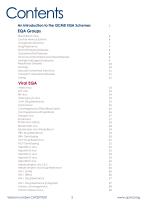
An Introduction to the QCMD EQA Schemes 5 Blood Borne Virus 6 Central Nervous System 6 Immunocompromised Associated Diseases 9 Sexually Transmitted Infections 11 Transplant Associated Diseases 11 Cytomegalovirus Dried Blood Spots 16 Cytomegalovirus Whole Blood 16 Epstein-Barr virus Whole Blood 19 Herpes simplex virus 1& 2 25 Herpes simplex virus Drug Resistance 25 HIV-1 Drug Resistance (Integrase) 27 Human herpes virus 6 28
Open the catalog to page 2
Human Papillomavirus (PreservCyt) 29 Influenza Haemagglutinin Typing 30 Respiratory syncytial virus 34 West Nile virus 35 Borrelia burgdorferi spp. (Lyme Disease) 38 Chlamydia trachomatis and Neisseria gonorrhoeae 39 Diarrheagenic Escherichia coli 41 Extended Spectrum ^-lactamase and Carbapenemase 41 Methicillin Resistant Staphylococcus aureus 43 Methicillin Resistant Staphylococcus aureus Typing 44 (epidemiology and outbreak studies) Mycobacterium tuberculosis 44 Mycoplasma spp. (cell contamination) 45 Vancomycin Resistant Enterococci 47 Pneumocystis jirovecii...
Open the catalog to page 3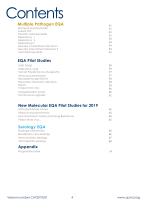
Contents Multiple Pathogen EQA Bacterial Gastroenteritis MALDI-TOF Parasitic Gastroenteritis Respiratory I Respiratory II Respiratory III Sexually Transmitted Infections I Sexually Transmitted Infections II Viral Gastroenteritis EQA Pilot Studies CNSI (Viral) CNSII (Non-viral) Human Papillomavirus (Surepath) Immunocompromised Mycoplasma genitalium Neonatal / Newborn infections Sepsis Torque teno virus Transplantation (viral) Trichomonas vaginalis New Molecular EQA Pilot Studies for 2019 Arthropod-borne viruses Atypical mycobacterium Mycobacterium tuberculosis Drug Resistance Yellow fever virus Serology...
Open the catalog to page 4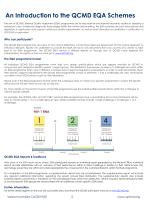
An Introduction to the QCMD EQA Schemes The aim of QCMD's External Quality Assessment (EQA) programmes are to help monitor and improve laboratory quality by assessing a laboratory's use of molecular diagnostic technologies within the routine clinical setting. The EQA schemes are both educational and regulatory in application and support continuous quality improvement, as well as assist laboratory accreditation / certification to ISO15189 or equivalent. Who can participate? The QCMD EQA programmes are open to any clinical laboratory conducting molecular based tests for the routine diagnosis of infectious...
Open the catalog to page 5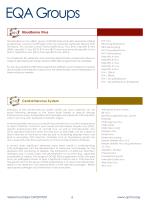
EQA GroupsBloodborne Virus The Bloodborne Virus (BBV) group of QCMD External Quality Assessment (EQA) programmes consists of pathogens that are classically detected directly from the blood. This includes human immunodeficiency virus (HIV), hepatitis B virus (HBV), hepatitis C virus (HCV) B19 virus (B19) and more recently hepatitis A virus (HAV), hepatitis E virus (HEV) and hepatitis D virus (HDV). To compliment the detection and viral load determination programme above a range of genotyping and drug resistance BBV EQA programmes are available. For the drug resistance BBV EQA programmes different...
Open the catalog to page 6
EQA Groups Congenital Infections The term congenital infection is used to describe those infections transmitted from mother to child either during pregnancy (Transplacental infection) or immediately after childbirth. They can be caused by viruses, bacteria and on occasion parasites. The ability of a particular pathogen to cross the placenta and infect the foetus /embryo is dependent on many factors including the mother’s immune status. Primary infections during pregnancy can result in spontaneous abortion or major developmental disorders if undetected and left untreated. Cytomegalovirus Dried...
Open the catalog to page 7
EQA Groups Exotic/Emerging Diseases A complex relationship exists between pathogen genetics, host and the environment. As a result, predicting the future emergence of exotic diseases is difficult. However, globalisation coupled with rapid increases in human populations over the last 50 years has played an important role. Local environmental changes such as deforestation due to urbanisation bring humans into closer contact with potential new pathogen vectors. These factors disturb the subtle balance between pathogen, host and the environment and create the opportunity for the emergence of new...
Open the catalog to page 8
Immunocompromised Associated Diseases The treatment and management of patients with compromised immune systems has seen important developments in recent years with, for example, the introduction of novel multi-drug treatment regimes. As a result, the healthcare and management of immunocompromised patients has greatly improved. However, pathogen infection or viral reactivation remain significant contributors to morbidity and mortality in these patients. A number of opportunistic parasitic, fungal and viral pathogens are of concern in the management of immunocompromised patients due to both acute...
Open the catalog to page 9
Respiratory Diseases Respiratory tract infections (RTIs) are common conditions, experienced by most adults and children each year. They can affect both the upper and lower respiratory tract and range from the common cold to viral and bacterial pneumonia. For the young, the elderly and the immune compromised, RTIs can be a significant health threat if not managed effectively. RTIs can be caused by a large number of bacterial, viral and fungal pathogens which have nearly indistinguishable physiological symptoms. This can increase the chances of undiagnosed or misdiagnosed infections leading to...
Open the catalog to page 10
Sexually transmitted infections (STIs) remain a major public health concern throughout the world with some infections reaching epidemic proportions in sexually active groups. As a result, a number of WHO and UN global strategies have been initiated in an attempt to control the spread of STIs. STIs are the main preventable cause of infertility, particularly in women. However, some STIs remain asymptomatic before leading to serious reproductive complications and congenital infections, therefore appropriate diagnosis and treatment is essential. Molecular diagnostic assays allow the accurate assessment...
Open the catalog to page 11
Advances in the treatment and management of patient infection have seen important developments in recent years. In particular the introduction of novel antiviral drug therapies has improved the medium and long-term prospects of infected patients. However, the development of drug resistant pathogens is an increasing complication and remains a significant factor in the treatment of these patient groups. The use of genotyping and sequencing technologies has allowed accurate pathogen assessment and monitoring of patient samples over time. This allows early and accurate determination of pathogen status....
Open the catalog to page 12All AB Analitica catalogs and technical brochures
 Catalogue 2023
36 Pages
 AB 13C Breath test
4 Pages
 PRODUCT CATALOG 2018
16 Pages
 HP UREASI TEST
2 Pages
 RS-FACTOR V LEIDEN
1 Page
 HPV-TYPE EXPRESS
2 Pages
 PRODUCT LIST 2017
20 Pages
 GENEQUALITY DDK-G17
1 Page
 Product list 2016
24 Pages


- Detection kit
- Solvent reagent
- Blood detection kit
- Molecular biology reagent
- Laboratory reagent
- Infectious disease detection kit
- Molecular detection kit
- Rapid infectious disease test
- Optical test kit
- Clinical chemistry reagent kit
- Fluorescence detection kit
- Real-time PCR assay kit
- Rapid bacteria test
- Strip assay kit
- Oncology detection kit
- Urine detection kit
- PCR system
- DNA extraction reagent
- PCR detection kit
- Genetic detection kit