
- Catalogs
- AB-CT - Advanced Breast-CT
- DIEurope Breast CT Leiden

- Company
- Products
- Catalogs
- News & Trends
- Exhibitions
DIEurope Breast CT Leiden

DIEurope Breast CT Leiden
Early and accurate detection of breast cancer is crucial. Despite technological advancements, challenges such as patient comfort and imaging effectiveness in dense breast tissues persist. Dr. Wasser from Leiden University Medical Centre discusses screening methods and new modalities that could revolutionize early detection.
Early detection is vital, yet many women avoid mammography due to discomfort from breast compression. Mammography, the standard screening technique, has limitations, especially in dense breast tissue, leading to potential missed diagnoses.
Mammography and MRI are primary tools. Mammography is the first-line method, followed by ultrasound if anomalies are detected. MRI is used for high-risk patients due to its sensitivity, but it has limitations in dense breasts.
Breast CT, introduced at LUMC, offers advantages over traditional methods, such as no compression, which increases participation. It provides 3D imaging, high-resolution images, and can show calcifications, making it a promising alternative.
Mammography offers a broad overview but is limited in dense tissues. MRI provides detailed 3D imaging but lacks calcification display. Breast CT combines these strengths, offering 3D imaging, high-resolution images, and calcification visibility.
Comprehensive studies are needed to establish breast CT's efficacy. Initial studies show promise, especially with contrast, but further research is required to validate its clinical role.
Breast CT could replace mammography in diagnostics if proven effective. For population screening, mammography remains cost-effective. An ideal workflow would involve mammography for initial screenings, followed by breast CT for inconclusive results.
Patients prefer breast CT due to the absence of compression and shorter duration compared to MRI. It offers a more comfortable experience, reducing anxiety and claustrophobia.
Breast CT provides high-resolution images, comprehensive visualization, and the ability to display tumors, calcifications, and blood vessels. It offers a real 3D view, improving diagnostic accuracy.
Incorporating biopsy capabilities into breast CT could create a complete diagnostic platform, streamlining diagnosis and treatment planning.
Catalog excerpts
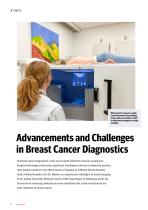
While breast CT represents a significant advancement in breast imaging, further studies are needed to confirm its effectiveness compared to existing modalities. Advancements and Challenges in Breast Cancer Diagnostics In breast cancer diagnostics, early and accurate detection remains paramount. Despite technological advances, significant challenges continue to shape the practice, from patient comfort to the effectiveness of imaging in different breast densities. Guido Gebhardt spoke with Dr. Wasser, an experienced radiologist in breast imaging at the Leiden University Medical Centre LUMC Department of Radiology, about the intricacies of screening methods and new modalities that could revolutionize the early detection of breast cancer.
Open the catalog to page 1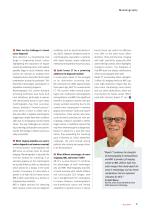
þ What are the challenges in breast cancer diagnosis? Early detection is a fundamental challenge in diagnosing breast cancer, highlighting the importance of regular screening. Detecting cancer at its earliest possible stage is crucial. However, many women are reluctant to undergo mammography due to discomfort from breast compression during the procedure. This discomfort discourages participation in population screening programs. Mammography, the current standard screening technique, also faces technical limitations, particularly in women with dense breast tissue. In such cases, mammography may...
Open the catalog to page 2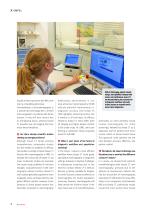
display enhancing tumors like MRI, making it a compelling alternative. Tomosynthesis, or 3D mammography, is a pseudo-3D technology with a limited tomo-angulation. In patients with dense breasts, it may still miss tumors due to overlapping tissue, whereas breast CT provides true 3D imaging that minimizes these limitations. þ Are there already scientific studies showing an emerging evidence? Although breast CT shows promise, comprehensive, comparative studies are still needed to establish its efficacy. Few studies currently compare breast CT directly with mammography or MRI. To validate the clinical...
Open the catalog to page 3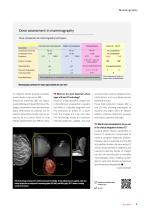
ŽƐĞĂƐƐĞƐƐŵĞŶƚ ŝŶŵĂŵŵŽŐƌĂƉŚLJ ŽƐĞĐŽŵƉĂƌŝƐŽŶŽĨŵĂŵŵŽŐƌĂƉŚLJƚĞĐŚŶŝƋƵĞƐ Conventional mammography Digital mammography Compression thickness Compression force Total dose [mGy] Dose dependency Dose dependency on compression force, breast thickness, and parenchymal density Dose dependency solely on breast tissue characteristics Mammography and breast CT require approximately the same dose CT, citing the shorter duration and lower anxiety levels compared to MRI. Despite its sensitivity, MRI can induce claustrophobia and discomfort due to the lengthy examination time and enclosed space. With breast CT, patients...
Open the catalog to page 4All AB-CT - Advanced Breast-CT catalogs and technical brochures
 Flyer nu:view
8 Pages
 OnePager Overview
1 Page
 Showroom
1 Page
 nu:view References
19 Pages
 Testimonials from patients
2 Pages


Archived catalogs
 nu:view
8 Pages