

Locking Ankle Plating System Surgical Technique (LEX00-04-C)
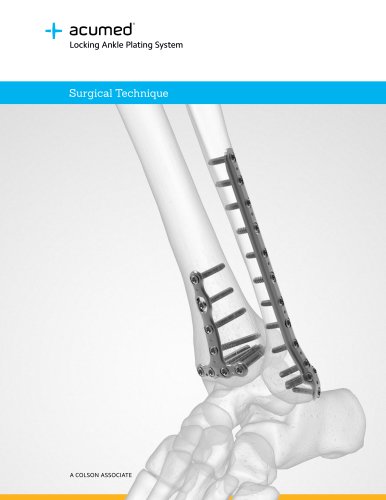
Locking Ankle Plating System Surgical Technique (LEX00-04-C)
The Acumed Locking Ankle Plating System is designed for the fixation of fractures, fusions, and osteotomies of the tibia and fibula. It features a low-profile design with locking screws and a Type II anodized finish, and is part of the Lower Extremity Modular System.
The system includes anatomically precontoured plates for various fixation uses:
- LPL Lateral Fibula Plates: For non-comminuted distal fibular fractures, osteotomies, and nonunions.
- Lateral Fibula Plates: For distal fibular fractures, osteotomies, and nonunions.
- LPL Anterior Tibia Plates: For non-comminuted distal tibial fractures, osteotomies, and nonunions from an anterior approach.
- LPL Medial Tibia Plates: For non-comminuted distal tibial fractures, osteotomies, and nonunions from a medial approach.
The system includes various instruments such as plate tacks, plate benders, drill guides, and drivers to assist in the surgical procedure. Specific instruments are used for different screw sizes and types.
The surgical technique involves several steps:
- Patient Positioning and Exposure: Position the patient supine and make the necessary incisions for exposure.
- Reduction: Reduce the fracture before plate application, ensuring proper alignment and compression.
- Selection and Placement: Choose the appropriate plate and secure it temporarily with K-wires or plate tacks.
- Initial Plate Fixation: Use nonlocking screws for initial fixation, followed by locking screws for stability.
- Closure and Postoperative Care: Closure and care are at the surgeon's discretion.
- LPL and Locking Lateral Fibula Plates: Involves positioning, reduction, selection, and fixation of the plate with specific screw types and sizes.
- LPL Anterior Tibia Plates: Requires a longitudinal incision and careful reduction, with specific instructions for plate bending and screw placement.
The Acumed Locking Ankle Plating System provides a comprehensive solution for ankle fixation, offering flexibility in plate and screw selection to accommodate various surgical needs.
- Patient Positioning and Exposure: Position the patient supine and make a medial incision to expose the tibia fracture. Ensure separation of incisions by at least 7 cm if fixing the anterior tibia or lateral fibula simultaneously.
- Reduction: Reduce the fracture using a temporary external fixator or laminar spreader. Use K-wires or lag screws for temporary fixation while templating the plate.
- Selection and Placement: Choose an LPL Medial Tibia Plate that is three holes proximal to the fracture line. Use K-wire holes for temporary fixation.
- Initial Plate Fixation: Confirm plate positioning and joint reduction fluoroscopically. Place distal-most screws using appropriate drill guides and depth gauges.
- Insert Remaining Screws: Complete fracture reduction and stabilization by inserting remaining screws.
- Closure and Postoperative Care: Closure and postoperative protocol are at the surgeon's discretion.
- Implant Removal Instructions: Use specific drivers for removing different types of screws.
Catalog excerpts

Locking Ankle Plating System Surgical Technique
Open the catalog to page 1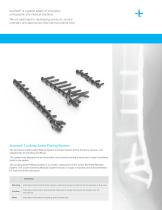
Acumed® is a global leader of innovative orthopaedic and medical solutions. We are dedicated to developing products, service methods, and approaches that improve patient care. Acumed® Locking Ankle Plating System The Acumed Locking Ankle Plating System provides fixation during fractures, fusions, and osteotomies for the tibia and fibula. The system was designed to be low profile and includes locking screws and a Type II anodized finish to the plates. The Locking Ankle Plating System is a modular component of the Lower Extremity Modular System. The Lower Extremity Modular System houses a range...
Open the catalog to page 2
Acumed® Locking Ankle Plating System Surgical Technique Table of Contents System Features . . . . . . . . . . . . . . . . . . . . . . . . . . . . . . . . . . . . . . . . . . . . . . . . . . . . . . . . . . . . . . . . . 2 Instrument Overview . . . . . . . . . . . . . . . . . . . . . . . . . . . . . . . . . . . . . . . . . . . . . . . . . . . . . . . . . . . . . 5 Surgical Technique Overview . . . . . . . . . . . . . . . . . . . . . . . . . . . . . . . . . . . . . . . . . . . . . . . . . . . . . 8 Surgical Techniques . . . . . . . . . . . . . . . . . . . . . . . . . . . . . . . . . . . . . . ....
Open the catalog to page 3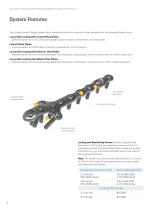
Acumed® Locking Ankle Plating System Surgical Technique System Features The Locking Ankle Plating System offers low-profile plates in a variety of sizes designed for the following fixation uses. Low-profile Locking (LPL) Lateral Fibula Plate: Internal fixation for non-comminuted distal fibular fractures, osteotomies, and nonunions Lateral Fibula Plates: I nternal fixation for distal fibular fractures, osteotomies, and nonunions Low-profile Locking (LPL) Anterior Tibia Plates: I nternal fixation for non-comminuted distal tibial fractures, osteotomies, and nonunions, from an anterior approach Low-profile...
Open the catalog to page 4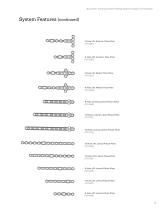
Acumed® Locking Ankle Plating System Surgical Technique System Features [continued] 7-Hole LPL Anterior Tibia Plate (70-0247) 5-Hole LPL Anterior Tibia Plate (70-0245) 7-Hole LPL Medial Tibia Plate (70-0227) 9-Hole LPL Medial Tibia Plate (70-0229) 9-Hole Locking Lateral Fibula Plate (70-0169) 11-Hole Locking Lateral Fibula Plate (70-0171) 13-Hole Locking Lateral Fibula Plate (70-0173) 13-Hole LPL Lateral Fibula Plate (70-0153) 11-Hole LPL Lateral Fibula Plate (70-0151) 9-Hole LPL Lateral Fibula Plate (70-0149) 7-Hole LPL Lateral Fibula Plate (70-0147) 5-Hole LPL Lateral Fibula Plate (70-0145)
Open the catalog to page 5
Acumed® Locking Ankle Plating System Surgical Technique System Features [continued] Screw Options System Screws 3.0 mm Locking Hexalobe Screw 8 mm–26 mm (30-02XX) 3.5 mm Locking Hexalobe Screw 8 mm–26 mm (30-02XX) 3.0 mm Nonlocking Hexalobe Screw 8 mm–26 mm (30-03XX) 3.5 mm Nonlocking Hexalobe Screw 8 mm–26 mm (30-02XX) Optional Cortical (Hex) Screws 2.7 mm Locking Cortical (Hex) Screw 8 mm–65 mm (COL-2XXX) 2.7 mm (Nonlocking) Cortical (Hex) Screw 8 mm–65 mm (CO-27XX) 3.5 mm Locking Cortical (Hex) Screw 6 mm–65 mm (COL-3XXX) 3.5 mm (Nonlocking) Cortical (Hex) Screw 6 mm
Open the catalog to page 6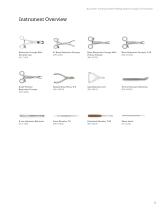
Acumed® Locking Ankle Plating System Surgical Technique Instrument Overview Reduction Forceps With Serrated Jaw (PL-CL04) 8" Bone Reduction Forceps (MS-1280) Bone Reduction Forceps With Points, 5 Broad (MS-47135) Bone Reduction Forceps, 5.25 (MS-45300) Small Pointed Reduction Forceps (OW-1200) Needle Nose Pliers, 5.5 (MS-48245)
Open the catalog to page 7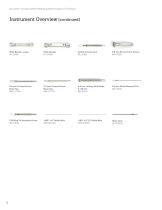
Acumed® Locking Ankle Plating System Surgical Technique Instrument Overview [continued] Plate Bender, Large (PL-2045) 3.5 mm Screw Driver Sleeve (MS-SS35) 3.5 mm Cortical Screw Bone Tap (MS-LTT35) 2.7 mm Cortical Screw Bone Tap (MS-LTT27) 2.3 mm Locking Drill Guide 6–65 mm (80-0622) 2.3 mm Quick Release Drill (80-0627) T15 Stick Fit Hexalobe Driver (80-0760) Plate Tack (PL-PTACK)
Open the catalog to page 8
Acumed® Locking Ankle Plating System Surgical Technique Instrument Overview [continued] 2.0 mm Quick Release Drill (80-0386) 2.8 mm Quick Release Drill (80-0387) 3.5 mm x 5" Quick Release Drill (MS-DC35) 2.5 mm Quick Release Hex Driver (HPC-0025) 2.5 mm Solid, Quick Release, Driver Tip (HT-2502) 6 mm–70 mm Depth Gauge, 2 mm Increments (MS-9022) Offset Drill Guide (PL-2095) 2.8 mm/3.5 mm Thin Drill Guide (PL-2196) 2.0 mm/2.8 mm Thin Drill Guide (PL-2118) 2.8 mm Locking Drill Guide 6–65 mm (80-0384) 2.0 mm Locking Drill Guide 6–65 mm (80-0385
Open the catalog to page 9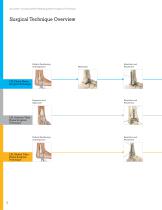
Acumed® Locking Ankle Plating System Surgical Technique Surgical Technique Overview Patient Positioning and Exposure LPL Fibula Plates Surgical Technique Patient Positioning and Exposure LPL Anterior Tibia Plates Surgical Technique LPL Medial Tibia Plates Surgical Technique
Open the catalog to page 10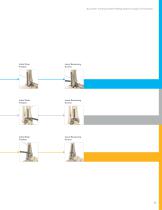
Acumed® Locking Ankle Plating System Surgical Technique Initial Plate Fixation Insert Remaining Screws Initial Plate Fixation Insert Remaining Screws Initial Plate Fixation Insert Remaining Screws
Open the catalog to page 11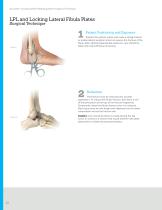
Acumed® Locking Ankle Plating System Surgical Technique LPL and Locking Lateral Fibula Plates Surgical Technique Patient Positioning and Exposure Position the patient supine and make a straight lateral or posterolateral surgical incision to expose the fracture of the fibula. After attaining appropriate exposure, care should be taken with vital soft-tissue structures. The fracture must be reduced prior to plate application. To reduce the fibular fracture, peel back 2 mm of the periosteum at the tips of the fracture fragments. Temporarily clamp the fibular fracture once it is reduced. Place lag...
Open the catalog to page 12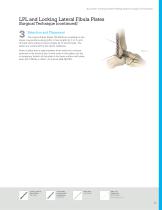
Acumed® Locking Ankle Plating System Surgical Technique LPL and Locking Lateral Fibula Plates Surgical Technique [continued] The Lateral Fibula Plates (70-01XX) are available in two styles: Low-profile Locking (LPL) in five lengths (5, 7, 9, 11, and 13-hole) and Locking in three lengths (9, 11, and 13-hole). The plates are contoured for the lateral malleolus. Select a plate that is approximately three holes (six cortices) proximal to the fracture line. K-wire holes in the plates can aid in temporary fixation of the plate to the bone surface with plate tacks (PL-PTACK) or .062" x 6" K-wires (WS-1607ST)....
Open the catalog to page 13All Acumed catalogs and technical brochures
 EnCompass
8 Pages
Archived catalogs
 CFX
CFX20 Pages
 MFx
MFx20 Pages
 OsteoVation EX
6 Pages
 Profile Zero
8 Pages
 ExtremiLOCK
6 Pages
 OsteoPower Catalog
19 Pages
- Bone plate
- Compression plate
- Metallic compression plate
- Locking compression plate
- Orthopedic surgery instrument kit
- Distal compression plate
- Compression bone screw
- Metallic compression bone screw
- Proximal compression plate
- Forearm compression plate
- Lateral compression plate
- Bone substitute
- Medial compression plate
- Tibia compression plate
- Humerus compression plate
- Radius compression plate
- Cannulated compression bone screw
- Orthopedic surgery bone substitute
- Suture anchor
- Foot compression plate