- Catalogs
- Advanced Bionics
- NEPTUNE User Guide


NEPTUNE User Guide

NEPTUNE User Guide
The User Guide for the Neptune™ sound processor is intended to help users, parents, and caregivers understand its use and maintenance. It emphasizes the processor's waterproof capabilities and comfort, as it does not require ear-worn components. The guide covers usage, care, troubleshooting, and safety.
The Neptune sound processor is part of a cochlear implant system, including the Implantable Cochlear Stimulator (ICS), headpiece, and cable. It features a sound processor, battery cover, and Neptune Connect control module. The processor is fully submergible, suitable for water use, and includes an on/off button, LED indicators, and audible alarms for status updates.
The system converts sound into electrical signals for hearing and can store up to three user-selectable programs. It is designed for water use with an IP68 rating. The Neptune Connect allows adjustments to volume, sensitivity, and program settings and can connect to FM systems and consumer electronics.
The headpiece transmits sound signals and power to the implant and includes a microphone for sound pickup. It works with the Universal Headpiece for non-water environments and the AquaMic for water activities, both offering IP68 protection.
- Ingress Protection (IP) Rating: IP68 for water and dust resistance.
- Operating temperature: -20°C to +55°C.
- Humidity tolerance: 0-95% relative humidity.
- Pressure tolerance: 69.6 kPa to 130.8 kPa.
- Altitude and depth suitability: Up to 10,000 ft altitude and 3m depth.
The guide includes warnings about electrostatic discharge, airport security, and ultrasonic sensors. Users are advised to read the entire manual before use.
Basic troubleshooting tips and contact information for support are provided to assist users in resolving common issues.
The Neptune Sound Processor is designed for water use, utilizing a disposable or rechargeable AAA battery. It includes a Battery Cover for a watertight seal and a Color Cover for customization. The AquaMic headpiece is suitable for swimming, while the Universal Headpiece is for daily activities.
After water exposure, rinse parts in clean water. The Neptune Connect and Universal Headpiece should be removed before water activities. For drying, use a desiccant device like Zephyr by Dry & Store®.
The processor can be worn using clips, pouches, armbands, lanyards, headbands, or harnesses. Each method has specific instructions for attachment and removal. The Neptune Connect should be detached before water exposure.
The processor is powered by a single AAA battery. The 'on/off' button controls power, and LED indicators show battery status and system conditions. Audible alarms provide additional notifications.
The Universal Headpiece is for general use, while the AquaMic is for water activities, with an IP68 rating. Sound quality may be affected underwater but should normalize after drying.
Small parts may pose a choking hazard. If the processor overheats, discontinue use and contact support. Follow all instructions to avoid damage or injury.
Headpiece cables come in various colors and lengths. Regular inspection is recommended to ensure they are in good condition. Damaged cables should be replaced. Cables should not be removed or replaced underwater. If detached during water use, dry the sound processor before reconnecting. Cables longer than 81cm are not recommended for young children due to strangulation risks.
To attach the cable to the headpiece or sound processor, hold each component and push the connectors firmly together. For troubleshooting, refer to the User Guide.
Correct magnet strength is crucial for comfort and retention. Consult a clinician for adjustments. Do not add magnets without professional guidance. Discontinue use if irritation occurs and seek medical attention if magnets are swallowed.
Color Caps are available to match the Neptune sound processor. They should be in place at all times. Use the provided tool for removal and refer to the instructions for further guidance.
The Neptune Connect allows for volume, sensitivity, and program adjustments. It is removable for tamper-proof control and should not be used in water. Ensure the processor is dry before attaching the Neptune Connect.
The Sync Light ensures settings match between the Neptune Connect and the sound processor. A green flash indicates synced settings, while a red flash indicates a mismatch. Sync by turning the volume dial counter-clockwise.
Programs can be changed using the Neptune Connect, which stores up to three programs. Volume and sensitivity adjustments require syncing if the Neptune Connect was removed. Consult the User Guide for detailed instructions.
FM systems can be used with the Neptune sound processor by attaching the FM receiver to the Neptune Connect. Ensure the processor is off before attaching or removing the FM receiver.
Test mode allows listening to microphones and FM receivers. Attach headphones to the Neptune Connect and set the program switch to the monitor position.
Options for telephone use include placing the receiver over the headpiece microphone, using a telephone adapter, patch cable, or speaker phone. Consult a clinician for recommendations.
The Neptune sound processor can use alkaline, lithium, or rechargeable NiMH AAA batteries. Refer to the manufacturer's instructions for recharging.
- Do not recharge disposable batteries or use rechargeable lithium-ion batteries.
- Avoid placing batteries in the mouth or swallowing them; seek medical attention if ingested.
- Remove empty batteries from the sound processor to prevent leakage damage.
- Dispose of leaking batteries according to local regulations and avoid contact with skin or eyes.
- Keep batteries away from heat and do not dispose of them in fire.
- Use only manufacturer-recommended chargers and keep batteries away from children.
- The Neptune system includes various accessories like the Universal Headpiece (UHP) for daily use and the AquaMic for swimming, which is IP68 rated for water resistance.
- The system is compatible with Phonak MLxi wireless FM receiver and includes Listening Check earphones for monitoring.
- Audio accessories can be connected via the auxiliary connector, but avoid mains powered devices without isolation cables.
- Neptune Covers allow for color customization and should be used when the Neptune Connect is not attached.
- Battery Covers provide an airtight seal for water use and should be checked for damage regularly.
- The system includes a carrying case and a Zephyr by Dry & Store for moisture removal.
- The Neptune Connect has an IP44 rating, while the sound processor and AquaMic have an IP68 rating, ensuring protection against dust and water immersion up to three meters.
- Proper care involves using a damp cloth for cleaning and ensuring the battery cover is secure before water exposure.
- Recommended operating temperatures range from 0°C to 45°C, and storage temperatures from -20°C to 55°C.
- Approved power sources include specific AAA batteries and programming interfaces.
- Avoid exposing the system to extreme heat and follow electromagnetic compatibility guidelines.
- Be cautious of small parts that may pose choking hazards and avoid using long cables with young children.
- Discontinue use if the sound processor becomes unusually hot and contact Advanced Bionics for assistance.
1. Ensure the cable is detached in a desiccant device overnight for proper drying.
2. If loud sounds occur underwater, remove the headpiece and dry the AquaMic microphone.
3. Do not change the AAA battery underwater.
4. Avoid using tools to remove the Battery Cover to prevent damage.
5. Replace damaged Battery Covers before water use.
6. Use a mains isolation cable for mains powered sound sources.
7. Do not swim with the Neptune Connect attached.
8. Service should only be performed by authorized personnel.
1. Avoid static electricity exposure by touching metal surfaces before handling the device.
2. Use fabric softener on clothing and bedding to reduce static.
1. Metal detectors will not damage the implant but may trigger alarms.
2. Ultrasonic sensors may distort sound quality; reduce volume when near.
3. Avoid placing microphones in X-ray machines.
No Sound or Red LED Flashing:
1. Ensure the processor is on and settings are correct.
2. Check for cable damage and ensure proper attachment.
3. Remove obstructions from the microphone.
4. Replace the cable or headpiece if necessary.
1. Remove obstructions and check cable integrity.
2. Ensure proper attachment and settings.
3. Replace components if issues persist.
1. Shake and dry the AquaMic microphone.
2. Inspect and replace damaged cables.
3. Use a desiccant device for drying.
1. Rinse with clean water and dry using a desiccant device.
1. Dry the compartment and inspect for damage.
2. Replace components if rust or damage is noted.
1. Ensure the battery is charged and correctly inserted.
2. Contact support if issues persist.
1. Reattach and ensure proper orientation.
2. Power cycle the processor if needed.
1. Check settings and replace components if LED or alarms do not function as expected.
2. Consult with a clinician for programming issues.
Catalog excerpts

USER GUIDE for the NEPTUNE™ Sound Processor
Open the catalog to page 2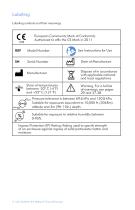
Labeling symbols and their meanings 2 User Guide for the Neptune™ Sound Processor
Open the catalog to page 3
Table of Contents Introduction . . . . . . . . . . . . . . . . . . . . . . . . . . . . . . . . . . . . . . . .5 Purpose of this Guide . . . . . . . . . . . . . . . . . . . . . . . . . . . . . . . . . . 5 About the Neptune Sound Processor . . . . . . . . . . . . . . . . . . . . . . . . . 5 The Neptune System . . . . . . . . . . . . . . . . . . . . . . . . . . . . . . . . . . .6 The System Overview . . . . . . . . . . . . . . . . . . . . . . . . . . . . . . . . . . .7 The Sound Processor . . . . . . . . . . . . . . . . . . . . . . . . . . . . . . . . . . 7 The Neptune Connect . . . . . . . . ....
Open the catalog to page 4
Changing Volume . . . . . . . . . . . . . . . . . . . . . . . . . . . . . . . . . . . . Changing Sensitivity . . . . . . . . . . . . . . . . . . . . . . . . . . . . . . . . . . . Using FM . . . . . . . . . . . . . . . . . . . . . . . . . . . . . . . . . . . . . . . . . . Listening to the Microphone and FM Receiver . . . . . . . . . . . . . . . . . . . . Using the Telephone . . . . . . . . . . . . . . . . . . . . . . . . . . . . . . . . . . . AAA Battery Information . . . . . . . . . . . . . . . . . . . . . . . . . . . . . . . . .29 Using Neptune Accessories . . . . . . . . . . . . . . . . . ....
Open the catalog to page 5
Introduction Purpose of this Guide This User Guide is designed to help recipients, parents, and caregivers understand the use and care of the Neptune™ sound processor — the world’s first swimmable sound processor! In addition to being waterproof, the Neptune sound processor does not require you to wear anything on the ear, making it the most comfortable and discreet sound processor in the market today. The Neptune sound processor provides access to the latest sound processing innovations by Advanced Bionics, the market leader in performance. This User Guide will provide all of the information...
Open the catalog to page 6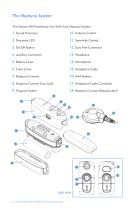
The Neptune System This Section Will Familiarize You With Your Neptune System 12. Euro Port Connector 8. Neptune Connect Sync Light 17. Headpiece Cable Connector 18. Neptune Connect Release Latch 12 SIDE VIEW 6 User Guide for the Neptune™ Sound Processor
Open the catalog to page 7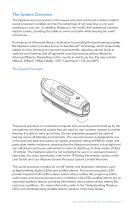
The System Overview The Neptune sound processor is the newest and most advanced cochlear implant sound processor available and has the advantage of not requiring you to wear anything on your ear. In addition, Neptune is the world’s first waterproof cochlear implant system, providing the ability to swim and bathe while hearing the world around you. As evidence of Advanced Bionics’ dedication to providing the best hearing possible, the Neptune system provides access to AutoSound™ technology which dynamically adapts to every listening environment automatically, adjusting volume levels to optimize...
Open the catalog to page 8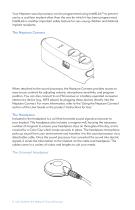
Your Neptune sound processor can be programmed using IntelliLink™ to prevent use by a cochlear implant other than the one for which it has been programmed. IntelliLink is another important safety feature for very young children and bilateral implant recipients. When attached to the sound processor, the Neptune Connect provides access to easy-to-use controls for adjusting volume, microphone sensitivity, and program position. You can also connect to an FM receiver or a battery-operated consumer electronics device (e.g., MP3 player) by plugging these devices directly into the Neptune Connect. For...
Open the catalog to page 9
The Neptune sound processor works with two different headpieces: the Universal Headpiece and the AquaMic. The Universal Headpiece (UHP), which works with all Advanced Bionics’ sound processors, is intended for use with the Neptune processor outside of water environments. For more information, refer to the ‘Replacing Headpiece Cables’ section of the User Guide or the UHP and/or Cable ‘Instructions for Use.’ The AquaMic headpiece is designed for use during swimming, bathing, and showering and carries an IP68 rating for water and particulate matter (e.g. dust, sand) resistance. For more information,...
Open the catalog to page 10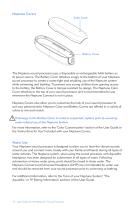
Neptune Covers Color Cover Battery Cover The Neptune sound processor uses a disposable or rechargeable AAA battery as its power source. The Battery Cover attaches snugly to the bottom of your Neptune sound processor to create a water-tight seal enabling use of the Neptune system while swimming and bathing. To prevent very young children from gaining access to the battery, the Battery Cover is tamper-resistant by design. The Neptune Color Cover attaches to the top of your sound processor and is recommended for use whenever the Neptune Connect is not in place. Neptune Covers also allow you to customize...
Open the catalog to page 11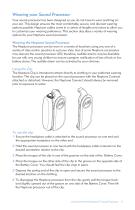
Wearing your Sound Processor Your sound processor has been designed so you do not have to wear anything on your ear. This design ensures the most comfortable, secure, and discreet wearing options possible. Neptune cables come in a variety of lengths and colors to allow you to customize your wearing preference. This section describes a variety of wearing options for your Neptune sound processor. Wearing the Neptune Sound Processor The Neptune processor can be worn in a variety of locations using any one of a variety of clips and/or pouches to suit your style. Use of some Neptune accessories may...
Open the catalog to page 12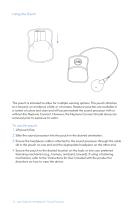
The pouch is intended to allow for multiple wearing options. The pouch attaches to a lanyard, an armband, a belt, or a harness. Neptune pouches are available in a variety of colors and sizes and will accommodate the sound processor with or without the Neptune Connect. However, the Neptune Connect should always be removed prior to exposure to water. To use the pouch: 1. Lift pouch flap. 2. Slide the sound processor into the pouch in the desired orientation. 3. nsure the headpiece cable is attached to the sound processor through the cable E slit in the pouch on one end and the appropriate headpiece...
Open the catalog to page 13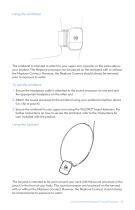
The armband is intended to attach to your upper arm, typically on the same side as your implant. The Neptune processor can be placed on the armband with or without the Neptune Connect. However, the Neptune Connect should always be removed prior to exposure to water. To use the armband: 1. nsure the headpiece cable is attached to the sound processor on one end and E the appropriate headpiece on the other end. 2. Attach the sound processor to the armband using your preferred retention device 3. Secure the armband to your upper arm using the VELCRO® brand fasteners. For further instructions on how...
Open the catalog to page 14Archived catalogs
 Hear Your Best brochure
32 Pages
 SOUND SOLUTIONS
6 Pages
 Off-the-Ear Power Options
2 Pages
 USER GUIDE HARMONY®
54 Pages
 USER GUIDE PLATINUM SERIES?
40 Pages
 HiRes 90K Implant Family
40 Pages
 Advanced Bionics
12 Pages
 hear your best
20 Pages
 Products & Accessories
42 Pages
 Naida CI Q70
18 Pages
 hear your world
44 Pages
 hear more of your world
8 Pages
 Bring on the Water brochure
16 Pages
 Bring on the Performance (Q70)
24 Pages
 Neptune_Wearing
16 Pages
 Bring on the Performance (Q90)
24 Pages
 Bring on the Performance (Q30)
20 Pages
 HiFocus™ Mid-Scala Electrode
8 Pages
 Naída CI Q70
67 Pages
 AquaCase
12 Pages
 Naída CI Q90
392 Pages
 Naída CI Q30
386 Pages
 Neptune Brochure
6 Pages
 Product Catalog
32 Pages