


- Company
- Products
- Catalogs
- News & Trends
- Exhibitions
AESCULAP® CoreHip® SYSTEM

AESCULAP® CoreHip® SYSTEM
Catalog excerpts

ORTHOPAEDIC SURGERY AESCULAP® CoreHip® SYSTEM TEN LINES OF INDICATION. ONE INSTRUMENTATION. MORE INDIVIDUALITY.
Open the catalog to page 1
AESCULAP® CoreHip® PRIMARY TEN LINES OF INDICATION. ONE INSTRUMENTATION. MORE INDIVIDUALITY. GLOBAL PATENT
Open the catalog to page 2
R calcar = R VAR = R STD = R VLG ONE RADIUS ONE RASP DESIGN TEN INDICATION
Open the catalog to page 3
AESCULAP® CoreHip® PRIMARY CEMENTLESS VARIOUS FEMUR SHAPES. FOUR LINES OF INDICATION.
Open the catalog to page 4
PRIMARY – CEMENTLESS ❙ The cementless CoreHip® Primary System consists of the indication lines Standard, Valgus, Varus and Dysplasia. ❙ The four CoreHip® indication lines take into consideration different anatomical curvatures of the calcar femoris. ❙ The CoreHip® stem selection separates stem anchorage and reconstruction of the joint center. ❙ Each CoreHip® indication line has a fixed offset range in relation to the position of the head center in varus, valgus, standard or dysplastic situations and grows laterally. ❙ The patented CoreHip® system rasps allow implantation of all three indication...
Open the catalog to page 5
AESCULAP® CoreHip® PRIMARY CEMENTED VARIOUS FEMUR SHAPES. THREE LINES OF INDICATION.
Open the catalog to page 6
PRIMARY – CEMENTED ❙ The CoreHip® Primary stems can also be used with cement. ❙ The cemented CoreHip® system combines the same properties and advantages as the cementless stems, even with the cemented CoreHip® AS version. ❙ The CoreHip® surgical technique allows for intra-operative decision for cementless or cemented implantation. ❙ The CoreHip® stem selection therefore takes different anatomical curvatures of the calcar femoris into consideration even with the cemented technique. ❙ The cemented anchoring of the polished surface is based on a triple conical stem design. ❙ The CoreHip® Centralizer...
Open the catalog to page 7
AESCULAP® AS CoreHip® PRIMARY CEMENTED VARIOUS FEMUR SHAPES. THREE LINES OF INDICATION.
Open the catalog to page 8
THE AS CoreHip® STEMS PRIMARY – CEMENTED ❙ The AS CoreHip® stems show a high degree of reliability due to a reliable connection of the AS coating to the base material material (1, 2). ❙ The AS CoreHip® Primary stems combine the same properties and advantages as cemented stems. ❙ The AS CoreHip® stems show high resistance to metal ion release (1, 2). ❙ The AS CoreHip® stem selection takes into account different anatomical curves of the femoral calcar even with the cemented technique. ❙ The surface of the AS CoreHip® stems has similar properties to the polished surface of the CoreHip® stems. ❙...
Open the catalog to page 9
AESCULAP® CoreHip® PRIMARY STEM DESIGN. CHARACTERISTICS AND ANCHORING. NECK polished surface CONE CCD 122° to 142° SHOULDER Protection of greater trochanter intraoperative orientation PROXIMAL PLASMAPORE® coating triple cone design MEDIAL Calcar adjustment 4 anatomical shapes: Valgus – Standard – Varus – Dysplasia DISTAL axial femoral guidance raw surface 3° PROXIMAL triple taper ANCHOR bilateral cortical contact Primary stability via 7° cone
Open the catalog to page 10
NECK polished surface CONE CCD 122° to 142° SHOULDER Protection of greater trochanter intraoperative orientation MEDIAL Calcar adjustment 3 anatomical shapes: Valgus – Standard – Varus PROXIMAL triple taper PROXIMAL polished surface triple cone design DISTAL polished surface axial femorale guidance 7° ANCHOR bilateral cortical contact Primary stability via 7° cone CEMENT MANTLE ∆ Rasp and stem size CENTRALIZER for distal stem position
Open the catalog to page 11
AESCULAP® CoreHip® PRIMARY TEN LINES OF INDICATION. ONE IMPLANTATION RASP.
Open the catalog to page 12
THE RASPS ❙ The CoreHip® Implantation Rasps can be used universally for the three stem series in cementless or cemented techniques. ❙ Three CoreHip® neck adapters allow intraoperative selection of the stem best suited to the anatomical situation. ❙ The CoreHip® Rasp Curvature can be adapted to valgus, standard, varus or dysplasia conditions by a higher or lower position. ❙ The CoreHip® system rasps have different markers for the height of the prosthesis shoulder and femoral osteotomy. ❙ The CoreHip® rasp shoulder indicates the height of the head center. ❙ The CoreHip® osteotomy guide influences...
Open the catalog to page 13
AESCULAP® CoreHip® PRIMARY ONE SURGICAL TECHNIQUE. FOUR MEDIAL CURVES. THE CURVES ❙ The CoreHip® indication lines take into consideration the relationship between different medial curvatures and femoral rotation centers. ❙ The CoreHip® surgical technique is oriented to the medial curvatures by a higher or lower rasp position. ❙ The CoreHip® rasp position allows variation of the head center (valgus, standard, varus, dyspla
Open the catalog to page 14
ONE MEDIAL CURVE. THREE OFFSET VARIANTS. THE OFFSET ❙ The CoreHip® stems can cover three different offset ranges for a given medial contour, stem size and leg length. ❙ The CoreHip® surgical technique supports this procedure with different osteotomy levels and three neck adapters. ❙ The CoreHip® Offset characteristic is independent of the stem size per indication lin
Open the catalog to page 15
AESCULAP® CoreHip® DYSPLASIA ONE SURGICAL TECHNIQUE. FOUR MEDIAL CURVES. 142° Valgus & Dysplasia 132° Standard 122° Varus ❙ In preoperative planning, the CoreHip® indication lines show a high degree of correlation between leg length and offset reconstruction due to the variability of the four stem systems. ❙ The CoreHip® head centers are positioned with a femoral offset dependent on the medial resection point and a size growth dependent on the head center. ❙ The CoreHip® dysplasia indication line can achieve a leg length adjustment of 10 mm with the same valgus offset reconstruction and adaptation...
Open the catalog to page 16
ANATOMICAL JOINT RECONSTRUCTION. LEG LENGTH AND OFFSET. OFFSET 100 % Degree of achievement For the design of the CoreHip® system, both two- dimensional (ap- and lateral X-rays) and three- dimensional data (> 500) from most ethnic sources in the world were used. This allowed the diversity of the femur to be established as the basis for the systemic compilation of all possible indications. In an iterative planning process, the initial CoreHip® design was optimized on the basis of two or three-dimensional X-ray material (> 250 femoral examples). With this approach, the CoreHip® system was able to...
Open the catalog to page 17All Aesculap® catalogs and technical brochures
 AESCULAP® EQUIPMENT CARTS
6 Pages
 AESCULAP® NEUROENDOSCOPY
128 Pages
 AESCULAP® AdTec® single use
8 Pages
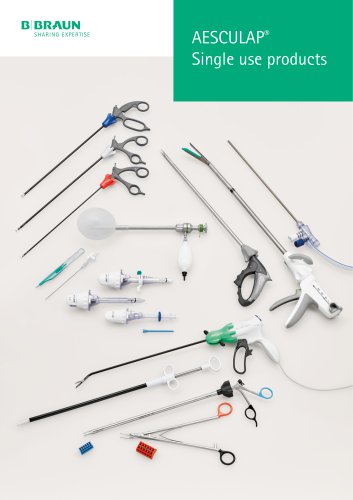 AESCULAP® Single use products
92 Pages
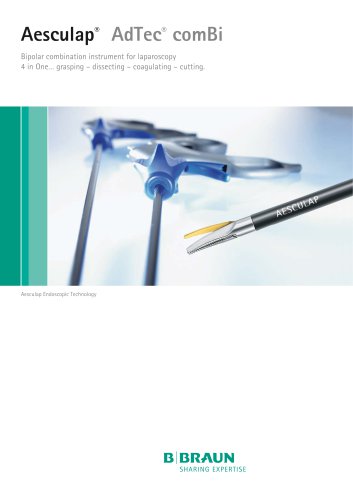 Aesculap® AdTec® comBi
4 Pages
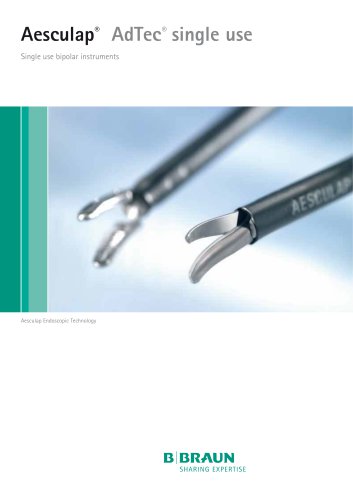 Aesculap® AdTec®single use
4 Pages
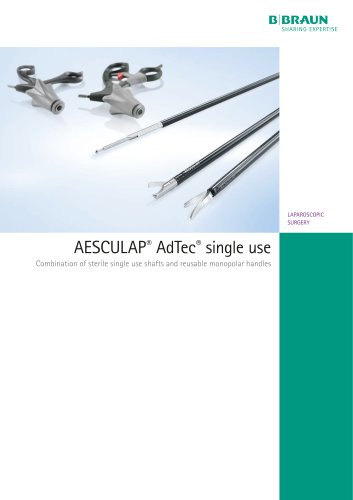 AESCULAP® AdTec® single use
6 Pages
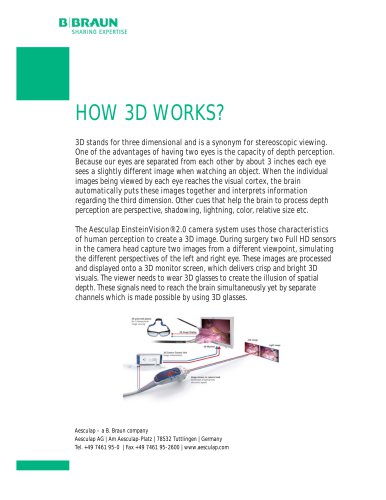 3D
3D9 Pages
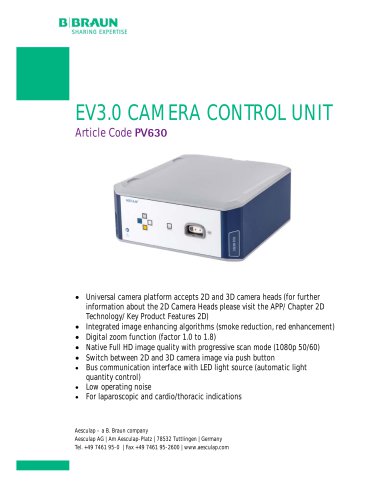 EV3.0 CAMERA CONTROL UNIT
12 Pages
 AESCULAP® EinsteinVision® 3.0 FI
62 Pages
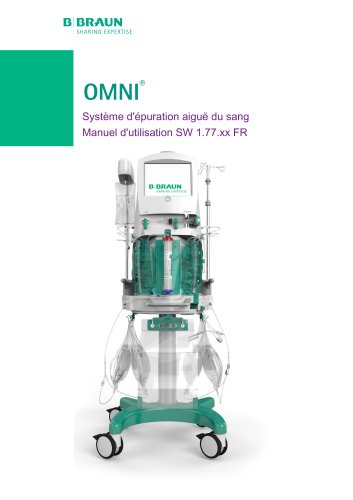 OMNI
OMNI635 Pages
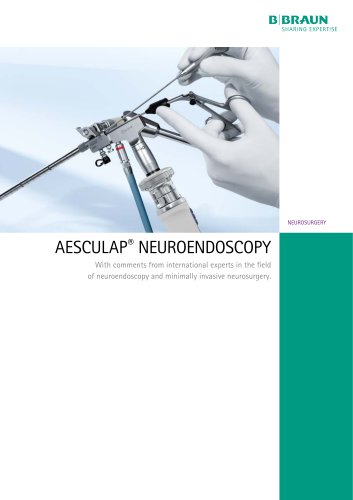 AESCULAP® NEUROENDOSCOPY
128 Pages
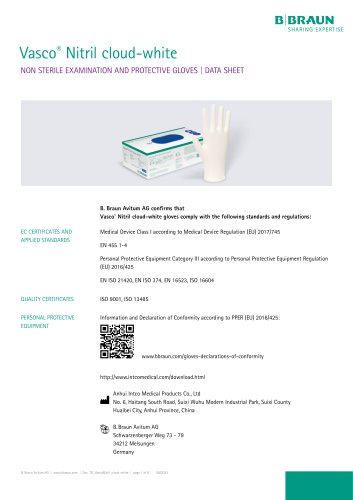 Vasco® Nitril cloud-white
6 Pages
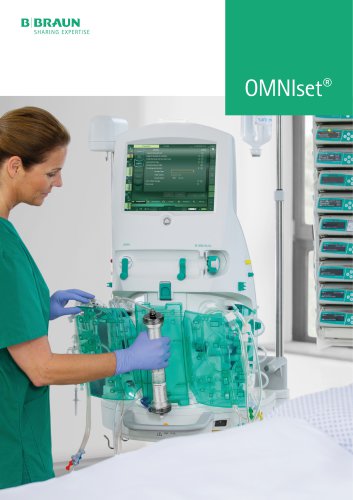 OMNIset®
4 Pages
 OMNI VR
2 Pages
 OMNI® plus
9 Pages
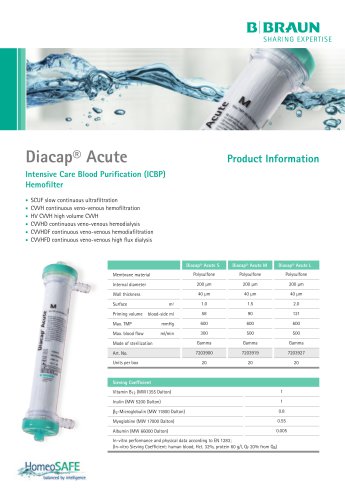 Diacap® Acute
2 Pages
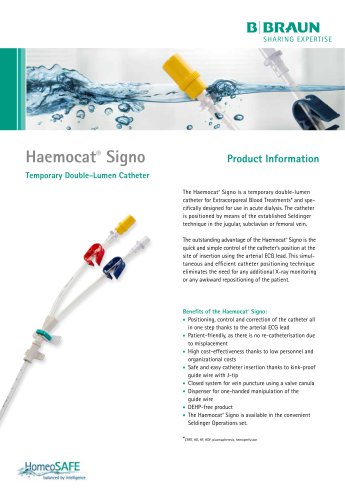 Haemocat® Signo
2 Pages
Archived catalogs
 Premilene® Mesh Plug
8 Pages
 AESCULAP® Excia® 12/14
18 Pages
 Aesculap®
16 Pages
 VascuFlex®
12 Pages
 MONOMAX®
16 Pages
 Quintex®
8 Pages
 AESCULAP® BULLDOG CLIPS
8 Pages
 AESCULAP® Metha®
28 Pages
 AESCULAP® NEUROENDOSCOPY
128 Pages
 Targon® FN
36 Pages
 proGAV ® 2.0
36 Pages
 TrendHip®
16 Pages
 Aesculap® OrthoPilot®
52 Pages
 Aesculap® Targon® RF
28 Pages
 CARDIOLOGY
44 Pages
 Nelson® deluxe
8 Pages
 M.blue®
44 Pages
 LC – LINEAR CUTTER STAPLER
6 Pages
 Aesculap Aeos®
16 Pages
 EV3.0 CAMERA CONTROL UNIT
12 Pages
 Aesculap Surgical Instruments
64 Pages
 AdTec® bipolar
8 Pages
 AESCULAP® SINGLE USE PRODUCTS
88 Pages
 proSA®
30 Pages
 activ L®
44 Pages


- Bone plate
- Logistics trolley
- Compression plate
- Metallic compression plate
- AESCULAP® catheter
- Locking compression plate
- Medical device trolley
- Surgery forceps
- Grasping forceps
- Syringe
- Surgery electrode
- Cannula
- Electrosurgical electrode
- Human scissors
- Surgical system
- Endoscope
- Orthopedic surgery instrument kit
- Cutting electrosurgical system
- AESCULAP® retractor