


- Company
- Products
- Catalogs
- News & Trends
- Exhibitions
AESCULAP® EinsteinVision® 3.0 FI
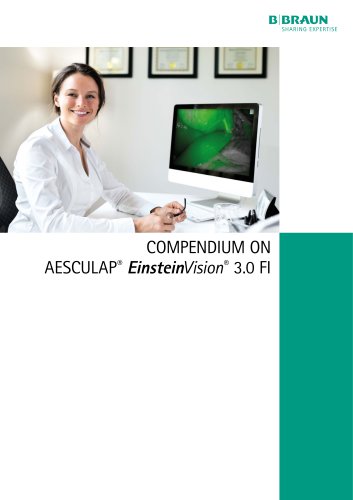
AESCULAP® EinsteinVision® 3.0 FI
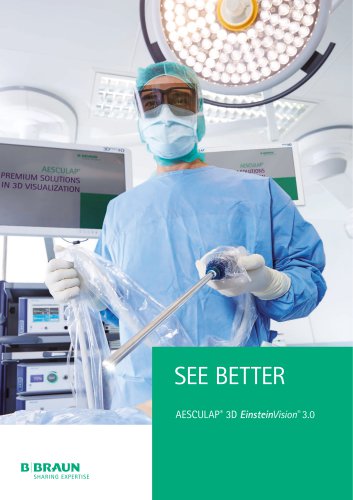
The AESCULAP® EinsteinVision® 3.0 FI system is designed for near-infrared fluorescence imaging and indocyanine green (ICG) guided surgery. It enhances surgical outcomes through real-time 3D fluorescence imaging, offering various modes for optimal visualization of anatomical structures.
Fluorescence imaging is increasingly used in surgeries for improved visualization of anatomical structures and tissue perfusion. It is applied in general surgeries like cholecystectomy and colorectal surgeries, as well as in gynecology and urology for procedures such as sentinel lymph node mapping and ureter identification.
The document emphasizes the importance of determining the appropriate dose, concentration, and timing of ICG administration. Ongoing research is needed to refine these parameters for optimal clinical outcomes.
NIRF-C is used in laparoscopic cholecystectomy to enhance biliary anatomy visualization, reducing bile duct injuries and conversion to open surgery. Studies show it reduces operative time and improves anatomical landmark recognition compared to traditional methods.
Supported by the Italian Society of Endoscopic Surgery, fluorescence-guided vision is efficient and economically sustainable, though more evidence is needed for its clinical applications. It shows promise in enhancing surgical outcomes by improving lymph node dissection and reducing complications.
ICG fluorescence is used in various laparoscopic procedures, offering advantages in safety, efficiency, and precision. It is particularly beneficial in ureteral identification, reducing the risk of injuries and enhancing surgical safety.
Overall, the use of ICG fluorescence in surgeries offers significant benefits in terms of enhanced visualization, reduced complications, and improved surgical outcomes. It is a valuable tool across various medical disciplines, particularly in complex surgeries requiring precise anatomical identification.
Catalog excerpts
COMPENDIUM ON AESCULAP® EinsteinVision® 3.0 FI
Open the catalog to page 1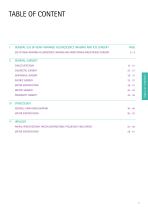
I GENERAL USE OF NEAR-INFRARED FLUORESCENCE IMAGING AND ICG SURGERY PAGE USE OF NEAR-INFRARED FLUORESCENCE IMAGING AND INDOCYANINE GREEN GUIDED SURGERY 6 - 8 SENTINEL LYMPH NODE MAPPING 46 - 49 PARTIAL PROSTATECTOMY, PARTIAL NEPHRECTOMY, PYELOPLASTY AND OTHERS 54 - 56
Open the catalog to page 3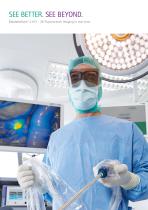
SEE BETTER. SEE BEYOND. EinsteinVision® 3.0 FI - 3D Fluorescence Imaging in real-time
Open the catalog to page 4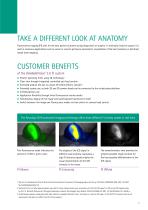
TAKE A DIFFERENT LOOK AT ANATOMY Fluorescence Imaging (FI) aims for the best patient outcome during diagnostics or surgery.1 In minimally invasive surgery it is used in numerous applications such as vessel or visceral perfusion assessment, visualization of bile duct anatomy or (sentinel) lymph node mapping. ■ Shorter operating times using 3D technology2 ■ Clear view through integrated, controlled anti-fog function ■ Extended product life due to unique 3D sterile delivery concept3 ■ Extended system use, as both 2D and 3D camera heads can be connected to the visualization platform ■ Application...
Open the catalog to page 5
GENERAL USE OF FLUORESCENCE IMAGING CONSENSUS CONFERENCE STATEMENT ON THE GENERAL USE OF NEAR-INFRARED FLUORESCENCE IMAGING AND INDOCYANINE GREEN GUIDED SURGERY Dip F., Boni L., Bouvet M., et al. Annals of Surgery, 2020, (modified Delphi study) BACKGROUND/AIM: In recent decades, the use of near-infrared light and fluorescence-guidance during open and laparoscopic surgery has exponentially expanded across various clinical settings. However, tremendous variability exists in how it is performed. In this first published survey of international experts on fluorescence-guided surgery, we sought to...
Open the catalog to page 6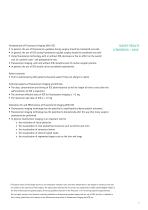
SURVEY RESULTS (CONSENSUS > 85%)1 Fundamentals of Fluorescent Imaging With ICG • In general, the use of fluorescence-guidance during surgery should be considered very safe. • In general, the use of ICG during fluorescence-guided surgery should be considered very safe. • Using fluorescence technology, with or without ICG, decreases or has no effect on the overall cost of a patient's peri- and postoperative care. • Fluorescence imaging, with and without ICG, should be part of routine surgical practice. • In general, the use of ICG should not be considered experimental. Patient selection • Prior...
Open the catalog to page 7
GENERAL USE OF FLUORESCENCE IMAGING COULD FLUORESCENCE-GUIDED SURGERY BE AN EFFICIENT AND SUSTAINABLE OPTION? A SICE (ITALIAN SOCIETY OF ENDOSCOPIC SURGERY) HEALTH TECHNOLOGY ASSESSMENT SUMMARY Vettoretto, N., Foglia, E., Ferrario, L., et al. Surgical Endoscopy, 2020, (evaluation/comparative study) BACKGROUND/AIM: Indocyanine green fluorescence vision is an upcoming technology in surgery. It can be used in three ways: angiographic and biliary tree visualization and lymphatic spreading studies. The present paper shows the most outstanding results from an health technology assessment study design,...
Open the catalog to page 8
GENERAL SURGERY CHOLECYSTECTOMY ABSTRACT COULD FLUORESCENCE-GUIDED SURGERY BE AN EFFICIENT AND SUSTAINABLE OPTION? A SICE (ITALIAN SOCIETY OF ENDOSCOPIC SURGERY) HEALTH TECHNOLOGY ASSESSMENT SUMMARY Vettoretto, N., Foglia, E., Ferrario, L., et al. Surgical Endoscopy, 2020, (evaluation/comparative study) BACKGROUND/AIM: Indocyanine green fluorescence vision is an upcoming technology in surgery. It can be used in three ways: angiographic and biliary tree visualization and lymphatic spreading studies. The present paper shows the most outstanding results from an health technology assessment study...
Open the catalog to page 10
FLUORESCENCE OR X-RAY CHOLANGIOGRAPHY IN ELECTIVE LAPAROSCOPIC CHOLECYSTECTOMY: A RANDOMIZED CLINICAL TRIAL Lehrskov L.L., Westen M., Larsen S.S., et al. BJS, 2020, (randomized clinical trial) BACKGROUND/AIM: Safe laparoscopic cholecystectomy may necessitate biliary imaging, and non-invasive fluorescence cholangiography may have advantages over contrast X-ray cholangiography. This trial compared fluorescence and X-ray cholangiography for visualization of the critical junction between the cystic, common hepatic and common bile ducts. PATIENTS AND METHODS: This non-inferiority blinded RCT included...
Open the catalog to page 11
GENERAL SURGERY CHOLECYSTECTOMY ABSTRACT RANDOMIZED TRIAL OF NEAR-INFRARED INCISIONLESS FLUORESCENT CHOLANGIOGRAPHY Dip F., LoMenzo E., Sarotto L., et al. Annals of Surgery, 2019, (multicenter randomized, single-blinded, controlled clinical trial) BACKGROUND/AIM: Incisionless near-infrared fluorescent cholangiography (NIFC) is emerging as a promising tool to enhance the visualization of extrahepatic biliary structures during laparoscopic cholecystectomies. PATIENTS AND METHODS: We conducted a single-blind, randomized, 2-arm trial comparing the efficacy of NIFC (n = 321) versus white light (WL)...
Open the catalog to page 12
UNDERSTANDING INTRAOPERATIVE FLUORESCENT CHOLANGIOGRAPHY: TEN STEPS FOR AN EFFECTIVE AND SUCCESSFUL PROCEDURE Dip F., Aleman R., Frieder J.S., et al. Surgical Endoscopy, 2021, (retrospective study) BACKGROUND/AIM: Common bile duct injuries (BDI) during laparoscopic cholecystectomy (LC) continue to be the source of morbidity and mortality. The reason for BDI is mostly related to the misidentification of the extrahepatic bile duct structures and the anatomic variability. Near-infrared fluorescent cholangiography (NIFC) has proven to enhance visualization of extrahepatic biliary structures during...
Open the catalog to page 13
GENERAL SURGERY CHOLECYSTECTOMY ABSTRACT FLUORESCENCE-BASED CHOLANGIOGRAPHY: PRELIMINARY RESULTS FROM THE IHU-IRCAD-EAES EURO-FIGS REGISTRY Agnus, V., Pesce, A., Boni, L. et al. Surgical Endoscopy, 2020 (registry study) BACKGROUND/AIM: Near-infrared fluorescence cholangiography (NIRF-C) is a popular application of fluorescence image-guided surgery (FIGS). NIRF-C requires near-infrared optimized laparoscopes and the injection of a fluorophore, most frequently Indocyanine Green (ICG), to highlight the biliary anatomy. It is investigated as a tool to increase safety during cholecystec-tomy. The...
Open the catalog to page 14
DOES NEAR-INFRARED FLUORESCENT CHOLANGIOGRAPHY WITH INDOCYANINE GREEN REDUCE BILE DUCT INJURIES AND CONVERSIONS TO OPEN SURGERY DURING LAPAROSCOPIC OR ROBOTIC CHOLECYSTECTOMY? — A META-ANALYSIS Dip F., Lo Menzo E., White K.P., et al. Surgery - Infrared Fluorescence, 2021, (meta analysis) BACKGROUND/AIM: Bile duct injury and conversion-to-open–surgery rates remain unacceptably high during laparoscopic and robotic cholecystectomy. In a recently published randomized clinical trial, using near-infrared fluorescent cholangiography with indocyanine green intraoperatively markedly enhanced biliary-structure...
Open the catalog to page 15All Aesculap® catalogs and technical brochures
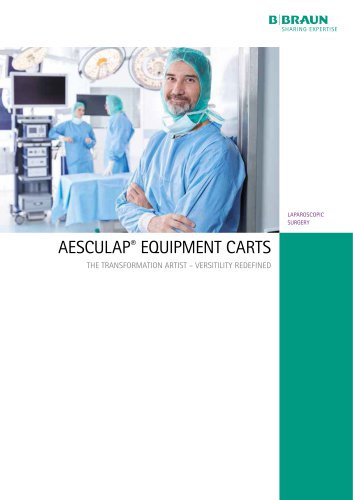 AESCULAP® EQUIPMENT CARTS
6 Pages
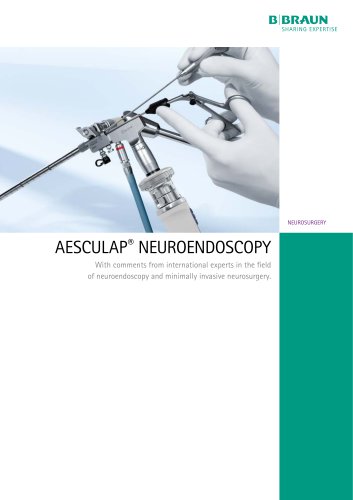 AESCULAP® NEUROENDOSCOPY
128 Pages
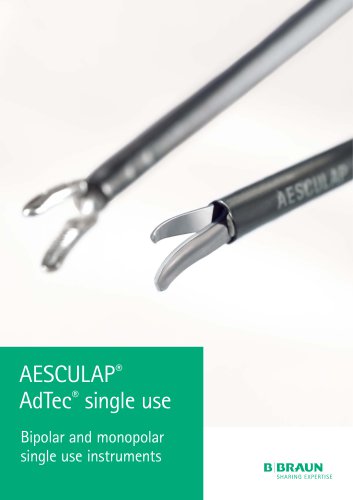 AESCULAP® AdTec® single use
8 Pages
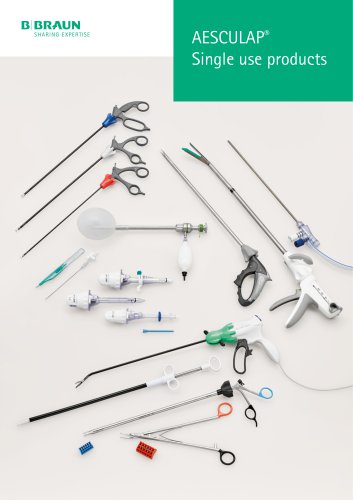 AESCULAP® Single use products
92 Pages
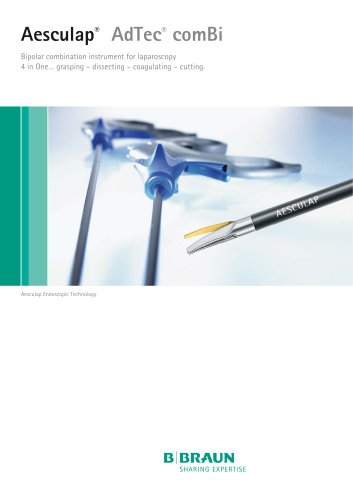 Aesculap® AdTec® comBi
4 Pages
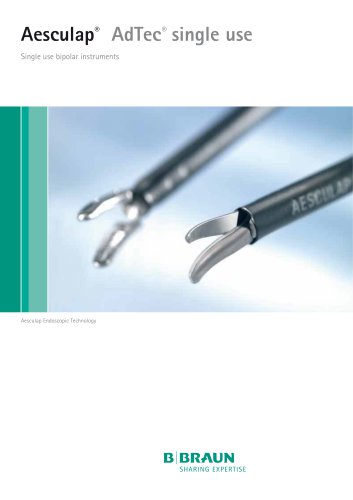 Aesculap® AdTec®single use
4 Pages
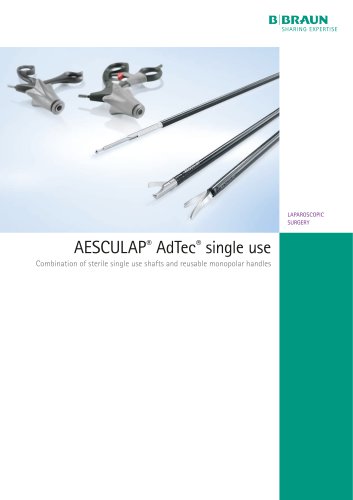 AESCULAP® AdTec® single use
6 Pages
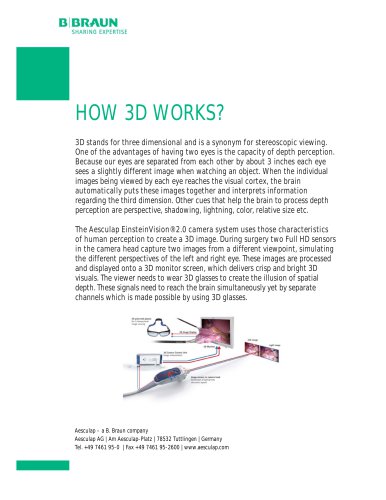 3D
9 Pages
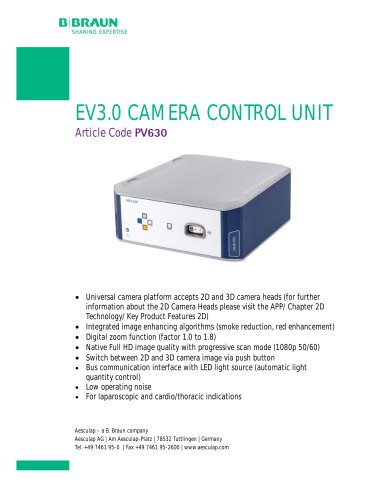 EV3.0 CAMERA CONTROL UNIT
12 Pages
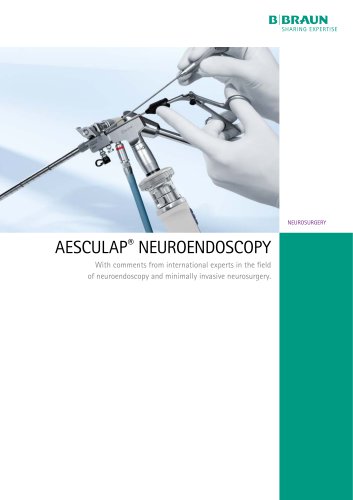 AESCULAP® NEUROENDOSCOPY
128 Pages
 Vasco® Nitril cloud-white
6 Pages
 OMNIset®
4 Pages
 OMNI VR
2 Pages
 OMNI® plus
9 Pages
 Diacap® Acute
2 Pages
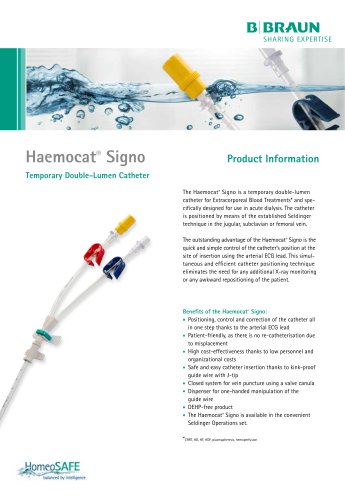 Haemocat® Signo
2 Pages
Archived catalogs
 Premilene® Mesh Plug
8 Pages
 AESCULAP® Excia® 12/14
18 Pages
 Aesculap®
16 Pages
 VascuFlex®
12 Pages
 MONOMAX®
16 Pages
 Quintex®
8 Pages
 AESCULAP® BULLDOG CLIPS
8 Pages
 AESCULAP® Metha®
28 Pages
 AESCULAP® NEUROENDOSCOPY
128 Pages
 Targon® FN
36 Pages
 proGAV ® 2.0
36 Pages
 TrendHip®
16 Pages
 Aesculap® OrthoPilot®
52 Pages
 Aesculap® Targon® RF
28 Pages
 CARDIOLOGY
44 Pages
 Nelson® deluxe
8 Pages
 M.blue®
44 Pages
 LC – LINEAR CUTTER STAPLER
6 Pages
 Aesculap Aeos®
16 Pages
 EV3.0 CAMERA CONTROL UNIT
12 Pages
 Aesculap Surgical Instruments
64 Pages
 AdTec® bipolar
8 Pages
 AESCULAP® CoreHip® SYSTEM
36 Pages
 AESCULAP® SINGLE USE PRODUCTS
88 Pages
 proSA®
30 Pages
 activ L®
44 Pages


- Bone plate
- Compression plate
- Logistics trolley
- Metallic compression plate
- Locking compression plate
- AESCULAP® catheter
- Surgery forceps
- Medical device trolley
- Grasping forceps
- Syringe
- Surgery electrode
- Cannula
- Electrosurgical electrode
- Human scissors
- Endoscope
- AESCULAP® retractor
- Surgical system
- Container
- Orthopedic surgery instrument kit
- Reusable forceps