


- Company
- Products
- Catalogs
- News & Trends
- Exhibitions
AESCULAP® NEUROENDOSCOPY

AESCULAP® NEUROENDOSCOPY
Catalog excerpts

AESCULAP® NEUROENDOSCOPY With comments from international experts in the field of neuroendoscopy and minimally invasive neurosurgery.
Open the catalog to page 1
AESCULAP® NEUROENDOSCOPY In this catalog you will find our current product line for various applications in neurosurgery. For the individual intended use of each product, please refer to the respective instructions for use under: https://eifu.bbraun.com. In 1924, the famous general and neurological surgeon William Halsted expressed his belief “…that the tendency will always be in the direction of exercising greater care and refinement in operating”. Today, within the third millennium this fundamental philosophy of minimally invasive therapy should be emphasized more than ever before, operating...
Open the catalog to page 2
Michael Fritsch Neubrandenburg, Germany Jeremy Greenlee Iowa City, USA André Grotenhuis Nijmegen, Netherlands Peter Nakaji Phoenix, USA Mark Souweidane New York, USA Charles Teo Sydney, Australia skin incision, the craniotomy, and the extent of brain surface traumatization and retraction to a necessary minimum limit. These advantages of minimally invasive microsurgery contribute to improved postoperative results, including shorter hospitalization time because of reduction of the risk for complications. However, small sized minimally invasive approaches cause two important limitations: the significant...
Open the catalog to page 3
Table of Content Page Intraventricular Neuroendoscopy - Intraventricular Neuroendoscopy - MINOP® - Paediatric Intraventricular Neuroendoscopy - PaediScope® - Advanced Intraventricular Neuroendoscopy - MINOP® InVent Endoscope-assisted Microneurosurgery - MINOP® TEAM Transnasal Neuroendoscopy - MINOP® TREND Holding Devices Visual Equipment Power Systems Aesculap Academy Numerical Index
Open the catalog to page 5
INTRAVENTRICULAR NEUROENDOSCOPY
Open the catalog to page 7
MINOP ® Intraventricular Neuroendoscopic System Minimally Invasive Neuroendoscopic OPeration
Open the catalog to page 8
The genesis of endoscopic surgery within the ventricular compartment can be attributed to the development of small caliber rod lens optics, fiberoptic light transmission and dedicated instrumentation. Since the advent of intraventricular endoscopic surgery, neurosurgeons have applied the technology to treat a number of disorders. While the enthusiasm has been great and the full potential not yet realized, a major benefit to the patient has been proven for selected conditions. Most notably the treatment of non-communicating hydrocephalus, management of patients with pineal region tumors, fenestration...
Open the catalog to page 9
MINOP® Intraventricular Neuroendoscopic System - MINOP® Trocars Rounded tip for less traumatic insertion into the brain Single obturator for working channel enables insertion of the trocar under visual control, with the 0° endoscope Large depth scale on the outer shaft of the trocar Conical entry of the working channel supporting the insertion of instruments into the trocar Attachment on top of the trocar for connection of peripheral devices MINOP® trocar Outer diam. 6 mm 4 channels: Endoscope channel, diam. 2.8 mm Working channel, diam. 2.2 mm Irrigation channel, diam. 1.4 mm Overflow channel,...
Open the catalog to page 10
MINOP trocar Outer diam. 4.6 mm ® 3 channels: Endoscope channel, diam. 2.8 mm Irrigation channel, diam. 0.8 mm Overflow channel, diam. 0.8 mm Including: 1 obturator for the endoscope channel 3 sealing caps for Luer-Lock connector Cleaning brush MINOP trocar Outer diam. 3.2 mm ® 1 channel: Endoscope channel: diam. 2.8 mm Including: 1 obturator for endoscope channel 1 sealing cap for Luer-Lock connector
Open the catalog to page 11
MINOP® Intraventricular Neuroendoscopic System - Spare Parts for Trocars PF893800 Cleaning brush for MINOP® trocars FF398R and FF399R EJ751251 Sealing cap for Luer-Lock connector Sales unit: PAK = Package of 20 pieces EJ751200 Sealing cap for Luer-Lock connector Sales unit: ST = Package of 1 piece
Open the catalog to page 12
MINOP® Intraventricular Neuroendoscopic System - MINOP® Endoscopes Full HD compatible Optimized optical components leading to an enlarged image area, higher image quality, brightness and contrast Angled endoscope design for enhanced instrument maneuverability Autoclavable / Sterrad® PE184A MINOP® angled endoscope Direction of view: 0° (green ring) Shaft diam.: 2.7 mm PE204A MINOP® angled endoscope Direction of view: 30° upwards (red ring) Shaft diam.
Open the catalog to page 13
MINOP® Intraventricular Neuroendoscopic System - Tube Shaft Instruments Tactile Feedback Improved control during Working length 265 mm, 10 ½'' Shaft diameter 2 mm Detachable for reprocessing instrument insertion thanks to the integrated tactile feedback which delivers a noticeable resistance indicating that the instrument tip is emerging from the trocar Rotating Knob Smooth rotation of the instrument tip by turning the knob with the index finger leading to enhanced handling and precision during neuroendoscopic surgery "A very appealing feature of the MINOP tube shaft instruments is a rotational...
Open the catalog to page 14
MINOP® Intraventricular Neuroendoscopic System - Tube Shaft Instruments Instrument complete: Handle · outer tube · jaw part with inner tube, detachable, including cleaning brush MINOP® scissors sharp / sharp MINOP® biopsy forceps MINOP® scissors blunt/blunt MINOP® grasping and dissecting forceps FF389R MINOP® surgical forceps, 1 x 2 teeth The very delicate MINOP® instruments should be carefully and completely detached and pre-cleaned manually at the end of the operation. Keeping them in dedicated baskets for sterilization protects the super-fine instrument tips. A careful handling by trained...
Open the catalog to page 15
MINOP® Intraventricular Neuroendoscopic System - Spare Parts for Tube Shaft Instruments FF432R MINOP® instrument handle, only FF433R MINOP® outer tube, only Scissors, jaw part with inner tube sharp / sharp Biopsy forceps, jaw part with inner tube Scissors, jaw part with inner tube blunt/blunt Grasping and dissecting forceps, jaw part with inner tube 2⁄1 Cleaning brush for tube shaft instruments without illustration Surgical forceps, jaw part with inner tube, 1 x 2 teeth For disassembly and assembly of MINOP® tube shaft instruments see poster no. C60911. Aesculap® Neuroendoscopy DISASSEMBLING...
Open the catalog to page 16All Aesculap® catalogs and technical brochures
 AESCULAP® EQUIPMENT CARTS
6 Pages
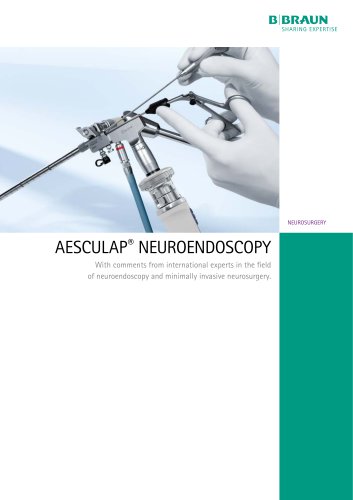 AESCULAP® NEUROENDOSCOPY
128 Pages
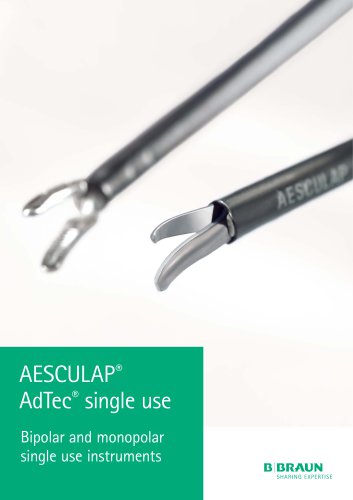 AESCULAP® AdTec® single use
8 Pages
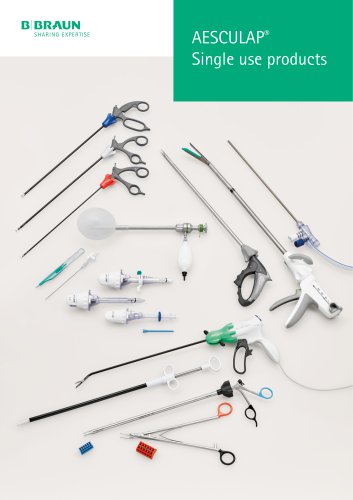 AESCULAP® Single use products
92 Pages
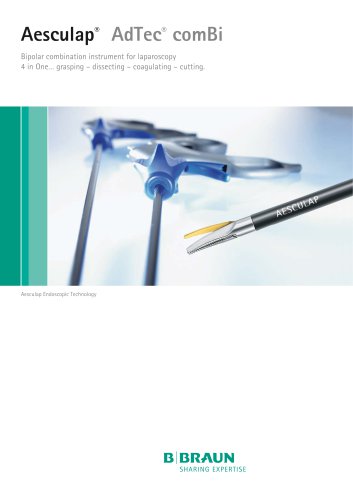 Aesculap® AdTec® comBi
4 Pages
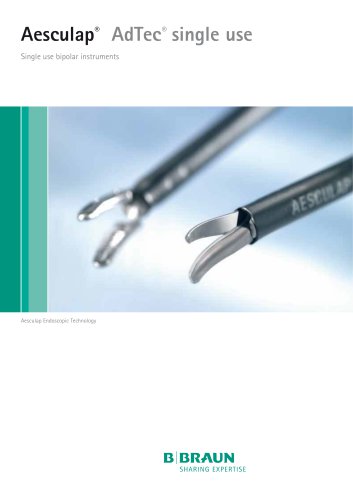 Aesculap® AdTec®single use
4 Pages
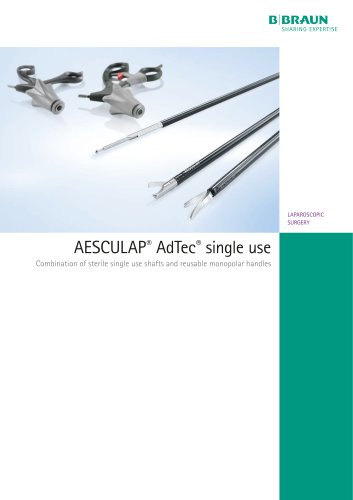 AESCULAP® AdTec® single use
6 Pages
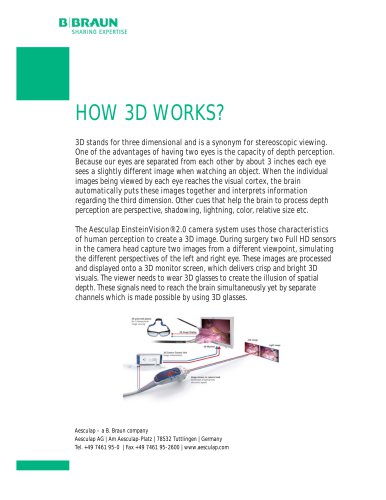 3D
3D9 Pages
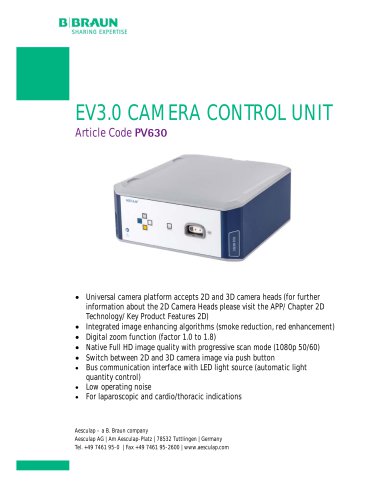 EV3.0 CAMERA CONTROL UNIT
12 Pages
 AESCULAP® EinsteinVision® 3.0 FI
62 Pages
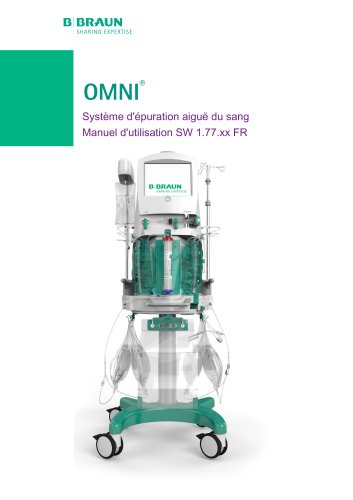 OMNI
OMNI635 Pages
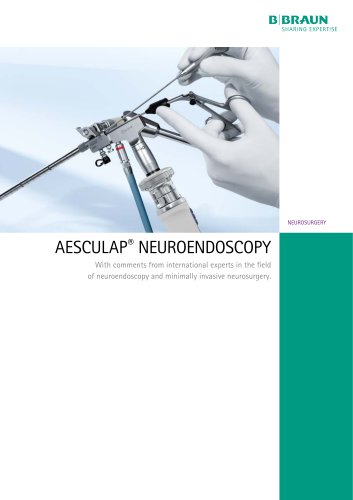 AESCULAP® NEUROENDOSCOPY
128 Pages
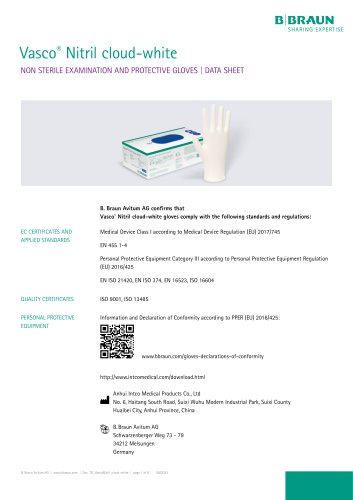 Vasco® Nitril cloud-white
6 Pages
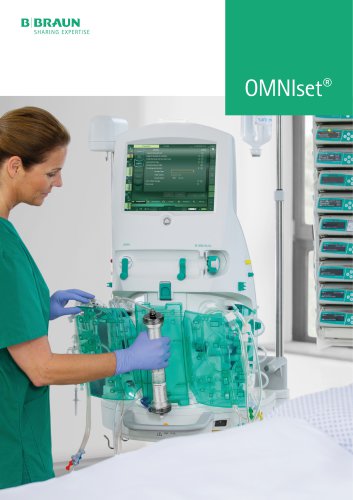 OMNIset®
4 Pages
 OMNI VR
2 Pages
 OMNI® plus
9 Pages
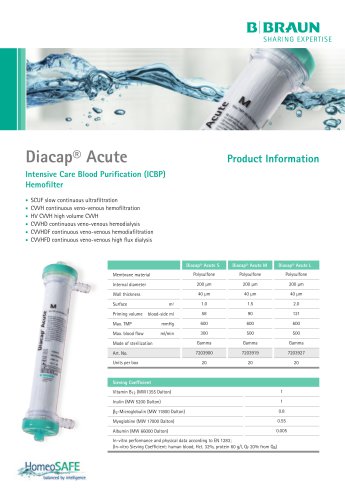 Diacap® Acute
2 Pages
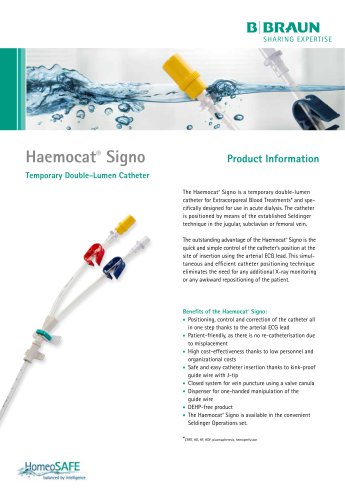 Haemocat® Signo
2 Pages
Archived catalogs
 Premilene® Mesh Plug
8 Pages
 AESCULAP® Excia® 12/14
18 Pages
 Aesculap®
16 Pages
 VascuFlex®
12 Pages
 MONOMAX®
16 Pages
 Quintex®
8 Pages
 AESCULAP® BULLDOG CLIPS
8 Pages
 AESCULAP® Metha®
28 Pages
 Targon® FN
36 Pages
 proGAV ® 2.0
36 Pages
 TrendHip®
16 Pages
 Aesculap® OrthoPilot®
52 Pages
 Aesculap® Targon® RF
28 Pages
 CARDIOLOGY
44 Pages
 Nelson® deluxe
8 Pages
 M.blue®
44 Pages
 LC – LINEAR CUTTER STAPLER
6 Pages
 Aesculap Aeos®
16 Pages
 EV3.0 CAMERA CONTROL UNIT
12 Pages
 Aesculap Surgical Instruments
64 Pages
 AdTec® bipolar
8 Pages
 AESCULAP® CoreHip® SYSTEM
36 Pages
 AESCULAP® SINGLE USE PRODUCTS
88 Pages
 proSA®
30 Pages
 activ L®
44 Pages


- Bone plate
- Logistics trolley
- Compression plate
- Metallic compression plate
- AESCULAP® catheter
- Locking compression plate
- Medical device trolley
- Surgery forceps
- Grasping forceps
- Syringe
- Surgery electrode
- Cannula
- Electrosurgical electrode
- Human scissors
- Surgical system
- Endoscope
- Orthopedic surgery instrument kit
- Cutting electrosurgical system
- AESCULAP® retractor