- Company
- Products
- Catalogs
- News & Trends
- Exhibitions
COPD-Compendium
COPD-Compendium
The document introduces the COPD Compendium, which explores new methods for managing chronic lung diseases, emphasizing Spirovital therapy. This therapy combines inhalation, chromotherapy, and aroma therapy to enhance well-being and quality of life.
Causes and Diagnosis
Chronic Obstructive Pulmonary Disease (COPD) is primarily caused by long-term smoking, passive smoking, exposure to pollutants, asthma, and childhood respiratory infections. Diagnosis involves assessing symptoms and conducting pulmonary function tests, with heart rate variability (HRV) being a key indicator.
Therapeutic Options
Treatment aims to slow disease progression and improve life quality through bronchodilators, anti-inflammatory drugs, expectorants, and long-term oxygen therapy. Complementary therapies like acupuncture and homeopathy are also considered.
Spirovital Therapy
This therapy integrates inhalation, chromotherapy, and aroma therapy to enhance lung function without increasing medication reliance. It focuses on regulating the autonomic nervous system (ANS), which manages bodily functions and stress responses.
Impact of the Nervous System
The sympathetic and parasympathetic nervous systems control bodily functions, including alveoli size for oxygen uptake. Stress activates the sympathetic system, while relaxation activates the parasympathetic system, aiding recovery.
Medication Effects
Conventional COPD medications often stimulate the sympathetic nervous system, potentially increasing stress and inhibiting recovery. Beta-2 sympathomimetics and anticholinergics affect mucus production and bronchial dilation.
Conclusion
The compendium suggests Spirovital therapy as a promising approach to managing COPD by leveraging natural body processes and reducing dependency on conventional medications.
- Bronchodilators: Includes drugs like Ipratropium and Salbutamol, which are sympathetic stimulants.
- Anti-inflammatory Drugs: Cortisone-containing drugs like Budesonid and PDE4 inhibitor Roflumilast, also sympathetic stimulants.
- Expectorant Medication: Stimulates parasympathetic activity.
COPD Medication by GOLD Stages
- GOLD I: Short-acting bronchodilator as needed.
- GOLD II: Long-acting bronchodilator/beta-2 sympathomimetic and anticholinergic.
- GOLD III: Cortisone inhalation and possibly oxygen.
- GOLD IV: Increased oxygen use.
Future of COPD Treatment
Emphasizes combined preparations and non-pharmaceutical solutions like VNS analysis for medication effectiveness.
Spirovital Therapy
- Applications: COPD, lung emphysema, chronic bronchitis, and asthma.
- Aim: Improve lung function, regenerate lung cells, and enhance ANS regulation.
- Recommendations: 20 minutes several times daily for chronic diseases.
- Risks: No apparent risks or side effects over 20 years.
Combination Therapies
- Inhalation Therapy: Uses singlet oxygen for energy transfer.
- Chromotherapy: Utilizes colors for therapeutic effects.
- Aroma Therapy: Employs essential oils to affect the ANS.
Initial Reactions to Spirovital Therapy
Includes increased fatigue, improved inhalation/exhalation, blood pressure regulation, and enhanced concentration.
Realistic Objectives for COPD Patients
- Months 1-6: Stop further progression of COPD.
- Months 7-12: Achieve measurable improvement in lung function and HRV.
For further information, contact Commit GmbH.
The document discusses potential improvements in lung function for COPD patients through oxygen energy therapy, challenging the need for drugs and additional oxygen.
Study Overview
A placebo-controlled pilot study by Dr. Michael Kucera on 24 COPD patients demonstrated lung function improvement using oxygen energy therapy over six months.
Methodology
Patients received therapy twice daily for 20 minutes, with lung function monitored via spirometry, focusing on the FEV1 parameter.
Results
Treated patients showed improved lung function, decreased sympathetic activity, and increased parasympathetic activity. The placebo group showed no improvements.
Additional Findings
Oxygen energy therapy also improved root growth in plants, indicating effectiveness beyond placebo effects.
Oxygen Basics
The document explains air composition and oxygen utilization, noting only a quarter of inhaled oxygen is used by the body.
Oxygen Therapy Types
Discusses therapies like Multi-step Oxygen Therapy and Ozone Therapy, focusing on improving oxygen utilization and energy production.
Recommendations
For chronic diseases, devices with more catalysts are recommended to enhance energy regulation and improve quality of life.
Conclusion
Therapies enhancing oxygen utilization can significantly improve health outcomes, particularly for COPD patients.
Ozone therapy uses medical ozone to stimulate the body's regulatory response, requiring careful assessment of energy reserves before administration. It should be conducted by experienced therapists due to potential risks.
Types of Ozone Therapy
- Major autohaemotherapy (GEB)
- Minor autohaemotherapy (KEB)
- External therapy
- Rectal ozone administration
- Injections into joints
- Infiltration
- Ozon puncture
Considerations and Risks
Ozone therapy is a strong stimulation therapy that can lead to adverse reactions if the stimulus is too strong or the patient's energy level is low.
Spirovital Therapy
This therapy enhances ANS regulation, oxygen utilization, and boosts natural protective enzymes without introducing foreign substances.
Testimonials on Spirovital Therapy for COPD
Testimonials highlight improvements in COPD patients, including increased oxygen saturation, better lung function, and enhanced energy levels.
Application and Safety
Spirovital therapy is suitable for all ages and should be administered several times a day for conditions like COPD. No side effects or overdoses have been reported in its 20-year history.
Contact Information
For further inquiries, contact Airnergy AG at [email protected] or visit their website at www.airnergy.com.
Catalog excerpts
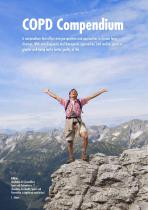
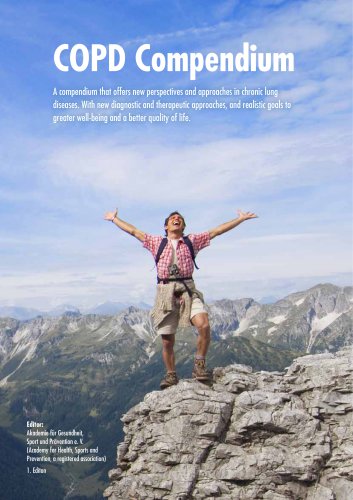
COPD Compendium A compendium that offers new perspectives and approaches in chronic lung diseases. With new diagnostic and therapeutic approaches, and realistic goals to greater well-being and a better quality of life. Editor: Akademie für Gesundheit, Sport und Prävention e. V. (Academy for Health, Sports and Prevention, a registered association) 1. Editon 1
Open the catalog to page 1
Impressum Akademie für Gesundheit, Sport und Prävention e. V. The utmost care was applied during the compilation of texts and images. Nevertheless, errors cannot be completely excluded. The publisher “ Akademie für Gesundheit, Sport and Prävention e.V.“ (Academy for Health, Sports and Prevention, a registered association) and the authors © Copyright by Akademie für Gesundheit, Sport und Prävention e. V. assume no legal responsibility, warranty or liability of any kind for c onsequences resulting from errors or omisisons. All rights reserved This work, including all of its parts, is protected...
Open the catalog to page 2
COPD special - New therapy approach with Spirovital therapy 4 Superordinated control organ regulates subordinated systems 6 Impact of the sympathetic and parasympathetic nervous system 7 Aims and logic of the Spirovital therapy Risks and side effects Combination of three therapies 12 Inhalation therapy Aroma therapy The technology behind the trial results - Basic processes learned from nature Possible (initial) reactions and their relevance (Initial) Reactions Note on severe (initial) reactions Realistic objectives and ambitions - the basis for your success Trials and empirical evidence COPD...
Open the catalog to page 3
Notes on reading The following Spirovital therapy, provided by the manufacturer Airnergy, has been referred to under various terms during its development. Therefore, it is also known today by the following terms: S.O.E-Therapy = Singlet Oxygen Energy Therapy SET = Sauerstoff-Energie-Therapie (Active Air) OET = Oxygen Energy Therapy The trials referred to on page 14, were performed under the formerly used term “Oxygen Energy Therapy“; therefore , we have not, updated that chapter by renaming the term “Spirovital therapy“. COPD special – New therapy approach with Spirovital therapy This COPD compendium...
Open the catalog to page 4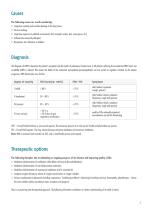
Causes The following causes are worth considering: w Long-time smoking and resultant damage to the lung tissue w Passive smoking w Long-time exposure to polluted environments (for example: smoke, dust, waste gases, etc.) w Asthma (also caused by allergies) w Respiratory tract infections in children Diagnosis The diagnosis of COPD is based on the patient‘s symptoms and the results of pulmonary function tests. In all patients suffering from moderate COPD, heart rate variability (HRV) is reduced. This means the ability of the autonomic (sympathetic/parasympathetic) nervous system to regulate is...
Open the catalog to page 5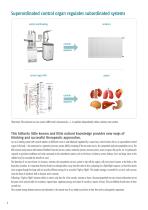
Superordinated control organ regulates subordinated systems control unit/heating controls regulates controls regulates Illustration: The autonomic nervous system (ANS) works autonomously, i. e. it regulates independently without voluntary intervention. This hitherto little known and little noticed knowledge provides new ways of t hinking and successful therapeutic approaches. Just as a heating system with several radiators in different rooms is controlled and regulated by a supervisory control center, there is a superordinate control organ in the body – the autonomic (or vegetative) nervous...
Open the catalog to page 6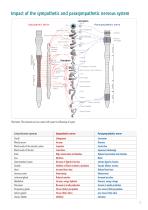
Impact of the sympathetic and parasympathetic nervous system Illustration: The autonomic nervous system with respect to influencing of organs Subordinated systems Sympathetic nerve Parasympathetic nerve Alveoli Blood pressure Blood vessels of the mascular system Blood vessels of the skin Brain Eyes Gastrointestinal system Genitals Heart Immune system Lachrymal glands Metabolism Pancreases Perspiratory glands Salivary glands Urinary bladder Enlargement Increase Expansion Constriction High concentration and attention Mydriasis Decrease of digestive function Inhibition of blood circulation, ejaculation...
Open the catalog to page 7
Illustration: Lungs with enlarged display of the pulmonary alveoli Sympathetic and parasympathetic impact on the alveoli Our lungs contain millions of tiny alveoli (air sacs), which are regulated and controlled by the superordinated autonomic nervous system. They are responsible for the uptake of oxygen from the air into the blood. These alveoli are not rigid and inflexible, but can and must adapt their size and shape to the current situation. This becomes apparent, for example, in a situation of imminent danger when the sympathetic nerve suddenly becomes dominant and the alveoli are enlarged...
Open the catalog to page 8
Stress/tension caused by sympathiconia Relaxation/regeneration caused by parasympathiconia ª Sympathetic nerve – Enlargement/hyperinflation Parasympathetic nerve – Decrease to normality Illustration: Conditions of the alveoli in comparison Brief summary: The main nerves of the ANS control and regulate all organs and organ systems down to the cellular level. Sympathetic nervous system = “tense nerves” (activates fight and survival systems) Parasympathetic nervous system = “relaxed nerves” (activates relaxation, regeneration, repair and energy storage) COPD Medication What COPD medications are...
Open the catalog to page 9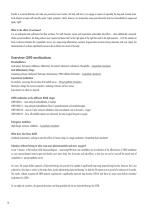
bronchi to a normal diameter and relax any previously tense muscles, the body will now try to engage in repairs of especially the lung and mucosal areas. Such attempts at repair will naturally create “repair symptoms“ which, however, can temporarily cause great discomfort and must immediately be suppressed again, right? What is the effect of cortisone? It is an undisputed and well-known fact that cortisone, first and foremost, causes and exacerbates undesirable side-effects – when additionally consumed. Under normal conditions, the body produces any required cortisone itself: in the right place...
Open the catalog to page 10
COPD Homoeopathy COPD and homoeopathy work supportive and well together, even though homoeopathy alone is insufficient to allow for notable long-term improvements in cases of COPD GOLD III or IV. These require additional therapies to lay the necessary foundations in the body for normal physiological functioning, especially in the areas of bronchi, goblet cells and alveoli. There are several homoeopathic remedies which are very beneficial for COPD patients, for different purposes. We distinguish between traditional homoeopathy and complex homoeopathy. Traditional homoeopathy attempts to find the...
Open the catalog to page 11All Airnergy catalogs and technical brochures
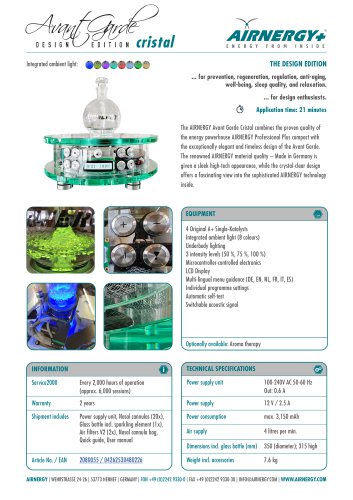 AIRNERGY Avant Garde
1 Page
 AIRNERGY Basis Plus
1 Page
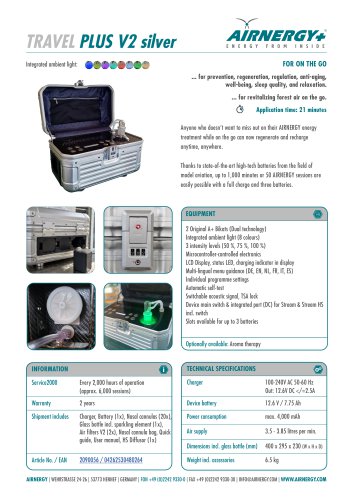 AIRNERGY Travel Plus V2
1 Page
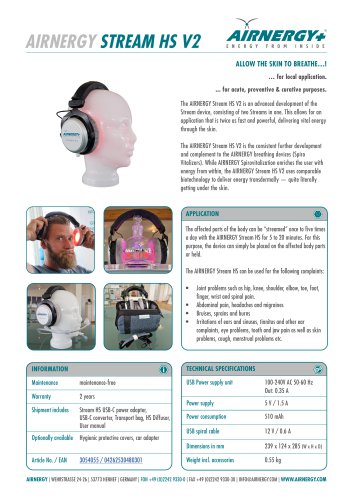 Stream Headset (HS) V2
1 Page
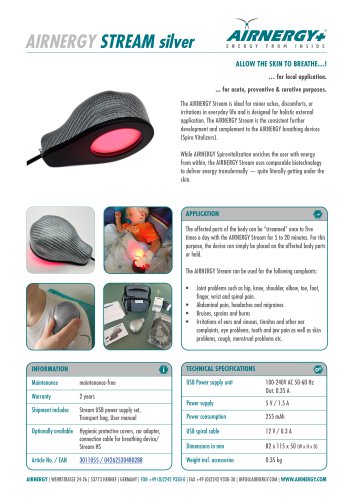 AIRNERGY Stream
1 Page
 Breathe yourself healthy
36 Pages
 Little Atmos
40 Pages
 AIRNERGY Image brochure
32 Pages
 Avant Garde Collection
12 Pages