


MODEL MA50BM

MODEL MA50BM
AcrySof® UV-absorbing acrylic foldable multipiece posterior chamber lenses are designed for visual correction of aphakia in adults post-cataract surgery. Made from high refractive index soft acrylic material, these lenses can be folded for insertion and unfold once implanted. They feature biconvex, anterior asymmetric biconvex, or meniscus optics with PMMA supporting haptics.
The lenses are available in various models with different optic types, diameters, and haptic angles. For instance, Model MA30AC has a 5.5 mm optic diameter and a 5º haptic angle, while Model MA60BM has a 6.0 mm optic diameter and a 10º haptic angle.
These lenses are positioned in the posterior chamber of the eye to replace the natural lens, functioning as a refractive medium. Their effectiveness in reducing retinal disorders is not established.
Indicated for visual correction of aphakia in adults post-cataract surgery. Not suitable for patients with conditions like choroidal hemorrhage, severe uveitis, or uncontrolled glaucoma.
Potential surgical risks include corneal damage, infection, and retinal detachment. The safety of lens implantation in patients with preexisting ocular conditions is not substantiated. Long-term effects are unknown, and regular postoperative monitoring is advised.
Use Alcon qualified delivery systems and viscoelastics to avoid lens damage. Special care is needed for Model MA60MA due to its dimensions. Do not resterilize lenses or store them above 45°C.
Studies began in December 1990, showing the lens is safe and effective for visual correction of aphakia. The patient population was predominantly Caucasian with a mean age of 66 years. Visual acuity results at one and three years postoperatively were favorable.
Patients must be registered with Alcon post-implantation for long-term follow-up. Adverse events should be reported to Alcon Laboratories.
At three years, the majority of patients across all age groups achieved a visual acuity of 20/40 or better. Specifically, 98.8% of patients under 60, 98.2% of those aged 60-69, 99.3% of those aged 70-79, and 98.1% of those over 79 achieved this level of visual acuity.
Two methods were compared: Planned Extracapsular Cataract Extraction (ECCE) and Phacoemulsification. At one year, 83.3% of ECCE patients and 96.1% of Phacoemulsification patients achieved 20/40 or better visual acuity. At three years, 100% of ECCE patients and 96% of Phacoemulsification patients achieved this level.
The FDA identified 11 potential complications post-cataract extraction. At one year, the most common complications were macular edema (1.9%) and hyphema (1.5%). At three years, macular edema increased slightly to 2.1%. Persistent complications were rare, with macular edema and retinal detachment being the most notable.
Adverse reactions included hypopyon and intraocular infection, each occurring at a rate of 0.3% at both one and three years postoperatively. Secondary surgical interventions were required in 1.9% of cases at one year and 2.4% at three years.
A study comparing AcrySof® lenses with PMMA and silicone lenses showed a significant reduction in lens epithelial cells, which are linked to posterior capsule opacification. AcrySof® lenses had lower Nd:YAG capsulotomy rates compared to PMMA lenses.
The lenses are supplied sterile and must be opened under aseptic conditions. The expiration date is clearly marked, and lenses should be returned if expired. The returned goods policy allows for exchanges but not credit.
Catalog excerpts

10-500-088-012 PRODUCT INFORMATION Alcon Laboratories, Inc. STERILE UV-Absorbing Acrylic Foldable Multipiece Posterior Chamber Lenses ENGLISH PRODUCT INFORMATION…………………………
Open the catalog to page 1
PRODUCT INFORMATION Alcon Laboratories, Inc. STERILE UV-Absorbing Acrylic Foldable Multipiece Posterior Chamber Lenses CAUTION: Federal (USA) law restricts this device to the sale by or on the order of a physician. Model Characteristics Chart Model Optic Type Haptic Angle DESCRIPTION AcrySof® UV-absorbing acrylic foldable multipiece posterior chamber lenses are optical implants for the replacement of the human crystalline lens in the visual correction of aphakia in adult patients following cataract surgery. The optical portion consists of a high refractive index soft acrylic material. This material...
Open the catalog to page 2
Figure 2 SPECTRAL TRANSMITTANCE CURVES (PERCENTAGE OF ULTRAVIOLET TRANSMITTANCE) NOTES: • The cutoff wavelength and the spectral transmittance curves presented here represent the range of transmittance values of IOLs made from acrylate/methacrylate copolymer with bonded UV-absorber. • Measurements were direct transmittance using a 6 mm aperture and a disc of thickness equivalent to the optic center. • UV cutoff at 10% T is 395 nm (-5 diopter lens). UV cutoff at 10% T is 400 nm (+30 diopter lens). • Human lens data from Boettner and Wolter (1962). MODE OF ACTION AcrySof® posterior chamber intraocular...
Open the catalog to page 3
WARNINGS 1. As with any surgical procedure, there is risk involved. Potential complications accompanying cataract or implant surgery may include, but are not limited to the following: corneal endothelial damage, infection (endophthalmitis), retinal detachment, vitritis, cystoid macular edema, corneal edema, pupillary block, cyclitic membrane, iris prolapse, hypopyon, and transient or persistent glaucoma. 2. The safety and effectiveness of intraocular lens implants have not been substantiated in patients with preexisting ocular conditions (chronic drug miosis, glaucoma, amblyopia, diabetic retinopathy,...
Open the catalog to page 4
DIRECTIONS FOR USE 1. Examine the label on the unopened package for model, power, proper configuration, and expiration date. 2. After opening the cardboard storage container, verify lens case information (e.g., model, power, and serial number) is consistent with information on outer package labeling. 3. This device is sterile until the inner pouch is opened. Inspect the pouch carefully for tears, cuts, punctures or other signs that the pouch has been opened or damaged. DO NOT implant the IOL if the sterility has been compromised (see RETURNED GOODS POLICY). 4. To remove the lens, open the pouch...
Open the catalog to page 5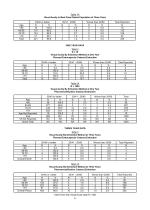
Table 1A Visual Acuity in Best Case Patient Population at Three Years Age <60 60-69 70-79 >79 Total ONE YEAR DATA Table 2 N = 18 Visual Acuity By Extraction Method at One Year Planned Extracapsular Cataract Extraction Age <60 60-69 70-79 >79 Total Table 2A N = 1020 Visual Acuity By Extraction Method at One Year Phacoemulsification Cataract Extraction Age <60 60-69 70-79 >79 Age Not Reported Total VA Not Reported Grand Total THREE YEAR DATA Table 3 Visual Acuity By Extraction Method at Three Years Planned Extracapsular Cataract Extraction Age <60 60-69 70-79 >79 Overall ECCE Table 3A Visual Acuity...
Open the catalog to page 6
COMPLICATIONS The United States Food and Drug Administration has identified eleven (11) potentially sight‑threatening complications which may occur following cataract extraction and/or intraocular lens implantation. The cumulative and persistent (present at the one year visit) rates of these complications during the first and third postoperative years for the Model MA60BM patients stratified by cataract extraction method is shown in Tables 4, 4A, 5 and 5A. Complication rates include all enrolled subjects for whom a case report form was received. Table 4 Cumulative Postoperative Complications...
Open the catalog to page 7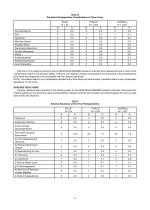
Table 5A Persistent Postoperative Complications at Three Years ECCE N = 24 Corneal Edema Macular Edema Pupillary Block Secondary Glaucoma Cyclitic Membrane Vitritis Endophthalmitis Retinal Detachment Lens Dislocation Fifty-four (4.4%) patients receiving the AcrySof® Model MA60BM posterior chamber lens experienced one or more of the complications listed in the previous tables. However, the majority of these complications occurred early in the postoperative time frame and appeared to be associated with the cataract extraction. NOTE: Cumulative refers to any complication reported at any time during...
Open the catalog to page 8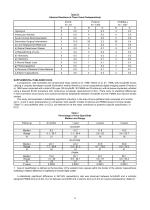
Table 6A Adverse Reactions at Three Years Postoperatively ECCE N = 24 Intraocular Infection Acute Corneal Decompensation Secondary Surgical Intervention: a) Lens Replacement/Removal b) Retinal Detachment Repair f) Wound Repair Leak g) Photocoagulation h) Removal of Residual Cortex Material SUPPLEMENTAL PUBLISHED DATA A prospective, well-controlled and randomized study (Ursell et al, 1998; Hollick et al. #1. 1998) with AcrySof® lenses utilizing a uniquely-developed coaxial illumination method linked to a novel computerized digital imaging system (Pande et al, 1998) was conducted with a total of...
Open the catalog to page 9
Table 8 Posterior (Nd:YAG) Capsulotomy Rates IOL Material @ 3 years N % P value In addition, the reduced area of LECs observed in this study was associated with decreased lens epithelial cell proliferation (Hollick et al, #2. 1998) and anterior capsule movement (Ursell et al, 1997) for AcrySof® lenses as compared to the models of similarly designed silicone and PMMA lenses. HOW SUPPLIED These posterior chamber intraocular lenses are supplied dry, in a package terminally sterilized with ethylene oxide, and must be opened only under aseptic conditions (See DIRECTIONS FOR USE). EXPIRATION DATE Sterility...
Open the catalog to page 10
SYMBOLS USED ON LABELING SYMBOL Intraocular lens Posterior chamber Posterior chamber lens Anterior Asymmetric Biconvex Body diameter (Optic diameter) Overall diameter (Overall length) Do not reuse Use by Sterilized by ethylene oxide Serial number Attention: See instructions for use Manufacturer EC Authorized Representative in the European Community Upper Limit of Temperature Alcon Laboratories, Inc. 6201 South Freeway Fort Worth, Texas 76134-2099 USA Alcon Laboratories (UK) Ltd. Frimley Business Park Frimley, Camberley Surrey, GU16 7SR, United Kingdom © 2000, 2013-2014 Novartis
Open the catalog to page 11All Alcon catalogs and technical brochures
 PUREPOINT
2 Pages
 Vektor
2 Pages
 NEGENUITY
2 Pages
 CONSTELLATION®
4 Pages
 Maintaining Good Eye Health
3 Pages
 The LenSx® Laser System
12 Pages
 CZ70BD
7 Pages
 MODEL SN6AT3, SN6AT4, SN6AT5
23 Pages
 MODEL SN60AT
9 Pages
 MODEL SN6AD1
26 Pages
 MODEL MA30AC
11 Pages
 MODEL MN60AC
13 Pages
 MODEL SN60WF
15 Pages
 MODEL SN6CWS
15 Pages
 NAPHCON A
1 Page
 PUREPOINT LASER
6 Pages
 CONSTELLATION® Vision System
10 Pages


- Syringe
- Trolley-mounted laser
- Diode laser
- Tabletop laser
- Surgical laser
- 1 ml syringe
- Ophthalmic laser
- Operating microscope
- 0.5 ml syringe
- Retinal photocoagulation laser
- Monofocal intraocular lens
- Floor-standing laser
- Ophthalmic biometer
- 0.3 mL syringe
- Ophthalmic operating microscope
- Presbyopia intraocular lens
- Optical ophthalmic biometer
- Cataract surgery laser
- Femtosecond laser