
- Catalogs
- Amann Girrbach
- Clinical Guide III


- Products
- Catalogs
- News & Trends
- Exhibitions
Clinical Guide III
Clinical Guide III
Zolid Zirconia by Amann Girrbach is an all-ceramic system designed for high-quality zirconia restorations, integrating seamlessly into the CAD/CAM workflow. With over a decade of experience, the system has produced more than 10 million units globally, maintaining a complaint rate of less than 0.1%. It offers a variety of blanks for customized restorations, emphasizing durability and aesthetics.
Material Properties
Zirconia (ZrO2) is known for its superior mechanical properties, including a strength of up to 1,200 MPa, excellent fracture toughness, aging resistance, and biocompatibility. Its enhanced translucency provides natural aesthetics comparable to glass ceramics.
Manufacturing and Quality Control
Zolid blanks are produced in-house in Austria using high-quality raw materials under strict controls, ensuring safety, stability, and biocompatibility.
Scientific Studies
In Vitro Studies: Studies show Ceramill Zolid FX has the highest flexural strength and translucency among tested zirconium oxides. Mechanical/Optical Properties: Monolithic zirconium oxides have lower contrast values and flexural strengths, but Ceramill Zolid shows increased strength after aging.
Conclusion
Zolid Zirconia combines high mechanical strength, aesthetic appeal, and biocompatibility, meeting high standards in dental material technology.
Objective of the Study
The study evaluates the optical and mechanical properties of monolithic multilayer zirconium oxide compared to other zirconium oxides.
Materials and Method
Materials include Ceramill Zolid FX Multilayer, Prettau Anterior, and Zenostar Translucent. Properties like translucency, flexural strength, and fracture toughness were assessed using various tests.
Results
Ceramill Zolid FX Multilayer exhibited the highest translucency and mechanical properties among Class 4 materials. Zenostar Translucent outperformed in mechanical properties but belongs to a different class.
Additional Studies
Studies on sintering temperature effects show higher temperatures increase grain size and contrast ratio but decrease flexural strength. Biaxial flexural strength measurements yield the highest values.
Fitting Studies
The marginal fit of zirconium oxide restorations was investigated, showing clinically acceptable margin fits with the Ceramill CAD/CAM system.
Objective of the Study
Studies focus on the fit of dental crowns, effects of hydrofluoric acid, bonding strength of ceramic inlays, and clinical evaluations of zirconium oxide-based crowns.
Specifications and Procedures
Statistical evaluations include Shapiro-Wilk test, ANOVA, and Levene's test. Tests on bonding strength used different etching and bonding techniques.
Results and Conclusions
- Hydrofluoric acid concentration affects surface roughness of zirconium oxide.
- No significant differences in bonding strength between ceramic inlays and cements.
- High survival and success rates for zirconium oxide-based crowns.
- Monolithic zirconium oxide restorations show high survival rates in short-term studies.
Scientific Facts
Discusses biocompatibility, cytotoxicity, and chemical solubility of dental materials, emphasizing compliance with ISO standards.
Material Classes & Generations of Zirconium Oxide
Dental ceramics are categorized into classes based on mechanical and chemical properties. Class 5 requires a flexural strength of over 800 MPa, suitable for extensive restorations. Different generations of zirconium oxide vary in aluminum and yttrium oxide content, affecting translucency and strength.
Flexural Strength & Weibull Statistics
Flexural strength is crucial for load-bearing capacity, measured by 3-point and 4-point bending tests. The Weibull modulus indicates fracture behavior reliability.
Modulus of Elasticity
Describes the relationship between stress and deformation, with zirconium oxide showing high rigidity.
Fracture Load & Toughness
Fracture load tests determine failure load, useful for crowns and bridges. Fracture toughness measures resistance to crack propagation.
Mechanical Ageing & Masticatory Simulation
Simulators test mechanical and thermal stresses on dentures, simulating years of wear.
Hydrothermal Ageing
Involves water absorption leading to phase transitions in zirconium oxide, affecting mechanical properties.
Hardness & Abrasion
Hardness tests measure resistance to deformation, with abrasion tests simulating wear.
Bonding Strength
Critical for restorations, with tests assessing the bond between materials and dental substances.
Marginal Gap Analysis
Accurate fit and marginal seal are vital for restoration longevity, with a 50 µm seal considered acceptable.
Translucency & Structure
Translucency is influenced by composition and microstructure, with grain size affecting strength and phase transformation.
Overview of Zirconium Oxide Properties
Enhanced translucency due to cubic stabilized phase, offering improved aging resistance.
Scientific Facts - Confidence Interval and P-Value
Confidence intervals and p-values are used to deduce statistical significance in dental studies.
Contact Information
Amann Girrbach has offices in various countries, providing contact details for inquiries.
Catalog excerpts

CLINICAL GUIDE III SCIENTIFIC COMPENDIUM
Open the catalog to page 1
ZOLID ZIRCONIA – MUCH MORE THAN JUST A WHITE DISC With Zolid, Amann Girrbach provides a comprehensive all-ceramic system for high-quality and esthetic zirconia restorations. Complete integration into the CAD/CAM workflow ensures maximum process reliability and continuously high quality. This material is backed by a decade of experience in the development and in-house production of zirconia for restorations. Amann Girrbach laid the foundation stone 10 years ago with the Ceramill ZI blanks for copy milling. Since then, more than 10 million units have been produced from Amann Girrbach zirconia blanks...
Open the catalog to page 2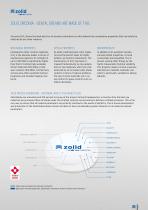
ZOLID ZIRCONIA – DENTAL DREAMS ARE MADE OF THIS Zirconia (ZrO2) forms the ideal basis for all-ceramic restorations as this material has outstanding properties that can hardly be matched by any other material. MECHANICAL PROPERTIES OPTICAL PROPERTIES Compared to other ceramic materials, ZrO2 is the absolute leader in terms of mechanical properties. Its strength of up to 1,200 MPa is significantly higher than that of commercially available lithium disilicate (500 MPa) or feldspar ceramics (160 MPa). Furthermore, zirconia also offers excellent fracture toughness and excellent ageing resistance....
Open the catalog to page 3
STUDIES The chapter “Studies” of the Scientific Compendium shows the current status of the most important external studies, which underline the clinical evidence of Zolid products. The results of the studies reflect the excellent properties of the blanks from Amann Girrbach and provide additional scientific certainty. In Vitro – Mechanical/Optical properties In Vivo – Clinical studies In Vitro – Bonding stren
Open the catalog to page 4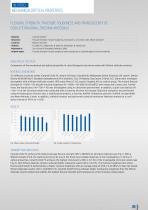
IN VITRO MECHANICAL/OPTICAL PROPERTIES FLEXURAL STRENGTH, FRACTURE TOUGHNESS AND TRANSLUCENCY OF CUBIC/TETRAGONAL ZIRCONIA MATERIALS Material: Flexural strength, fracture toughness, translucency, zirconium oxide, lithium disilicate Munich, Germany P. Zadeh, N. Lümkemann, B. Sener, M. Eichberger, B. Stawarczyk The Journal of Prosthetic Dentistry, 2018 Original paper: Flexural strength, fracture toughness and translucency of cubic/tetragonal zirconia materials OBJECTIVE OF THE STUDY Comparison of the mechanical and optical properties of cubic/tetragonal zirconium oxides with lithium disilicate...
Open the catalog to page 5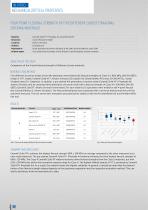
IN VITRO MECHANICAL/OPTICAL PROPERTIES FOUR-POINT FLEXURAL STRENGTH OF FIVE DIFFERENT CUBIC/TETRAGONAL ZIRCONIA MATERIALS Material: Ceramill Zolid HT+ Preshade A4, Ceramill Zolid FX Munich, Germany Study sponsored by Amann Girrbach at the LMU University Munich, April 2018 Original paper: Four-point flexural strength of five different cubic/tetragonal zirconia materials OBJECTIVE OF THE STUDY Comparison of the 4-point flexural strength of different zirconia materials MATERIALS AND METHOD Five different zirconium oxides of the 4th generation were tested with flexural strengths of Class 5 (> 800...
Open the catalog to page 6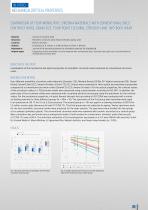
IN VITRO MECHANICAL/OPTICAL PROPERTIES COMPARISON OF FOUR MONOLITHIC ZIRCONIA MATERIALS WITH CONVENTIONAL ONES: CONTRAST RATIO, GRAIN SIZE, FOUR-POINT FLEXURAL STRENGTH AND TWO-BODY WEAR Material: Ceramill ZI, Ceramill Zolid Monolithic zirconium oxide, flexural strength, ageing, wear Munich, Germany B. Stawarczyk, K. Frevert, A. Ender, M. Roos, B. Sener, T. Wimmer Journal of the mechanical behavior of biomedical materials 59, 2016,128-138 Original paper: Comparison of four monolithic zirconia materials with conventional ones: Contrast ratio, grain size, four-point flexural strength and two-body...
Open the catalog to page 7
IN VITRO MECHANICAL/OPTICAL PROPERTIES SUMMARY AND CONCLUSION The monolithic zirconium oxides achieved lower contrast values than conventional zirconium oxide. No correlation between the contrast values and the grain size could be observed. The flexural strengths determined (see Fig. 1) show that the monolithic zirconium oxides have lower flexural strengths than conventional zirconium oxide. The ageing of the materials has no significant influence on the flexural strength. For Ceramill Zolid, the flexural strength increases after hydrothermal ageing and demonstrates the highest flexural strengths...
Open the catalog to page 8
IN VITRO MECHANICAL/OPTICAL PROPERTIES OPTICAL AND MECHANICAL PROPERTIES OF NEWLY DEVELOPED MONOLITHIC MULTILAYER ZIRCONIA Material: Ceramill Zolid FX Multilayer Monolithic multilayer zirconium oxide, mechanical properties, translucency Mansoura, Egypt Original paper: Optical and Mechanical Properties of Newly Developed Monolithic Multilayer Zirconia OBJECTIVE OF THE STUDY Evaluation of the optical and mechanical properties of a monolithic multilayer zirconium oxide and comparison with two further monolithic, monochrome pre-stained zirconium oxides. MATERIALS AND METHOD The multilayer zirconium...
Open the catalog to page 9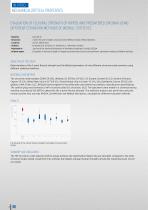
IN VITRO MECHANICAL/OPTICAL PROPERTIES EVALUATION OF FLEXURAL STRENGTH OF HIPPED AND PRESINTERED ZIRCONIA USING DIFFERENT ESTIMATION METHODS OF WEIBULL STATISTICS Material: 3-point flexural strength, zirconium oxide, Weibull module, Weibull statistics Zurich, Switzerland B. Stawarczyk, M. Özcan, A. Trottmann, C. Hämmerle, M. Roos Journal of the mechanical behavior of biomedical materials 10 (2012) 227-234 Original paper: Evaluation of flexural strength of hipped and presintered zirconia using different estimation methods of Weibull statistics OBJECTIVE OF THE STUDY Determination of the 3-point...
Open the catalog to page 10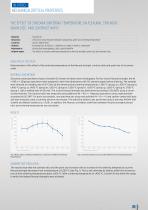
IN VITRO MECHANICAL/OPTICAL PROPERTIES THE EFFECT OF ZIRCONIA SINTERING TEMPERATURE ON FLEXURAL STRENGTH, GRAIN SIZE, AND CONTRAST RATIO Material: Zirconium oxide, flexural strength, translucency, grain size, sintering temperature Zurich, Switzerland B. Stawarczyk, M. Özcan, L. Hallmann, A. Ender, A. Mehl, C. Hämmerle Clinical Oral Investigations, 2013 Jan;17(1):269-74 Original paper: The effect of zirconia sintering temperature on flexural strength, grain size, and contrast ratio OBJECTIVE OF THE STUDY Determination of the effect of the sintering temperature on the flexural strength, contrast...
Open the catalog to page 11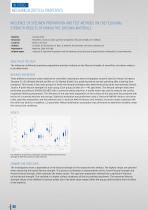
IN VITRO MECHANICAL/OPTICAL PROPERTIES INFLUENCE OF SPECIMEN PREPARATION AND TEST METHODS ON THE FELUXURAL STRENGTH RESULTS OF MONOLITHIC ZIRCONIA MATERIALS Material: Ceramill Zolid Monolithic zirconium oxide, specimen preparation, flexural strength, test methods Munich, Germany B. Schatz, M. Strickstrock, M. Roos, D. Edelhoff, M. Eichberger, I.M. Zylla, B. Stawarczyk Original paper: I nfluence of Specimen Preparation and Test Methods on the feluxural Strength Results of Monolithic Zirconia Materials OBJECTIVE OF THE STUDY The influence of different specimen preparations and test methods on the...
Open the catalog to page 12All Amann Girrbach catalogs and technical brochures
 General Catalog
111 Pages
 Guide "Processing Techniques"
36 Pages
 Zolid Bion
8 Pages
 Ceramill Workflow
60 Pages
 Ceramill DRS
40 Pages
Archived catalogs
 Newsflyer 2023
32 Pages
 AG General Catalogue
111 Pages
- Dental restoration material
- Resin dental material
- Dental prosthesis dental material
- Agitator
- Laboratory oven
- Modeling dental material
- Dental crown material
- Laboratory software
- Biocompatible dental material
- Dental bridge material
- Benchtop oven
- Benchtop agitator
- Ceramic dental material
- Dental software
- Liquid dental material
- Design software
- Electronic stirrer
- Translucent dental material
- 3D printing dental material