
- Catalogs
- Arthrosurface
- Great toe HemiCAP®

Great toe HemiCAP®

Great toe HemiCAP®
Hallux rigidus is a prevalent arthritis condition in the foot, especially in individuals over 50. Initial stages are treated conservatively or with cheilectomy, while advanced stages often require surgical interventions like arthrodesis, which restricts joint movement. Metatarsal head resurfacing has emerged as a mobility-preserving alternative since 2004.
Implant Design Evolution
The HemiCAP® metatarsal head resurfacing system was developed to address cartilage defects while preserving joint motion. It includes a titanium screw and cobalt chrome articular component, allowing for modular surface adjustments to fit patient anatomy. Recent design improvements aim to prevent implant loosening and enhance joint kinematics.
Surgical Technique
The surgical procedure involves a dorsal incision to evaluate cartilage loss, followed by guide wire placement and fixation component insertion. Essential steps include joint decompression, soft tissue mobilization, and flexor tendon release to enhance postoperative motion. Bioabsorbable anchors are recommended to prevent metallosis.
Clinical Results
Studies indicate high patient satisfaction and improved range of motion post-surgery. At a 5-year follow-up, an 88% implant survivorship was observed, with most patients willing to undergo the procedure again. The second evolution of the implant design aims to improve dorsal roll-back and joint space.
Discussion
Patients often favor mobility-preserving treatments over arthrodesis. Non-surgical options include footwear modifications and anti-inflammatory medications. Cheilectomy is effective for early stages but less effective for advanced cases. The HemiCAP® system offers a promising alternative, maintaining joint mobility and providing a viable option to arthrodesis if necessary.
Catalog excerpts
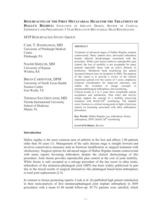
RESURFACING OF THE FIRST METATARSAL HEAD FOR THE TREATMENT OF HALLUX RIGIDUS: EVOLUTION OF IMPLANT DESIGN, REVIEW OF CLINICAL EXPERIENCE AND PRELIMINARY 5 YEAR RESULTS OF METATARSAL HEAD RESURFACING MTP RESURFACING STUDY GROUP: University of Pittsburgh Medical University of North Texas Health Science Center Florida International University Hallux rigidus is the most common area of arthritis in the foot and affects 1/40 patients older than 50 years (I). Management of the early disease stage is straight forward and involves conservative measures such as footwear modificai ion or surgical treatment with cheilectomy. Surgical options for advanced stages of Hallux Rigidus remain controversial with many reports favouring arthrodesis despite the clinical shortcomings of this procedure. Joint fusion provides reproducible pain control at the cost ofjoint mobility. While fusion is only accepted as a salvage procedure of the last resort in other joints, arthrodesis of the metatarso-phalangeal joint (MPJ) has been widely publicized in part due to the mixed results of surgical alternatives like phalangeal based hemi-arthroplasty or total joint replacement (2-5) In contrast to fusion promoting reports, Cook et al. (6) published high patient satisfaction in their meta-analysis of tirsi metatarsophalangeal [oint implant arthroplasty in 3049 procedures with a mean 61.4M month follow-up: 85.7% patients were satisfied, which Treatment of advanet'il stages of I iallux Rigidus remains controversial. Many authors have advocated arthrodesis despite inherent disadvantages associated with [he procedure. While joint fusion achieves reproducible pain control, the loss of mobility is not acceptable for many patients especially those with an active lifestyle or profession. Metatarsal head resurfacing has gained increased interest since its inception in 2004. The purpose of this report is to provide a review of the clinical experience gained over ihe course of 5 years, emphasize technical con sideral ion for improved outcomes, and outline the evolution of design concepts in il..-,il,il-, pi- II.II -ICI. ,ii l:rn¡!l,i-.r\ ,ind n.:suit;icii]g. Clinical results at 2 to 5 years show remarkable patient acceptance and satisfaction. Pain relief and activity ratings support the concept of a mobility preserving treatment with IlcmiCAP' resurfacing. The implant screw fixation is a criticai strong pomi in light of previous reports on loosening associated with other arthroplasty Key Words: llallu\ Rigidus. toc. aiihrodesis. fusion. iiiilnopliisiy. MTP. HemiCAP ' resurfacing Level of Evidence: Review
Open the catalog to page 1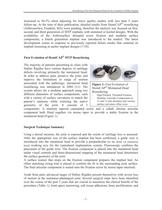
Resurfacing of the First Metatarsal Head for the Treatment of Hallux Rigidus increased to 94.5% when adjusting for lower quality studies with less than 5 years follow-up. At the time of their publication, detailed results from HemiCAP® resurfacing (Arthrosurface, Franklin, MA) were pending, therefore the analysis was focused on first, second, and third generation of MTP implants with stemmed or keeled designs. With the availability of the Arthrosurface threaded screw fixation and modular surface components, a fourth generation implant was introduced to the market. The latest development comes...
Open the catalog to page 2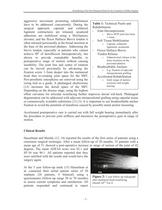
aggrcssiVe movement promoting rehabilitation have to be addressed concurrently. During the Tabic 1: Tedimeli! l'euri mid surgical approach, capsular and collateral Rehabilitation ligament contractures are released, sesamoid " Jomt Decompression: adhesions are mobilized using a McGlamory 0 MOV^MTF joint line back elevator, and the flexor Hallucis Brcvis tendon is _ Soft Tissùe Mobilization olten released periodically tit tlie broad insertion at capsule, co I Ut to ra I the base of the proximal phalanx. Addressing the ligaments, sesamoids brevis tendon, especially in patients who cannot - Flexor...
Open the catalog to page 3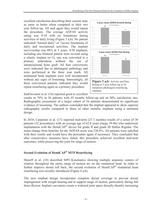
Resurfacing of the First Metatarsal Head for the Treatment of Hallux Rigidus excellent satisfaction describing their current state as same or better when compared to their two year follow-up. All said again they would repeat the procedure. The average AOFAS activity rating was 8/10 with no limitations during activities of daily living (Figure 3 a,b). No patient indicated “limited daily” or “severe limitations of daily and recreational activities. The implant survivorship was 88% at 5 years. 4/30 implants, including one bilateral patient were revised using a silastic implant (n=3), one was converted...
Open the catalog to page 4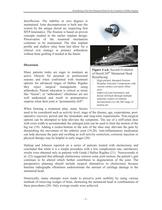
Resurfacing of the First Metatarsal Head for the Treatment of Hallux Rigidus dorsiflexion. The stability at zero degrees is maintained. Joint decompression is built into the system by the unique dorsal arc respecting first MTP kinematics. The fixation is based on proven concepts studied in the earlier implant design. Preservation of the sesamoid mechanism continues to be maintained. The thin implant profile and shallow inlay bone bed allow for a clinical exit strategy to primary arthrodesis without bone grafting if needed in the future. Discussion Many patients today are eager to maintain an...
Open the catalog to page 5
Raikin el al. (23) reported retrospectively on patients who either underwent phalangeal hemiarthroplasty (average follow-up: 80 months) or arthrodesis (average follow-up: 30 months). They concluded that arthrodesis shows superior results, however the difference in the follow-up times may have influenced these results. They also noted a very high failure rate of 24% in the hemiarthroplasty group and an 18.5% fair or poor result in patients in the arthrodesis group. Despite these short term fair results, fusion of the joint is an end stage procedure that has been associated with many complications...
Open the catalog to page 6
Resurfacing of the First Metatarsal Head for the Treatment of Hallux Rigidus 10. Fuhrmann RA. Wagner A. Anders JO. First metatarsophalangeal joint replacement: the method of choice for end-stage hallux rigidus? Foot & Ankle Clinics.2003, 8(4):711-21. 11. Hasselman CT. Hemiarthroplasty of the arthritic first metatarsophalangeal head with a contoured articular prosthesis. Presented at the AOFAS meeting. Toronto, CA 2007. 12. Hasselman CT, Shields N. Resurfacing of the first metatarsal head in the treatment of hallux rigidus. Tech Foot Ankle Surg. 2008; 7: 31-40. 13. Berlet GC, Hyer CF, Lee TH,...
Open the catalog to page 7All Arthrosurface catalogs and technical brochures
 Restore Your Active Lifestyle
16 Pages
 Kahuna
2 Pages
 NanoFx
2 Pages
 KISSloc™
2 Pages
 hip hemicap
2 Pages
 When it’s your last move
2 Pages
 Product Portfolio
15 Pages
 Hip HemiCAP®
12 Pages
 Shoulder HemiCAP®
1 Page
 UniCAP
2 Pages
- Bone plate
- Arthrodesis plate
- Knee prosthesis
- Metallic arthrodesis plate
- Foot arthrodesis plate
- Arthrodesis screw
- Cemented knee prosthesis
- Metallic arthrodesis screw
- Foot arthrodesis screw
- Headless arthrodesis screw
- Digit joint implant
- Unicondylar knee prosthesis
- Non-locking arthrodesis plate
- Foot phalange arthrodesis plate
- Metatarsophalangeal joint implant
- Humeral head prosthesis
- Patello-femoral prosthesis