


HOW SMART DEVICES AND MIDDLEWARE INTEGRATION ARE REVOLUTIONIZING HEALTHCARE

HOW SMART DEVICES AND MIDDLEWARE INTEGRATION ARE REVOLUTIONIZING HEALTHCARE
Smart devices and middleware integration are transforming healthcare by enhancing communication and efficiency. The adoption of smartphones, particularly through Bring Your Own Device (BYOD) policies, has become prevalent in healthcare settings, facilitating work-related tasks and improving patient care.
Since the introduction of the iPhone in 2007, smartphones have been increasingly used in healthcare. A 2013 Cisco survey indicated that 88.6% of healthcare workers use their smartphones for work. The trend of BYOD is expected to grow, filling a critical need for mobile healthcare staff by providing internet access, communication, and healthcare apps.
Smart devices alone cannot meet all healthcare needs. Middleware solutions, such as those provided by Ascom, integrate smart device apps with healthcare systems like nurse call and patient monitoring. These solutions enhance workflow by managing staff assignments, alert messages, and message escalation, thereby improving patient care and reducing response times.
Healthcare requires coordinated communication among team members. Ascom's Unite Axess app supports iOS and Android devices, integrating with the Unite Messaging Suite to deliver critical messages to clinicians, allowing them to respond to alerts without being tied to a specific location.
Effective communication strategies in healthcare must ensure connectivity, access to patient information, real-time response to alarms, and efficient management of patient care. The Unite Axess app facilitates these by providing features like chat for team communication and waveform snapshots for quick decision-making.
Middleware like Unite Messaging Suite helps manage patient alarms by filtering and prioritizing messages, reducing alarm fatigue. It uses configurable filtering rules to consolidate multiple alarms into single messages and employs time delay filters to minimize low-level alerts.
Automatic alert message escalation is crucial for patient safety. If a message is not responded to, it is escalated to predefined backups, ensuring critical alarms are addressed promptly. This system enhances both safety and efficiency by allowing clinicians to focus on their tasks without unnecessary interruptions.
Security concerns are paramount in healthcare. The Unite Axess app ensures patient data protection through login credentials, user authentication, and message encryption. Mobile Device Management (MDM) software further secures devices by allowing remote data wiping and enforcing security policies.
Smart devices, when combined with middleware solutions like Ascom's Unite Axess and Unite Messaging Suite, provide healthcare staff with secure, efficient tools to improve patient care and streamline communication. These technologies address mission-critical communication needs, enhancing workflow and patient safety.
Catalog excerpts
HOW SMART DEVICES AND MIDDLEWARE INTEGRATION ARE REVOLUTIONIZING HEALTHCARE BYOD & Healthcare Since the release of Apple’s first iPhone in 2007, consumer smartphone adoption has been a driving force in overall acceptance of smart devices in vertical markets like healthcare. As individuals bring their personal smartphone to work, it’s increasing clear these smart devices are being used for work-related tasks. A Cisco Partner survey conducted in March 2013 shows convincingly that when healthcare workers were asked “Do you use your smartphone for work purposes?”, 88.6% of respondents said yes.1 Bring Your Own Device (BYOD) to work is not a new concept. It actually took root back in the early 90s when Palm became successful with the Personal Digital Assistant (PDA). Remember the Palm Pilot? PDAs were utilized to sync contacts, calendar and email — typically without the blessing of IT. As healthcare IT departments struggle with BYOD and how to control and manage personal devices, one thing is clear — these devices are not going away. If anything, BYOD will most certainly grow in the future. According to a recent IDC forecast for global smartphone shipments, “2013 will mark the first year that smartphone shipments surpass those of feature phones, with smartphones expected to account for 52.2% of all mobile phone shipments worldwide.”2 The reality is that smart devices fill a void for mobile healthcare staff. Whether it’s accessing the internet, communicating with team members, or utilizing a healthcare app, hospital staff members find it easier to get their job done with a smart device. In many different phases of healthcare, smart device use is being integrated with patient care. Mobile device strategy is critical because smart devices will play an ever increasing role in patient care. Middleware Connects the Dots Healthcare staff needs cannot be completely addressed with smart devices alone. Interactive solutions with real workflow changes must be incorporated to achieve both improved patient care and greater efficiency. Many middleware providers, including Ascom, provide smart device apps with integrated solutions. These solutions typically offer integration to systems like nurse call, patient monitoring, laboratory, service logistics and critical alarm handling, while also addressing the mission-critical elements of patient care. These mission-critical elements include staf
Open the catalog to page 1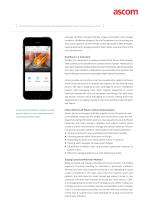
WHITEPAPER: HOW SMART DEVICES AND MIDDLEWARE INTEGRATION ARE REVOLUTIONIZING HEALTHCARE message handling, message filtering, image presentation and message escalation. Middleware elements, like staff assignment, are critical because they connect patients to staff members ensuring receipt of alert messages. Likewise automatic message escalation helps reduce response time and the risk of human error. Healthcare Is A Team Sport Whether it’s a personal or a hospital-provided smart device, staff members need a cohesive and comprehensive communications solution. Healthcare is a team sport requiring...
Open the catalog to page 2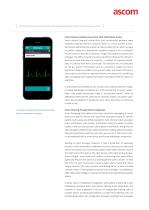
WHITEPAPER: HOW SMART DEVICES AND MIDDLEWARE INTEGRATION ARE REVOLUTIONIZING HEALTHCARE Smart Devices Combine Ease of Use with Information Access Smart devices improve connectivity and coordination between team members helping clinicians respond faster to critical patient events. Sometimes additional information can be provided with an alert message to quickly assess the appropriate response required. As an example, Ascom Unite can provide a waveform image with a patient monitor alert message. The ability to quickly review a waveform enhances the clinician’s decision on how and when to respond...
Open the catalog to page 3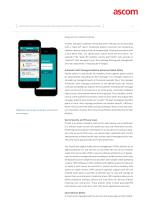
WHITEPAPER: HOW SMART DEVICES AND MIDDLEWARE INTEGRATION ARE REVOLUTIONIZING HEALTHCARE being sent to a clinician’s device. Another example of patient monitoring alarm filtering can be illustrated with a “leads off” alarm. Sometimes patient movement can temporarily displace a lead causing an alarm to be generated. Filtering these alarms with a time delay filter, can significantly reduce these low-level alerts. For example if the “leads off” problem corrects itself within sixty seconds no “leads off” alert message is sent. Alert message filtering and management are vital components in reducing...
Open the catalog to page 4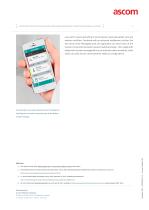
WHITEPAPER: HOW SMART DEVICES AND MIDDLEWARE INTEGRATION ARE REVOLUTIONIZING HEALTHCARE care staff a secure and efficient tool to deliver improved patient care and enhance workflow. Combined with an advanced middleware solution, like the Ascom Unite Messaging Suite, this application can solve many of the mission-critical communication issues in healthcare today. From single staff assignment to alarm message delivery to automatic alarm escalation, Unite Axess can unify all your communication needs on a single device. Care providers can easily respond to alert messages by touching the convenient...
Open the catalog to page 5All Ascom catalogs and technical brochures
 Ascom teleCARE IP
5 Pages
 Unite Cardiomax
2 Pages
 ASCOM IP-DECT SOLUTIONS
2 Pages
 Ascom PAGING 900
4 Pages
 Ascom Myco 3
4 Pages
 Ascom Myco 3 for enterprise.
4 Pages
 Ascom Unite Connect for RTLS
2 Pages
 Ascom Unite Admin
2 Pages
 Inspired by nurses myco
5 Pages


- Control software
- Laboratory software
- Monitoring software
- Planning software
- Hospital software
- Surgery software
- Nurse call system
- Medical device control panel
- Evaluation software
- Alarm software
- Monitoring controller
- Motion control unit
- Phone nurse call system
- Panic button alert system
- Wristband alert system
- Hospital management and communication system
- Alert management software
- Medical telephone
- Intensive care software
- Data management and communication system