
- Catalogs
- Behnk Elektronik
- Coagulometer CL 4 brochure

- Products
- Catalogs
- News & Trends
- Exhibitions
Coagulometer CL 4 brochure
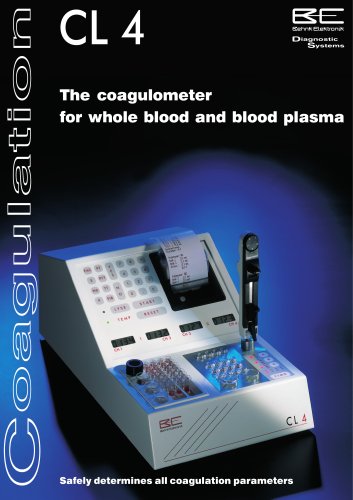
Coagulometer CL 4 brochure
Catalog excerpts
EehnK EleKtronLK DO for whole blood and blood plasma Safely determines all coagulation parameters
Open the catalog to page 1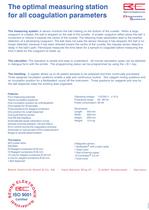
The optimal measuring station for all coagulation parameters The measuring system: A sensor monitors the ball rotating on the bottom of the cuvette. When a large coagulum is created, the ball is stopped on the wall of the cuvette. A smaller coagulum either slows the ball´s movement or directs it towards the centre of the cuvette. The following three parameters lead to the positive detection of a developing coagulum: The ball does not pass the sensor because it has stopped; the ball is no longer detected, because it has been directed toward the centre of the cuvette; the impulse sensor detects...
Open the catalog to page 2All Behnk Elektronik catalogs and technical brochures
 Thrombolyzer XRC
4 Pages
 Thrombolyzer Compact X
2 Pages
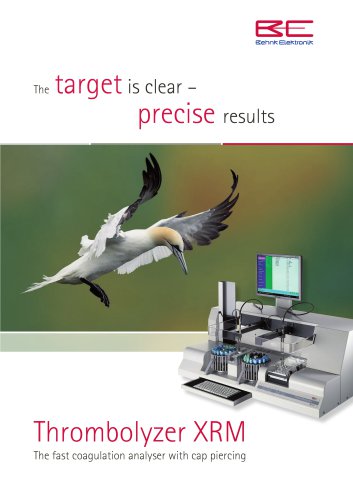 Thrombolyzer XRM
4 Pages
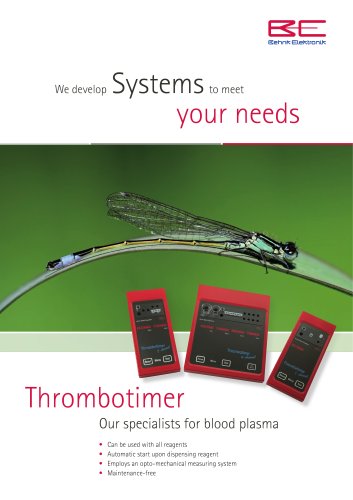 Thrombotimer brochure
2 Pages
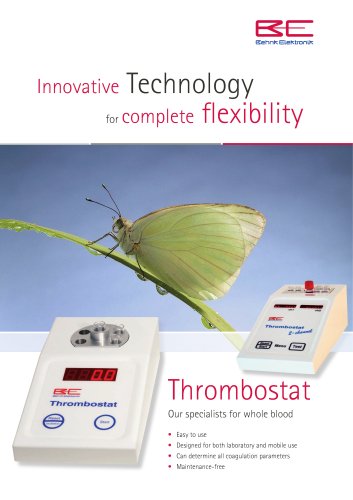 Thrombostat brochure
2 Pages
 Compact brochure
2 Pages
 XRC, XRM brochure
4 Pages
- Solvent reagent
- Diagnostic reagent
- Protein reagent
- Buffer solution reagent
- Quality control reagent
- Freeze-dried reagent kit
- Serum reagent
- Hematology reagent
- Hemostasis analyzer
- Animal-based reagent
- Plasma reagent
- Calibration reagent
- Benchtop coagulometer
- Automatic coagulometer
- Hemoglobin reagent
- Cleaning reagent
- Semi-automated coagulation analyzer
- Bilirubin reagent
- Triglycerides reagent
- 4-channel hemostasis analyzer