
- Catalogs
- Bestview Laser
- The best HIFU machine manufacturer&supplier-BVLASER. OEM HIFU ultrasound machine. HIFU machine for body and face professional.


- Company
- Products
- Catalogs
- News & Trends
- Exhibitions
The best HIFU machine manufacturer&supplier-BVLASER. OEM HIFU ultrasound machine. HIFU machine for body and face professional.

1 / 1 PageView full catalog
The best HIFU machine manufacturer&supplier-BVLASER. OEM HIFU ultrasound machine. HIFU machine for body and face professional.
Product catalog summary
Overview of HIFU (High-Intensity Focused Ultrasound)
HIFU is a medical technology that uses focused ultrasound waves to target and treat tissues non-invasively. It is primarily used for therapeutic purposes such as tumor ablation and other medical treatments.
Main Sections
1. Specifications
- Frequency range: Typically between 0.8 to 3.5 MHz depending on application.
- Power output: Adjustable to achieve desired tissue ablation without damaging surrounding areas.
- Focal zone size: Precisely controlled to target specific tissue volumes.
2. Procedures
- Patient preparation: Includes imaging guidance (MRI or ultrasound) to locate target tissue.
- Application: Focused ultrasound waves are delivered to the target area to induce thermal coagulation.
- Monitoring: Real-time imaging ensures accurate targeting and treatment efficacy.
3. Standards and Safety
- Compliance with medical device regulations and safety standards is mandatory.
- Thermal dose limits must be respected to avoid collateral damage.
- Operator training and certification recommended for safe use.
4. Recommendations and Best Practices
- Use imaging guidance for precise targeting.
- Adjust power and duration based on tissue type and patient condition.
- Continuous monitoring during treatment to ensure safety and effectiveness.
Key Data from Tables and Figures
Typical parameters include focal depth (ranging from a few millimeters to several centimeters), power levels (up to several hundred watts), and treatment durations (seconds to minutes). Graphs often illustrate temperature rise in tissue over time and spatial distribution of ultrasound intensity.
Critical Information
- HIFU offers a non-invasive alternative to surgery with reduced recovery time.
- Precise control of ultrasound parameters is essential to maximize treatment efficacy and minimize side effects.
- Proper patient selection and imaging guidance are crucial for successful outcomes.
See more
Catalog excerpts
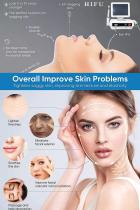
Look 5 to 10 years ''"younger Tho perfect solution for '"sagging skin Lift sagging HIFU Double Chin lift • No down time Can be completed in a lunch broak Lighten fine lines Eliminate facial edema Improve facial vascular micrococilation
Open the catalog to page 1All Bestview Laser catalogs and technical brochures


Related Searches
- Skin and body treatment unit
- Aesthetic medicine laser
- Trolley-mounted laser
- Diode laser
- Tabletop laser
- Dermatology laser
- Hair removal laser
- Nd:YAG laser
- Skin rejuvenation laser
- Surgical laser
- Tattoo removal laser
- CO2 laser
- Acne treatment laser
- Picosecond laser
- IPL system
- Hair removal IPL system
- Scar removal laser
- Vascular lesion treatment laser
- Cryolipolysis unit
- Alexandrite laser
*Prices are pre-tax. They exclude delivery charges and customs duties and do not include additional charges for installation or activation options. Prices are indicative only and may vary by country, with changes to the cost of raw materials and exchange rates.
About MedicalExpo
MedicalExpo is a marketplace that offers B2B players a complete experience, from product sourcing to purchase. MedicalExpo is an entity of VirtualExpo Group.
Are you a buyer?
Are you a supplier?