
- Catalogs
- Bestview Laser
- Wholesale ND YAG laser tattoo removal machine. ND YAG laser dermatology. China Q-switched ND YAG laser machine manufacturer-BVLASER.


- Company
- Products
- Catalogs
- News & Trends
- Exhibitions
Wholesale ND YAG laser tattoo removal machine. ND YAG laser dermatology. China Q-switched ND YAG laser machine manufacturer-BVLASER.

1 / 1 PageView full catalog
Wholesale ND YAG laser tattoo removal machine. ND YAG laser dermatology. China Q-switched ND YAG laser machine manufacturer-BVLASER.
Product catalog summary
This document provides an overview of the best ND:YAG laser machines available in the market, focusing on their specifications, performance parameters, and recommended applications.
1. Specifications
- Wavelength: Typically 1064 nm for standard ND:YAG lasers, with some models offering dual wavelengths (e.g., 532 nm) for versatility.
- Pulse Duration: Ranges from nanoseconds to milliseconds, affecting precision and treatment depth.
- Energy Output: Adjustable energy levels, commonly between 100 mJ to several joules per pulse, suitable for various dermatological and industrial uses.
- Repetition Rate: Variable frequency, often from 1 Hz up to 10 Hz or higher, enabling faster treatment sessions.
2. Procedures and Applications
- Medical Uses: Tattoo removal, skin resurfacing, vascular lesion treatment, and hair removal.
- Industrial Uses: Precision cutting, engraving, and marking on metals and plastics.
3. Standards and Safety
- Compliance with international laser safety standards (e.g., IEC 60825-1).
- Incorporation of safety features such as key locks, emergency stop buttons, and protective eyewear requirements.
4. Recommendations and Best Practices
- Select machines with adjustable parameters to tailor treatments to specific needs.
- Ensure regular maintenance and calibration for consistent performance.
- Use trained operators to maximize safety and efficacy.
5. Summary of Key Models
| Model | Wavelength (nm) | Energy Output (J) | Pulse Duration | Applications |
|---|---|---|---|---|
| Model A | 1064 | 1-3 | 5-10 ns | Tattoo removal, skin treatment |
| Model B | 1064/532 | 0.5-2 | 10-20 ns | Vascular lesions, pigmentation |
| Model C | 1064 | 2-5 | 1-5 ms | Industrial marking, cutting |
This summary highlights the critical parameters and considerations for selecting the best ND:YAG laser machine tailored to specific medical or industrial applications.
See more
Catalog excerpts
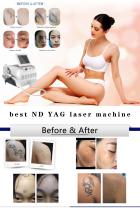
• BEFORE & AFTER- Before & After
Open the catalog to page 1All Bestview Laser catalogs and technical brochures


Related Searches
- Skin and body treatment unit
- Aesthetic medicine laser
- Trolley-mounted laser
- Diode laser
- Tabletop laser
- Dermatology laser
- Hair removal laser
- Skin rejuvenation laser
- Surgical laser
- Tattoo removal laser
- CO2 laser
- Acne treatment laser
- Picosecond laser
- IPL system
- Hair removal IPL system
- Scar removal laser
- Vascular lesion treatment laser
- Cryolipolysis unit
- Alexandrite laser
*Prices are pre-tax. They exclude delivery charges and customs duties and do not include additional charges for installation or activation options. Prices are indicative only and may vary by country, with changes to the cost of raw materials and exchange rates.
About MedicalExpo
MedicalExpo is a marketplace that offers B2B players a complete experience, from product sourcing to purchase. MedicalExpo is an entity of VirtualExpo Group.
Are you a buyer?
Are you a supplier?