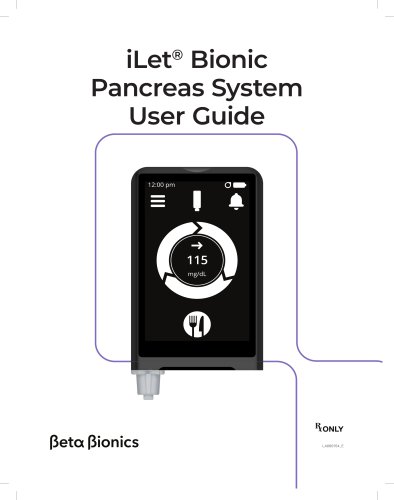
Overview: The iLet® Bionic Pancreas System User Guide provides comprehensive instructions for the safe and effective use of the iLet system, designed to automatically regulate blood glucose levels through insulin administration. It includes detailed information on system components, setup, maintenance, and safety precautions.
Main Components: The system includes the iLet Bionic Pancreas, iLet Cartridge, iLet Connect, and iLet Charge. It utilizes continuous glucose monitoring (CGM) and an insulin infusion set.
Usage Instructions: Users are advised to read the guide thoroughly before using the system. The guide provides step-by-step instructions for setup, operation, and maintenance, emphasizing the importance of following these instructions to avoid incorrect insulin dosing.
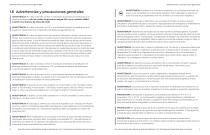
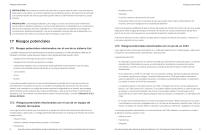
Safety Warnings: The guide contains warnings about potential risks, including the dangers of improper use leading to severe hypo- or hyperglycemia. It stresses the need for proper training and consultation with healthcare providers.
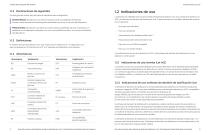
Intended Use: The iLet system is intended for individuals with type 1 diabetes, aged 6 and above, for home use with a compatible iCGM. It requires a prescription and is designed for single-person use.
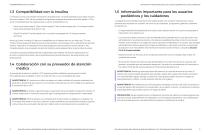
Insulin Compatibility: The system is compatible with U-100 rapid-acting insulin analogs such as NovoLog, Fiasp, and Humalog, with specific usage guidelines provided.
Collaboration with Healthcare Providers: Users are encouraged to work closely with healthcare providers to tailor diabetes management plans and ensure proper system use.
Pediatric Use: Special considerations are provided for pediatric users and caregivers, including the use of access restrictions to prevent accidental insulin administration.
Technical Specifications: The guide includes detailed technical specifications for the iLet device, CGM sensor, and transmitter, as well as information on electromagnetic compatibility and wireless data security.
Warranty Information: The guide outlines warranty terms for the iLet device, cartridges, infusion equipment, and iLet Connect.
Device Specifications and Features: The iLet system integrates with Continuous Glucose Monitors (CGM) and insulin delivery mechanisms. It displays glucose data and insulin doses on a graphical interface, with options to view data over different time periods (3, 6, 12, and 24 hours). The system supports pairing with Dexcom and Abbott CGMs and mobile devices.
Graph and Therapy Summary: The graphical interface shows recent glucose data and insulin doses. Users can switch between graph and therapy summary views, which provide data summaries over 1, 7, 30, and 90 days.
Status Bar and Menu Screen: The status bar indicates device connections, alerts, and battery status. The menu screen provides access to settings, including glucose entry, insulin pausing, CGM management, mobile device pairing, and volume adjustments.
Configuration Menu: Users can adjust device settings, including CGM targets, body weight, and general settings like time and date. The system allows for secondary CGM targets and body weight adjustments, with medical guidance recommended for changes.
History and Volume: The history section logs alerts, meal announcements, cartridge changes, and insulin infusion sets. Volume settings allow users to adjust alert levels, with recommendations to keep volume high for critical alerts.
Safety Precautions: Regularly review device settings to ensure correct insulin administration. Confirm time, date, and touchscreen functionality. Ensure the correct CGM transmitter serial number is programmed to avoid missing critical glucose readings.
Setup Instructions: Initial setup involves charging the device, setting the current time and date, and following on-screen instructions. Users are advised to handle components with clean hands and fill the sterile iLet cartridge on a clean surface.
Introduction to the iLet Bionic Pancreas System: This document provides a comprehensive guide on setting up and using the iLet Bionic Pancreas System. It includes detailed instructions on preparing the insulin cartridge, connecting the infusion set, and managing the system for optimal insulin delivery.
Air Bubble Removal from the iLet Cartridge: To ensure proper insulin delivery, it is crucial to remove air bubbles from the cartridge. Large air bubbles should be dislodged by gently tapping the cartridge. The syringe is then reinserted to remove the bubbles completely. It is important to keep the needle straight to avoid damaging the cartridge septum, which could lead to insulin leakage and high blood glucose levels.
Adding More Insulin: After removing air bubbles, additional insulin can be added to the cartridge. The syringe should be tapped to release any air bubbles before transferring insulin. Overfilling the cartridge should be avoided to prevent the rubber plunger from dislodging.
Preparing the iLet Device: Before inserting the insulin cartridge, the device must complete a rewinding process. This step is crucial to prevent damage to the cartridge and the device, as well as unintended insulin delivery.
Inserting the Cartridge and Preparing the Tubing: The insulin cartridge should be inserted into the device's insulin chamber. The infusion set and iLet Connect adapter must be connected securely to prevent insulin leakage or air entry, which could lead to incorrect insulin dosing.
Filling the Tubing: The tubing should be filled with insulin while ensuring no air bubbles are present. This step is critical to ensure accurate insulin delivery.
Insulin Equipment: Regular checks and replacements of the infusion set are necessary to prevent infections and ensure proper insulin absorption. The infusion set should not be placed over scars or tattoos to avoid irritation.
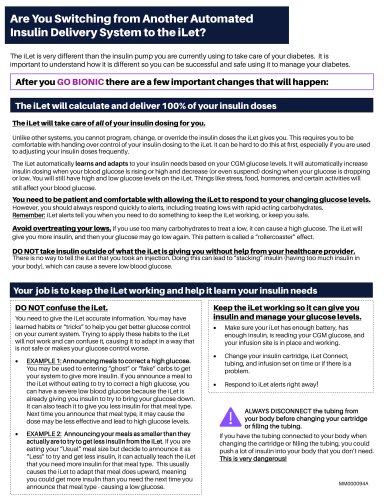
Automated Insulin Administration: Once the user's weight is entered, the iLet system begins to autonomously regulate glucose levels. Users are advised not to administer insulin from other sources unless directed by a healthcare provider.
Conclusion: The iLet Bionic Pancreas System offers an innovative approach to insulin delivery, adapting to the user's needs over time. Users are encouraged to contact Beta Bionics or their healthcare provider with any concerns.
Device Overview: The iLet device is designed to automatically regulate glucose levels without requiring the user to count carbohydrates, adjust basal rates, or make corrections for high blood glucose levels. It administers insulin every 5 minutes based on CGM readings and carbohydrate intake. If glucose levels drop too quickly, the device reduces or stops insulin delivery.
Precautions: Users must follow the user guide instructions and consult healthcare providers if needed. The device cannot function if the insulin cartridge is empty or if the infusion set is malfunctioning. Limited functionality occurs when the CGM sensor is disconnected.
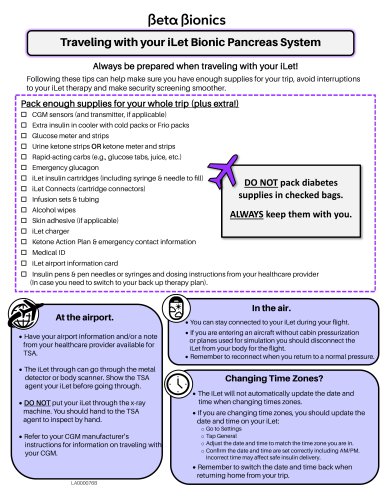
Maintenance: Proper maintenance is crucial to avoid hyperglycemia and diabetic ketoacidosis (DKA). The insulin cartridge, iLet Connect, and tubing should be replaced every three days or when empty. Avoid replacements before bedtime or when glucose monitoring is not possible for several hours.
Infusion Set Replacement: Replace the infusion set every three days or immediately if it becomes dislodged or shows signs of malfunction or leakage. Follow specific steps for disconnection and reconnection to ensure proper insulin delivery.
CGM Sensor Replacement: Replace CGM sensors according to manufacturer instructions, avoiding replacements before bedtime or when glucose monitoring is not possible. Follow specific steps for sensor and transmitter replacement and pairing with the iLet device.
Warnings: Never fill the tubing while connected to the body to prevent excessive insulin administration, which can lead to severe hypoglycemia. Ensure all connections are secure to prevent insulin leakage or air entry.
Maintenance of the iLet System:- Changing the CGM Sensor: When changing the CGM sensor paired with the iLet device, any active sensor session will be stopped, and glucose readings will not be available until a new sensor is initiated.
- CGM Connectivity: The iLet device and CGM sensor communicate via Bluetooth. Temporary disconnections are normal. To maintain connectivity, keep the sensor and device on the same side of the body and ensure the device screen faces outward.
- CGM Accuracy and Calibration: CGM sensors measure glucose in interstitial fluid, which may differ from blood glucose levels. Accurate CGM readings are crucial for proper insulin dosing. If calibration issues arise, follow the steps to recalibrate or replace the sensor.
When the CGM Sensor is Disconnected:- BG-Run Mode: This mode allows temporary insulin dosing based on blood glucose values when CGM data is unavailable. It is limited to 48 or 72 hours, depending on the initialization period. Manual blood glucose entries are required.
- Entering Blood Glucose: Blood glucose values can be entered manually when the CGM is offline. These values are used for insulin dosing in the absence of CGM data.
Mobile Device Integration:- The iLet device can be paired with a smartphone via the iLet Mobile app for software updates and data uploads.
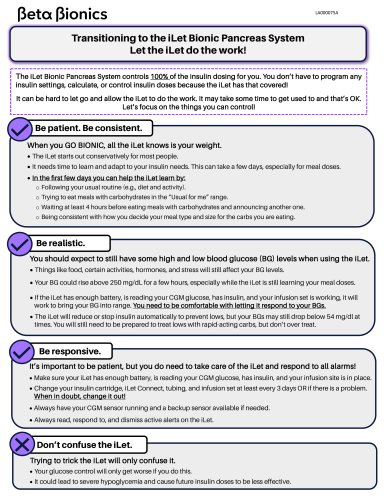
Managing High and Low Glucose Levels:- The iLet system responds to CGM glucose values and trends. Users may still experience high and low glucose levels requiring attention.
- Patience is essential as the system adapts to insulin needs. Immediate response to alarms and maintaining the device is crucial.
Insulin Infusion Site Management: Ensure that your CGM alarms are activated and set to a volume you can hear. Promptly responding to glucose alerts is crucial to prevent prolonged hypoglycemia or hyperglycemia. Always confirm high or low glucose levels indicated by your CGM with a blood glucose reading via fingerstick. If your Dexcom CGM is inaccurate compared to a fingerstick reading, calibrate it according to the manufacturer's instructions. FreeStyle Libre 3 Plus sensors are factory-calibrated and do not require manual calibration. Ensure the Luer iLet Connect adapter is straight and firmly connected to the tubing to prevent insulin leakage or air entry, which can cause hypo- or hyperglycemia. Contact your healthcare provider if you have questions or need assistance managing glucose levels with the iLet system.
Mobile Application Usage: Use the iLet Mobile app on compatible iOS or Android devices for wireless updates and data sharing with Beta Bionics cloud. Only install apps from trusted sources like the Apple App Store or Google Play Store to avoid malware that could affect the iLet Mobile app's functionality. The app checks if your device is rooted or has sideloaded apps, which poses security risks and may block app usage. If you suspect malware, stop using the app and contact Beta Bionics customer service.
Managing High Glucose Levels: If CGM glucose is above 300 mg/dl for 90 minutes or 400 mg/dl at any time, consider changing your insulin cartridge, tubing, and infusion site. Respond immediately to high glucose alarms, confirm hyperglycemia with a fingerstick, and check blood ketones if advised by your healthcare provider. Avoid prolonged high glucose levels by announcing meals with carbohydrates, ensuring sufficient insulin and battery, and keeping high glucose alerts active. Do not administer additional insulin unknown to the iLet system unless directed by your healthcare provider.
Managing Low Glucose Levels: Treat low glucose levels with fast-acting carbohydrates like juice or glucose tablets. Avoid slow-acting carbohydrates like chocolate or peanut butter, which can prolong low glucose levels. Do not overconsume carbohydrates to prevent a glucose spike and subsequent insulin dosing by the iLet system. The iLet system will reduce or stop insulin delivery in response to low or dropping glucose levels. Ensure CGM alarms are active and audible, and have fast-acting carbohydrates and emergency glucagon available.
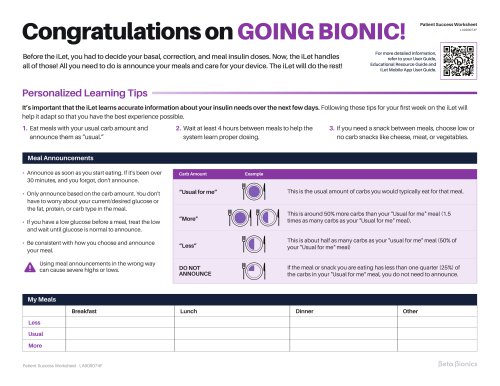
Meal Announcements: Announce meals within 30 minutes of starting to eat to avoid insulin stacking. If you eat more, announce additional carbohydrates without including previously announced ones. Choose meal size based on carbohydrate content, not total meal size or other nutrients. Consistency in meal type (breakfast, lunch, dinner) helps the iLet system learn your eating patterns. Do not announce meals for carbohydrates used to treat low glucose levels.
Introduction: This document provides guidance on managing blood glucose levels using the iLet bionic pancreas system. It covers meal announcements, insulin administration, and handling hypoglycemia.
Managing Hypoglycemia:- Treat low blood glucose with fast-acting carbohydrates before meals and wait for glucose levels to normalize before eating.
- Do not include carbohydrates used for treating hypoglycemia in meal size calculations to avoid additional hypoglycemia.
- Avoid announcing meals as smaller than they are to prevent insufficient insulin administration, which can lead to hyperglycemia.
Meal Announcements:- Announce meals as "Breakfast," "Lunch," or "Dinner" and estimate carbohydrate content as "Usual for me," "More," or "Less."
- Announce meals at the start of eating or up to 15 minutes before if certain of eating within that time.
- The system learns and adapts insulin doses based on meal announcements.
Insulin Administration:- The iLet system administers insulin automatically based on glucose levels and meal announcements.
- Users can cancel ongoing insulin administration if necessary.
FAQs:- Do not announce meals if following a very low-carb diet.
- Do not use meal announcements to lower glucose levels without eating.
- Announce meals within 30 minutes of starting to eat to avoid insulin stacking.
Exercise Considerations:- Avoid consuming high-carb snacks before exercise while connected to the iLet system to prevent increased insulin administration and risk of hypoglycemia.
- Consider disconnecting from the system if planning to consume carbs before exercise.
Conclusion: The iLet system continuously learns and adapts to individual insulin needs, but users must follow guidelines for meal announcements and hypoglycemia treatment to ensure effective glucose management.
Sensor Alerts: The document outlines various alerts related to the Abbott FreeStyle Libre 3 Plus sensor. Key alerts include temperature-related issues where the sensor is too hot or cold, requiring relocation to a more suitable environment. Sensor errors and replacement alerts are also highlighted, indicating when the sensor needs to be replaced to ensure accurate glucose readings.
Battery Alerts: Battery alerts for the iLet device are categorized by priority levels. Users are advised to recharge the device when the battery is low to prevent shutdown.
Insulin Management Alerts: Alerts related to insulin management include low insulin levels, cartridge changes, and occlusion issues. Users are instructed to monitor insulin levels and replace cartridges as needed. In case of occlusions, troubleshooting steps are provided.
Reminders: Reminders are set for various tasks such as configuring the iLet device, changing insulin equipment, and verifying body weight. These reminders help maintain effective diabetes management.
Troubleshooting: The document provides troubleshooting guidance for the iLet device, emphasizing the importance of having an emergency kit and alternative insulin administration methods. Users are advised to check for insulin leaks and ensure the device is functioning correctly.
Device Care: Instructions for the general care and cleaning of the iLet device are provided. Users are cautioned against using certain cleaning methods that could damage the device.
Clinical Performance: The document discusses the pivotal trial of the iLet bionic pancreas system, comparing its efficacy and safety against standard treatment methods. The trial included participants with type 1 diabetes and evaluated the use of the iLet system for insulin administration.
Overview: The document discusses the pivotal trial of the iLet bionic pancreas system for individuals with type 1 diabetes aged 6 years and older. It compares the performance of the iLet system using Fiasp insulin against standard treatment over a 13-week extension phase.
Participant Demographics: The study included participants aged 6 to 83 years, with varying durations of diabetes and HbA1c levels at randomization. The demographic data is detailed in tables, showing age distribution, diabetes duration, HbA1c levels, gender, racial/ethnic groups, household income, education, and insurance coverage.
Study Design: Participants were randomized into groups using the iLet system with different insulins (Novolog, Humalog, or Fiasp) or standard treatment. The primary endpoint was the change in HbA1c after 13 weeks, with secondary endpoints including time spent with glucose levels below 54 mg/dL, average glucose levels, and time in the target range of 70 to 180 mg/dL.
Key Findings:- The iLet system showed a significant reduction in HbA1c levels by 0.5% compared to standard treatment across all age groups and insulin types.
- For participants aged 18 and older using Novolog or Humalog, the adjusted mean difference in HbA1c was -0.5% after 13 weeks.
- For participants aged 6 to 17 using Novolog or Humalog, the adjusted mean difference in HbA1c was also -0.5%.
- The iLet system did not increase the time spent with glucose levels below 54 mg/dL compared to standard treatment.
Conclusion: The iLet bionic pancreas system effectively reduces HbA1c levels without increasing hypoglycemia risk, demonstrating its potential as a viable treatment option for managing type 1 diabetes.
Study Design: This document describes a 13-week single-group intervention trial involving 90 participants with type 1 diabetes across 16 clinical centers in the United States. The study included 42 participants aged 18 and older and 48 participants aged 6 to 17. Data analysis was conducted on 46 participants, excluding those aged 18 and older.
Methods: Participants were trained to use the BP system. Those aged 6 to 17 used U-100 Fiasp® PumpCart® (insulin aspart) in a prefilled 1.6 ml cartridge. Follow-up included phone contacts and visits at specified intervals, with the final visit at 13 weeks involving HbA1c testing and psychosocial questionnaires.
Outcome Measures: All participants who started using BP with Fiasp were included in the analysis. Key metrics included HbA1c levels and CGM data over the 13-week period.
Key Results:- HbA1c
- Mean CGM glucose
- Time in range (70-180 mg/dL)
- Time above 180 mg/dL
- Time above 250 mg/dL
- Rate of hyperglycemic events
- Time below 70 mg/dL
- Time below 54 mg/dL
- Rate of hypoglycemic events
- Standard deviation of mean CGM glucose
- Coefficient of variation
Intervention Compliance: The trial completion rate was 99%, with high usage of the iLet bionic pancreas system, which autonomously administered insulin 97% of the time for adults and 96% for children.
Safety of iLet System: 54 participants evaluated the safety of using blood glucose values instead of CGM data for the iLet system. No severe hypoglycemia, DKA, or other serious adverse events were reported.
Bionic Pancreas Extension Study: This extension study involved participants aged 6 and older from the control group of the pivotal trial. It assessed the safety and usability of the BP IO with rapid-acting insulin aspart (Fiasp) and its impact on quality of life. Results showed comparable changes in HbA1c and glucose metrics to the pivotal trial.
Adverse Events: 53 adverse events were reported among 46 participants aged 6 to 17, including one DKA and one hospitalization for abdominal pain. All events resolved completely.
Technical Information: The iLet device administers insulin based on CGM data. In the absence of CGM data, the BG-run mode provides a temporary safe level of insulin administration.
Overview of iLet System: The iLet system is a bionic pancreas designed to automate insulin delivery using a decision-making software that incorporates three main algorithms. These algorithms work together to determine the necessary insulin dosage based on continuous glucose monitoring (CGM) data and other factors.
Algorithms:- Basal Insulin Algorithm: This calculates the basic insulin dose required at all times, functioning autonomously even without CGM or blood glucose values.
- Bolo Correction Algorithm: Adjusts basal insulin doses to accommodate daily variations such as stress or sleep, preventing insulin accumulation that could lead to hypoglycemia.
- Meal Announcement Algorithm: Ensures correct insulin dosing for meals by learning and adapting to user input about meal times, with a maximum meal dose of 24 units.
Safety and Dosage Limits: The iLet system has built-in safety measures, including a global insulin dose limit of 30 units and routine autonomous doses limited to 3 units. Insulin delivery is paused if glucose levels fall below 60 mg/dL.
System Specifications:- Operating Conditions: Temperature range from 50°F to 98.6°F, humidity from 15% to 90% without condensation.
- Storage Conditions: Temperature range from 36°F to 86°F, humidity from 20% to 90% without condensation.
- Altitude: Operates from -1200 feet to 10,000 feet.
- Moisture Protection: Varies by component, with the iLet device rated IPX8 for immersion up to 12 feet for 30 minutes.
Device Specifications:- Insulin Reservoir: 1.8 ml capacity.
- Alarm Indications: Acoustic, vibratory, and visual alarms with a minimum sound volume of 45 dBA at 1 meter.
- Administration Frequency: Every 5 minutes with precision tested according to IEC standards.
- Power and Charging: Inductive charging with a typical operation time of 5 days between charges.
Performance and Accuracy: The iLet system's insulin delivery is tested for both basal and bolus administration, ensuring high precision and reliability in various conditions.
Specifications and Standards: The document references several standards and specifications, including IEC 60417 for alternating and direct current symbols, ISO 15223-1 for sterilization and storage conditions, and FDA regulations for device sales. It also mentions ASTM F2503 for MR safety and Bluetooth technology.
Electromagnetic Compatibility (EMC): The iLet system is designed for specific electromagnetic environments. It complies with RF emissions standards (CISPR 11) and is suitable for use in various installations, including domestic ones. The system meets IEC 61000 standards for harmonic emissions and voltage fluctuations.
Electromagnetic Immunity: The document outlines the iLet system's immunity to electromagnetic interference, including electrostatic discharges, electrical fast transients, and surges. It specifies compliance levels and environmental conditions for optimal performance.
Wireless Service Quality and Data Security: The iLet system uses Bluetooth Low Energy (BLE) technology for communication, with a maximum range of 20 feet. It ensures data integrity through encryption and proprietary methods. The system is expected to receive at least 90% of CGM readings within this range.
FCC Interference Notice: The document includes a compliance statement with FCC Part 15 regulations, outlining conditions for device operation and potential interference solutions. It advises on maintaining a minimum distance from RF communication equipment to avoid performance degradation.
Warranty: The document briefly mentions a warranty section for the iLet device and its cartridges, indicating coverage terms and conditions.
Warranty Overview: Beta Bionics, Inc. provides a warranty for its iLet Bionic Pancreas and related components, valid only in the United States. The warranty covers defects in materials and workmanship under normal use conditions.
iLet Bionic Pancreas Warranty: The iLet Bionic Pancreas is warranted for four years (five years for Medicare and some Medicaid plans) from the original shipping date. The warranty covers compliance with official usage instructions and defects in materials and workmanship. Beta Bionics may repair or replace the device at its discretion. The warranty remains valid only if the device is used according to Beta Bionics' instructions and is void if unauthorized modifications or repairs are made.
iLet Insulin Cartridge Warranty: The insulin cartridge is warranted for a single use over three days from opening, not exceeding the expiration date. The warranty is void if the cartridge is reused, improperly opened, or modified.
iLet Infusion Equipment Warranty: The infusion equipment is warranted for a single use over three days from opening, not exceeding the expiration date. The warranty is void if the equipment is reused, improperly opened, or modified.
iLet Connect Warranty: The Luer adapters are warranted for a single use over three days from opening, not exceeding the expiration date. The warranty is void if the adapter is reused, improperly opened, or modified.
General Conditions: All warranties are personal and non-transferable to the original purchaser. Any unauthorized sale or transfer voids the warranty. Beta Bionics disclaims all other warranties, including implied warranties of merchantability or fitness for a particular purpose.
Contact Information: For product returns, visit Beta Bionics' support page. Contact Beta Bionics at their Irvine, CA address or through their customer service phone number and email.
Intellectual Property: All content is protected and cannot be reproduced without written consent from Beta Bionics. Trademarks mentioned are owned by their respective companies.


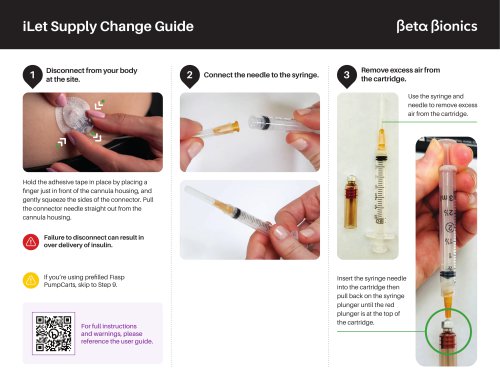 iLet Supply Change Guide
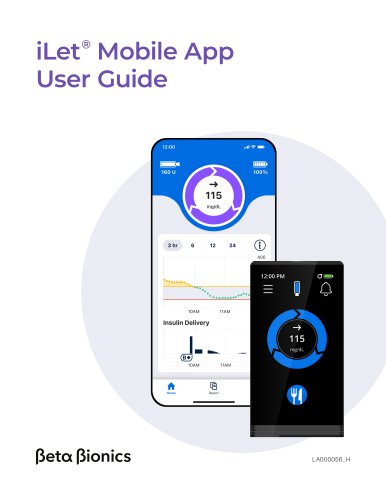 iLet Mobile App User Guide
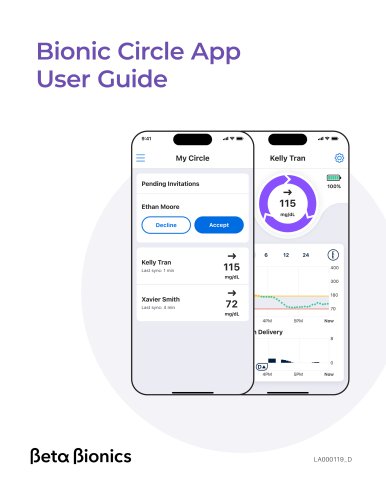 Bionic Circle App User Guide
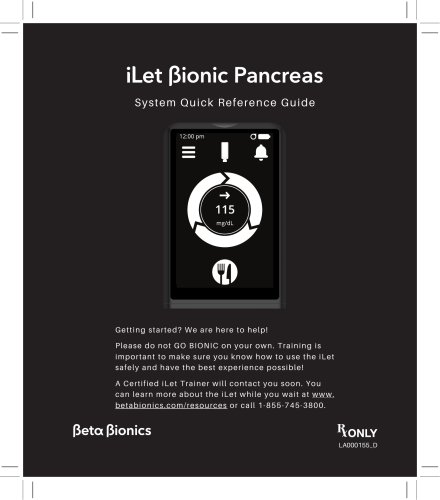 System Quick Reference Guide