


TiO2Mesh™ Biocompatible textile coatings
1 / 2 PagesView full catalog
TiO2Mesh™ Biocompatible textile coatings
Product catalog summary
Introduction
The document discusses advancements in implant materials, focusing on enhancing biocompatibility through surface modifications. BioCer Entwicklungs GmbH has developed innovative coating processes to improve implant surfaces, particularly using titanium oxide coatings.
Specifications and Procedures
The coating process involves a wet-chemical method to apply a pure titanium oxide layer on textile implant materials like hernia mesh. This process enhances biocompatibility and biofunctionality by leveraging titanium's ability to form a protective TiO2 layer, which anchors human proteins and integrates implants into the body.
Material Characteristics
Titanium is favored for its mechanical qualities and body compatibility, forming a stable oxide layer upon contact with air or body fluids. However, its brittleness limits its use where flexibility is crucial, leading to the use of polymers that may cause foreign body reactions.
Innovative Coating Solutions
New coating processes address these issues by modifying surface roughness and increasing cell adhesion, resulting in improved biocompatibility. The coatings are firmly adhered to the polymer, maintaining the implant's flexibility and elasticity.
Experimental Results
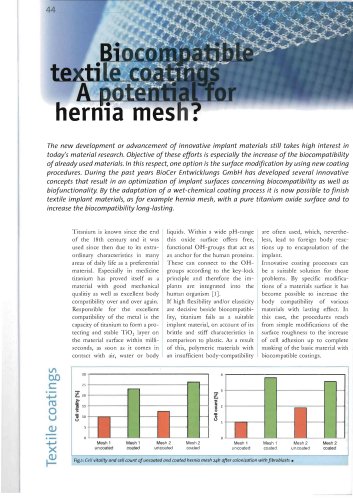
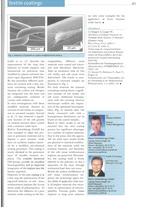
Experiments with fibroblasts on coated and uncoated hernia meshes showed significant increases in cell vitality and count for coated samples. Scanning electron microscopy confirmed enhanced biocompatibility, with structured cells distributed homogeneously on coated surfaces.
Applications and Benefits
The technology is applicable to various implant materials, including vascular grafts and breast implants, enhancing their biocompatibility. The titanium oxide layer is similar to the passivation layer on metallic implants, providing excellent integration into the human body.
Conclusion
The new coating process offers significant advantages for implant materials, preserving essential properties while improving biocompatibility. This advancement opens new fields of application for implants requiring optimized biocompatibility.
References
The document cites studies on collagen adsorption on titanium oxide surfaces and improvements in long-term behavior of polymer-based implants through plasma-activated chemical vapor deposition.
Contact Information
Dr. Markus Heinlein and Frank Heidenau from BioCer Entwicklungs GmbH are the primary contacts for further information.
The document discusses advancements in implant materials, focusing on enhancing biocompatibility through surface modifications. BioCer Entwicklungs GmbH has developed innovative coating processes to improve implant surfaces, particularly using titanium oxide coatings.
Specifications and Procedures
The coating process involves a wet-chemical method to apply a pure titanium oxide layer on textile implant materials like hernia mesh. This process enhances biocompatibility and biofunctionality by leveraging titanium's ability to form a protective TiO2 layer, which anchors human proteins and integrates implants into the body.
Material Characteristics
Titanium is favored for its mechanical qualities and body compatibility, forming a stable oxide layer upon contact with air or body fluids. However, its brittleness limits its use where flexibility is crucial, leading to the use of polymers that may cause foreign body reactions.
Innovative Coating Solutions
New coating processes address these issues by modifying surface roughness and increasing cell adhesion, resulting in improved biocompatibility. The coatings are firmly adhered to the polymer, maintaining the implant's flexibility and elasticity.
Experimental Results
Experiments with fibroblasts on coated and uncoated hernia meshes showed significant increases in cell vitality and count for coated samples. Scanning electron microscopy confirmed enhanced biocompatibility, with structured cells distributed homogeneously on coated surfaces.
Applications and Benefits
The technology is applicable to various implant materials, including vascular grafts and breast implants, enhancing their biocompatibility. The titanium oxide layer is similar to the passivation layer on metallic implants, providing excellent integration into the human body.
Conclusion
The new coating process offers significant advantages for implant materials, preserving essential properties while improving biocompatibility. This advancement opens new fields of application for implants requiring optimized biocompatibility.
References
The document cites studies on collagen adsorption on titanium oxide surfaces and improvements in long-term behavior of polymer-based implants through plasma-activated chemical vapor deposition.
Contact Information
Dr. Markus Heinlein and Frank Heidenau from BioCer Entwicklungs GmbH are the primary contacts for further information.
See more
Catalog excerpts
45 are only some examples für the application of those titanium oxide laycrs. _ Literature _ [lJ Köppel1 5, Lal1gel W., Adsorption of Collagen Fragmentr on Lehle et al. [2] describe the improvement of the long time behavior of textile implants and biomaterials on polymeric base modified by plasma aetivated che mical vapor deposition (PACVD). By this procedure different poly mers are covered wirh a thin, tita ni um containing coating. Beside titanium also carbon and nitrogen are integrated into the layer and are subsequently oxidized 10 cantact with ambient air. In vitro investigations with...
Open the catalog to page 2All BioCer catalogs and technical brochures
 Ti02Mesh Ti02 Mesh Light
2 Pages
 Ti02Mesh Bra
2 Pages
 rules of conduct
2 Pages
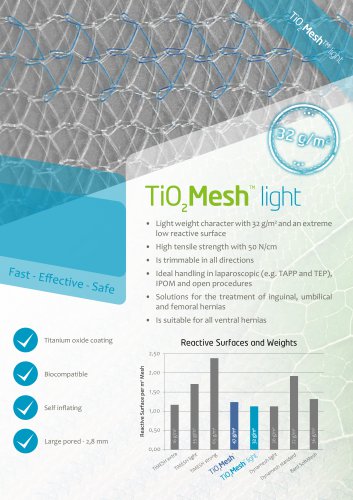 TiO2Mesh™ light
2 Pages
 TiO2Mesh™ Product Overview
2 Pages
 TiO2Mesh™
2 Pages
 HaemoCer™ Flex Set
2 Pages
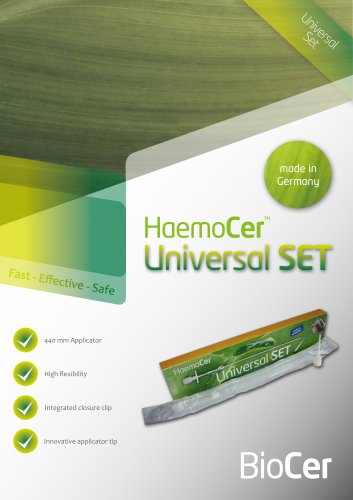 HaemoCer™ Universal Set
2 Pages
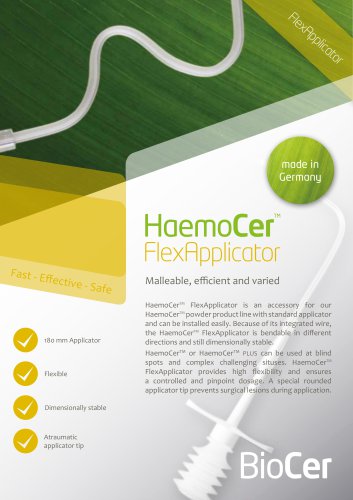 HaemoCer™ FlexApplicator
2 Pages
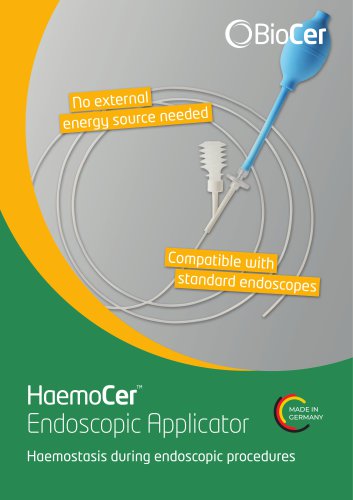


Related Searches
- Hemostatic agent
- Hernia prosthesis
- Abdominal hernia prosthesis
- Inguinal hernia prosthesis
- ENT surgery hemostatic agent
- Wound surgery hemostatic agent
- Cardiovascular surgery hemostatic agent
- Neurosurgery hemostatic agent
- Orthopedic surgery hemostatic agent
- Gynecological surgery hemostatic agent
- Incisional hernia prosthesis
- Powder hemostatic agent
- Urologic surgery hemostatic agent
- Applicator
*Prices are pre-tax. They exclude delivery charges and customs duties and do not include additional charges for installation or activation options. Prices are indicative only and may vary by country, with changes to the cost of raw materials and exchange rates.
About MedicalExpo
MedicalExpo is a marketplace that offers B2B players a complete experience, from product sourcing to purchase. MedicalExpo is an entity of VirtualExpo Group.
Are you a buyer?
Are you a supplier?