
- Catalogs
- BioMedomics, Inc.
- Sickle SCAN®

Sickle SCAN®
Sickle SCAN®
Sickle SCAN is a diagnostic tool designed to improve the survival prospects of children with sickle cell disease (SCD) in resource-limited areas. It provides accurate results without the need for electricity or additional equipment, making it suitable for point-of-care use.
Design of the Testing Device
The Sickle SCAN device is a lateral flow qualitative immunoassay that detects the presence of hemoglobins HbA, HbS, and HbC. It features a testing cartridge with four detection bands, including a control band. The test requires a small blood sample mixed with a buffer solution, and results are visible within minutes.
Testing Procedures
The test involves adding 5 μL of blood to a buffer solution, mixing, and then applying the lysate to the Sickle SCAN cartridge. Results are typically visible within one minute, with a final reading after five minutes.
Comparison With Other Methods
Traditional methods for diagnosing SCD, such as hemoglobin electrophoresis and HPLC, require advanced laboratory facilities and are costly. Sickle SCAN offers a cost-effective and rapid alternative with high sensitivity and specificity.
Test Reliability
Sickle SCAN provides high specificity and sensitivity, even in the presence of interfering substances or in anemic patients. It can differentiate between SCD, sickle cell trait, and normal hemoglobin.
Sensitivity and Specificity
In a study comparing Sickle SCAN to HPLC, the device demonstrated over 99% sensitivity and specificity across various hemoglobin genotypes.
Interfering Factors
The device shows minimal interference from substances like albumin, bilirubin, triglycerides, hydroxyurea, and penicillin.
Limit of Detection
The limit of detection for hemoglobins A, S, and C is less than 10% for each.
Conclusion
Sickle SCAN is a revolutionary tool for diagnosing sickle cell disease in resource-limited settings, offering a rapid, reliable, and affordable solution.
Catalog excerpts

Sickle SCAN could revolutionize the survival prospects for children born with sickle cell disease in resource-limited areas.” Thomas N. William, Chair in Hemoglobinopathy, Dept of Medicine, Imperial College of Lond
Open the catalog to page 1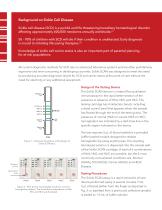
Background on Sickle Cell Disease Sickle cell disease (SCD) is a painful and life threatening hereditary hematological disorder affecting approximately 400,000 newborns annually worldwide.(1) 50 - 90% of children with SCD will die if their condition is undetected. Early diagnosis is crucial to initiating life-saving therapies.(2) Knowledge of sickle cell carrier status is also an important part of parental planning for at-risk populations. All current diagnostic methods for SCD rely on advanced laboratory systems and are often prohibitively expensive and time-consuming in developing countries....
Open the catalog to page 2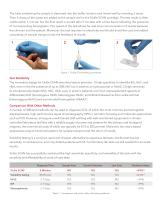
The tube containing the sample is dipensed into the buffer solution and mixed well by inverting 3 times. Then 5 drops of the lysate are added to the sample well in the Sickle SCAN cartridge. The test result is often visible within 1 minute, but the final result is scored after 5 minutes with a blue band indicating the presence of corresponding hemoglobin. The speed of the test allows for real-time communication of results between the clinician and the patient. Moreover, the test requires no electricity and should avoid the cost and added complexity of sample transport and the feedback of results....
Open the catalog to page 3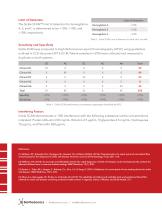
Limit of Detection The Sickle SCAN™ limit of detection for hemoglobins A, S, and C is determined to be <10%, <10%, and <10%, respectively. Limit of Detection Hemoglobin A Table 2 - Sickle SCAN Limit of Detection for HbA, HbS, and HbC Sensitivity and Specificity Sickle SCAN was compared to High Performance Liquid Chromatography (HPLC) using guidelines outlined in CLSI document EP15-A2-IR. Patient samples (n=290) were collected and measured in duplicate on both systems. SS Table 3 - Sickle SCAN performance compared to genotypes identified by HPLC Interfering Factors Sickle SCAN demonstrates ≤ 10%...
Open the catalog to page 4All BioMedomics, Inc. catalogs and technical brochures
 Femi SCAN
4 Pages
 SARS-CoV-2-Rapid Antigen test
33 Pages
- Detection kit
- Solvent reagent
- Blood detection kit
- Blood rapid screening test
- Cassette rapid test
- Immunoassay rapid diagnostic test
- Infectious disease detection kit
- Diagnostic reagent
- Rapid virus test
- Molecular detection kit
- Respiratory disease assay kit
- Optical test kit
- Dye reagent kit
- Clinical detection kit
- Cassette detection kit
- Chromatographic immunoassay test kit
- Fluorescence detection kit
- Rapid respiratory disease test
- COVID-19 assay kit
- Clinical reagent