- Catalogs
- Bioquochem
- New analytical device to assess the redox state of biomédical samples


- Company
- Products
- Catalogs
- News & Trends
- Exhibitions
New analytical device to assess the redox state of biomédical samples
New analytical device to assess the redox state of biomédical samples
The BRS (BQC Redox System) is a portable electrochemical device designed to assess the redox state of biomedical samples by measuring Total Antioxidant Capacity (TAC) and H2O2 Scavenging Activity. It is validated for use with human blood, plasma, and urine and is designed for continuous upgrades.
BRS Test Strips
The device uses disposable test strips for TAC and H2O2 measurements. TAC strips are made from carbon material, while H2O2 strips use modified carbon with electrocatalytic properties.
Advantages of Using BRS
- Simple and fast analysis
- Low sample volume required
- No need for lab equipment or complex sample pretreatment
- Suitable for colored and turbid samples
How to Use the BRS Device
Insert the test strip, place a sample drop, and start the measurement via a mobile app. Results are displayed in about one minute.
Understanding Oxidative Stress
Oxidative stress is an imbalance between reactive oxygen/nitrogen species and antioxidants, linked to aging and diseases. Studying it is crucial for disease prevention and understanding lifestyle effects on health.
Electrochemistry in Oxidative Stress Study
Electrochemistry is ideal for studying redox reactions due to its rapid response and high sensitivity. The BRS device uses this to measure oxidative stress markers efficiently.
Total Antioxidant Capacity (TAC)
TAC measures the non-enzymatic antioxidant defense system. The BRS device uses a voltammetric technique for TAC determination, offering a simple and sensitive alternative to traditional methods.
BRS Analytical Characteristics for TAC
- Wide linear range for TAC standards
- Good precision with intra and inter-assay CVs < 10%
Conclusion
The BRS device provides a rapid, simple, and effective method for assessing the redox state of biomedical samples, overcoming many limitations of traditional methods.
Introduction to H2O2 Scavenging Activity
Hydrogen peroxide (H2O2) is a byproduct of cellular processes and can cause oxidative damage if not regulated. Measuring H2O2 scavenging activity is crucial for assessing antioxidant capacity.
Methods for Determining H2O2 Scavenging Activity
Traditional methods include UV absorption and fluorometric probes, which face challenges like interference and high costs.
BRS Device for H2O2 Scavenging Activity
The BRS device uses voltammetric techniques to measure H2O2 oxidation, offering a simple and cost-effective solution.
Comparison of Methods
Optical methods face issues like interference, whereas the BRS method is selective and simple.
Analytical Characteristics
The BRS method demonstrates high precision with a CV of less than 10% for intra-assay precision.
Sample Analysis
Table 6 presents the percentage of H2O2 scavenging activity for various biological samples, with saliva showing 20-45% and lysed red blood cells showing 35-55% scavenging activity.
Catalog excerpts
New analytical device to assess the redox state of Edificio CEEI | Parque Tecnologico de Asturias, 33428 Llanera, Asturias [email protected]
Open the catalog to page 1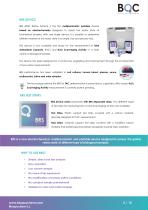
BRS DEVICE BRS (BQC Redox System) is the first multiparametric portable device based on electrochemistry designed to assess the redox state of biomedical samples. With one single device, it is possible to determine different markers of the redox state in a simple, fast and precise way. The device is now available and ready for the measurement of Total Antioxidant Capacity (TAC) and H2O2 Scavenging Activity in a wide variety of biological samples. The device has been designed for a continuous upgrading and improvement through the incorporation of new redox measurements. BRS performance has been...
Open the catalog to page 3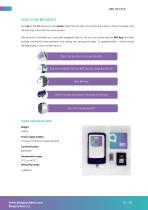
BRS DEVICE HOW TO USE BRS DEVICE The use of the BRS device is very simple. Insert the test strip into the device, place a drop of sample onto the test strip, and start the measurement. The device is controlled by a specially designed App to use on your mobile device. BRS App functions include running the measurements and storing and sharing the data. In approximately 1 minute results are displayed on your mobile device. Click the button to turn on the BRS Pair your mobile with the BRS device using Bluetooth Insert the strip and place the drop of sample Some Technical data Weight ±250 g Power...
Open the catalog to page 4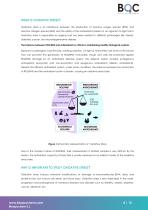
WHAT IS OXIDATIVE STRESS? Oxidative stress is an imbalance between the production of reactive oxygen species (ROS) and reactive nitrogen species (RNS) and the ability of the antioxidants present in an organism to fight them. Oxidative stress is responsible for ageing and has been related to different pathologies like obesity, diabetes, cancer, and neurodegenerative disease. The balance between ROS/RNS and antioxidants is critical in maintaining healthy biological systems. Exposure to pathogens, bad life style, smoking, pollution, UV light or malnutrition are some of the factors that can promote...
Open the catalog to page 5
BRS DEVICE Determining the degree of oxidative stress is therefore of great interest to study: Disease prevention, control and treatment. Aging process. Effect of lifestyles (diet, sport) on health. WHY ELECTROCHEMISTRY TO STUDY OXIDATIVE STRESS? Redox reactions are involved in the origin and consequences of oxidative stress. Electrochemistry is recognized as the best tool to study this type of reactions. Another important aspect in favour of the electrochemical methods to study oxidative stress, is the electroactivity of most of the oxidants and antioxidants present in biological samples....
Open the catalog to page 6
TOTAL ANTIOXIDANT CAPACITY (TAC) WHAT IS TAC? Total antioxidant capacity (TAC) is a global measurement of the non-enzymatic antioxidant defense system that integrates the individual effect of all antioxidants in a given matrix, and their additive, synergistic or antagonistic interactions. TAC is considered an important parameter to establish the redox state of biological samples and can be used as an oxidative stress biomarker. METHODS FOR TAC DETERMINATION Due to the lack of standard quantification methods for TAC determination a wide variety of assays have been used to asses the antioxidant...
Open the catalog to page 7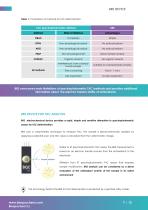
Table 1. Comparison of methods for TAC determination. TAC Spectrophotometric Method Method ORAC BRS overcomes main limitations of spectrophotometric TAC methods and provides additional information about the electron transfer ability of antioxidants. BRS DEVICE FOR TAC ANALYSIS BRS electrochemical device provides a rapid, simple and sensitive alternative to spectrophotometric assays for TAC determination. BRS uses a voltammetric technique to measure TAC. The sample is electrochemically oxidized by applying a potential scan and TAC value is calculated from the voltammetric charge. Similar to ET...
Open the catalog to page 8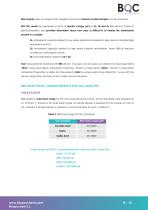
REDOX TECHNOLOGIES BRS analysis does not require toxic reagents and even colored or turbid samples can be analyzed. BRS TAC results are expressed in terms of electric charge (^C) as Qi, Q2 and Qt. BRS device, thanks to electrochemistry, also provides information about how easy or difficult is to oxidize the antioxidants present in a sample. Q1. Antioxidant capacity related to low redox potential antioxidants. Easy electron transfer/High antioxidant activity. Q2. Antioxidant capacity related to high redox potetial antioxidants. More difficult electron transfer/Low antioxidant activity. Qt. Total...
Open the catalog to page 9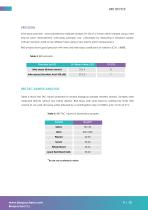
Intra-assay precision was evaluated by replicate analysis (n=10) of a human serum sample using a new strip for each measurement. Inter-assay precision was calculated by measuring a standard solution (100 |jM Ascorbic Acid) on ten different days using a new strip for each measurement. BRS analysis shows good precision with intra and inter-assay coefficients of variation (CV) < 10 %.
Open the catalog to page 10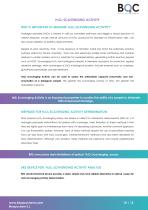
H2O2 SCAVENGING ACTIVITY WHY IS IMPORTANT TO MEASURE H2O2 SCAVENGING ACTIVITY? Hydrogen peroxide (H2O2) is formed in cells by controlled pathways and trigger a broad spectrum of cellular response. Locally intense amounts of H2O2, produced for example by inflammatory cells, can also cause oxidation of proteins, lipids and DNA. Despite its poor reactivity, H2O2 in the presence of transition metal ions forms the extremely reactive hydroxyl radical by Fenton chemistry. H2O2 can also selectively oxidize some methionine and cysteine residues in certain proteins and is a substrate for myeloperoxidase,...
Open the catalog to page 11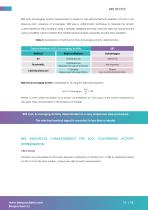
BRS H2O2 Scavenging Activity measurement is based on the electrochemical oxidation of H2O2 in the absence and presence of scavengers. BRS uses a voltammetric technique to measure the anodic current related to H2O2 oxidation using a specially designed test strips. H2O2 test strips are manufactured using a modified carbon material that exhibits electrocatalytic properties towards H2O2 oxidation. Table 5. Comparison of methods for H2O2 Scavenging Activity determination. Optical Methods H2O2 Scavenging Activity BRS H2O2 Scavenging Activity is expressed as % using the following equation: Where iO...
Open the catalog to page 12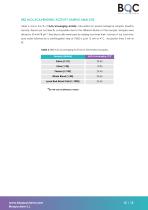
BRS H2O2 SCAVENGING ACTIVITY SAMPLE ANALYSIS Table 6 shows the % of H2O2 Scavenging Activity calculated for several biological samples (healthy donors). Results are not directly comparable due to the different dilution of the samples. Samples were diluted in 50 mM PB pH 7. Red bloos cells were lysed by adding four times their volume of ice cold ultra-pure water followed by a centrifugation step at 10000 x g for 15 min at 4° C. Incubation time: 5 min at RT. Table 6. BRS H2O2 Scavenging Activity for biomedical samples.
Open the catalog to page 13All Bioquochem catalogs and technical brochures
Archived catalogs
 PRODUCT CATALOGUE 2018
32 Pages
 STAIN LINE CATALOGUE
16 Pages