
- Catalogs
- BioSystems S.A.
- Autoimmunity Product List


- Products
- Catalogs
- News & Trends
- Exhibitions
Autoimmunity Product List

Autoimmunity Product List
Catalog excerpts

REAGENTS & INSTRUMENTS
Open the catalog to page 1
FOREWORD The immune response in autoimmune diseases is itself part of the disease process, where the immune system reacts against components naturally present in the human being as if they were a menace for the organism. Consequently, it is possible to use autoantibodies as markers of disease. In some of these diseases, autoantibodies can predict both the likelihood of clinical disease and the rate of progression to disease, but also autoantibodies can be detected in diseases with a long period before the onset of clinical symptoms. This is the case of type 1 diabetes and thyroiditis, in which...
Open the catalog to page 3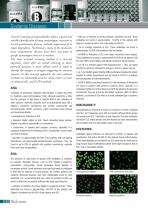
Systemic Diseases General screening of autoantibodies allows a quick and reliable identification of many autoantigens coexistent in several autoimmune diseases, without compromise of its organ dependence. Furthermore, many of the connective tissue autoimmune diseases have been associated to specific autoantigens that act as markers. The most accepted screening method is a two-step approach, where after an initial screening to detect potential positives, a more refined search is made to identify the antigen or antigens triggering the immune response. In this two-step approach, the most common methods...
Open the catalog to page 4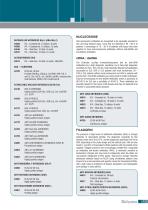
IFA – Complete kit, 10 slides x 6 wells IFA – Complete kit, 10 slides x 12 wells IFA – Slide Box, 10 slide x 6 wells IFA – Slide Box, 10 slide x 12 wells IFA – Slide Box, 10 slide x 6 wells / HEp2/ML. ELISA kit, 96 test Purified SSA(Ro), SSB(La), Sm/RNP, RNP (70, A and C), Sm, Scl70, Jo1, dsDNA, ssDNA, nucleosomes, total histones, PMScl 100, Centromere B EXTRACTABLE NUCLEAR ANTIGENS ELISA 96 Test 44740 ENA 6-SCREENING Highly purified SSA (Ro), SSB (La), Sm, Sm/RNP, Jo1, Scl70 Anti-nucleosome antibodies are recognized to be especially prevalent in SLE and drug-induced lupus, since they are detected...
Open the catalog to page 5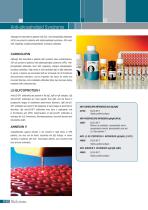
Anti-phospholipid Syndrome Although first described in patients with SLE, anti-phospholipid antibodies (ACA) are present in patients with antiphospholipid syndrome. ACA react with negatively charged phospholipids, including cardiolipin. CARDIOLIPIN Although first described in patients with systemic lupus erythematosus, ACA are present in patients with antiphospholipid syndrome (APS). Antiphospholipid antibodies react with negatively charged phospholipids, including cardiolipin. High levels of anti-cardiolipin IgG or IgM antibodies in serum or plasma are associated with an increased risk of thrombosis...
Open the catalog to page 6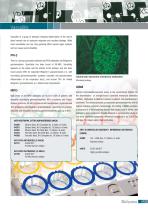
Vasculitis Vasculitis is a group of diseases featuring inflammation of the wall of blood vessels due to leukocyte migration and resultant damage. While most vasculitides are rare, they generally affect several organ systems and can cause severe disability. PR-3 There is a strong association between anti-PR3 antibodies and Wegener’s granulomatosis. Specificity has been found of 95-98%. Sensitivity depends on the phase and the activity of the disease, and has been found around 90% for expanded Wegener’s granulomatosis (i.e. with necrotizing glomerulonephritis, systemic vasculitis and granulomatous...
Open the catalog to page 7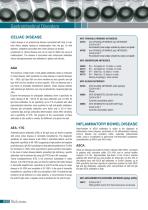
Gastrointestinal Disorders CELIAC DISEASE Celiac disease is an autoimmune disease associated with total or subtotal villous atrophy leading to malabsorption from the gut. As with diabetes, antibodies associated with celiac disease can predict progression to clinical disease and can be used to define the cause of malabsorption. The disease is associated with endomysial antibodies (tissue transglutaminase) and antibodies to gliadin and reticulin. AGA The presence of high levels of anti-gliadin antibodies (AGA) is indicative of celiac disease. AGA sensitivity for celiac disease is reported between...
Open the catalog to page 8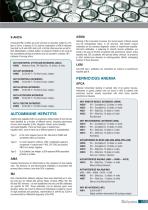
Among the IBD, X-ANCA are more common in ulcerative colitis (44.1%) than in Chron´s disease (8.1%) and the combination of ANCA methanol fixed test by IIF and ASCA test by IIF or ELISA often becomes an aid for their differentiation. X-ANCA pattern (or atypical P-ANCA) is the result of the autoantibody binding to proteins such as lactoferrin, elastase, BPI, cathepsin G among others Staining of the muscularis mucosae, the muscle layers of blood vessels and the interglandular fibers, in rat stomach. Anti-smooth muscle antibodies are the standard diagnostic marker of autoimmune hepatitis. Anti-actin...
Open the catalog to page 9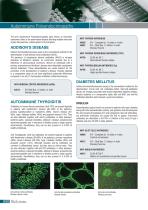
Autoimmune Polyendocrinopathy The term Autoimmune Polyendocrinopathy (also known as Schmidt’s syndrome) refers to an autoimmune disease affecting multiple endocrine organs like pancreas, adrenal gland or thyroid gland. ADDISON’S DISEASE Indirect immmunofluorescence assay is the conventional method for the determination of anti-adrenal cortex antibodies (AACA). The presence of cytoplasmic adrenal antibodies (AACA) is strongly indicative of Addison’s disease, an uncommon disorder due to a deficiency of adrenocortical hormones. Almost all individuals with a primary amenorrhea and Addison’s disease...
Open the catalog to page 10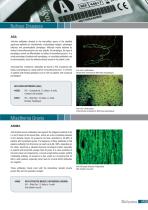
Bullous Diseases ASA Anti-skin antibodies directed to the intercellular space of the stratified squamous epithelia are characteristic of pemphigus vulgaris, pemphigus foliaceus and paraneoplastic pemphigus. Although results obtained by indirect immunofluorescence are very specific for pemphigus, the type of pemphigus cannot be differentiated by indirect immunofluorescence. In a small percentage of patients with pemphigus, no circulating antibodies can be demonstrated, since the antibody already bound to the patient’s skin. Anti-basement membrane antibodies are found in 70% of patients with bullous...
Open the catalog to page 11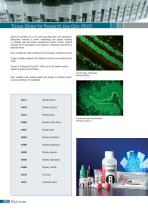
Slides are provided as it, to be used according users' own procedures. Biosystems warrants a correct morphology and general reactivity as checked with anti-nuclear homogeneus positive control. Specific reactivity for an autoantigen is not checked or otherwise assumed for a particular tissue. Not a complete kit. Other components are necessary to perform the test. Usage of auxiliary reagents from different lots does not compromise the Tissues "For Research Use Only" (RUO) are not CE-labelled and are subject to special sale conditions. (Only available under special request and subject to minimum...
Open the catalog to page 12All BioSystems S.A. catalogs and technical brochures
 CLINICAL DIAGNOSTICS
48 Pages
 A25
A252 Pages
 Coagulation
2 Pages
 Reagents BA
4 Pages
 Oxalate-Citrate
4 Pages
 HA5
HA52 Pages
 HA3
HA32 Pages
 A15 cooler
2 Pages
 A15
A152 Pages
 BA200
BA2008 Pages
 Biochemistry
2 Pages
 I MLS
I MLS2 Pages
 I MLD
I MLD4 Pages
 I PRO
I PRO4 Pages
 BA400
BA40012 Pages

- Compound microscope
- Laboratory microscope
- Desktop microscope
- Sample preparation system
- Clinical chemistry reagent kit
- Automatic sample processor
- Clinical chemistry analyzer
- Immunoanalysis reagent kit
- Automated biochemistry analyzer
- Benchtop biochemistry analyzer
- Hematology analyzer
- Automatic hematology analyzer
- Benchtop sample preparation system
- Benchtop hematology analyzer
- Hematology analyzer with touchscreen
- Hemostasis analyzer
- ELISA reagent kit
- Binocular microscope
- Fluorescence microscope