
- Catalogs
- Bruker Daltonics Inc.
- GlycoScape: Glycan database-free Run & Done glycoproteomics on the timsTOF platform


GlycoScape: Glycan database-free Run & Done glycoproteomics on the timsTOF platform
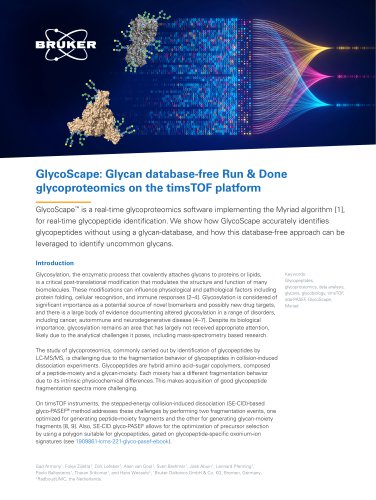
GlycoScape: Glycan database-free Run & Done glycoproteomics on the timsTOF platform
GlycoScape™ is a cutting-edge glycoproteomics software that utilizes the Myriad algorithm for identifying glycopeptides without the need for a glycan database. This innovative approach is crucial for identifying uncommon glycans, which play significant roles in various diseases.
Specifications and Methodology
GlycoScape operates on the timsTOF platform using the SE-CID-based glyco-PASEF method. This method optimizes fragmentation for both peptide and glycan components, allowing the software to identify glycopeptides by analyzing oxonium ions and N-glycan core fragmentation patterns.
Case Studies
- Case 1: GlycoScape successfully identified glycan moieties in a NIST mAB standard, aligning with known compositions.
- Case 2: Glycan identification was validated through exoglycosidase sequencing, confirming expected distributions.
- Case 3: The software detected novel glycans in patients with ALG1-congenital disorder of glycosylation, showcasing its ability to identify uncommon structures.
- Case 4: GlycoScape identified species-specific sialic acid distributions in plasma, demonstrating its adaptability with user-defined sugar building blocks.
Conclusions
GlycoScape offers accurate, real-time glycopeptide identification without relying on a glycan database, facilitating the discovery of novel glycans and providing flexibility through user-defined sugar building blocks.
This document reviews recent advancements in glycoproteomics, emphasizing the role of glycans as biomarkers in diseases like cancer and autoimmune disorders. It highlights the use of advanced mass spectrometry techniques for glycoprotein analysis.
Key Studies and Findings
- Glycans are significant biomarkers in cancer diagnosis and treatment, as noted by Adamczyk et al. (2012).
- Pinho et al. (2023) discuss the immune regulatory networks coordinated by glycans in autoimmunity and infection.
- Mukherjee et al. (2023) and Baerenfaenger et al. (2024) focus on optimizing glycoproteomics through advanced mass spectrometry techniques.
- Xu et al. (2015) introduce ProLuCID, an algorithm enhancing sensitivity and specificity in proteomics.
- Leoz et al. (2020) conduct an interlaboratory study on glycosylation analysis of monoclonal antibodies.
- Kawahara et al. (2021) evaluate high-performance search strategies for serum glycopeptide analysis.
- Polasky et al. (2022) discuss multiattribute glycan identification and FDR control.
- Wessels et al. (2024) demonstrate the use of plasma glycoproteomics for high-specificity disease biomarkers.
Technological Advancements
- GlycoScape, related to Bruker's ProteoScape, facilitates glycoproteomic mass spectrometry data analysis on the timsTOF platform.
- Dr. Melissa Baerenfaenger emphasizes the efficiency of PASEF data acquisition on the timsTOF platform for studying glycosylation in neurological diseases.
Conclusion
The document highlights the importance of glycoproteomics in understanding disease mechanisms and developing diagnostic tools. The integration of advanced mass spectrometry techniques and informatics solutions is crucial for enhancing the accuracy and efficiency of glycoprotein analysis.
Catalog excerpts
GlycoScape: Glycan database-free Run & Done glycoproteomics on the timsTOF platform GlycoScape™ is a real-time glycoproteomics software implementing the Myriad algorithm [1], for real-time glycopeptide identification. We show how GlycoScape accurately identifies glycopeptides without using a glycan-database, and how this database-free approach can be leveraged to identify uncommon glycans. Introduction Glycosylation, the enzymatic process that covalently attaches glycans to proteins or lipids, is a critical post-translational modification that modulates the structure and function of many biomolecules. These modifications can influence physiological and pathological factors including protein folding, cellular recognition, and immune responses [2–4]. Glycosylation is considered of significant importance as a potential source of novel biomarkers and possibly new drug targets, and there is a large body of evidence documenting altered glycosylation in a range of disorders, including cancer, autoimmune and neurodegenerative disease [4–7]. Despite its biological importance, glycosylation remains an area that has largely not received appropriate attention, likely due to the analytical challenges it poses, including mass-spectrometry based research. The study of glycoproteomics, commonly carried out by identification of glycopeptides by LC-MS/MS, is challenging due to the fragmentation behavior of glycopeptides in collision-induced dissociation experiments. Glycopeptides are hybrid amino acid–sugar copolymers, composed of a peptide-moiety and a glycan-moiety. Each moiety has a different fragmentation behavior due to its intrinsic physicochemical differences. This makes acquisition of good glycopeptide fragmentation spectra more challenging. On timsTOF instruments, the stepped-energy collision-induced dissociation (SE-CID)-based glyco-PASEF® method addresses these challenges by performing two fragmentation events, one optimized for generating peptide-moiety fragments and the other for generating glycan-moiety fragments [8, 9]. Also, SE-CID glyco-PASEF allows for the optimization of precursor selection by using a polygon suitable for glycopeptides, gated on glycopeptide-specific oxonium-ion signatures (see 1909861-lcms-221-glyco-pasef-ebook). Gad Armony 1, Fokje Zijlstra 2, Dirk Lefeber 2, Alain van Gool 2, Sven Brehmer 1, José Abuin 1, Lennard Pfenning 1, Paolo Ballesteros 1, Tharan Srikumar 1, and Hans Wessels 2; 1 Bruker Daltonics GmbH & Co. KG, Bremen, Germany; 2 RadboudUMC, the Netherlands. Keywords: Glycopeptides, glycoproteomics, data analysis, glycans, glycobiology, timsTOF, dda-PASEF, GlycoScape,
Open the catalog to page 1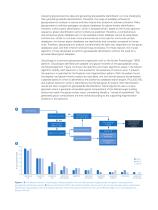
Analyzing glycoproteomics data and generating glycopeptide identification is more challenging than generating peptide identifications. Therefore, the range of available software for glycoproteomics analysis is scarcer and less mature than proteomic software solutions. Many glycoproteomic software packages use glycan databases for glycan-moiety identification. However, unlike protein identification, which is template-driven, based on the human genome sequence, glycan identification cannot similarly be predicted. Therefore, a comprehensive and exhaustive glycan database akin to the available protein...
Open the catalog to page 2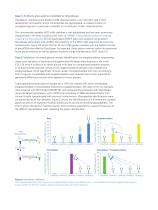
Case 1: Antibody glycosylation identified by GlycoScape. Therapeutic monoclonal antibodies (mAB) characterization is an important step in their development and quality control. All antibodies are glycosylated, and determination of conjugated glycans, in particular at Asn297, is a critical part of their characterization. The commercially available NIST mAB standard is well established and has been extensively characterized in the field, including work from us (1889617-Glycopeptide-analysis-in-peptidemapping-workflow-ebook). SE-CID-based glyco-PASEF data were analyzed using default GlycoScape parameters...
Open the catalog to page 3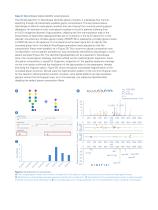
Case 3: GlycoScape helps identify novel glycans. The Myriad algorithm in GlycoScape identifies glycan-moieties in a database-free manner, searching through all theoretically possible glycan compositions. This key feature allows GlycoScape to identify novel glycan-moieties that are missing from currently existing glycan databases. An example of such novel glycan-moieties is found in patients suffering from an ALG1-congenital disorder of glycosylation, affecting the first mannosylation step in the biosynthesis of lipid-linked oligosaccharides due to mutations in the ALG1 gene [15]. In this disorder,...
Open the catalog to page 4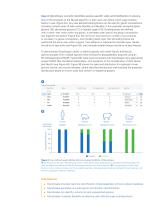
Case 4: GlycoScape correctly identifies species-specific sialic acid distribution in plasma. One of the strengths of the Myriad algorithm is that users can define which sugar building blocks it uses (Figure 4A). Any user defined building blocks can be used for glycan compositions, including multiple types of sialic acids (Neu5Ac and Neu5Gc in this example); phosphorylated glycans [16]; derivatized glycans [17]; or labeled sugars [18]. Building blocks are defined with a name, their mass within the glycan, a one-letter code used in the glycan composition and fragment annotation (Figure 3D), the...
Open the catalog to page 5
References [1] Armony G, Brehmer S, Srikumar T, et al (2023). The GlycoPaSER Prototype as a Real-Time N-Glycopeptide Identification Tool Based on the PaSER Parallel Computing Platform. Int J Mol Sci 24:7869. https://doi.org/10.3390/ijms24097869. https://github.com/Wessels-Lab/Myriad_core [2] Shental-Bechor D, Levy Y (2008). Effect of glycosylation on protein folding: a close look at thermodynamic stabilization. Proc Natl Acad Sci U S A 105:8256–8261. https://doi.org/10.1073/pnas.0801340105 [3] Varki A (2017). Biological roles of glycans. Glycobiology 27:3–49. https://doi.org/10.1093/glycob/cww086...
Open the catalog to page 6All Bruker Daltonics Inc. catalogs and technical brochures
 Life Science Mass Spectrometry
20 Pages
 MASS SPECTROMETRY
20 Pages
 neofleX™
12 Pages
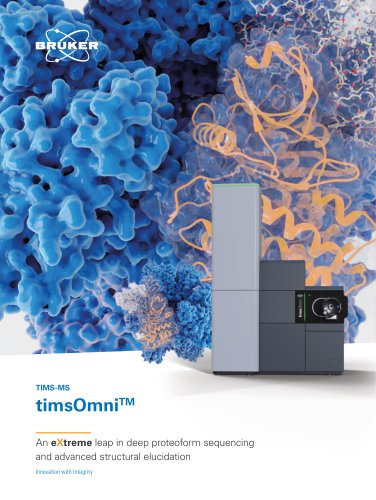 timsOmniTM
20 Pages
Archived catalogs
 micrOTOF-Q III
6 Pages
 Toxtyper
6 Pages
 impact HD
12 Pages
 Radiation Backpack Sentry
4 Pages
 Product Overview
20 Pages
 The new autoflex speed
10 Pages
 solarix XR
12 Pages
 SIGIS II
2 Pages
 VeroTect
4 Pages
 µRAID
µRAID4 Pages
 SVG 2 and Probes
6 Pages
 MM2
MM26 Pages
 RAID M100
6 Pages
 RAID S2
6 Pages
 RAID XP
4 Pages
 pTD
pTD2 Pages
 RAID AFM
4 Pages
 DE-tector
6 Pages
 ImagePrep
4 Pages
 micrOTOF II
8 Pages
 impact II
12 Pages
 EVOQ
EVOQ6 Pages
 maxis II
12 Pages
 ProteinScape
8 Pages
 Bruker ToxScreener
6 Pages
 MALDI Biotyper CA System
12 Pages
 MALDI Biotyper Clinical IVD
6 Pages
 MBT Mycobacteria Library
4 Pages
 PesticideScreener 2.0
8 Pages
 rapifleX™ MALDI Tissuetyper™
8 Pages
 MALDI Imaging
16 Pages
 MBT Pharma
8 Pages
 MBT Disposable Targets US
2 Pages
 MBT BTS US
2 Pages
 MBT Sepsityper
6 Pages
 MBT Consumables RUO
4 Pages
 MBT SMART IVD
4 Pages
 MBT Pilot RUO
4 Pages
 MBT Galaxy RUO
4 Pages
 Quant Proteomics
8 Pages
 timsTOF Pro
6 Pages
 TargetScreener
6 Pages
 timsTOF™
8 Pages
 TASQ Software
4 Pages
 BioPharma Compass® 2.0
8 Pages
 Metabolomics
8 Pages
 spotOn™
4 Pages
 Product Overview
16 Pages
 Toxtyper
8 Pages
 CMC-assist
2 Pages
 IntelliSlidesTM
2 Pages
 MALDI Biotyper® CA System
12 Pages
 Label-Free Molecular Imaging
12 Pages
 EVOQ - 2014
6 Pages


- BRUKER analysis software
- Visualization software
- Control software
- Reporting software
- BRUKER laboratory software
- BRUKER spectrometer
- Monitoring software
- Acquisition software
- BRUKER benchtop spectrometer
- Simulation software
- Chromatography system
- Test software
- Import software
- Server-based software
- Real-time software
- Data analysis software
- Research software
- Interpretation software
- Compact spectrometer
- BRUKER mass spectrometer