

- Products
- Catalogs
- News & Trends
- Exhibitions
CONTAINER SYSTEM

CONTAINER SYSTEM
CBM, established in 1943 by Cav. Busatti, specializes in medical sterilization equipment. Operating from a 30,000 m2 facility in Italy, CBM offers over 4000 products and is certified under UNI EN ISO 9001 and UNI EN ISO 13485, ensuring high-quality standards.
The Permaside Filters system improves sealing, steam penetration, and air filtration in sterilization containers. Innovations include vertical PTFE filter cartridges and the use of stainless steel and aluminum, enhancing durability without adding weight. The design complies with ISO 11607-1 standards.
CBM's container system is designed for modern sterilization needs, featuring:
- Rounded upper rims for stability and gasket protection.
- Silicone gaskets for easy replacement.
- Anti-crushing devices to prevent damage from stacking.
- Riveted components for secure sealing.
- Aseptic opening and stable stacking systems.
- Disposable seals for tamper evidence.
- Ergonomic handles for safe transport.
- Traceability through aluminum plates and paper labels with chemical indicators.
- Design facilitating easy cleaning.
CBM complies with European regulations and standards, including:
- European Regulation (UE) 2017/745 and Directives 2007/47/CE and 93/42/CE for medical devices.
- EN ISO 9001 and EN ISO 13485 for quality management systems.
- EN ISO 17665-1 for sterilization processes.
- EN ISO 11607-1 and EN ISO 11607-2 for packaging requirements.
- EN 868-8 and EN ISO 11140-1 for sterilization containers and chemical indicators.
- EN 285 for steam sterilizers.
CBM uses reliable materials that meet current regulatory requirements for container production, including a Magnesium-Aluminium alloy and AISI304 stainless steel. Aluminum containers undergo anodizing processes to enhance surface properties and resistance to corrosive agents.
CBM manufactures containers using reliable materials that meet current standards. The containers are made from a Magnesium-Aluminium alloy and AISI304 stainless steel. The aluminium containers undergo anodizing processes, either soft or hard, to enhance surface properties and resistance to corrosive agents. Stainless steel containers are naturally resistant to corrosion and do not require additional surface treatments.
The anodizing process provides a protective surface coating on aluminium, making it resistant to water steam and allowing for color differentiation of container lids. Hard anodizing improves mechanical surface properties, giving a brownish color to the containers.
Stainless steel containers, made from AISI304, offer superior mechanical properties compared to aluminium, allowing for thinner walls without compromising strength. The weight difference between filled aluminium and steel containers is minimal, and both materials provide similar heat transmission resistance.
CBM offers a range of sterile barrier systems, including containers with replaceable and permanent filters, protected filters, and valve systems. The Permaside Filters system features a permanent microbial barrier positioned vertically, reducing dust and condensation accumulation and ensuring sterility during transport and storage.
The system requires minimal maintenance, with PTFE filters certified for over 2000 cycles and a shelf life of 5 years. Containers are equipped with unique serial numbers for traceability. The vertical filter position prevents steam penetration issues and enhances steam saturation quality. The design allows for a higher load volume compared to standard containers.
The vertical filter position avoids steam penetration problems from incorrect stacking. The reduced inlet surface improves steam saturation quality. The permanent cartridge size is optimized according to container height, ensuring uniform steam penetration and facilitating sterilization.
The CBM patent for the lateral filtering system enhances the steam penetration and air filtration capabilities of rigid containers used for steam sterilization. This system is efficient and cost-effective for sterilization centers.
- Vertical Filter Position: Prevents steam penetration issues due to faulty stacking and maintains a consistent distance from the steam inlet to the load center.
- Filter Dimensions: Optimized according to container height, reducing consumable management costs.
- Protection from Contaminants: Dust, dirt, and condensed water do not accumulate on the filters, ensuring sterility during transport and storage.
Containers are available in various materials such as stainless steel and aluminum with hard or soft anodizing. They come in different sizes and configurations, including options for non-removable lids and oversized handles.
This mechanical filtering system requires no maintenance and operates through a series of valve positions during and after sterilization to ensure sterility.
Designed for small-scale operations, these containers are robust and flexible, conforming to European standards. They are ideal for organizing small surgical sets and reducing disposable material usage.
- Non-removable hinged lids.
- Oversized handles with ergonomic coverings.
- Colored handles and lids for easy identification.
CBM offers a comprehensive range of accessories and consumables for both its own containers and those of other brands. The document details various products, including seals, plates, adhesive supports, filters, and baskets, highlighting their specifications and uses.
CBM provides universal plastic seals, some with chemical indicators, and aluminum and stainless steel plates, available in neutral or engraved forms. These are designed for secure locking and identification purposes.
The document lists various adhesive supports for documents and plates, emphasizing high-performance adhesives resistant to washing and sterilization cycles, ensuring permanent fixation on metallic surfaces.
CBM offers a variety of filters, including disposable paper filters with chemical indicators, cotton filters for up to 70 cycles, synthetic filters for up to 200 cycles, and long-lasting PTFE filters for up to 2000 cycles. These filters are designed for CBM containers and other brands, with options for different sizes and configurations.
CBM's basket system is highlighted as a versatile solution for handling and washing surgical instruments. The baskets, made from stainless steel AISI304, feature a unique design with perforated sheets and rounded corners, enhancing water drainage and preventing instrument displacement. The baskets are available in standard and customizable sizes, with retractable handles for easy handling.
The use of PTFE filters is noted for its environmental benefits, reducing paper consumption and sterilization costs, while offering extreme chemical resistance and longevity.
The document details various stainless steel and aluminum plates, fixing systems, and labels. It includes dimensions and specifications for engraved and neutral plates, as well as fixing systems using rings, cables, and clips. The plates are designed for use in wire baskets and trays.
The document outlines the use of trays in standard baskets to create additional levels for instruments, optimizing space and separating fragile items. The Easy Fit System is highlighted for its versatility in positioning and protecting surgical instruments, allowing for quick configuration changes and compatibility with sterilization processes.
The Easy Fit System is recommended for its ability to withstand sterilization and disinfection processes. The use of silicone and stainless steel materials is emphasized for durability and safety. The document also suggests using Flexymat silicone mats for better steam circulation and water drainage during sterilization.
The document includes detailed tables listing various supports, their dimensions, and configurations. Each support is supplied with screws for easy installation. The tables provide information on the number of slots, diameters, and lengths for different support types, such as Small Star, Big Star, Comb, and others.
The document emphasizes the importance of using the correct fixing systems and supports to ensure the safe handling and sterilization of surgical instruments. It also highlights the flexibility of the Easy Fit System in adapting to different instrument sizes and configurations.
1. The document describes various types of baskets and dispensers used in surgical settings, specifically for microsurgery, neurosurgery, laser surgery, and robotic surgery instruments.
2. Baskets are equipped with hinged flat lids, handles, and inner trays. They include silicone mats and supports to secure instruments during sterilization processes.
3. The materials used include stainless steel AISI304, known for its durability and resistance to high temperatures and corrosion.
1. The baskets are designed for the safe handling, washing, and sterilization of surgical instruments.
2. The Easy Fit System ensures instruments are securely held in place, preventing damage during handling.
3. The design includes features like perforations for steam flow and liquid drainage, and smooth surfaces to prevent damage to packaging.
1. The baskets are suitable for steam and low-temperature sterilization processes.
2. They are designed to avoid any mixing of instruments and to protect delicate components like optical fibers and Kirschner wires.
3. The use of non-toxic silicone supports is emphasized for safety and hygiene.
1. The baskets' design includes rounded edges and smooth surfaces to ensure safe handling and prevent damage to instruments and packaging.
2. The use of electro-polished stainless steel prevents discoloration and water stains.
3. The baskets are equipped with various support systems to accommodate different types of surgical instruments, including those used in robotic surgery.
1. Specific dimensions and configurations are provided for each type of basket, indicating their suitability for different instruments.
2. The document specifies the number of instruments each basket can hold, ensuring proper usage and capacity management.
The document provides a comprehensive overview of surgical baskets and dispensers, highlighting their design, materials, and functionality. The emphasis is on ensuring the safety and integrity of surgical instruments during sterilization and handling processes.
1. The document describes various medical instrument frames and containers made primarily from stainless steel AISI304, ensuring durability and resistance to sterilization processes.
2. The frames and containers are equipped with Easyfit silicone supports for secure placement of instruments.
3. DEKO containers are available in stainless steel or anodized aluminum, designed for the first decontamination of surgical instruments.
1. Laparoscopic frames facilitate the creation of single-patient surgery kits and ensure proper steam circulation during sterilization.
2. Arthroscopic instrument frames can be fixed inside perforated sheet baskets using screws, allowing functional arrangement of instruments.
3. Small set baskets are designed for sterilizing, cleaning, and transporting small instruments, with a focus on safety and effective steam penetration.
1. The DEKO system prevents cross-contamination during transport of contaminated materials.
2. Baskets and containers are electropolished to prevent color changes and water spots during sterilization.
3. Transport trolleys are made from stainless steel AISI304, ensuring long service life and resistance to corrosion.
1. Easyfit silicone supports and Softlips silicone lips ensure instruments remain in place during processes.
2. DEKO containers feature a high level of tightness, preventing overflow of disinfectant liquids.
3. Transport trolleys are equipped with antistatic wheels and perimetric bumpers for safe and efficient transport.
1. Dimensions specified in the tables are indicative and may vary.
2. The document does not provide detailed assembly instructions for the frames and containers.
1. Ensure proper handling of containers and trolleys to maintain their integrity and functionality.
2. Regularly check the tightness of DEKO containers to prevent leaks and contamination.
Catalog excerpts

MEDICAL EQUIPMENT Systems for sterilization services Systèmes pour les services de stérilisation
Open the catalog to page 1
CBM was founded by Cav. Busatti in 1943 into Milan. CBM has been moved to its current site in 1962. Actually CBM developed over an area of 30,000 m2. From the very start, the company specialized in medical equipment, especially in the area of sterilization, manufacturing high quality and reliable over time equipment. La société CBM a été créée par Cav. Busatti en 1943. En 1962, la société a été déplacée à son emplacement actuel. Aujourd’hui la surface de la société est de 30.000 m2. Depuis ses débuts, CBM s’est spécialisée dans la production de matériel médical, plus particulièrement dans le...
Open the catalog to page 3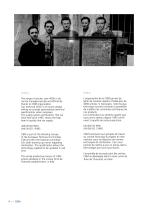
The range of articles, over 4000 in all, can be managed quickly and efficiently thanks to CBM organization. Our technical office is of course always willing to consider personalized technical specifications when necessary. The quality system certification, that we have held since 1995, shows the high level of quality that we supply: L’organisation de la CBM permet de gérer de manière rapide et fiable plus de 4000 articles. Si nécessaire, notre bureau technique est prêt à évaluer la possibilité de modifier les contraintes techniques de nos produits. Les certifications du système qualité que nous...
Open the catalog to page 4
(ENG) The Permaside Filters further improves the excellent capacities of sealing, steam penetration and filtration of the air of our range of containers for steam sterilization, being offered as an efficient and economical solution for sterilization services. The principal innovation of this system lies in the vertical position of the permanent PTFE filter cartridges and in the use of stainless steel and light aluminum alloy at the same time. The lid is generally the part of the container affected by scratches and dents. The use of stainless steel improves the resistance of the container lid...
Open the catalog to page 7
Container System The ultimate choice for modern sterilization departments. Le meilleur choix pour les modernes centrales de stérilisation. Dimensions specified in the tables are in mm and they are indicative. — Les dimensions illustrées dans les tables sont exprimées en millimètres et elles sont indicatives.
Open the catalog to page 9
Container System Common key features to all containers — Principales caractéristiques communes à tous les conteneurs The CBM container system represents the best choice for modern sterilizing centers. The flexible nature of the extremely large range of available containers offers to the operators an answer for every requirement in matters of packaging and transporting surgical apparatus. Le système de conteneur CBM représente le meilleure choix pour les modernes centrales de stérilisation. La flexibilité de la vaste gamme de conteneurs disponibles, offre aux opérateurs une solution pour tous...
Open the catalog to page 10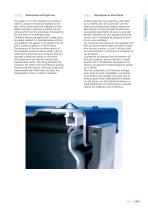
The upper rim of the container is rounded in order to improve mechanical stability to this part, which must ensure the tightness of the gasket and also it presents a greater contact surface which has the advantage of preserving the seal from an accelerated wear. Container lids are equipped with a large silicone gasket realized in a seamless piece without any welding. The gasket is not glued to the lid and it is easy to replace in case of need. The presence of the anti-crushing device of the lid gasket avoids excessive weight, due to stacking of more than one container, that can damage it weighing...
Open the catalog to page 11
The closing system ensures an easy, safe and fast opening and closing of the container. The closing levers fixed onto the lid offer, during the opening, an aseptic removal of the lid itself. Stacking system is stable and safe. The containers can be stacked thanks to a system of “bosses” on the lid of the container which is coupled to a “recess” situated on the bottom of the container that allows its stability during transport and storage. Le dispositif de fermeture assure une ouverture et fermeture du conteneur faciles, sûres et rapides. Les leviers de fermeture fixés sur le couvercle offrent,...
Open the catalog to page 12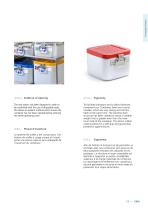
Container System The seal system has been designed in order to be combined with the use of disposable seals, this allows an evident method which ensure the container has not been opened before entering the sterile operating room. To facilitate transport and to allow balanced movement our Containers have two central handles, which are very strong and comfortable at the same time. The stainless steel structure has been created to stand a notable weight that is greater even than the maximum load of the container. The silicon rubber coating allows for a soft grip and guarantees protection against...
Open the catalog to page 13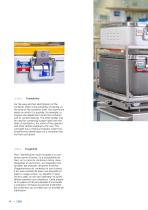
For the easy and fast identification of the container, there is the possibility of placing, at the body of the container itself, two aluminium plates on which it is possible, for example, to engrave the department which the container and its content belongs. The other holder may be used for containing a paper label with the date of sterilization, the name of the operator and other details essential to the user. This card label has a chemical indicator stripe that simplifies the identification of a container that has been processed. Pour l’identification facile et rapide d’un conteneur parmi d’autres,...
Open the catalog to page 14
The body and lid roundings, and all the parts that make up the container have been studied in order to facilitate cleaning after every use. Les parties arrondies du corps et du couvercle, ainsi que toutes les composants du conteneur, ont été réalisés dans le but de faciliter le nettoyage après tout usage.
Open the catalog to page 15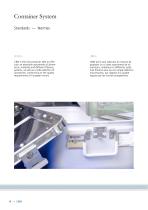
Container System Standards — Normes CBM is the only producer able to offer such an extensive assortment of dimensions, materials and different filtering systems, as well as a wide selection of accessories, conforming to the quality requirements of European norms. CBM est le seul fabricant en mesure de proposer un si vaste assortiment de dimensions, matériaux et différents systèmes filtrants ainsi qu’une ample sélection d’accessoires, par rapport à la qualité requise par les normes européennes.
Open the catalog to page 16All C.B.M. catalogs and technical brochures
 DRY STERILIZERS
12 Pages
 SST2200B
8 Pages
- Medical dolly
- Hospital trolley
- Steam sterilizer
- Laboratory incubator
- Benchtop sterilizer
- Automatic sterilizer
- Stainless steel sterilizer
- Temperature-control laboratory incubator
- Heating oven
- Laboratory oven
- Benchtop laboratory incubator
- Benchtop oven
- Front-loading autoclave
- Sterilizer with touchscreen
- 1-door oven
- Instrument sterilization container
- Top-loading sterilizer
- Heating laboratory incubator