


Cepheid Bladder Cancer Patient Brochure

Cepheid Bladder Cancer Patient Brochure
This document provides an overview of bladder cancer, its symptoms, diagnostic procedures, and treatment options. It emphasizes the importance of early detection and continuous monitoring post-treatment.
Symptoms of Bladder Cancer
The most common symptom of bladder cancer is blood in the urine, known as haematuria, which can make urine appear red, pink, or tea-colored. While blood in urine is often not cancerous, it is crucial to consult a doctor for a proper diagnosis. Bladder cancer is more prevalent in men than women and typically occurs in individuals aged 60 to 79.
Risk Factors
Risk factors for bladder cancer include a history of smoking and exposure to certain chemicals, particularly in industrial settings. Doctors will consider these factors when diagnosing bladder cancer.
Diagnostic Procedures
1. Urine Cytology: A laboratory test that examines urine for cancerous cells. However, the absence of detected cancer cells does not rule out bladder cancer.
2. Non-Invasive Diagnostic Tests: These tests look for specific markers in urine associated with tumor cells. The absence of these markers suggests a lower likelihood of cancer.
3. Cystoscopy: A procedure where a cystoscope is inserted into the bladder via the urethra to visually inspect the bladder lining for cancerous cells. This is typically done under local anesthesia.
Treatment
For early bladder cancer, surgery known as trans-urethral removal of bladder tumor (TURBT) is performed to remove cancerous tissue. Post-surgery, tissue samples are analyzed to confirm the presence and type of cancer, which informs further treatment.
Post-Treatment Monitoring
Continuous monitoring is essential to ensure cancer does not recur. This may involve regular cystoscopy procedures and non-invasive urine tests to detect abnormalities.
Contact Information
For further information, contact the corporate headquarters in Sunnyvale, CA, or the European headquarters in Maurens-Scopont, France. Contact details are provided for both locations.
Catalog excerpts

Get informed: read, listen, and ask.
Open the catalog to page 1
Bladder Cancer1 There are several possible symptoms of bladder cancer. The most common symptom of bladder cancer is blood in the urine (pee) which makes it look red, pink or tea-coloured. While blood in your urine is unlikely to be cancer, it is important to get checked by a doctor. Bladder cancer is three times more common in men than in women2. Bladder cancer develops most often in people between the ages of 60 and 79, the average age of diagnosis is 70 years old3. But also younger men and women can get bladder cancer. No one knows what causes most bladder cancer, but some factors may increase...
Open the catalog to page 2
°1(° Blood in the Urine Doctors call blood in the urine haematuria. There are many reasons why you could have blood in your urine: infection, kidney stones, an enlarged prostate, kidney disease, but also some medication or strenuous exercise can cause haematuria4. The likelihood that it is caused by bladder cancer is less than 10%. Sometimes it can be difficult for doctors to decide who may have bladder cancer and who might have a more minor condition. For some symptoms, your doctor may ask you to wait to see if the symptoms get better or respond to treatment, such as antibiotics. Or your doctor...
Open the catalog to page 3
These tests could be: Urine Cytology A sample of urine can be sent to the laboratory to look for cancerous cells under a microscope. This test may detect cancer cells, but only if they are seen. If no cancer cells are seen, it does not mean there is no bladder cancer present. Further tests must be done to confirm, or rule out the diagnosis of bladder cancer.
Open the catalog to page 4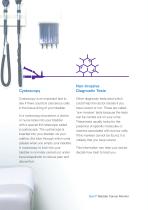
Cystoscopy Diagnostic Tests Cystoscopy is an important test to see if there could be cancerous cells in the tissue lining of your bladder. In a cystoscopy procedure, a doctor or nurse looks into your bladder with a special thin telescope called a cystoscope. The cystoscope is inserted into your bladder via your urethra, the tube through which urine passes when you empty your bladder. A cystoscopy to look into your bladder is normally carried out under local anaesthetic to reduce pain and discomfort. Other diagnostic tests exist which could help the doctor decide if you have cancer or not. These...
Open the catalog to page 5
What Happens if I Do Have Bladder Cancer? Everyone with early bladder cancer has surgery to remove the cancer tissue from their bladder lining. This operation is called trans-urethral removal of bladder tumour (TURBT). This will require anaesthesia and your doctor will explain the procedure in more detail to you. After surgery, the doctor sends samples (biopsies) of the removed bladder tissue to the laboratory. There, a specialised doctor (the pathologist) will review the tissues to double-check whether you have bladder cancer or not. If cancer is present, they will also determine the specific...
Open the catalog to page 6
After Treatment After any treatment for early bladder cancer, your doctor keeps a close eye on you to make sure the cancer does not come back. You may have additional cystoscopy procedures for some years to come. How often you have these depends on the kind of bladder cancer you have. Other non-invasive tests exist which could help the doctor with your follow-up. These tests require only a small sample of your urine to check for the presence/absence of abnormalities. This information can help your doctor decide if your cancer has come back and what the next steps should be. Get informed: read,...
Open the catalog to page 7
CORPORATE HEADQUARTERS EUROPEAN HEADQUARTERS www. .com 904 Caribbean Drive Vira Solelh Sunnyvale, CA 94089 USA 81470 Maurens-Scopont France TOLL FREE 1.888.336.2743 PHONE 33.563.82.53.00
Open the catalog to page 8All Cepheid catalogs and technical brochures
 Xpert® Xpress Flu/RSV 2023
4 Pages
 GeneXpert® Infinity Systems
8 Pages
 The New GeneXpert®
12 Pages
 Cepheid Virology Brochure
4 Pages
 Xpert® Breast Cancer STRAT4
4 Pages
 Xpert® HIV-1 Viral Load
4 Pages
 Xpert® HIV-1 Qual
4 Pages
 Xpert® HCV Viral Load
4 Pages
 Xpert® FII & FV
4 Pages
 Xpert® HBV Viral Load
4 Pages
 Xpert® HPV
4 Pages
 Xpert® TV
4 Pages
 Xpert® MTB/RIF Ultra
4 Pages
 Xpert® Xpress Strep A
4 Pages
 Xpert® Norovirus
4 Pages
 GeneXpert® System
12 Pages
 Xpert® BCR-ABL Ultra
4 Pages
 Xpert® CT/NG
6 Pages
 Xpert® MRSA/SA BC
4 Pages


Archived catalogs
 Xpert® Carba-R
4 Pages
 Xpert® C. difficile BT
4 Pages
 Xpert® EV
3 Pages
 Xpert® SA Nasal Complete
4 Pages
 Xpert® vanA/vanB
4 Pages
 Xpert® Ebola
4 Pages
 Xpert® MRSA NxG
4 Pages
 Cepheid Corporate Overview
16 Pages
 Xpert® MTB/RIF
4 Pages
 Xpert® GBS
3 Pages
 Xpert® MRSA/SA SSTI
4 Pages
 Xpert® MRSA
2 Pages

- Cepheid test kit
- Blood detection kit
- Plasma detection kit
- Cepheid rapid blood test
- Infectious disease detection kit
- Rapid serum test
- Rapid plasma test
- Cepheid rapid virus test
- Cepheid molecular biology test kit
- Rapid whole blood test
- Respiratory disease assay kit
- Cepheid rapid infectious disease test
- Clinical detection kit
- Rapid respiratory disease test
- Urine rapid diagnostic test
- Reporting software
- Windows software
- Laboratory software
- Cepheid rapid bacteria test
- Cell detection kit