

- Company
- Products
- Catalogs
- News & Trends
- Exhibitions
TRANSPALATAL DISTRACTOR 3.4499

TRANSPALATAL DISTRACTOR 3.4499
This document provides a detailed overview of the surgical technique for using transpalatal distractors in surgically assisted rapid palatal expansion (SARPE) procedures. The implants adhere to ISO 5832 standards and Directive 93/42/EEC, ensuring high quality. The system comprises implants, an instrument set, and a surgical technique.
Implant Description
Transpalatal distractors feature spikes for secure anchoring, an articulated mechanism for solid attachment, and holes for 2.0ChMP microscrews. A blocking screw prevents complete removal, minimizing the risk of swallowing or choking. Distractors are color-coded for easy identification: green for the right side and blue for the left.
Surgical Technique
- Surgical Approach: An L-shaped or cross-incision is made in the palate.
- Implant Selection: Use trials and forceps to select the appropriate distractor length.
- Implant Insertion: Position the implant using dissecting forceps and set the fixing plates horizontally.
- Microscrew Insertion: Insert microscrews using a quick coupling handle and screwdriver tip.
- Activation: Activate the distractor with a flat wrench until a 1mm diastema is observed.
- Latency Period: Tighten the blocking screw during this period, lasting about a week.
- Distraction: Begin distraction after the latency period, with rotations performed twice daily.
- Consolidation Period: Allow time for new bone to consolidate, lasting 3-6 months.
Implant Removal
Removal involves unlocking the blocking screw, loosening microscrews, and removing the distractor.
Catalogue Pages
Includes detailed catalogue pages for the instrument set, distractors, and screws, specifying lengths and materials.
Instructions for Use
Emphasizes the importance of skilled professionals using the instruments, proper handling to avoid damage, and thorough inspection before use. Materials include corrosion-resistant steel, aluminum alloys, and plastics suitable for surgical instruments.
Instrument Maintenance and Handling
1. Ensure instruments are free from corrosion, with sharp and undamaged blades. Replace damaged instruments immediately.
2. Protect tissue structures near the operative site.
3. Avoid collision with metal equipment to prevent damage.
4. Do not apply excessive force to prevent permanent damage.
5. Instruments are subject to wear; fractures may occur with prolonged use.
6. Intraoperative X-Ray is recommended to confirm removal of metal fragments.
7. Check for allergies to metallic materials before use.
8. Follow calibration deadlines for torque instruments to avoid injury or device damage.
9. Reprocess instruments in contact with body fluids before reuse.
Cleaning, Disinfection, and Sterilization
1. Non-sterile devices must undergo cleaning, disinfection, and sterilization.
2. Effective cleaning depends on water quality, detergent type, and cleaning technique.
3. Hospital facilities are responsible for cleaning effectiveness.
4. Clean instruments immediately after use to prevent contamination.
5. Manual and automated cleaning methods are described, with specific instructions for each.
6. Use approved cleaning agents and avoid aggressive chemicals.
7. Inspect devices for dirt and damage before reuse.
8. Sterilization should be performed using vacuum-type steam sterilization.
Storage and Calibration
1. Store instruments properly to prevent damage and corrosion.
2. Regular calibration is required for torque instruments to ensure safety and accuracy.
Compatibility
1. ChM instruments are designed for use with ChM implants only. Combining with other manufacturers' products is not recommended.
For further clarification, contact the manufacturer or visit the website for updated instructions.
Catalog excerpts
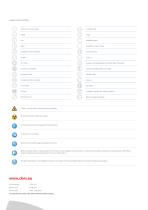
SYMBOLS DESCRIPTIONS Titanium or titanium alloy available lengths Available number of holes Available versions: left/right Torx drive Number of threaded holes in the shaft part of the plate Torx drive cannulated Number of locking holes in the plate Hexagonal drive Variable angle Hexagonal drive cannulated Cancellous Ster Non Ster Available in sterile/ non- sterile condition Refer to surgery technique Caution - pay attention to the particular proceeding. Perform the activity with X-Ray control. Information about the next stages of the proceeding. Proceed to the next stage. Return to the specified...
Open the catalog to page 2
This surgical technique applies to transpalatal distractors. The presented range of implants is made of materials in accordance with ISO 5832 standards. Compliance with the requirements of quality management systems and the requirements of Directive 93/42/EEC concerning medical devices guarantee high quality of the offered implants. The system includes: • implants (distractor and microscrews), • instrument set used in the surgery, • surgical technique. Indications • Correction of the deformities of the maxilla in surgically assisted rapid palatal expansion (SARPE) procedures, especially in skeletally...
Open the catalog to page 5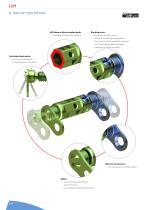
HEX shape of the microplate body: • facilitated activation with a wrench. Blocking screw: • blocks the distraction screw, • design of the blocking screw prevents the screw from being completely removed from the microplate body (eliminated swallowing or choking possibility). Articulated mechanism: • ensures solid attachment of the fixing plate to the bone. Holes for microscrews: • for microscrews of 2.0ChMP system. Spikes: • secure anchoring of the fixing plate in the bone, • ensure stable position of the distra
Open the catalog to page 6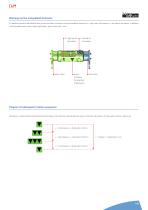
Markings on the transpalatal distractor An additional patient-side identification system has been introduced in the transpalatal distractors: R - right side of the patient, L - left side of the patient. In addition, the fixing plates were colour-coded: right plate - green colour; left - blue. • R - right side of • L - left side of • green colour • arrows indicating the direction of distraction • blue colour Diagram of subsequent rotation sequences Distraction is performed by rotating the distractor body in the direction indicated by the arrows. Schematic description of subsequent rotation sequences:...
Open the catalog to page 7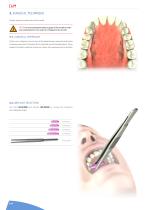
ChM3. SURGICAL TECHNIQUE Perform planned osteotomies of the maxilla. NOTE: It is recommended to place a gauze in the mouth to retain any small element in the event it is dropped in the mouth. 3.1. SURGICAL APPROACH Perform an L-shaped or cross-incision of the palate between premolars and molars or between premolars. The length of the horizontal incision should be about 10mm parallel to the teeth, while the vertical one - about 3mm perpendicular to the teeth. Use trials [43.4499] and forceps [30.3303] to choose the distractor of an adequate length.
Open the catalog to page 8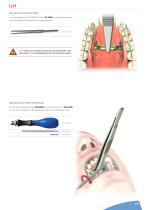
3.3. IMPLANT INSERTION Use dissecting forceps STANDARD 14.5cm [30.3303] to position the implant on the bone. Set the fixing plates in horizontal position. NOTE: Make sure the plate is positioned correctly: the left (L) side of the plate (blue) should be placed on the left side of the patient. 3.4. MICROSCREW INSERTION Use the quick coupling handle [40.6405] and a screwdriver tip X [40.6449] to insert the microscrews, of the appropriate length, in the fixing plate holes.
Open the catalog to page 9
If need be, use the 1.25/15 drill [40.6422] to drill a hard bone. 3.5. ACTIVATION Use the flat wrench [40.8402] to activate the transpalatal distractor until diastema of about 1mm is observed. Activate the distractor in accordance with the direction indicated by the arrows - refer to point 2 IMPLANT DESCRIPTION.
Open the catalog to page 10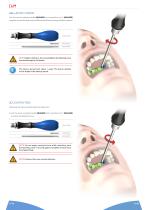
3.6. LATENCY PERIOD Use the quick-coupling handle [40.6405] and screwdriver tip X [40.6449] to tighten up the blocking screw and block the distractor during the latency period. NOTE: Tighten clockwise. Do not overtighten the blocking screw to avoid damage to the thread. The latency period lasts about 1 week. The doctor decides on the length of the latency period. 3.7. DISTRACTION Following the latency period, begin the distraction. a) se the quick-coupling handle [40.6405] and screwdriver tip X [40.6449] U to unlock the blocking screw. NOTE: Do not apply excessive force while unlocking since...
Open the catalog to page 11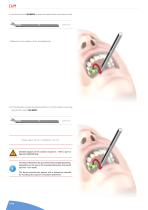
b) Use the flat wrench [40.8402] to rotate the implant body until resistance is felt. c) Make one or two rotations of the microplate body d) In the distraction period, the patient performs 1/3 of the rotation twice a day using the flat wrench [40.8402]. Detailed diagram of the rotation sequences - refer to point 2 IMPLANT DESCRIPTION. The doctor determines the size of the entire and daily distraction. Depending on the size of the intended distraction, this period last from 1 to 4 weeks. The doctor provides the patient with a distraction calendar for recording the sequence of rotations performed....
Open the catalog to page 12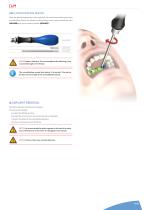
3.8. CONSOLIDATION PERIOD Once the planned expansion is accomplished, the new bone must be given time to consolidate. Block the distractor with blocking screw using screwdriver tip X [40.6449] and quick-coupling handle [40.6405]. NOTE: Tighten clockwise. Do not overtighten the blocking screw to avoid damage to the thread. The consolidation period lasts about 3÷6 months. The doctor decides on the length of the consolidation period. 4. IMPLANT REMOVAL The doctor decides to remove the implant. To remove the implant: a) unlock the blocking screw, b) loosen the microscrews (do not remove them completely),...
Open the catalog to page 13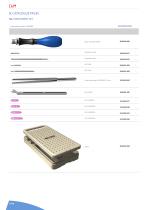
5. CATALOGUE PAGES5a. INSTRUMENT SET Instrument set for 2.0ChMP 40.8409.000 Quick coupling handle Dissecting forceps STANDARD 14.5cm Flat wrench
Open the catalog to page 14
5b. DISTRACTORS Transpalatal distractors 13.5 20_3.4499.020
Open the catalog to page 15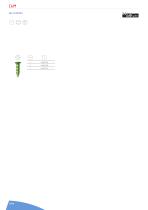
5c. SCREWS I ChM Micro Plates
Open the catalog to page 16
processing area in a closed container or covered with a damp cloth. 3) In order to avoid contamination during transportation, the dirty instruments should be separated from the clean ones. 3.Preparation for washing and disinfection (for all methods). 1) The used instruments should be reprocessed as soon as possible. 2) If the instrument can be disassembled, it must be done before cleaning processes. 3) Rinse under running water and remove surface debris using a disposable cloth, paper towel or plastic brushes (nylon brushes are recommended). Particular attention should be paid to openings and...
Open the catalog to page 17All ChM catalogs and technical brochures
 Locking plates
171 Pages
 IDS distraction system
26 Pages
 Compression screw
14 Pages
 PROXIMAL LATERAL TIBIA
2 Pages
 CHARSPINE2
2 Pages
 Cannulated (subtalar) screw
12 Pages
 Intramedullary nails
121 Pages
 Microsystems 2020
68 Pages
 PELVIC STABILIZATION
27 Pages
 RADIAL HEAD PROSTHESIS
10 Pages
 ARTHROSCOPY
14 Pages
 2018 Microsystems
44 Pages
 EXTERNAL STABILIZER CHARSTAB
8 Pages
 BONE SCREWS
40 Pages
 ORTHOPAEDIC INSTRUMENTS
106 Pages
 cuffs_tourniquets
4 Pages
 surgery
154 Pages
 other_instruments
8 Pages

Archived catalogs
 LOCKING PLATES ChLP
132 Pages
 MICROSYSTEMS
36 Pages
- Medical dolly
- Bone plate
- Compression plate
- Metallic compression plate
- Locking compression plate
- Anodized aluminum trolley
- Titanium compression plate
- Equipment trolley
- Orthopedic surgery instrument kit
- Distal compression plate
- Interbody fusion cage
- Compression bone screw
- Metallic compression bone screw
- Proximal compression plate
- Arthrodesis nail
- Forearm compression plate
- Lateral compression plate
- Medial compression plate
- Tibia compression plate
- PEEK interbody fusion cage
- VirtualExpo Group
- Our Partners
- Recruitment
- Testimonials