- Catalogs
- Clordisys Solutions Inc.
- Decontamination Chamber

- Products
- Catalogs
- News & Trends
- Exhibitions
Decontamination Chamber
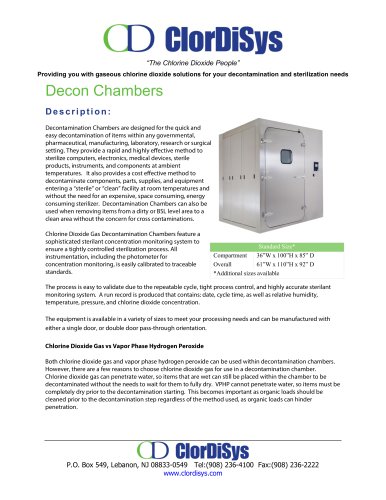
Decontamination Chamber
Catalog excerpts
“The Chlorine Dioxide People" Providing you with gaseous chlorine dioxide solutions for your decontamination and sterilization needs Descri ption: Decontamination Chambers are designed for the quick and easy decontamination of items within any governmental, pharmaceutical, manufacturing, laboratory, research or surgical setting. They provide a rapid and highly effective method to sterilize computers, electronics, medical devices, sterile products, instruments, and components at ambient temperatures. It also provides a cost effective method to decontaminate components, parts, supplies, and equipment entering a "sterile" or "clean" facility at room temperatures and without the need for an expensive, space consuming, energy consuming sterilizer. Decontamination Chambers can also be used when removing items from a dirty or BSL level area to a clean area without the concern for cross contaminations. Chlorine Dioxide Gas Decontamination Chambers feature a sophisticated sterilant concentration monitoring system to ensure a tightly controlled sterilization process. All instrumentation, including the photometer for concentration monitoring, is easily calibrated to traceable standards. The process is easy to validate due to the repeatable cycle, tight process control, and highly accurate sterilant monitoring system. A run record is produced that contains: date, cycle time, as well as relative humidity, temperature, pressure, and chlorine dioxide concentration. The equipment is available in a variety of sizes to meet your processing needs and can be manufactured with either a single door, or double door pass-through orientation. Chlorine Dioxide Gas vs Vapor Phase Hydrogen Peroxide Both chlorine dioxide gas and vapor phase hydrogen peroxide can be used within decontamination chambers. However, there are a few reasons to choose chlorine dioxide gas for use in a decontamination chamber. Chlorine dioxide gas can penetrate water, so items that are wet can still be placed within the chamber to be decontaminated without the needs to wait for them to fully dry. VPHP cannot penetrate water, so items must be completely dry prior to the decontamination starting. This becomes important as organic loads should be cleaned prior to the decontamination step regardless of the method used, as organic loads can hinder penetration.
Open the catalog to page 1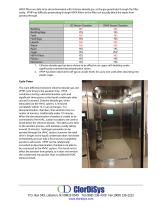
HEPA filters are able to be decontaminated with chlorine dioxide gas, as the gas penetrates through the filter easily. VPHP has difficulty penetrating through HEPA filters as the filter can actually block the vapor from passing through. 1. Chlorine dioxide gas has been shown to be effective on cages with bedding under significantly extended decontamination cycles. 2. VPHP has been observed to off-gas at unsafe levels for up to one week after absorbing into plastic cages. Cycle Times The main difference between chlorine dioxide gas and VPHP cycle times is the aeration time. VPHP condenses during...
Open the catalog to page 2All Clordisys Solutions Inc. catalogs and technical brochures
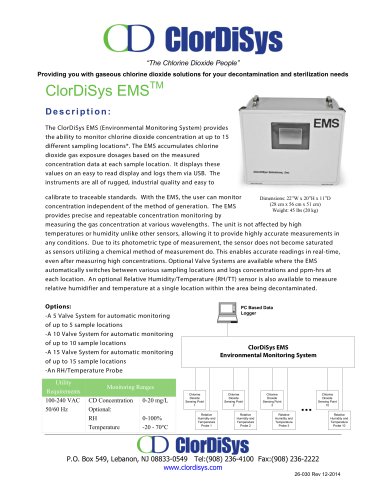 Cloridox-EMS
1 Page
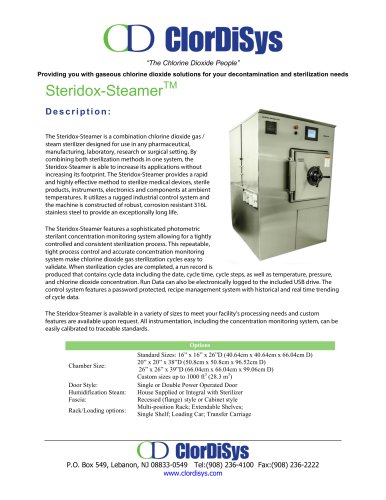 Steridox-Steamer
1 Page
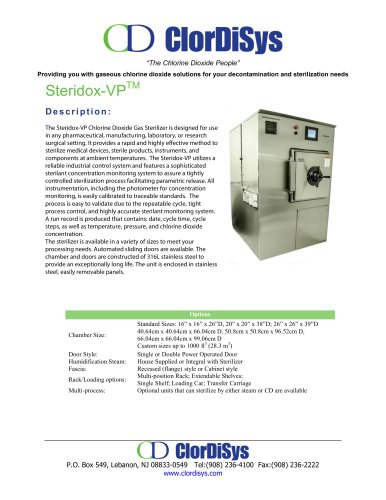 Steridox-VP
1 Page
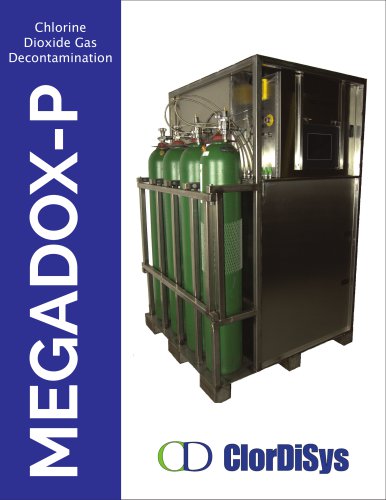 Megadox-P
6 Pages
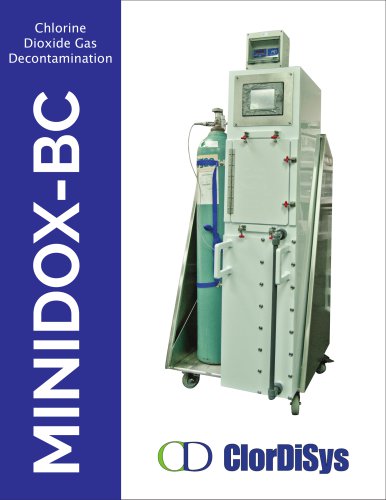 Minidox-BC
4 Pages
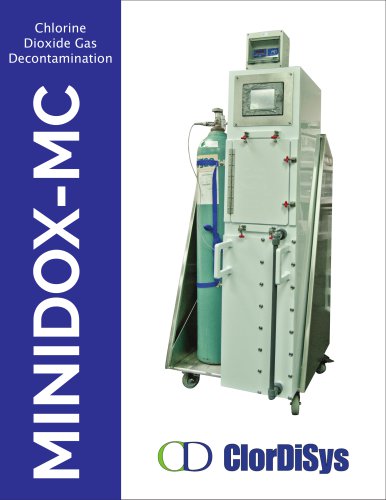 Minidox-MC
4 Pages
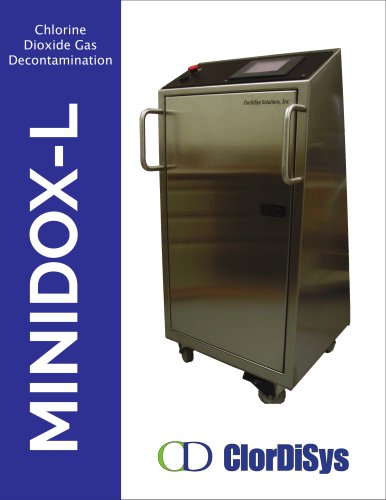 Minidox-L
4 Pages
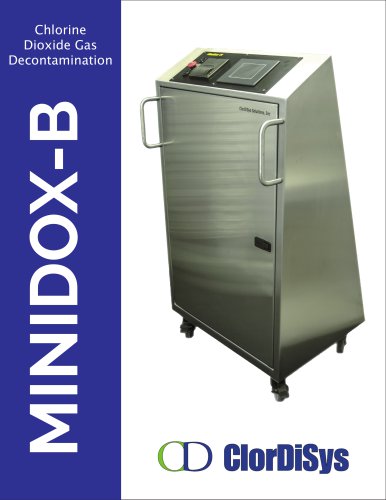 Minidox-B
6 Pages
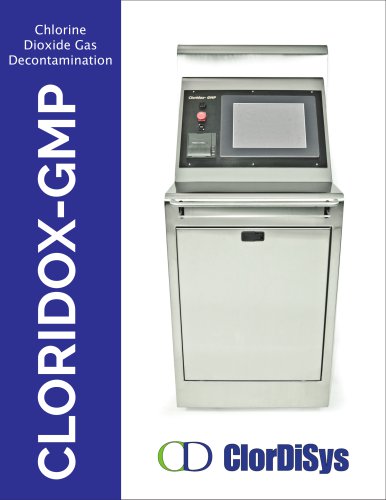 Cloridox-GMP
6 Pages
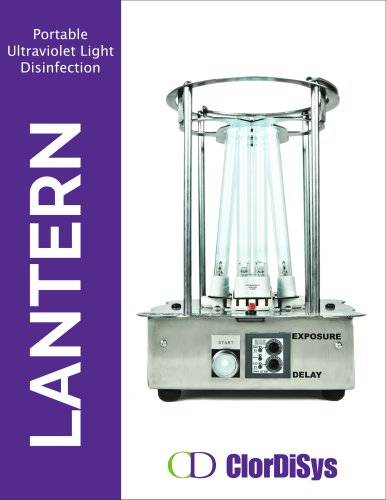 Lantern
4 Pages
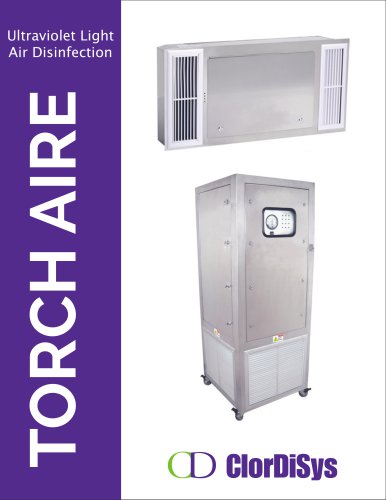 Torch-Aire
4 Pages
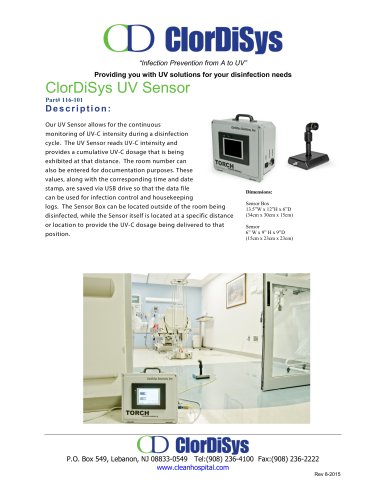 UV Sensor
1 Page
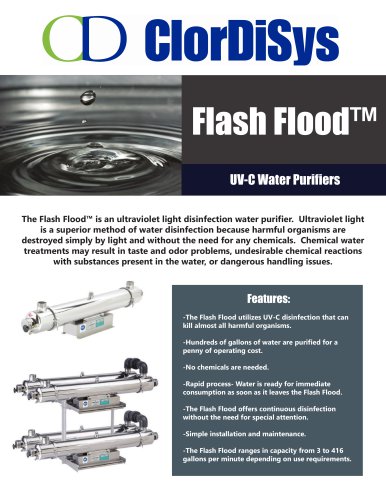 Flash Flood
2 Pages
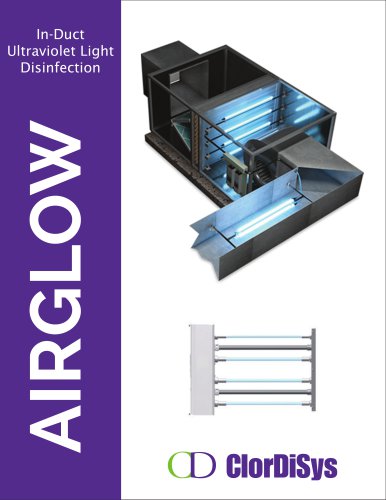 AirGlow
4 Pages
 FLASHBAR
4 Pages
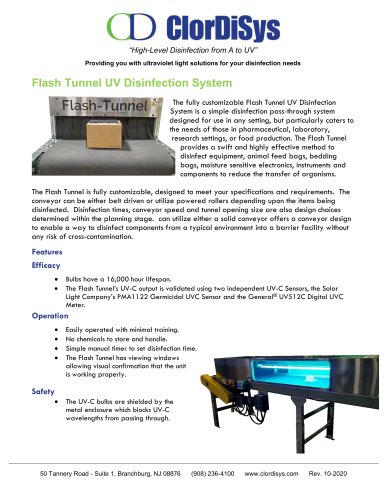 FLASH Tunnel
1 Page
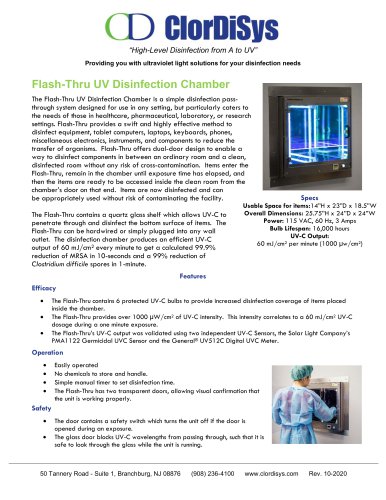 FLASH-Thru Chamber
2 Pages
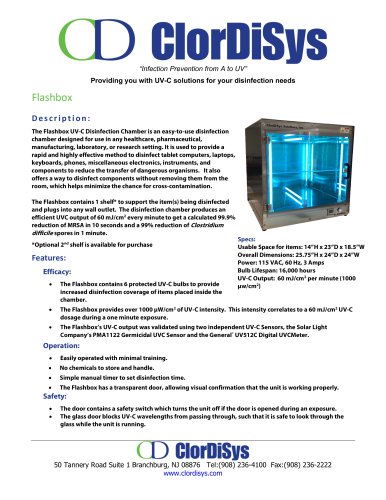 Flashbox
2 Pages
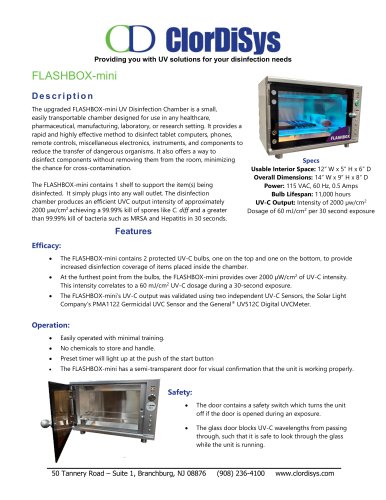 FLASHBOX-mini
2 Pages
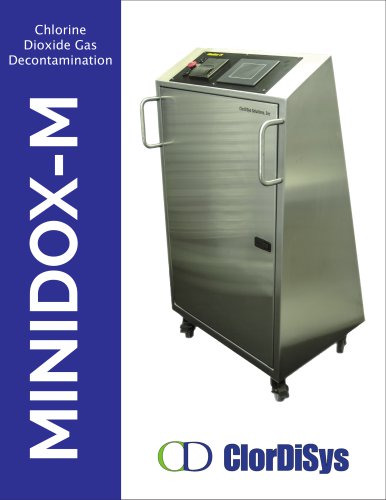 Minidox-M
6 Pages