- Catalogs
- Coveris Speciality Bags
- BAGASSE_FACT_SHEET


BAGASSE_FACT_SHEET
BAGASSE_FACT_SHEET
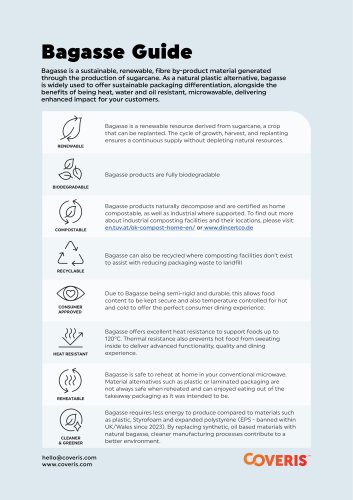
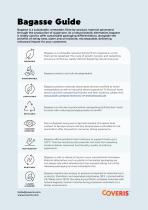
Bagasse is a renewable resource derived from sugarcane, which can be replanted, ensuring a continuous supply without depleting natural resources. It is a sustainable, renewable, fiber by-product material generated through the production of sugarcane.
Bagasse products are fully biodegradable and certified as home compostable, as well as industrially compostable where facilities exist. They can also be recycled in areas without composting facilities to reduce landfill waste.
Bagasse is semi-rigid and durable, providing secure and temperature-controlled packaging for both hot and cold foods. It offers excellent heat resistance, supporting foods up to 120°C, and prevents hot food from sweating, enhancing the dining experience.
Bagasse is safe to reheat in conventional microwaves, unlike some plastic or laminated packaging, allowing consumers to enjoy their meals directly from the packaging.
Bagasse requires less energy to produce compared to materials like plastic, Styrofoam, and expanded polystyrene (EPS), which has been banned in the UK/Wales since 2023. By replacing synthetic, oil-based materials with natural bagasse, cleaner manufacturing processes contribute to a better environment.
As a natural plastic alternative, bagasse is widely used for sustainable packaging, offering heat, water, and oil resistance, and is microwavable, providing enhanced impact for customers.
Catalog excerpts
Bagasse Guide Bagasse is a sustainable, renewable, fibre by-product material generated through the production of sugarcane. As a natural plastic alternative, bagasse is widely used to offer sustainable packaging differentiation, alongside the benefits of being heat, water and oil resistant, microwavable, delivering enhanced impact for your customers. Bagasse is a renewable resource derived from sugarcane, a crop that can be replanted. The cycle of growth, harvest, and replanting ensures a continuous supply without depleting natural resources. Bagasse products are fully biodegradable Bagasse products naturally decompose and are certified as home compostable, as well as industrial where supported. To find out more about industrial composting facilities and their locations, please visit: en.tuv.at/ok-compost-home-en/ or www.dincertco.de Bagasse can also be recycled where composting facilities don’t exist to assist with reducing packaging waste to landfill Due to Bagasse being semi-rigid and durable, this allows food content to be kept secure and also temperature controlled for hot and cold to offer the perfect consumer dining experience. Bagasse offers excellent heat resistance to support foods up to 120°C. Thermal resistance also prevents hot food from sweating inside to deliver advanced functionality, quality and dining experience. Bagasse is safe to reheat at home in your conventional microwave. Material alternatives such as plastic or laminated packaging are not always safe when reheated and can enjoyed eating out of the takeaway packaging as it was intended to be. Bagasse requires less energy to produce compared to materials such as plastic, Styrofoam and expanded polystyrene (EPS - banned within UK/Wales since 2023). By replacing synthetic, oil based materials with natural bagasse, cleaner manufacturing processes contribute to a better environment. [email protected] www.coveris.com
Open the catalog to page 1All Coveris Speciality Bags catalogs and technical brochures
 CREATIVE DESIGN TRENDS 2025
18 Pages