
- Catalogs
- Cowellmedi
- COWELL® Implant Solution v.29


- Company
- Products
- Catalogs
- News & Trends
- Exhibitions
COWELL® Implant Solution v.29

COWELL® Implant Solution v.29
The document provides an overview of the COWELL® Implant Solution, detailing its history, product lines, and technological advancements since its inception in 1994. It highlights the development of Korea's first dental implant and subsequent innovations in implant technology.
The COWELL® Implant Solution includes several generations of implants, such as the BIOPLANT™, ATLAS Implant System™, and INNO Implant System®. Each generation features advancements in surface treatment and design to improve osseointegration and clinical outcomes.
The document outlines the SLA-SH™ surface treatment, which enhances osseointegration through a biologically active surface. It also describes the precise machining process using CNC technology and stringent quality control measures.
The COWELL® Warranty covers implant lifetime replacement under specific conditions. The packaging system includes color coding for easy identification and emphasizes the importance of maintaining sterility.
The document details surgical protocols for implant placement, including pre-operative preparations, surgical steps, and post-operative care. It also outlines contraindications and warnings for implant surgery.
The REID (Research and Education in Implant Dentistry) is highlighted as a global institute dedicated to advancing implant dentistry through research and education. It aims to provide dental professionals with cutting-edge knowledge and training.
The document chronicles significant milestones in COWELLMEDI's history, including the development of the first dental implant in Korea, international expansions, and various certifications and approvals.
The COWELL® Implant Solution represents a comprehensive approach to dental implantology, combining innovative technology, rigorous quality control, and a commitment to education and research.
The COWELLMEDI fixtures are designed for specific applications and should not be altered. The use of electro-surgical instruments or lasers near metallic fixtures is discouraged due to potential risks. Proper patient selection and technique are crucial to avoid fixture failure. The document stresses the importance of aseptic conditions during treatment and highlights that contaminated fixtures cannot be reused.
Formal training is recommended for placing endosseous dental fixtures. Thorough screening of candidates, including radiographic evaluations, is essential to assess anatomical landmarks and bone suitability. The document outlines the necessity of adequate radiographs and direct inspection before treatment.
Potential complications include loss of fixture anchorage, infections, and poor patient cooperation. Surgical risks include swelling, bleeding, and temporary numbness, with rare cases of permanent numbness. Post-surgical care is crucial to manage these complications.
The healing period varies between the upper (6-8 months) and lower jaw (3-5 months), depending on bone quality. Pressure during healing can impede osseointegration. The document advises tracking the implant with lot numbers and X-rays.
Products should be stored at room temperature and used before expiration. They are sterilized via gamma irradiation and should be opened only before use. Only sterilized tools should be used during operations.
The SLA-SH™ surface treatment enhances implant integration through super-hydrophilic activation, improving osteoblast activation and blood penetration. The document includes detailed evaluations using electron microscopy and surface element tests, demonstrating the treatment's effectiveness and safety.
The document outlines the manufacturing tolerance evaluations for fixtures and prosthetic components, ensuring precision and quality in the production process.
The document lists multiple types of abutments, including Cemented, Angulated, Milling, Temporary, Meta G UCLA, and Plastic UCLA Abutments. Each type is described with its specific use case, such as for screw-cement or cement-retained prostheses, and the materials used, like titanium or PMMA.
Detailed instructions are provided for the installation and tightening of abutments using a 1.2 Hex Driver and Torque Wrench, with specified torque forces (e.g., 20N.cm or 30N.cm). The document also outlines the use of Scanbodies for 3D work and fixture level impressions.
Recommendations include using gold-colored abutments for more translucent restorations and selecting Hex-A or Hex-B based on the case requirements. The document emphasizes the importance of using the correct tools and torque settings to ensure stability and prevent fractures.
The document highlights various components such as Abutment Screws, Multi S & A Abutments, Multi Titanium Cylinders, and Multi Plastic UCLA Cylinders. Each component is described with its purpose, connection method, and tightening instructions.
Tools like the Multi S Machine Driver, Multi S Ratchet Driver, and Multi Holders (S Holder and A Holder) are mentioned for the installation and removal of abutments. The document also includes a component selection guide for Multi S & A Abutments.
The document contains tables listing product codes, dimensions, and specifications for various abutments and components. These tables are essential for selecting the correct parts for specific dental procedures.
This technical document serves as a comprehensive guide for dental professionals, providing essential information on the selection, installation, and maintenance of dental abutments and related components. It emphasizes precision, proper tool usage, and adherence to specified torque settings to ensure successful prosthetic outcomes.
- Cemented Extension Abutment: Designed for cement retained or screw-cement retained prosthesis, featuring anti-rotation surfaces and requiring a tightening torque of 30N.cm.
- Angulated Abutment: Available in 15° and 25° angles, suitable for anterior esthetic zones, also requiring a 30N.cm tightening torque.
- Meta G UCLA Abutment: Customizable for screw-cement or screw retained prosthesis, made with a CCM alloy core, and cast with non-precious metal or gold alloy.
- Prosthetic Procedure I: Component selection guide for Cemented & UCLA Abutment, detailing platform diameters and lengths.
- Prosthetic Procedure II: Guide for Solid Abutment, including details on protection caps and impression caps for gingival healing.
- Prosthetic Procedure III: Focuses on Shoulder Abutment, emphasizing dual anti-rotation grip and integration with screw and abutment.
- Prosthetic Procedure IV: Details on Sonator S&A Abutment, including path compensation and retention force options.
- Prosthetic Procedure V: Component selection for Ball Abutment, highlighting retention forces and impression techniques.
- Transfer Post: Used for closed tray impressions, with a tightening torque of 12~15N.cm.
- Replica: Mimics the conical interface of the fixture for working casts.
- Solid Lab Analog: Replaces abutment shape in working casts, chosen based on abutment length.
- Sonator S Ratchet Driver: Used for installing and removing Sonator S Abutments with a torque wrench.
- The INNO External Implant System includes components for Submerged, Intermediate, and External procedures, with specific tools like Fixture Drivers and Multi Countersinks for exclusive use in External procedures.
- Drill sizes range from Ø2.2 to Ø6.0, with corresponding Final Drills and Countersinks for each fixture diameter.
- Torque Wrench specifications allow for torque control from 10 to 120 N.cm, essential for fixture and abutment placement.
- Drilling sequences are outlined for different bone densities, emphasizing the importance of using the correct drill size and sequence to prevent compressive necrosis and ensure proper osseointegration.
- Parallel Pins are used to verify drilling paths, with recommendations to secure them with floss to prevent loss in the patient's mouth.
- Specific instructions are provided for using Drill Extensions and Torque Wrenches to maintain safety and effectiveness during procedures.
- For hard bone quality, the use of Countersinks and Tap Drills is advised to reduce torque force and facilitate fixture placement.
- In cases of wide extraction sockets or sloped edentulous ridges, specific drilling techniques and fixture placements are recommended to enhance stability and integration.
- The document lists various tools such as Hex Drivers, Mount Drivers, and Fixture Drivers, specifying their use with either Machine or Ratchet systems.
- Depth Gauges and Torque Wrenches are essential for measuring drilling depth and controlling torque during implant procedures.
- The INNO Prosthetic Planning Kit includes Abutment Gauges for determining abutment specifications post-fixture fixation, with options for different angles and diameters based on the case requirements.
- Solutions for both anterior esthetic zones and straight type abutments are provided, with detailed specifications for each type.
- Torque Head and Wrench: Used for tooth extraction by connecting to the extraction screw and rotating clockwise.
- Drilling Sequence: Involves using different drill sizes (Ø1.3 to Ø2.6) and screws (Ø1.8 to Ø2.2) under a torque of 20N.cm.
- Root Canal Preparation: Utilizes gate drills for canal identification and filling.
- Use appropriate torque (20~25N.cm) to prevent screw dislodgement or root fracture.
- Adjacent teeth with significant swaying should be stabilized using an elevator during extraction.
- For flapless surgery, the guide system helps in positioning the drill and maintaining buccal bone thickness.
- Buccal Position Guide: Ensures correct buccal bone thickness and implant positioning.
- Width Guide: Selected based on implant crown diameter to guide drilling.
- Position Guide and Linker: Used for continuous implants, ensuring accurate drill positioning.
- Crestal Cutter Drill: Prepares cortical bone for initial drilling.
- Composition: Based on E.rhBMP-2, a recombinant human bone morphogenetic protein type 2, supported by clinical data and studies.
- Features: Simplifies bone grafting and soft tissue regeneration, induces bone regeneration without infection, and acts directly on stem cells.
- Applications: Used in orthopedics for fractures and spine fusion, dentistry for alveolar ridge augmentation, and dermatology for skin regeneration.
- Mechanism: BMP-2 adheres to stem cells, inducing gene expression and promoting osteoblast proliferation.
- Material: An osteoconductive synthetic resorbable bone graft made of Calcium Phosphate.
- Applications: Used for sinus grafts and bone augmentation, recommended for use with COWELL® BMP.
- Features: Promotes ingrowth of osteoblasts and osteoclasts, with excellent biocompatibility and conductivity.
- Material: A xenograft made from bovine bone, designed to fuse with natural human bone.
- Features: Offers fast blood penetration, great hydrophilicity, and a 3D structure for optimal cell attachment.
- Material: An acellular dermal matrix sterilized using E-Beam technology.
- Features: Maintains collagen structure, promotes fibroblast influx, and has a high engraftment rate.
- Applications: Used for mucogingival defects and soft tissue formation around implants.
- Studies conducted at various hospitals show new bone formation around graft materials without inflammatory reactions.
- Clinical trials demonstrate the efficacy and safety of COWELL® BMP in human extraction sockets.
- Detailed specifications for particle size and dosage for various products, including COWELL® BMP and INNO-CaP.
- Diaderm® is a biodegradable atelocollagen membrane used in GTR and GBR operations.
- It aids in the restoration of alveolar bone and protects the operation site from epithelial cell infiltration.
- Key features include high biocompatibility, mechanical strength, resistance to enzymatic degradation, and flexibility.
- Storage conditions are between 1-30°C with a shelf life of 3 years from the date of manufacture.
- It shows higher resistance to enzymatic degradation compared to other products.
- InnoGenic® membranes include WiFi-Mesh, PTFE-Mesh, and Ti-Mesh, designed for non-resorbable barrier applications over intraoral defects.
- WiFi-Mesh and PTFE-Mesh are made from 100% PTFE, with WiFi-Mesh reinforced with titanium frames.
- Ti-Mesh is made from commercially pure titanium and is non-resorbable, designed to prevent displacement and maintain shape.
- Features include prevention of bacterial toxin penetration, high shape-keeping capability, and ease of customization and removal.
- WiFi-Mesh is used in clinical cases such as periodontitis with local osteomyelitis, aiding in bone grafting and shielding soft tissue penetration.
- It is non-resorbable, non-porous, and allows for the observation of healing through its transparent surface.
- Cowellmedi Co., Ltd is based in Seoul, Korea, with additional offices in Busan, Korea, and Villanova, USA.
Catalog excerpts

Implant Solution Help your daily practice superior Ver.29
Open the catalog to page 1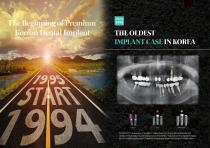
The Beginning of Premium Korean Dental Implant THE OLDEST IMPLANT CASE IN KOREA INNO Implant™ #35: BIOPLANT™, 1st generation of the COWELL® Implant, Korea’s first dental implant developed in 1994. #25, 36 & 37: ATLAS Implant System™, 2nd generation of the COWELL® Implant, Korea’s first ASD treated Implant. #32, 33 & 47: INNO Implant System®, Cowellmedi’s 4th generation implant surface, SLA-SH
Open the catalog to page 2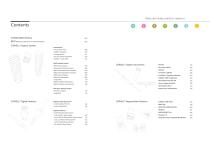
• Introduction Process Flow Chart COWELL® Warranty Package System SLA-SH™ Surface Treatment COWELL® CLASS 1000 • INNO Implant System® INNO-Fixture Design Abutment Prosthetic Protocol INNO Submerged & Short Implant INNO Submerged Narrow Implant INNO Internal Implant INNO External Implant Surgical Kits INNO Prosthetic Planning Kit INNO Prosthetic Instrument Kit Mini Plus® Implant Surgical Kit • InnoGenic® Autobone Harvester • Direct Surgical Guide Kit • INNO OSS & INNO OSS Allo • MEGA DERM™ Plus • Digital Prosthesis InnoFit Hybrid Ti-Base System · Sub. Hybrid Ti-Base System · Sub. & Sub-N. Multi...
Open the catalog to page 3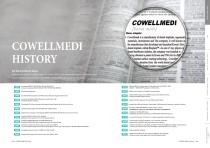
COWELLMEDI HISTORY REID COWELL® IMPLANT SYSTEM COWELLMEDI HISTORY For the first time in Korea, Beginning with Korea’s First Dental Implant, the COWELLMEDI has been leading the way to the future biomedical • Obtained MFDS manufacturing and sales approval for the COWELL® BMP. • Held the 1st WORLD BMP Symposium in Seoul, Korea. • Founded Asrahi Medical. • Obtained a US patent for E.rhBMP-2 Coated Implant. • Established R&D corporation with PNU’s Oral and Biotechnology Research Center. • Obtained MFDS Approval for E.rhBMP-2 Spinal Fusion Clinical Test Plan. • Launched the INNO Implant System®. •...
Open the catalog to page 4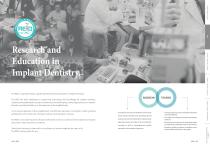
COWELLMEDI HISTORY REID COWELL® IMPLANT SYSTEM Research and Education in Implant Dentistry. COWELL® DIGITAL PRODUCTS The REID is a global institute, standing for Research and Education in Implant Dentistry. As its second objective of the establishment, the REID also has been committed to training dental professionals with world-class clinicians, lecturers, and education curricula. To improve how the world dental community treats implant dentistry by providing dental ■ The REID is now reaching more clinicians with easier access to a variety of clinical solutions and open discussions where everyone...
Open the catalog to page 5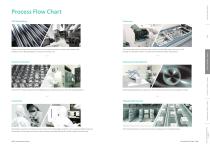
COWELLMEDI HISTORY Process Flow Chart Cleansing Precise machining process using state of the art computer numerical control system fused to the COWELL® Class 1000, operated by a world-class technical unit. The cleansing process by ultrasonic wave using the 3rd distilled water, vacuum dry, and heating dry sterilization leaves no residue and ultimately sterilizes the products. Surface Treatment The SLA-SH™ Surface treatment with biologically active materials to achieve the ideal osseointegration. Sanitarily packed products at cleanrooms are sterilized by gamma-ray using radiation isotope. Shipping...
Open the catalog to page 6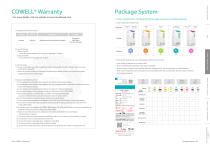
COWELLMEDI HISTORY Package System COWELL® Warranty * For more details, visit our website at www.cowellmedi.com 1. Color classification (Coding) by fixture type and external label marking A. Color classification by fixture type Submerged (Sub.) Fixture type Submerged Narrow (Sub-N.) 1. Guarantee beneficiary and scope Period Replacement with equivalent Implant The period shall begin from the sale date SUB-N. HEXAGON SYSTEM COWELL® IMPLANT SYSTEM 2. Scope of Warranty 1) Quality benefits > In case the product material or the manufacturing process is flawed. 2) Surgical benefits > In case implants...
Open the catalog to page 7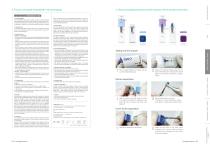
COWELL® IMPLANT SYSTEM 3. Fixture packaging opening and the sequence of the product extraction 1. Device Description The COWELLMEDI implant system includes a variety of precision-machined fixtures manufactured from titanium. These implants are surgically inserted into a mandible (the lower jawbone) or a maxillary bone (the upper jawbone) and serve as a replacement for a patient's tooth root providing a stable foundation for restoration. 2. Intended for use To support dental prosthesis as a dental device, which is implanted into alveolar bone to recover masticatory function and give better esthetics...
Open the catalog to page 8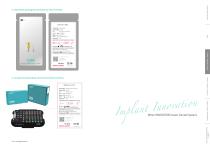
COWELLMEDI HISTORY 4. Abutment packaging and external label marking Hybrid S Ti-Base PRODUCT NAME : Dental Implnat PACKING UNIT : 1SET STORAGE CONDITION : Store at room temperature and in a dry place. Do Not Reuse Cowellmedi Co.,Ltd. 48, Hakgam-daero 221beon-gil, Sasang-gu, Busan, 46986, Republic of Korea TEL.: +82-51-312-2027~8 Website: http://www.cowellmedi.com D/T : 218 Trianon LN Villanova PA 19085-1442 USA COWELL® IMPLANT SYSTEM EC-Representative EC REP : Certification Experts B.V. Amerlandseweg 7, 3621 ZC Breukelen, The Netherlands The Pioneers in Dental Implant & E.rhBMP-2 Rx Only MEDICAL...
Open the catalog to page 9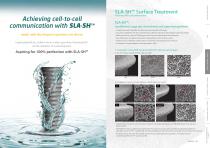
COWELLMEDI HISTORY SLA-SH™ Surface Treatment Achieving cell-to-cell communication with SLA-SH™ SLA-SH™: Sandblasted, Large-grit, Acid-etched, and Super-Hydrophilised > Long-lasting super-hydrophilic activation by special soaking technology. > Al2O3 free, sandblasted with biocompatible grits unlike the majority of other implants sold in the market. > Macro-pore & micro-pore of Ti-oxide layer mimicking the etched enamel rod of the tooth. made with the longest experience in Korea Achieving cell-to-cell communication > Even distribution of roughness through the whole portion of the implant surface....
Open the catalog to page 10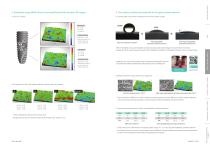
3. The surface activity increased due to the great surface wetness COWELLMEDI HISTORY 2. Evaluation using SSEM (Stereo Scanning Electron Microscope) 3D images A. Contact angle measurement evaluation result for the saline solution Surface Stats Surface Stats Measurement Info Magnification : 19.93 Measurement Mode : VSI Sampling : 496.74 nm Array Size : 640 X 480 After hydrophilic activation treatment (36.33°) After super-hydrophilic activation treatment (9°) After the hydrophilic and super-hydrophilic activation by special soaking technology, the sample became extremely hydrophilic and the surface...
Open the catalog to page 11All Cowellmedi catalogs and technical brochures
 InnoGenic™ Wifi-Mesh
26 Pages
 Diaderm® M
3 Pages
 MEGA DERM™ Plus
3 Pages
 DIABONE
3 Pages
 INNO OSS & INNO OSS Allo
3 Pages
 INNO-CaP
3 Pages
 COWELL® BMP
6 Pages
 COWELL® Regenerative Solution
13 Pages
 InnoGenic™ Bone Carrier
5 Pages
 Volume-up™ Guide System
4 Pages
 AO4 Surgical Stent
3 Pages
 Direct Surgical Guide Kit
7 Pages
 Atraumatic Extraction Kit
6 Pages
 COWELL® BMP Trephine Kit
4 Pages
 InnoGenic™ GBR Kit
7 Pages
 Sinus Lift Kit
5 Pages
 COWELL® Expert Instruments
33 Pages
 Digital Prosthesis (InnoFit)
13 Pages
 Digital Prosthesis (SFIT)
14 Pages
 InnoFit® Lodestar Kit
7 Pages
 InnoFit® Lodestar Plus Kit
11 Pages
 COWELL® Digital Products
39 Pages
 Surgical Kit
11 Pages
 Bite Impression Coping Catalog
10 Pages
 SONATOR™ 80’s
16 Pages
 Multi S & A Abutment
20 Pages
 Beauty-up™ Abutment
31 Pages
 Ball Abutment System
15 Pages
 Mini Plus® Implant
5 Pages
 INNO External Implant
9 Pages
 INNO Internal Impant
12 Pages
 INNO Submerged Narrow Implant
10 Pages
 INNO Submerged Implant
18 Pages
 COWELL® Implant System
66 Pages


- Dental material
- Dental restoration material
- Cowellmedi implant abutment
- Cowellmedi titanium implant abutment
- Cowellmedi straight implant abutment
- Cowellmedi dental surgery instrument kit
- Cowellmedi titanium dental implant
- Cowellmedi internal implant abutment
- Cowellmedi conical dental implant
- Biocompatible dental material
- Cowellmedi angled implant abutment
- Straight dental implant
- Cowellmedi dental implant surgery instrument kit
- Cowellmedi hexagonal implant abutment
- Cowellmedi screw implant abutment
- Cowellmedi bone substitute
- Cowellmedi internal hexagon implant abutment
- Cowellmedi dental implant analog
- Internal dental implant