
- Catalogs
- Cranial Technologies
- DOC Band

DOC Band

DOC Band
Plagiocephaly is a condition characterized by an abnormal head shape, which can occur before or after birth. It is often caused by factors such as restriction in the womb, prematurity, torticollis, sleeping position, and overuse of infant seats and carriers. If left uncorrected, plagiocephaly can significantly impact a child's future.
DOC Band® Treatment
The DOC Band® is a cranial orthosis designed to treat plagiocephaly. Since its inception, over 35,000 children have been treated with the DOC Band from 1988 to 2005. The treatment is supported by clinical photographers who track each child's progress, and it is administered by highly trained staff in family-friendly clinics. The DOC Band is recognized as the preferred treatment by craniofacial, neurological, and plastic surgeons worldwide.
FDA Classification and Regulatory Information
In 1998, the DOC Band® became the first medical device cleared by the US Food and Drug Administration (FDA) for the treatment of plagiocephaly. It remains the only device with clinical studies proving its safety and effectiveness. The DOC Band is classified as a Class II cranial orthosis and is restricted to sale by or on the order of a physician.
Indications and Contraindications
The DOC Band is intended for infants aged three to eighteen months with moderate or severe non-synostotic positional plagiocephaly. It is designed to apply pressure to the prominent regions of an infant’s cranium to improve cranial symmetry and shape. The device is contraindicated for conditions such as synostosis and hydrocephalus.
Adverse Events
Adverse events are rare, with skin irritation and breakdown occurring in less than 5% of treated children. Specific treatment protocols are in place to address these issues.
History and Development
Jeanne Pomatto-Hertz founded Cranial Technologies in 1986, developing the first FDA-cleared cranial molding device. The DOC Band and CranialTech have since become leaders in treating plagiocephaly, with clinics across the US, Canada, Europe, and the UK.
Early Intervention and Customized Design
The most effective correction period is when the infant’s skull is malleable, typically between three to six months of age. Each DOC Band is customized from a 3D model of the infant's head and is monitored regularly to ensure proper correction. The band is worn 23 hours a day, and a second band may be recommended for severe cases.
Staff and Training
CranialTech employs physical or occupational therapists and registered nurses who are trained to treat infants and assess developmental milestones. Additional training and annual continuing education are mandatory for all clinicians. Each clinic is also staffed with insurance specialists to assist families with claims and coverage.
Catalog excerpts

Dynamic Orthotic CranioplastySM Balance Symmetry Balance Symmetry Reshaping Children’s Lives ®
Open the catalog to page 1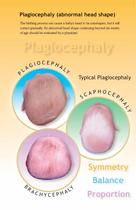
Plagiocephaly (abnormal head shape) The birthing process can cause a baby’s head to be misshapen, but it will correct gradually. An abnormal head shape continuing beyond six weeks of age should be evaluated by a physician. P Plagiocephaly L GIO A CEPH AL Y Typical Plagiocephaly A SC PHOCE PH A LY Symmetry B RA CHYCEPHA LY Balance Proportion
Open the catalog to page 2
Dynamic Orthotic CranioplastySM History In 1986, responding to requests from doctors for a non-surgical treatment of plagiocephaly, Jeanne Pomatto-Hertz, founder of Cranial Technologies, researched and developed the first cranial molding device to receive FDA-clearance. The DOC Band and CranialTech became leaders in the treatment for this often misdiagnosed condition. In the following years, over 35,000 children successfully benefited from DOC Band treatment in our clinics across the US, Canada, Europe and the United Kingdom. Early Intervention The most effective correction period is while the...
Open the catalog to page 3
The DOC Band is fabricated from a 3-Dimensional model of each individual baby’s head. Weighing just 6-oz, it applies mild holding pressures to redirect growth. While worn 23 hours a day, the band is carefully monitored every seven to 14 days, the baby’s skull growth is checked and correction of the deformity evaluated. A second band may be recommended when the severity of a patient’s plagiocephaly requires longer treatment. Our Staff We hire Physical or Occupational Therapists and RNs, accredited medical professionals already trained to treat infants and to assess their appropriate developmental...
Open the catalog to page 4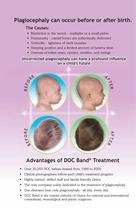
Plagiocephaly can occur before or after birth. The Causes: • • • • • Restriction in the womb - multiples or a small pelvis Prematurity - cranial bones are softer/easily deformed Torticollis - tightness of neck muscles Sleeping position and a limited amount of tummy time Overuse of infant seats, carriers, strollers, and swings BEF AFTE R BE TER FORE E AF OR Uncorrected plagiocephaly can have a profound influence on a child’s future Advantages of DOC Band® Treatment • Over 35,000 DOC babies treated from 1988 to 2005 • Clinical photographers follow each child’s treatment progress • Highly trained,...
Open the catalog to page 5
FDA Classification In 1998, the DOC Band® became the first medical device cleared by the US Food and Drug Administration for treatment of plagiocephaly. To date, it is the only device with clinical studies demonstrating safety and effectiveness. The Federal Register Volume 63, No. 146 published the FDA clearance in full detail on July 30, 1998. This is on file for review under 21 CFR 882.5970. Regulatory Information The DOC Band is a Class II cranial orthosis, cleared by the FDA for treatment of plagiocephaly. Federal law restricts this device to sale by or on the order of a physician. Indications...
Open the catalog to page 6