
- Catalogs
- Cubic Sensor and Instrument Co.,Ltd.
- Ultrasonic Oxygen Sensor Gasboard8500

- Company
- Products
- Catalogs
- News & Trends
- Exhibitions
Ultrasonic Oxygen Sensor Gasboard8500

Ultrasonic Oxygen Sensor Gasboard8500
A ventilator is a medical device used in hospitals to assist patients with breathing, particularly those with lung diseases. It functions by delivering pure oxygen to the lungs and removing carbon dioxide from the body, aiding individuals who cannot breathe independently.
Who Needs a Ventilator?
Ventilators are necessary during surgeries involving anesthesia and for patients with impaired lung function due to diseases or conditions that make independent breathing difficult.
How Ventilators Work
Ventilators use positive pressure to push air or a mixture of gases into the lungs. They can be set to operate at a specific rate, ensuring continuous breathing support if the patient fails to breathe independently.
Importance of Oxygen Measurement
Oxygen sensors are crucial in ventilators to maintain stable oxygen concentration levels, ensuring adequate oxygen supply for patient breathing. If levels drop, the device alerts for necessary adjustments.
Oxygen Measurement Technologies
Various technologies are used to measure oxygen concentration, including:
- Differential Pressure Sensor: Measures air flow through pressure differences.
- Low Pressure Drop Flow Meter: Uses a hot wire to measure air mass flow.
- Electrochemical Oxygen Sensor: Measures oxygen purity through current generated by dissolved oxygen.
- Paramagnetic Oxygen Sensor: Utilizes oxygen's paramagnetic properties to measure concentration.
- Zirconia Oxygen Sensor: Uses solid electrolytes to measure oxygen concentration.
- Ultrasonic Oxygen Sensor: Measures flow and concentration using ultrasonic waves.
Comparison of Technologies
Each technology has its advantages and disadvantages, such as stability, accuracy, cost, and lifespan. The ultrasonic sensor is noted for its stability, long life, and ability to measure both concentration and flow.
Advantages of Gasboard8500
The Gasboard8500 offers several benefits for oxygen measurement in ventilators:
- Utilizes advanced ultrasonic technology for mainstream oxygen concentration measurement.
- Compact, stable, and accurate with low cost and long lifespan.
- No routine calibration required and customizable for various configurations.
- High flow range capability and compatibility with different oxygen sources.
Wuhan Cubic's Strength
Wuhan Cubic provides reliable oxygen sensors for ventilators, backed by mass production capabilities, mature technology, and strict quality control certified by ROHS, REACH, and ISO9001. They have extensive experience collaborating with medical device manufacturers.
Catalog excerpts
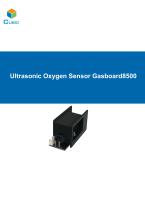
Ultrasonic Oxygen Sensor Gasboard8500
Open the catalog to page 1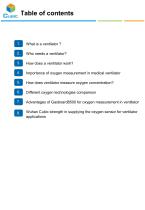
How does a ventilator work? Importance of oxygen measurement in medical ventilator How does ventilator measure oxygen concentration? Different oxygen technologies comparison Advantages of Gasboard8500 for oxygen measurement in ventilator Wuhan Cubic strength in supplying the oxygen sensor for ventilator applications
Open the catalog to page 2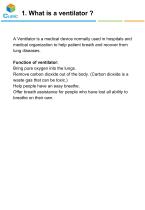
A Ventilator is a medical device normally used in hospitals and medical organization to help patient breath and recover from lung diseases. Function of ventilator: Bring pure oxygen into the lungs. Remove carbon dioxide out of the body. (Carbon dioxide is a waste gas that can be toxic.) Help people have an easy breathe. Offer breath assistance for people who have lost all ability to breathe on their own.
Open the catalog to page 3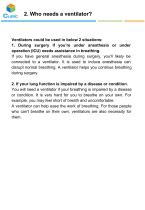
Ventilators could be used in below 2 situations: 1. During surgery if you’re under anesthesia or under operation (ICU) needs assistance in breathing. If you have general anesthesia during surgery, you'll likely be connected to a ventilator. It is used to induce anesthesia can disrupt normal breathing. A ventilator helps you continue breathing during surgery. 2. If your lung function is impaired by a disease or condition. You will need a ventilator if your breathing is impaired by a disease or condition. It is very hard for you to breathe on your own. For example, you may feel short of breath...
Open the catalog to page 4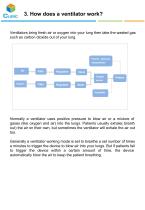
3. How does a ventilator work? Ventilators bring fresh air or oxygen into your lung then take the wasted gas such as carbon dioxide out of your lung. Normally a ventilator uses positive pressure to blow air or a mixture of gases (like oxygen and air) into the lungs. Patients usually exhale( breath out) the air on their own, but sometimes the ventilator will exhale the air out too. Generally a ventilator working mode is set to breathe a set number of times a minutes to trigger the device to blow air into your lungs. But if patients fail to trigger the device within a certain amount of time, the...
Open the catalog to page 5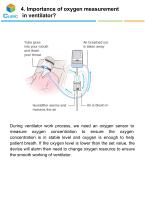
into your mouth your throat During ventilator work process, we need an oxygen sensor to measure oxygen concentration to ensure the oxygen concentration is in stable level and oxygen is enough to help patient breath. If the oxygen level is lower than the set value, the device will alarm then need to change oxygen resource to ensure the smooth working of ventilator.
Open the catalog to page 6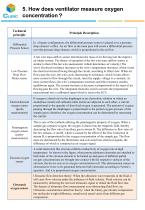
5. How does ventilator measure oxygen concentration? Technical principle Principle Description Differential Pressure Sensor In a bypass configuration, the differential pressure sensor is placed over a pressure drop element/ orifice. An air flow in the main pass will create a differential pressure over the pressure drop element, which is proportional to the air flow. Low Pressure Drop Flow Meter sensor A hot wire mass airflow sensor determines the mass of air flowing into the engine’s air intake system. The theory of operation of the hot wire mass airflow sensor is similar to that of the hot wire anemometer (which determines air velocity) The ...
Open the catalog to page 7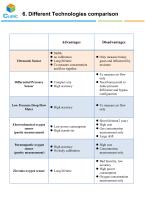
6. Different Technologies comparison
Open the catalog to page 8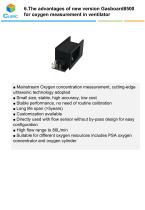
6.The advantages of new version Gasboard8500 for oxygen measurement in ventilator ■ Mainstream Oxygen concentration measurement, cutting-edge ultrasonic technology adopted ■ Small size, stable, high accuracy, low cost ■ Stable performance, no need of routine calibration ■ Long life span (>5years) ■ Customization available ■ Directly used with flow sensor without by-pass design for easy configuration ■ High flow range to 80L/min ■ Suitable for different oxygen resources includes PSA oxygen concentrator and oxygen cylinder
Open the catalog to page 9
7. Wuhan Cubic strength in supplying the oxygen sensor for ventilator applications ■ Mass production, mature technology and stable quality guarantee ■ Low cost ■ Strict quality control with ROHS, REACH and ISO9001 certificate ■ Rich experience in working wit
Open the catalog to page 10All Cubic Sensor and Instrument Co.,Ltd. catalogs and technical brochures
 About Cubic
1 Page
 Mainstream NDIR ETCO2 Sensor
3 Pages









Archived catalogs
 Fast Response CO2 Sensor
1 Page


- CUBIC medical sensor
- CUBIC monitoring sensor
- CUBIC gas sensor
- Laboratory sensor
- Vitals monitor
- Spirometer
- CUBIC particle counter
- Vital sign sensor
- Calibration sensor
- Electronic spirometer
- Process sensor
- Intensive care vital signs monitor
- Laser particle counter
- Humidity sensor
- Portable vitals monitor
- Clinical vital signs monitor
- CUBIC respiratory device sensor
- CUBIC intensive care sensor