- Catalogs
- CyberLogic
- Universal Standardization of Forearm Bone Densitometry

Universal Standardization of Forearm Bone Densitometry
Universal Standardization of Forearm Bone Densitometry
The document addresses the standardization of Bone Mineral Density (BMD) measurements across various devices, emphasizing the need for standardized equations to improve accuracy and comparability. It highlights the limitations of device-dependent variability and the importance of using standardized equations over simple linear regressions for cross-calibrating devices.
Devices and Methodology
Six different forearm bone densitometers were used in the study, involving 101 women aged 20-80 years. Regression statistics were employed to compare regions of interest (ROIs) across devices, despite differences in ROI size and placement. The study also involved scanning five phantoms to aid in cross-calibration between devices.
Key Findings
- Correlation coefficients for BMD measurements ranged from 0.7 to 0.97, with higher correlations for similar ROIs.
- Standardized units of BMD were derived for distal, mid, and proximal ROIs.
- The study highlights potential discrepancies in measurements when using different devices for clinical data pooling.
Standardization Efforts
The International Committee of Standards in Bone Measurement (ICSBM) commissioned the study to address standardization issues. The study proposes standardized equations for forearm BMD to facilitate cross-device comparisons, building on previous efforts to standardize spine and proximal femur BMD measurements.
Standardization Equations
Optimal conversion standardization equations were developed using SAS proc NONLIN. A common average BMD was determined by averaging population means for each device. Standardization equations were created for distal, mid-, and proximal ROIs, referred to as sdBMD, smBMD, and spBMD equations.
Phantom Measurements
Various phantoms were identified for potential use in quality control and cross-calibration procedures. Challenges with different phantoms and devices, including issues with anthropomorphic shapes and scanning modes, were detailed.
Results
Intermanufacturer BMD correlations were analyzed, showing population mean, standard deviation, and coefficient of variation for each BMD variable. Scatterplots and linear regression statistics for distal, mid-, and proximal sites were provided, with r values ranging from 0.70 to 0.97.
Standardization Relationships
Standardized BMD equations for each device were presented, showing no systematic differences between mean values. The trend of BMD values increasing relative to young BMD values before a perimenopausal drop was discussed.
Discussion
The document emphasizes the importance of using the same make and model of densitometer for baseline and follow-up examinations. It discusses the challenges of monitoring BMD changes across different devices and the need for standardization of ROIs. Devices with r values above 0.97 can be reasonably pooled and cross-calibrated, while those with lower r values may not provide reliable data for individual patients.
Conclusion
The study underscores the need for universal standards in forearm bone density measurement to prevent treatment disparities and improve clinical study consistency. It provides a framework for standardizing BMD measurements across different devices, enhancing diagnostic accuracy and comparability.
Catalog excerpts
JOURNAL OF BONE AND MINERAL RESEARCH Volume 17, Number 4, 2002 © 2002 American Society for Bone and Mineral Research Universal Standardization of Forearm Bone Densitometry JOHN A. SHEPHERD,1 XIAO GUANG CHENG,1 YING LU,1 CHRIS NJEH,1 JORG TOSCHKE,1 KLAUS ENGELKE,2 MICHAEL GRIGORIAN,1 and HARRY K. GENANT1 ABSTRACT As part of an effort to quantify device-dependent differences in forearm bone density, 101 women, aged 20 – 80 years (ϳ16 women in each age decade), were scanned on six forearm bone densitometers: the Aloka DCS-600EX, the Hologic QDR-4500A, the Lunar PIXI, the Norland pDEXA, the Osteometer DTX-200, and the Pronosco X-posure System. Regression statistics are reported for all similar regions of interest (ROIs). However, comparisons were confounded because of large differences in the ROI size and placement. The number of ROIs reported for a single scan by each device varied from 1 to 12. The correlation coefficients ranged from 0.7 < r < 0.97, with the highest correlation coefficients and lowest SEs for comparisons between the most similar ROIs. Standardized units of bone mineral density are derived for distal (sdBMD), mid(smBMD), and proximal (spBMD) ROIs that allow for comparable mean bone densities to be derived for patient populations. Five phantoms were scanned and characterized on five of the devices and the precision and mean values were reported. These phantom values will aid in the in vitro cross-calibration between manufacturers to recreate the presented in vivo relationships. Care should be exercised when using these equations for cross-calibrating patient databases or pooling clinical data from different devices because the least significant differences detectable from measurements taken on two different machines can be increased substantially. (J Bone Miner Res 2002;17:734 –745) Key words: dual-energy X-ray absorptiometry, digital X-ray radiogrammetry, cross-calibration, osteoporosis, peripheral INTRODUCTION Bone density is the single-most predictive measure of fracture risk. Bone density at virtually any available measurement site (spine, proximal femur, forearm, whole body, calcaneus, and tibia) can be used to predict risks of all fractures. Of those bone density measurement sites, in clinical practice, the forearm has been used the longest, applying quantitative methods such as dual-energy X-ray absorptiometry (DXA), single-energy X-ray absorptiometry (SXA), Dr. Genant and Dr. Shepherd serve as consultants. All other authors have no conflict of interest. or the radioisotope equivalents dual photon absorptiometry (DPA) and single photon absorptiometry (SPA). Duppe et ¨ al. showed that a single SPA measurement predicted hip fractures 25 years later with a relative risk of 1.66/SD decrease in bone mineral density (BMD).(1) The purpose of this study is to quantify the interrelationships of currently marketed devices that measure forearm bone density. The International Committee of Standards in Bone Measurement (ICSBM) commissioned the study. This committee was formed to address issues of accuracy, standardization, and comparability of densitometers from different manufacturers. All manufacturers were invited to participate with the committee, as were representatives from 1 Osteoporosis and Arthritis Research Group, Department of Radiology, University of California San Francisco, San Francisco, California, USA. 2 Institute of Medical Physics, University of Erlangen/Nurnberg, Erlangen, G
Open the catalog to page 1
academic institutions. The ICSBM has commissioned two previous studies, one for the standardization of the anteroposterior (AP) spine BMD as measured by DXA(2) and the second for the standardization of the proximal femur BMD.(3) The standardization equations were reported as letters to the editor of selected journals(4 –7) and standardize BMD units are now available on the applicable machines. The committee also has recommended standardized projectional density units of milligrams per squared centimeter (sometimes referred to as areal density) to distinguish it from the manufacture-specific BMD...
Open the catalog to page 2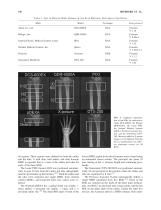
DEVICES WITH VERSION SCAN PROTOCOL INCLUDED Scan protocol General Electric Medical Systems Lunar Norland Medical Systems, Inc. Osteometer MediTech Forearm V 1.10 Forearm V 8.24a:3 Forearm V 1.42 Forearm V 3.8.0/1.1.1 Forearm V 1.1.2 Forearm V 1.63 FIG. 1. Graphical representation of the ROIs for each device: Aloka DCS-600EX, the Hologic QDR-4500A, GE Lunar PIXI, the Norland Medical Systems pDEXA, Pronosco X-posure System, and the Osteometer DTX200. Masking added to X-posure image to cover labeling. Note that the six manufacturers use different placement criteria for all ROIs. tal regions. These...
Open the catalog to page 3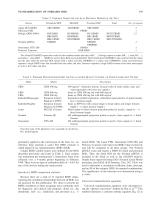
Table 2. Variable Names for the Scan Protocol Defined in the Text GE/Lunar PIXI Hologic QDR-4500A HUUBMD hrubmd hruubmd Norland pDEXA NDBMD Osteometer DTX-200 Pronosco X-posure Device Ultradistal npbmd nprbmd obmd dxr-bmd Total No. of regions The Aloka DCS-600EX reports the results for the combined radius and ulna (ARU. . .). Hologic reports a radius (HR. . .), ulna (HU. . .), and radius + ulna (HRU . . .) BMD for each of three ROIs and a global ROI. The Norland distal (NDBMD) is the result for both the radius and the ulna while the proximal ROI reports both a radius and ulna (NPBMD)...
Open the catalog to page 4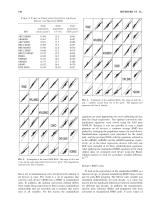
Table 4. Table of Population Statistics for Each Device and Selected ROIs Study Study Study population population population Hui et al.] to simultaneously solve for the best-fit solution of all devices at once. The result is a set of equations that converts each device’s BMD into a BMD in standardized units. In addition, the optimal conversion method differs from simple linear regressions in that it creates standardized relationships that are invertible and it assumes that errors exist in all variables. For this reason, the standardized equations are more appropriate for cross-calibrating...
Open the catalog to page 5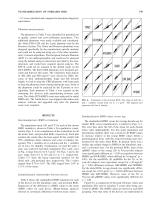
— 2.5 were calculated and compared to determine diagnostic equivalence. Phantom measurements The phantoms in Table 3 were identified for potential use in quality control and cross-calibration procedures. Two additional phantoms were made available and considered: the Aloka PHA-8158 and the Leeds phantom used by the Pronosco System. The Aloka and Pronosco phantoms were designed specifically for the manufacturer-specific machine and could not be analyzed using any of the other manufacturer’s forearm algorithms. The European Forearm Phantom (EFP) I is not anthropomorphic and could not be analyzed using...
Open the catalog to page 6Archived catalogs
 Ultrasound Simulation in Bone
14 Pages
 UltraScan™ 650
2 Pages