


- Company
- Products
- Catalogs
- News & Trends
- Exhibitions
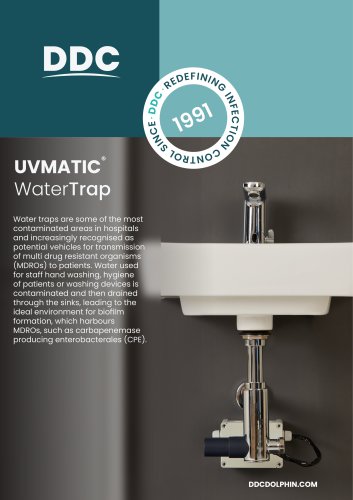
DDC UVMATIC WaterTrap
DDC UVMATIC WaterTrap
Water traps in hospitals are identified as significant sources of contamination, harboring multi-drug resistant organisms (MDROs) such as carbapenemase-producing enterobacterales (CPE). These areas are critical in the transmission of infections due to biofilm formation.
Problem Statement
Contaminated water traps under sinks and basins are recognized as threats to patient health, as they can emit bacteria into the environment, leading to cross-infection. Biofilms in these traps are resistant to disinfectants and can facilitate the transfer of antibiotic-resistant genes.
Solution: UVMATIC® WaterTrap
The UVMATIC® WaterTrap system uses UV-C light to effectively reduce bacteria and biofilms in water traps. It operates continuously, requiring minimal human intervention, and is cost-effective, consuming only 11 watts per hour.
Clinical Studies
1. Rigshospitalet, Copenhagen: A study demonstrated significant reduction in bacterial colony-forming units (CFUs) with UV-C treatment. However, recontamination occurred after discontinuation.
2. University Hospitals Birmingham: The system showed a 99% reduction in bacterial contamination in the U-bend of hand wash basins, with statistically significant results (p < 0.001).
Conclusion
The UVMATIC® WaterTrap system offers a novel approach to controlling bacteria and biofilms in hospital environments, enhancing patient safety by reducing the risk of infection transmission.
Installation and Maintenance
The system requires installation near an electrical supply and includes a waterproof connection box. The UV-C lamp needs annual replacement.
References
Studies and articles cited include works by Anantharajah et al. (2024), Fucini et al. (2023), and others, highlighting the link between contaminated sinks and healthcare-associated infections.
Catalog excerpts
Water traps are some of the most contaminated areas in hospitals and increasingly recognised as potential vehicles for transmission of multi drug resistant organisms (MDROs) to patients. Water used for staff hand washing, hygiene of patients or washing devices is contaminated and then drained through the sinks, leading to the ideal environment for biofilm formation, which harbours MDROs, such as carbapenemase producing enterobacterales (CPE).
Open the catalog to page 1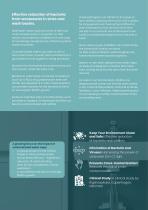
Washbasin water traps are some of the most contaminated areas in hospitals. For that reason, transmittance of MDROs from this area is increasingly recognised as a threat to patient health and safety. A contaminated water trap under a sink or hand wash basin, actually demonstrates that a good level of hand hygiene is being practiced. Bacteria from the hands are washed away and then remain inside the water trap. Bacteria in water traps can be fed as solutions (such as IV fluid, drug preperations even soft drinks) are disposed of in sinks. These solutions can provide nutrients for the bacteria to...
Open the catalog to page 2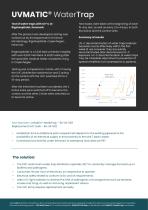
UVMATIC® WaterTrap Test of water traps with UV-C at Rigshospitalet, Denmark: After the product was developed, testing was carried out by the Department of Clinical Microbiology, Rigshospitalet, Copenhagen, Denmark. Risghospitalet, is a 1,040 bed university hospital, with over 6,000 members of staff, looking after the specialist medical needs of patients living in Copenhagen. Test swabs were taken at the beginning of each 15-day test, as well as every 3 to 4 days, in both the active and the control sinks. Summary of results UV-C decontamination of water traps reduces bacterial counts effectively...
Open the catalog to page 3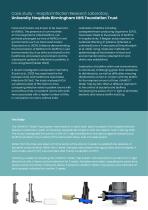
Case study - Hospital Infection Research Laboratory, University Hospitals Birmingham NHS Foundation Trust Hand wash basins are known to be reservoirs of MDROs. The presence of communities of microorganisms called biofilms, can promote prolonged survival of MDROs in wet environments such as hand wash basins (Hayward et al. 2024). Evidence demonstrating the transmission of MDROs from biofilms in wet environments (such as sinks and drains) to the healthcare and patient environment and the subsequent spread of infections to patients, is now recognised (Inkster 2024). A recent investigation conducted...
Open the catalog to page 4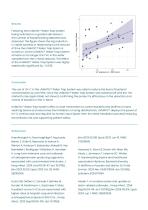
Results Following the UVMATIC® Water Trap System being switched on a gradual decrease in the number of bacteria being detected was observed. The figure shows the log reduction in viable bacteria in relationship to the amount of time the UVMATIC® Water Trap Sytem is turned on. As the UVMATIC® Water Trap System remains on for longer, the TVC in the water sampled from the U-bend reduces. The effect of the UVMATIC® Water Trap System was highly statistically significant (p < 0.001). Conclusion The use of UV-C in the UVMATIC® Water Trap System was able to reduce the level of bacterial contamination...
Open the catalog to page 5
Scan to find out more about our UVC range
Open the catalog to page 6All DDC catalogs and technical brochures
 Pulpmatic Ultima
6 Pages
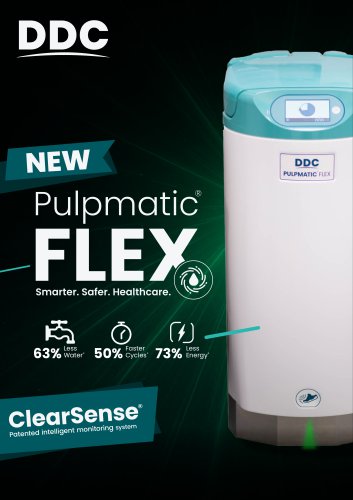 Pulpmatic Flex Brochure
8 Pages
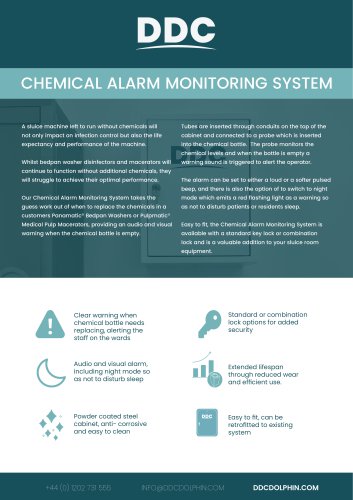 CAMS Monitoring System
2 Pages
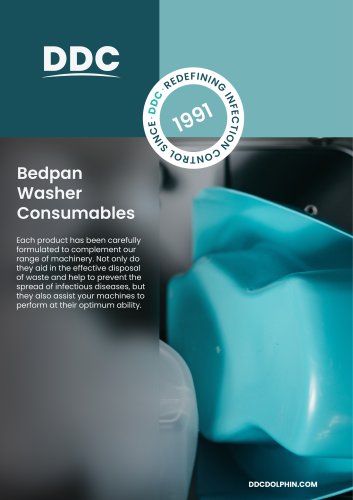 Bedpan Washer Consumables
8 Pages
 The DDC Solution
10 Pages
 Stainless Steel Brochure
8 Pages
 DDC Bedpan Washers
5 Pages
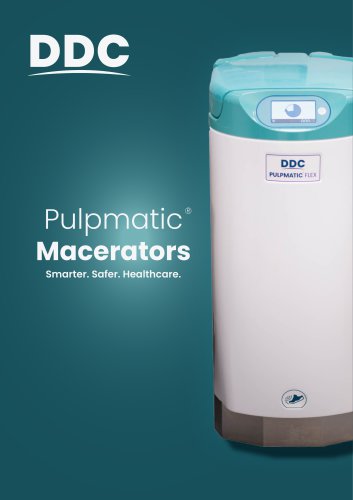 DDC Pulp Macerators
12 Pages

Archived catalogs
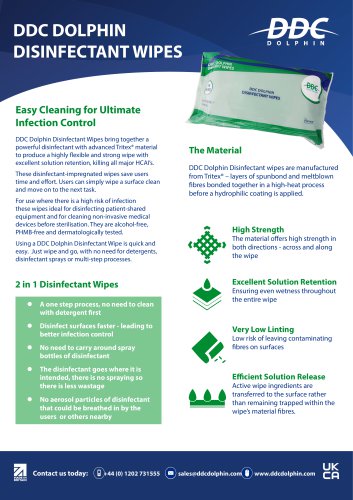 Disinfectant Wipes
2 Pages


- Hospital wardrobe
- Stainless steel cabinet
- 2 doors wardrobe
- DDC Dolphin container
- 1-unit wardrobe
- Sample container
- Healthcare facility air sterilizer
- Wall-mounted cabinet
- Cleaner
- Rack
- Hospital air recirculator
- Waste container
- DDC Dolphin 1-station sink
- DDC Dolphin metal sink
- UV air recirculator
- DDC Dolphin stainless steel sink
- Air purifier with HEPA filter
- Cabinet with sink
- Wall-mounted air sterilizer
- Medical tray