


- Products
- Catalogs
- News & Trends
- Exhibitions
CATALOGO

CATALOGO
Deltalab's latest catalogue highlights over 40 years of innovation, focusing on automation, speed, reliability, and regulatory compliance to meet market changes and customer satisfaction.
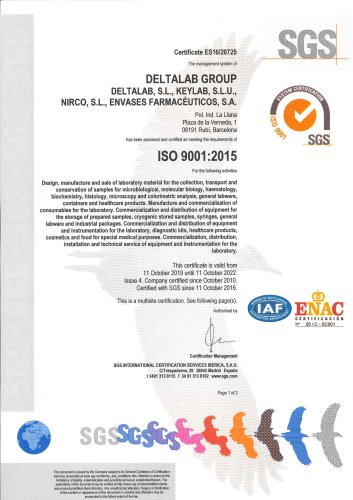
Deltalab is certified with ISO 9001:2015, ISO 14001:2015, and ISO 13485:2016, ensuring compliance with quality and environmental standards.
The CE Mark certifies that Deltalab's medical devices meet safety and health standards, with a commitment to reducing environmental impact through recyclable and biodegradable materials.
Under Regulation EU Nº 2017/745, Deltalab produces Class I and IIa medical devices, including sterile and non-sterile products, certified by a Notified Body.
Regulation EU Nº 2017/746 defines in vitro diagnostic devices, with Deltalab's products ensuring safety and compatibility for diagnostic purposes.
According to Regulation EU Nº 2016/425, PPE products protect users from health and safety risks.
Details on transport dimensions and packaging symbols ensure compliance with UNE-EN ISO 15223-1:2016 standards.
Goods are shipped at the purchaser's risk, with specified minimum order quantities and conditions for claims and returns.
Swabs for microbiological sampling are classified as Class IIa medical devices, complying with EU Regulation 2017/745 and certified by AEMPS.
Swabs meet various UNE-EN ISO standards for sterilization and quality management, ensuring safety and performance.
Swab heads are made from cotton, polyester, or viscose, each with specific absorption capacities and uses.
1. Serological Pipettes: Made of glass polystyrene, single-use, sterilized by radiation, volumes from 1 ml to 50 ml, pyrogenic, non-cytotoxic, non-hemolytic, DNAse/RNAse free.
2. Pipetting Bulbs: Made of natural orange rubber, designed for single-hand use, cleanable and autoclavable.
3. Pipette Pumps: Available in various models, resistant to acids and alkalies.
4. Whirl-Pak® Blender Bags: Made of low-density polyethylene, suitable for food and microbiological sampling.
5. Sterile Bottles for Water Sampling: Made of polyethylene, available with or without thiosulfate, sterilized by radiation.
6. Surface Sampling Kits: Include swabs and tubes with neutralizing broth, designed for microbiological analysis.
1. Pipetting Procedure: Involves evacuating air, intaking liquid, draining, and blowing out the pipette using a pipetting bulb.
2. Bag Closure: Whirl-Pak bags feature a leakproof closure with metallic sticks for secure sealing.
1. Meat Sampling Kit: Designed according to ISO 17604 for microbiological analysis of carcasses.
2. Surface Sampling Kit: Intended for skilled personnel, includes a sterile template for precise sampling.
1. Pipette Pumps: Color-coded for different volumes, with specific weights and volumes.
2. Whirl-Pak Bags: Available in various sizes and capacities, with specific weights and volumes.
3. Sterile Bottles: Available in 500 ml and 1,000 ml sizes, with or without thiosulfate, and specific weights and volumes.
0.2 ml PCR tubes are available in strips made of polypropylene with attached hinged caps, suitable for Real Time PCR, certified RNAse, DNAse, and pyrogen free.
Designed for use in Real Time PCR, allowing DNA quantification during amplification.
Certified RNAse, DNAse, and pyrogen free, autoclavable at 121°C.
Opaque white tubes recommended for Real Time PCR to avoid well-to-well crosstalking.
Various product codes for different configurations of PCR tubes and plates.
Detailed tables listing product codes, descriptions, case quantities, weights, and volumes for different PCR tube and plate configurations.
Thermostable adhesive film and aluminium sealing foil, resistant to DMSO, recommended for PCR work.
Made of medical-grade polypropylene, resistant to temperatures from -80°C to 121°C, certified free from RNase, DNase, DNA, and PCR inhibitors.
Includes racks with 96 round bottom tubes, compatible with robotic applications and multichannel pipetting systems.
Manufactured following various standards, available with different anticoagulants, designed for various tests.
With clot accelerators and gel separators, designed for biochemistry and immunology tests.
Details various types of blood collection tubes, highlighting materials, additives, and functionalities.
Instructions for using tubes include inverting them after filling, centrifugation guidelines provided.
Recommendations for storing tubes and handling to prevent contamination.
Tables provide detailed product codes, descriptions, case quantities, weights, volumes, and pallet quantities.
Emphasizes proper handling and centrifugation to ensure accurate results.
- Histosette I and II Cassettes: Made of polyacetal with air vents for efficient paraffin filling.
- Biopsy and Tissue Cassettes: Manufactured in POM, resistant to solvents.
- Modular Storage Solutions: Includes cabinets and drawers for storing microscope slides and cassettes.
- Forceps: Made of polyoxymethylene, autoclavable.
- Slides: EUROTUBO® and STAR FROST® slides available with various features.
- Using Biopsy Cassettes: Steps include placing the biopsy in a bag, processing in a cassette, and extracting the sample for embedding.
- Check with the commercial department for minimum quantities and delivery times for specific colors and configurations.
- Mounting Medium: VITROCLUD® quick-hardening medium.
- Staining Tray: Made of ABS, designed to hold slides securely.
- 30 ml Containers: Made with an innovative process for high resistance.
- 50 ml Containers: Made of ultra-clear polypropylene.
- 60 ml Containers: Available in polystyrene and polypropylene.
- 150 ml Containers: Made of ultra-clear polypropylene.
- 200 ml Containers: Made of ultra-clear polypropylene.
- Containers are autoclavable except for specific models.
- Containers are supplied capped but not fully locked to allow for sample collection.
- Containers are manufactured under aseptic conditions.
- Case quantities, weights, and volumes are specified for each container type.
Various containers and bags are described, including their dimensions, capacities, and materials.
Instructions for using Whirl-Pak® bags include steps for opening, placing samples, and securely closing the bags.
Containers meet specific standards such as UNE-EN 14401 for leak-proof closures.
For specific applications, certain containers are recommended due to their design and material properties.
Tables provide detailed information on product codes, capacities, dimensions, case quantities, weights, and volumes.
Important features include leak-proof and child-proof systems for security screw cap containers.
Sterile bottles are available for water sampling, designed according to ISO standards.
Designed for transporting biological samples, maintaining temperature for up to 6 hours.
Various containers and sampling equipment are available, including sterile and non-sterile spatulas, cytology brushes, and vaginal speculums.
Manufactured using high technology molds for uniformity and accuracy.
Details various specifications for laboratory equipment, including dimensions, materials, and capacities.
Describes various laboratory tubes made of polypropylene and borosilicate glass, suitable for clinical and research applications.
Tubes and caps are designed with flat threads for leakproof sealing.
Tubes can withstand centrifugation up to 14,000 xg.
Lists various models, including 15 ml non-skirted and 50 ml skirted and non-skirted tubes.
Covers a range of disposable glass culture tubes made of borosilicate or soda lime glass.
Describes microtubes made of polyethylene and polypropylene.
Recommends that centrifuge caps fit the size and shape of the tubes.
- Materials and Design: Made of ultra-clear polypropylene, autoclavable.
- Temperature and Centrifugation Resistance: Can withstand temperatures ranging from -175°C to 121°C.
- Materials and Features: Made of polypropylene, designed for storing biological materials at low temperatures.
- Color Coding: Caps and inserts available in various colors.
Wilmut offers a range of cryopreservation solutions including high-quality polypropylene tubes and cryoboxes.
Outlines the procedure for handling cryoperles.
Wilmut products are designed to meet high standards of quality.
- Maximum space optimization in freezers.
- High traceability with 2D datamatrix codes and barcodes.
Wilmut provides a range of accessories including caps, lockers, scanners, and more.
Details various storage systems, including metallic cryoracks and polypropylene racks.
Wilmut offers a range of pipette tips with and without filters.
- Tip Types: Lists various types of pipette tips.
- Compatibility: Tips are compatible with multiple pipette brands.
- Bulk and Rack Options: Tips are available in bulk or in racks.
- Types: Includes single and double-sided pipetting reservoirs.
- Ensure compatibility with specific pipette models before purchase.
- Graduated pipettes with a tolerance of ±10% for volumes up to 5 ml.
- Single-use, non-graduated, made of polypropylene.
- Made of white PVC, resistant to temperatures from –20 ºC to 80 ºC.
- Made of glass polystyrene, single-use.
- Available in open and closed tip designs.
- Designed for use with plastic and glass pipettes.
- Polystyrene and polycarbonate racks for cryovials.
- Designed for frozen sample storage.
- Made of autoclavable polypropylene.
- Available in hinged boxes.
- Made of polypropylene, autoclavable up to 121 ºC.
- Designed for freezer storage.
- 96 well PCR racks made of polypropylene.
- Floating racks for water bath incubation.
- Interlocking racks for larger experiments.
- Designed for working with different PCR volumes.
- Versatile racks designed to accommodate various tube sizes and styles.
- Baskets and Trays: Made of stainless steel with woven mesh bases.
- Waste Classification: Four types of medical waste.
- Sterilization Indicator Tapes: Self-adhesive tapes for indicating exposure to Ethylene Oxide sterilization.
1. Nitrile Gloves: Designed for medical and laboratory use, supplied in dispenser boxes of 100 units.
2. Latex Gloves: Available in powder-free and pre-powdered versions.
Made of polypropylene and TPX, autoclavable.
Made of polypropylene, autoclavable.
Available in TPX and polypropylene, autoclavable.
Made of polypropylene and TPX, autoclavable.
Includes burette clamps, pipette stands, vacuum pumps, drying racks, and spatulas.
- Bags: Various capacities ranging from 25 ml to 1,250 ml.
- Stirring Bars: Available in various shapes and sizes.
- Polyethylene Jars: Wide mouth jars with various capacities.
- Drums: Made of high-density polyethylene.
- Sterilization: Methods include dry heat, autoclaving, and ethylene oxide gas.
- Dimensions and Capacities: Detailed tables list the dimensions, capacities, and weights of various packaging products.
- Material Suitability: Many products are made with materials suitable for alimentary use.
Catalog excerpts

Your needs, our innovations
Open the catalog to page 1
General: [email protected] Marketing: [email protected] Plaza de la Verneda, 1 (Pol. Ind. La Llana) Apartado de Correos 195 08191 RUBÍ (BARCELONA) ESPAÑA
Open the catalog to page 2
Dear customers, distributors, suppliers and friends, It is again a pleasure to be able to adress all of you through this new edition of DELTALAB’s Catalogue. A Catalogue that highlights the work done by our company in these more than 40 years, and that wants to respond to the needs of our customers. Our well known company phylosophy: innovation, quality, service and efficiency, has been and will be always linked to our daily work, with a clear final objective: our customers’ satisfaction. At the doors of the beginning of a new decade our market continues to show solidity, being naturally an evolving...
Open the catalog to page 3
CERTIFICATIONS OF THE INTEGRATED MANAGEMENT SYSTEM (quality and environment) ISO 9001: 2015 Quality management systems. ISO 13485:2016 Medical devices. Quality management systems. Requirements for regulatory purposes. ISO 14001: 2015 Environmental management systems 2
Open the catalog to page 4
DELTALAB ISO CERTIFICATIONS Deltalab’s Quality Management System is certified as per ISO 9001:2015 and ISO 13485:2016 standards. Since August 2019, Deltalab has been granted the ISO 14001:2015 Certification. This standard ensures that our companies have an Environmental Management System, which allows us to control the environmental impact of our products and activities. Deltalab, being a company committed with the environment protection, has decided to implement the mentioned Environmental Management System to reduce as much as possible the environmental impact. The plastic materials of the products...
Open the catalog to page 5
1. MEDICAL DEVICES (MD) According to Regulation UE Nº 2017/745 on Medical Devices (that will replace Directive 93/42/CEE) a Medical Device is anyinstrument, apparatus, appliance, software, implant, reagent, material or other article intended by the manufacturer to be used, alone or in combination, for human beings for one or more of the following specific medical purposes: · Diagnosis, prevention, monitoring, prediction, prognosis, treatment or allevation of disease, · Diagnosis, monitoring, treatment, alleviationof,or compensation for, an injury or disability, · Investigation, replacement or...
Open the catalog to page 6
LEGISLATION OF MEDICAL DEVICES AND PPE 2. MEDICAL DEVICES FOR IN VITRO DIAGNOSTIC (IVD) According to Regulation EU Nº 2017/746 on medical devices for in vitro diagnosis (that will replace Directive 98/79/EC), an in vitro medical device is “any medical devicewhich is a reagent, reagent product, calibrator, control material, kit, instrument, apparatus, piece of equipment, software or system, whether used alone, solely or principally for the purpose of providing information on one or more of the following: · concerning a physiological or pathological process or state; · concerning congenital physical...
Open the catalog to page 7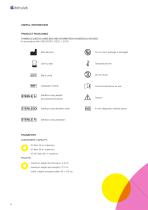
USEFUL INFORMATION PRODUCT PACKAGING SYMBOLS USED IN LABELING AND INFORMATION ON MEDICAL DEVICES (in accordance with UNE-EN ISO 15223-1: 2016) Use-by date Temperature limit Batch code Catalogue number Sterilized using aseptic processing techniques Sterilized using ethylene oxide Sterilized using irradiation TRANSPORT CONTAINERS: CAPACITY: · 20 feet: 28 m³ maximum · 40 feet: 58 m3 maximum · 40 HC feet: 68 m3 maximum PALLETS: · maximum height land transport: 2.40 m · maximum height sea transport: 2.10 m · width x depth european pallet: 80 x 120 cm In vitro diagnostic medical de
Open the catalog to page 8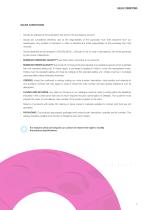
SALES CONDITIONS SALES CONDITIONS · Goods are shipped at the purchaser’s risk and on the purchaser’s account. · Goods are considered delivered, and at the responsibility of the purchaser, from their shipment from our warehouses. Any problem of transport or other is therefore the entire responsibility of the purchaser from that moment. · Goods delivered are the property of DELTALAB S.L. until paid in full. In case of discrepancy, we will be governed by the courts of Barcelona. · MINIMUM ORDERING QUANTITY (per total order): According to our price list. · MINIMUM ORDER QUANTITY (per product): In...
Open the catalog to page 9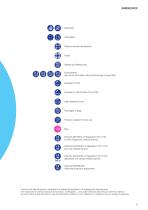
Alphanumerical Identification DNAse and RNAse free Autoclavable (see more information about autoclaving in page 298) Suitable for QPCR (Real Time PCR) High resistance tube Product suitable for food use Directive 98/79/EC or Regulation 2017/746 (in Vitro Diagnostic medical device) Directive 93/42/EEC or Regulation 2017/745 (low risk medical device) Directive 93/42/EEC or Regulation 2017/745 (Moderate risk, sterile medical device) Directive 89/686/EEC (Personal protective equipment) The technical data (dimensions, capacities and resistances) specified in this catalogue are approximated. The resistances...
Open the catalog to page 11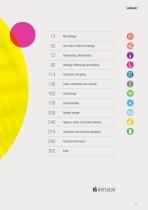
Cell culture. Molecular biology Haematology. Biochemistry Histology. Microscopy and staining Containers. Sampling Tubes, microtubes and cryovials Cold storage Liquid handling Sample storage Hygiene, safety and general labware Laboratory and industrial packaging Technical information
Open the catalog to page 13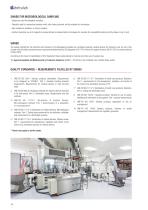
SWABS FOR MICROBIOLOGICAL SAMPLING - Swabs are used for biological sampling. - Specially used for processing samples which, after being coloured, will be analysed by microscopy. - Also suitable for isolations in culture medium. - Another important use is its capacity to spread dishes by dissemination techniques (for example for susceptibility testing by Kirby-Bauer or by E-test). SWABS The swabs intended for the collection and transport of microbiological samples are considered invasive medical devices for temporary use. As such, they comply with the safety and performance requirements determined...
Open the catalog to page 16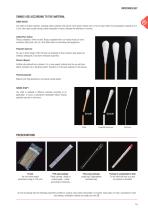
SWABS USE ACCORDING TO THE MATERIAL SWAB HEADS Are made of various materials, including cotton, polyester and viscose. Each swab contains more or less 0.04g of fiber and its absorption capacity is 0.20.3ml, with cotton usually having a better absorption of liquid, although the difference is minimal. Cotton/Pure Cotton: Fibrous substance, white and soft. Being a vegetable fiber can include traces of some substance (fatty acids, oils, etc.) that affect labile or demanding microorganisms. Polyester (Dacron): For use in direct antigen, PCR, IFA tests. Its drawback is that it contains fatty acids...
Open the catalog to page 17All Deltalab catalogs and technical brochures
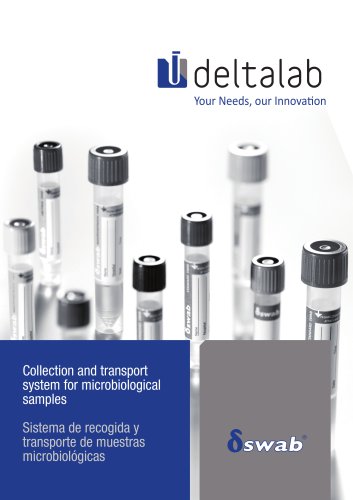 Catálogo DeltaSwab 2021
8 Pages
 CATALOGO-DELTALAB
318 Pages
 Deltalab, ISO 9001
3 Pages
 Deltalab, ISO 13485
1 Page
 Deltalab, ISO 14001
3 Pages