
- Catalogs
- Denfotex Research Ltd.
- Clinical

Clinical
Clinical
The document investigates the role of Sylc, a bioactive glass, in remineralising tooth structure and reducing hypersensitivity. It highlights the imbalance between demineralisation and remineralisation in teeth exposed to biofilm-related organic acids, leading to hypersensitivity, which affects 4% of the UK population.
Bioactive Glass as a Remineralisation Agent
Bioactive glass provides calcium and phosphates, essential for forming hydroxycarbonate apatite, which aids in cell adhesion and remineralisation. It is safe for clinical use and can be used to combat dental hypersensitivity and remineralise the resin-dentine interface.
Sylc Bioactive Glass
Sylc bioactive glass increases tubular occlusion and is used in tissue engineering, bone regeneration, and dentine remineralisation. It releases calcium and phosphate ions, integrating into the dentine structure to form a protective barrier against oral acidity.
Mechanism of Action
The active ingredient in Sylc, Novamin, reacts with saliva to release ions that precipitate a phosphate-based analogue to hydroxyapatite, providing a protective barrier.
Research and Data
Studies using Raman Spectroscopy and X-ray diffraction show that Sylc bioactive glass promotes hydroxycarbonate apatite formation and remineralisation. It effectively occludes dentinal tubules, reducing hypersensitivity and offering caries protection.
Conclusion
Sylc products offer diverse clinical applications, primarily due to their ability to remineralise dentine and protect tooth structure. This results in reduced hypersensitivity and enhanced caries protection.
Catalog excerpts
Bioactive glass as a tooth remineralisation agent Aran Batth, Julian Zeolla, Hannah Gorgui-Naguib and Ian Thompson investigate the role of Sylc in remineralising tooth structure As teeth are exposed to biofilm-related organic acid production, the rate of demineralisation of carbonated hydroxyapatite exceeds that of remineralisation by ions contained within the saliva (Featherstone, 2008; Banerjee et al, 2010). This imbalance results in exposed dentinal tubules, leading to hypersensitivity. Hypersensitivity is prevalent within the UK, having been reported to affect 4% of the population. Aran Batth is a research fellow at King’s College London Julian Zeolla is a research fellow at King’s College London Hannah Gorgui-Naguib is a research fellow at King’s College London Ian Thompson is a senior lecturer at King’s College London and the product director of Denfotex Research 18 Education aims and objectives This article aims to explain how bioactive glass can help remineralise teeth and reduce hypersensitivity. Expected outcomes Correctly answering the questions on page 50, worth one hour of verifiable CPD, will demonstrate that the reader understands the mechanisms involved in the remineralisation of tooth structure by bioactive glasses. Various remineralising vehicles – including topical fluoridation, casein phosphopeptide-amorphous calcium phosphate formation and bioactive glasses –have been employed to address this clinical issue (Pizzo et al, 2007; Wang et al, 2011). An introduction to bioactive glass Bioactive glass acts to supply biologic material with the source of calcium and phosphates contained within its silicate frame (Hench and Wilson 1993), in the same proportion to hydroxyapatite. In an aqueous environment the glass reacts in dissolution of the phosphates and calcium to form hydroxycarbonate apatite, resultant in adhesion of cells to the glass. The safety of bioactive glass has been assayed and shown to be adequate in vivo making it suitable for clinical ap
Open the catalog to page 1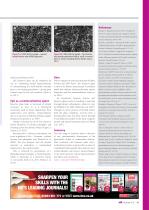
References Banerjee A, Hajatdoost-Sani M, Farrel S, Thompson I (2010). A clinical evaluation and comparison of bioactive glass and sodium bicarbonate air-polishing powders. Journal of Dentistry 38: 475-479 Burwell A, Litkowski L, Greenspan D (2009). Calcium Sodium Phosphosilicate (NovaMin): Remineralization Potential. Advances in Dental Research 21: 35-39 Earl J, Leary R, Muller K, Langford R, Greenspan D Figure1a: 1000x SEM micrograph – exposed dentinal tubules after H3PO4 application Figure1b: 1000x SEM micrograph – Sylc bioactive glass powder applicational effects, result in smeared layers...
Open the catalog to page 2All Denfotex Research Ltd. catalogs and technical brochures
 Desensitisation with Sylc
2 Pages
 Sylc
Sylc1 Page