
- Catalogs
- Dukon Medical
- Physiotherapy pharyngeal electric stimulator DK-801C


- Company
- Products
- Catalogs
- News & Trends
- Exhibitions
Physiotherapy pharyngeal electric stimulator DK-801C
1 /1Page
Physiotherapy pharyngeal electric stimulator DK-801C
1 /1Page
Catalog excerpts
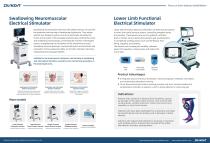
Focus on brain disease rehabilitation Swallowing Neuromuscular Electrical Stimulator Lower Limb Functional Electrical Stimulator Swallowing neuromuscular electrical stimulation devices are used for the treatment and training of swallowing dysfunction. They output specific low-frequency pulse currents to electrically stimulate the nerves and muscles in the laryngeal and neck area, exciting the nerves and swallowing muscle groups, promoting the recovery of damaged nerves, strengthening the movement of the swallowing muscles, alleviating neuronal paralysis, and promoting the reconstruction and restoration of the swallowing reflex arc function, thereby improving swallowing and language abilities. Lower limb functional electrical stimulatior use electrical stimulation to mimic the central nervous system, controlling targeted nerves and muscles. These devices are worn by patients, and their built-in motion sensors detect the patient's gait, assisting them in completing walking actions such as knee flexion, foot lifting, stepping, and landing. The devices can increase joint mobility, alleviate lower limb spasticity, improve gait, and reduce the risk of falls. Suitable for the assessment, treatment, and training of swallowing and articulation disorders caused by non-mechanical operations in the pharyngeal area. Foot sole transmitter Product Advantages • It integrates passive electrical stimulation, electromyographic feedback stimulation, and multimedia biofeedback training • Three-dimensional gait analysis training provides real-time, intuitive feedback of rehabilitation indicators to patients, which is highly effective in improving gait Utilizing triangular and square wave ■ Adult Continuous Pulse Mode stimulation of the neck to measure • Pediatric Alternating Pulse Mode their thresholds for muscle contraction • Automatic Trigger Pulse Mode • Hand-Controlled Continuous Pulse Mode More models Indications: Patients with unilateral or bilateral limb disabilities caused by damage to the upper motor neurons, such as those with cerebral palsy, cerebral infarction, stroke, post-brain injury sequelae, or spinal cord injuries. Patients who have been bedridden for a long time and need to prevent disuse muscle atrophy and a decrease in bone density. Patients who require interventions to increase or maintain joint mobility and to enhance the strength of the ankle dorsiflexion muscles, among others. Shijiazhuang Dukon Medical Instruments Co.,Ltd
Open the catalog to page 1All Dukon Medical catalogs and technical brochures



- Electric stimulator
- TENS physiotherapy
- Rehabilitation system
- EMS physiotherapy
- Robotic rehabilitation system
- Transcranial stimulator
- Magnetic therapy unit
- Continuous passive motion device
- Body massager
- Gait rehabilitation system
- Hand-held body massager
- Limbs mobility rehabilitation system
- Magnetic transcranial magnetic stimulator
- Transcranial magnetic stimulator
- Lower limb continuous passive motion device
- Rehabilitation sling
- Rehabilitation staircase
- Neurostimulator
- Knee continuous passive motion device
- TMS + rTMS transcranial magnetic stimulator