
- Catalogs
- Dukon Medical
- TMS + rTMS transcranial magnetic stimulator DK-TMS-03


- Company
- Products
- Catalogs
- News & Trends
- Exhibitions
TMS + rTMS transcranial magnetic stimulator DK-TMS-03
1 /1Page

TMS + rTMS transcranial magnetic stimulator DK-TMS-03
1 /1Page
Catalog excerpts

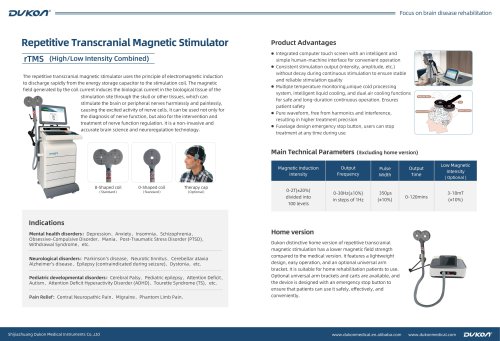
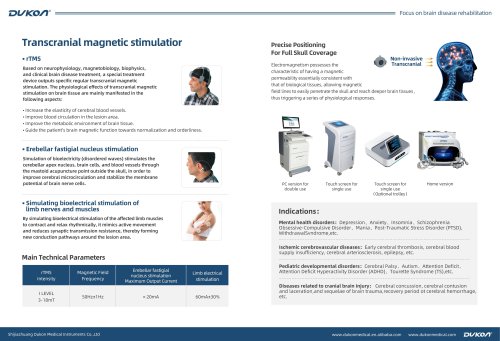
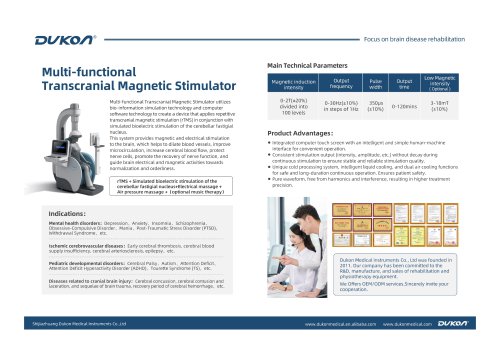
Neuro-psychiatric Disorde Brain Injury-related Diseases A single device meets the needs of a variety of people. What is repetitive transcranial magnetic stimulation (rTMS)? Transcranial Magnetic Stimulation (TMS), Positron Emission Tomography (PET), Functional Magnetic Resonance Imaging (fMRI), and Magnetoencephalography (MEG) are collectively known as the "four major brain science technologies." The repetitive transcranial magnetic stimulation therapy device is based on brain physiology, magnetic biology, and bioelectricity. It modulates brain function by outputting specific biphasic alternating electromagnetic fields and simulated bioelectric signals to achieve the purpose of preventing and adjusting brain diseases. Altering the membrane potential of neurons to promote cellular metabolism and neuronal electrical activity in the brain cells. Guiding brain magnetic function towards normalization and orderliness. Stimulating the activity of brain neurons, clearing damaged brain nerves, and reorganizing collateral circulation. Simulated BioelectricalStimulation of the Cerebellar Fastigial Nucleus auricular mastoid point Myoeletri Reflex Simulated Bioelectrical Stimulationof Muscle Nerves Simulated bioelectrical stimulation allows the affected limb to undergo passive contractions and relaxations,simulating active movement. Motor nerve pathway reconstruction Motor nerve pathway reconstruction , Motor nerve Power Cord V Instruction Manual
Open the catalog to page 1All Dukon Medical catalogs and technical brochures

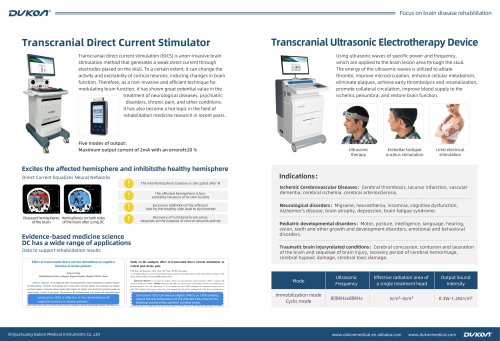
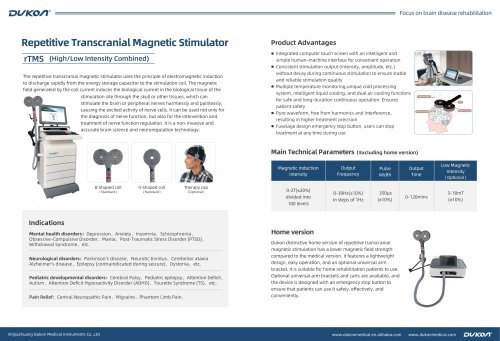
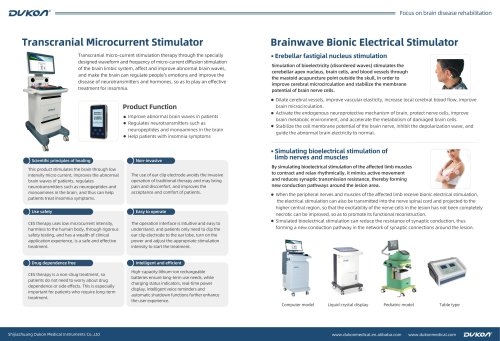
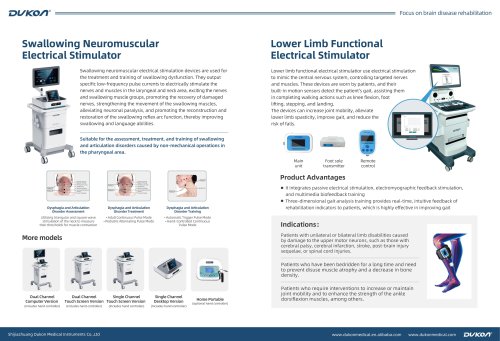

- Electric stimulator
- TENS physiotherapy
- Rehabilitation system
- EMS physiotherapy
- Robotic rehabilitation system
- Transcranial stimulator
- Magnetic therapy unit
- Continuous passive motion device
- Body massager
- Gait rehabilitation system
- Hand-held body massager
- Magnetic transcranial magnetic stimulator
- Transcranial magnetic stimulator
- Limbs mobility rehabilitation system
- Lower limb continuous passive motion device
- Rehabilitation sling
- Rehabilitation staircase
- Neurostimulator
- Knee continuous passive motion device
- TMS + rTMS transcranial magnetic stimulator