
- Catalogs
- Edinburgh Instruments
- LP980 Brochure


- Company
- Products
- Catalogs
- News & Trends
- Exhibitions
LP980 Brochure
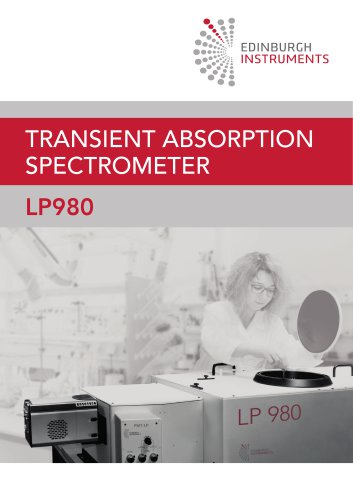
LP980 Brochure
- Kinetic Mode: Utilizes a PMT detector and oscilloscope for accurate transient kinetics measurements.
- Spectral Mode: Uses an ICCD detector for capturing full transient spectral features with time resolutions down to 3 ns.
- Data Conversion and Correction: The system can convert kinetic decay data into spectral data and vice versa. It includes automated fluorescence background subtraction and probe subtraction to ensure accurate TA behavior representation.
- Measurement Conditions: Examples include measurements with Ruthenium bipyridine in water and Anthracene in cyclohexane, highlighting the system's flexibility in handling different samples and conditions.
- Software Capabilities: The LP980-K software allows for standard curve fitting and advanced analysis using the optional FLASH software for complex data sets, including batch and global fitting of multiple ΔOD(t) curves.
- Sensitivity: Minimum ΔOD of 0.002 with a fast detector option and 0.0005 with a slow detector option.
- Time Resolution: Instrument Response Function (FWHM) of 5 ns with a fast detector option and 10 μs with a slow detector option.
- Laser Excitation Source: Includes a single wavelength flashlamp pumped Q-switched Nd:YAG laser and tuneable dye lasers.
- Probe Source: Utilizes a pulsed or steady-state xenon arc lamp with specific operational parameters.
- Monochromator: Features a 325 mm focal length, Czerny-Turner with a triple grating turret, and integrated filter wheel for second-order light removal.
- Detector Options: Includes PMT and InGaAs detectors covering a wide spectral range.
- Stopped Flow Accessory: Allows for rapid kinetic analysis with multi-mixing capabilities.
- Film Sample Holder: For transparent thin-film and slide samples with rotational and X-Y movement control.
- Laser Energy Meters: Measures excitation pulse energy and energy transmitted by the sample.
- Temperature-Controlled Sample Holders: Offers precise temperature control for sample measurements.
- Cryostat: Enables temperature-controlled measurements from 77 K to 300 K.
Catalog excerpts

EDINBURGH INSTRUMENTS TRANSIENT ABSORPTION SPECTROMETER
Open the catalog to page 1
2 LP980-K TRANSIENT ABSORPTION SPECTROMETER - KINETIC MODE Spectrometer system for measurements of transient absorption and laser-induced emission kinetics with the ability to automatically generate transient spectra. 10 LP980-SYSTEM OVERVIEW TRANSIENT ABSORPTION SPECTROMETER Configuration, layout, and specifications for the turn-key, modular and unrivalled spectrometer. 14 LP980-KS TRANSIENT ABSORPTION SPECTROMETER - KINETIC AND SPECTRAL MODE Spectrometer system for direct measurements of time-gated transient absorption and laser-induced emission spectra as well as kinetic measurements. ABOUT...
Open the catalog to page 2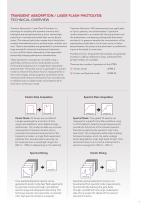
TRANSIENT ABSORPTION / LASER FLASH PHOTOLYSIS TECHNICAL OVERVIEW Transient Absorption / Laser Flash Photolysis is a technique for studying the transient chemical and biological species generated by a short, intense light pulse from a nanosecond pulsed laser source (pump pulse). This intense light pulse creates short lived photoexcited intermediates such as excited states, radicals, and ions. These intermediates are generated in concentrations large enough for chemical and physical interaction to occur and for direct observation of the associated temporally changing absorption characteristics....
Open the catalog to page 3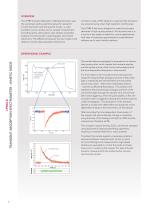
OVERVIEW The LP980 Transient Absorption (TA) Spectrometer uses the same basic optical-electrical setup for operation in both the kinetic and the spectral mode, i.e. laser excitation source, probe source, sample compartment (including optics, attenuators, laser shutter, and probe shutter), monochromator / spectrograph, and control electronics. The difference between the two modes is the detector and the data acquisition electronics. In kinetic mode a PMT detector is used and the transients are acquired using a fast, high resolution oscilloscope. The LP980-K has been designed to meet the stringent...
Open the catalog to page 4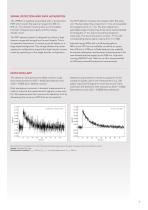
SIGNAL DETECTION AND DATA ACQUISITION The LP980-K is supplied as standard with a red sensitive PMT which covers the spectral range from 200 nm 870 nm. The detector housing also accommodates the high voltage power supply and the voltage divider circuit. The PMT detector system is designed to achieve a high dynamic range with exceptional current linearity. This is an essential requirement in measuring small signals on a large signal background. The voltage divider and power supply are configured to support this high linearity current mode by operating in a five stage dynode configuration. The PMT...
Open the catalog to page 5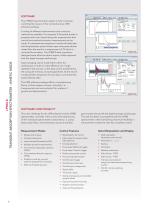
Control Features • Wavelength / slit control • Filter wheel for second order light rejection • Grating selection • Pump laser flashlamp trigger • Pump laser Q-switch trigger • Probe source pulse current • Pump and probe shutters • Oscilloscope trigger • Oscilloscope time base • Oscilloscope voltage scale • Signal offset • Time shift / delay • Optional temperature controlled sample holder • Optional cryostat mounting • Stopflow synchronisation • Optional Energy Meters SOFTWARE The LP980-K spectrometer system is fully computer-controlled by means of the comprehensive L900 software package. A variety...
Open the catalog to page 6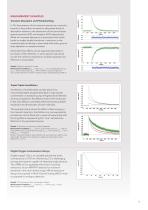
MEASUREMENT EXAMPLES Transient Absorption and Photobleaching In TA, the presence of the transient species can cause the sample to have either increased or decreased levels of absorption relative to the absorption of the ground state species (positive ΔOD and negative ΔOD respectively). While an increased absorption is associated with triplettriplet or singlet-singlet transitions, a reduction in the measured optical density is associated with either ground state depletion or sample emission. Generally these effects can be separated spectrally, or by means of their lifetimes. In some special cases...
Open the catalog to page 7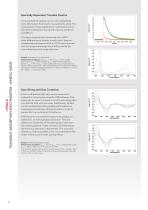
Spectrally Dependent Transient Kinetics Time-resolved TA spectra can provide substantially more information than kinetic measurements alone. The measurement of benzophenone in cyclohexane shows two distinct absorption bands with maxima at 330 nm and 530 nm. The delay characteristics (measured with a PMT) show different decay kinetics in each band. Spectral measurements (measured with an ICCD camera) reveal that the longer wavelength band shifts towards the near-infrared spectral range with time. Sample: Benzophenone in cyclohexane Measurement Conditions: Top: Apump = 355 nm, Epump = 8 mJ, pulsed probe...
Open the catalog to page 8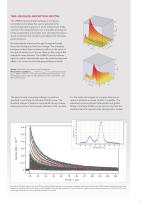
TIME−RESOLVED ABSORPTION SPECTRA The LP980-K Spectrometer hardware is computercontrolled and enables the user to generate timeresolved absorption spectra in a two-fold process: firstly, a series of TA measurements over a pre-defined range of probe wavelengths is recorded, and, secondly, this data is sliced at desired time windows and delays from the laser pulse excitation. By automatically scanning through the spectral range the probe background level can change. The changing background level does not have an effect on the value of the optical density, but it has an effect on the noise of the...
Open the catalog to page 9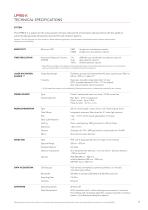
SYSTEM The LP980-K is a system for the measurement of laser-induced TA and emission decay kinetics with the ability to automatically generate temporally resolved TA and emission spectra. Optional: Thin-film geometry, co-linear excitation, diffuse reflectance geometry, and fluorescence and phosphorescence lifetime measurements accessories are all available. Edinburgh Instruments Ltd. has a policy of continuous product development and reserve the right to amend specifications without prior notice (Aug 2018)
Open the catalog to page 10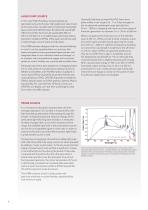
LASER PUMP SOURCE In TA / Laser Flash Photolysis, transient species are generated using a short pulse, high peak power laser, known as the pump pulse. Suitable lasers include fixed wavelength lasers, particularly Nd:YAG lasers (fundamental wavelength 1064 nm) and their harmonics (at wavelengths 532 nm, 355 nm and 266 nm), or tuneable lasers, particularly optical parametric oscillators (OPOs). Other lasers sometimes used include nitrogen, excimer lasers and dye lasers. The LP980 has been designed with the ultimate flexibility in mind. It can be supplied either as a turn-key, fully tested and performance...
Open the catalog to page 11All Edinburgh Instruments catalogs and technical brochures
 EPLED SERIES
2 Pages
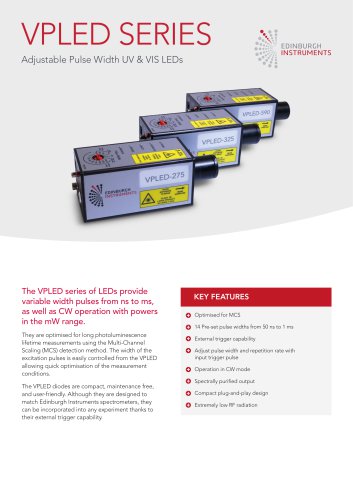 VPLED SERIES
2 Pages
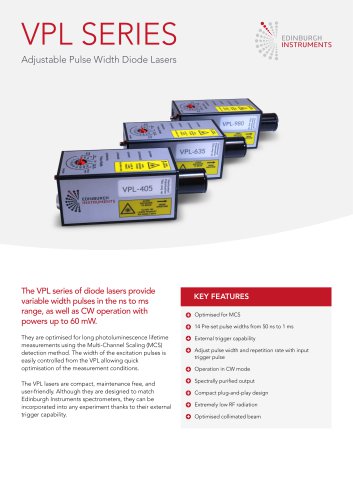 VPL SERIES
2 Pages
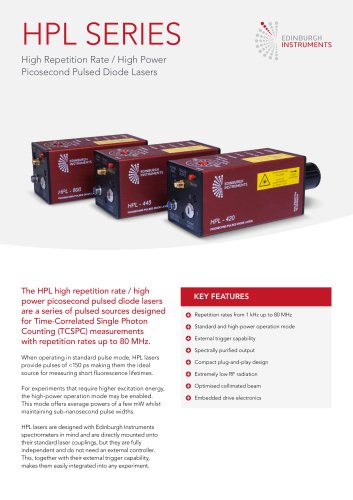 HPL
HPL2 Pages
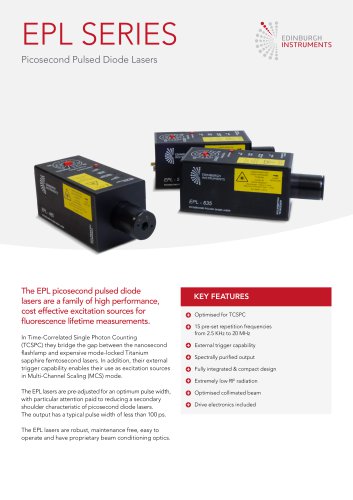 EPL SERIES
2 Pages
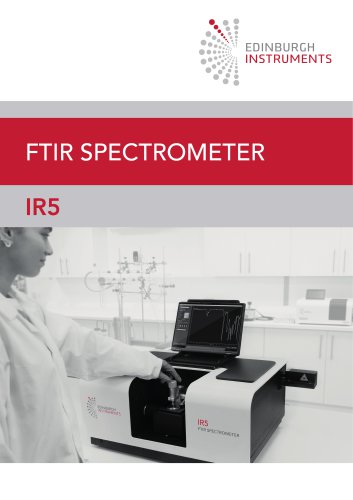 IR5
IR58 Pages
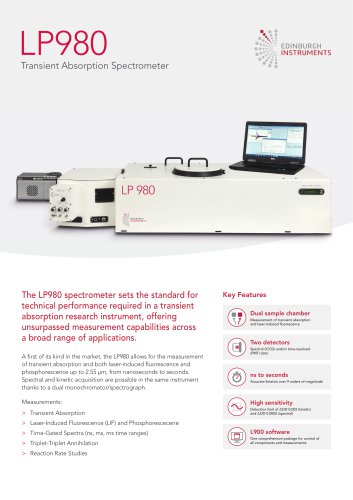 LP980 Data Sheet
2 Pages
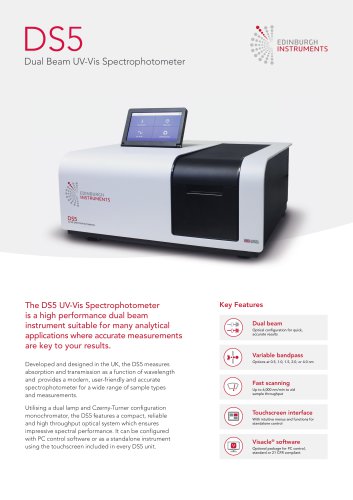 DS5
DS54 Pages
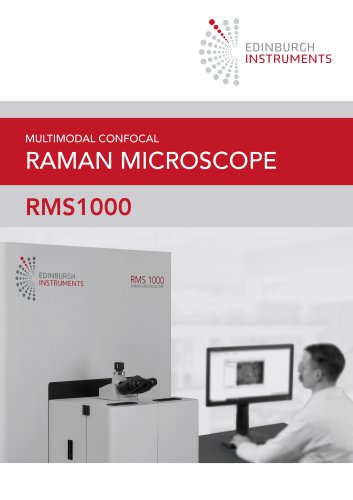 RMS1000
16 Pages
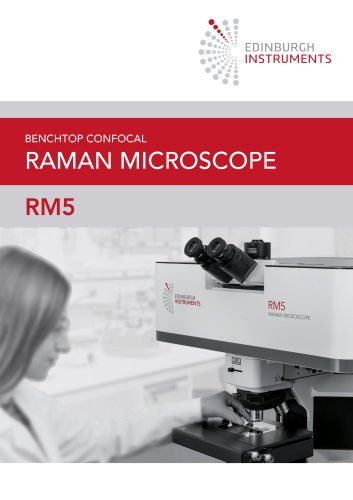 RM5
RM512 Pages
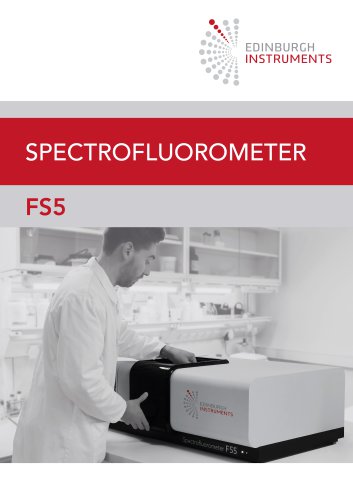 FS5 Brochure
9 Pages
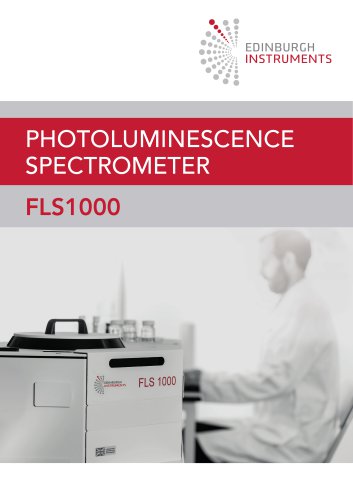 FLS1000 Brochure
24 Pages
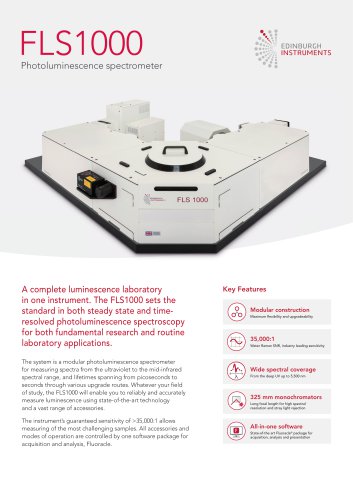 FLS1000 Data Sheet
2 Pages
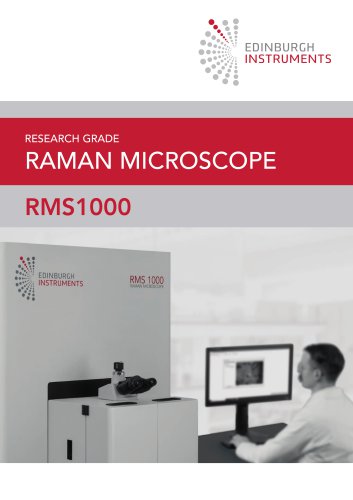 RESEARCH GRADE RAMAN MICROSCOPE
16 Pages
 MTL 5 Series
2 Pages
 Mini T
2 Pages
 Life Spec II
4 Pages

Archived catalogs
 FIRL Series Flyer
2 Pages
 PL Series
4 Pages
 FS5 Spectrofluorometer
12 Pages
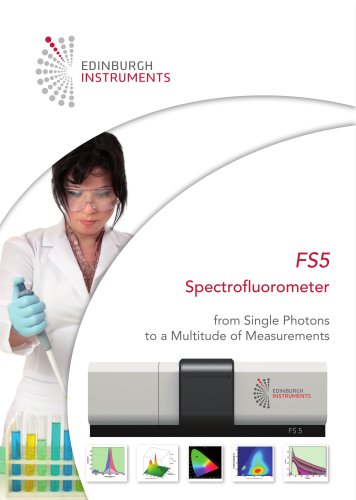 FS5
FS512 Pages

- Microscopy
- Compound microscope
- Laboratory microscope
- Desktop microscope
- LED light source
- Spectrophotometer
- Benchtop spectrometer
- Research microscope
- Fluorescence microscope
- Compact light source
- Benchtop spectrophotometer
- Microscope light source
- UV-visible spectrophotometer
- Compact spectrometer
- Compact microscope
- Spectrophotometer with USB port
- Research spectrometer
- Spectrometer for the pharmaceutical industry
- NIR spectroscope