
- Catalogs
- Embalmers Supply Company
- ESCO CATALOG

ESCO CATALOG
ESCO CATALOG
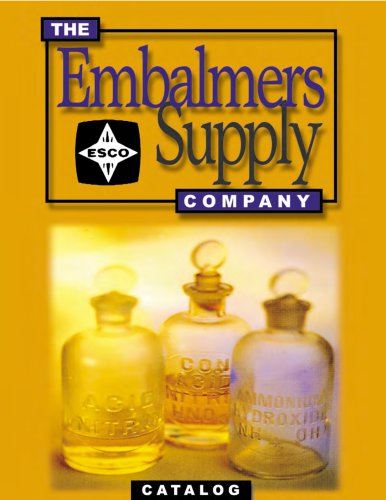
This document is a catalog from the Embalmers’ Supply Company (ESCO), detailing their range of embalming chemicals and related products. It emphasizes the company's commitment to quality and innovation in the funeral service industry since its inception in 1886.
ESCO assures funeral directors and embalmers of their dedication to improving embalming chemicals to meet high standards. They highlight the importance of using these chemicals exclusively on the deceased due to their hazardous nature.
- Triple-Base Chemicals: These include Bacterin, Destrin, and formaldehyde, with lanolin often added. They are designed to preserve bodies effectively.
- Special Application Chemicals: These are tailored for specific embalming challenges, such as EPiC Conditioner and Sofner.
- Less Sophisticated Chemicals: These are cost-effective options for high-volume users, including the Compo and ESCo Special lines.
ESCO was founded in 1886 and has been a pioneer in the embalming industry, introducing numerous innovations such as the first American-made embalming instruments and the first U.S. school of embalming.
ESCO has achieved several industry firsts, including the introduction of commercial formaldehyde, veinous embalming, and various embalming fluids and equipment innovations.
ESCO's drainage chemicals are designed to enhance blood drainage through chemical action. They are non-coagulative and help sequester calcium in the blood, ensuring effective embalming.
ESCO/Goldcrest arterial chemicals offer flexibility and are slightly alkaline with strong germ-killing properties. They provide excellent tissue color and require minimal cosmetic application.
ESCO continues to innovate in the embalming industry, offering a wide range of products to meet various embalming needs while maintaining a focus on safety and effectiveness.
This document provides a comprehensive list of embalming chemicals and related products, detailing their uses, packaging options, and unique properties. The products are categorized based on their function, such as preservation, restoration, and cleaning.
- QUAD: A hardening and preserving powder with exceptional drying qualities for internal and external use.
- Positive Powder: A heavy-fume embalming powder known for its preservative qualities.
- Lip Wax: A cosmetic wax for covering sores and discolorations, available in various colors.
- Leakproof Skin: A sealing agent for preventing leakage in embalmed bodies.
- Restorative Wax: Specialized wax for deep filling and feature modeling.
- Hygienic Soap: A gentle soap with emollients for cleansing and invigorating the skin.
- Solvent & Cleaner: A special solvent for cleaning syringes and needles.
- Amazing Spray Cleaner: A biodegradable detergent for various surfaces.
- San Veino Products: Available in liquid, gel, powder, and spray forms for preservation and deodorization.
- Hexaphene Products: A range of embalming chemicals for preservation and disinfection, including MA-64, MA-37, and MA-22.
- REX 36 Index 36: A high-strength arterial fluid with controlled reaction and cosmetic results.
The document also provides a brief history of the Gold Crest Chemical Company and its acquisition by Esco, highlighting the continuity of product quality and innovation in embalming chemicals.
The document serves as a detailed catalog for embalmers, offering a wide range of products tailored for various embalming needs, from preservation to cosmetic restoration and cleaning.
- Rubin-X Jaundice Fluid: Available in two formulations, this fluid effectively bleaches jaundice stains in eight out of ten cases, with marked improvement in others. It is used for post-mortem stain treatment without adverse side effects.
- Hexyethylphenoform: A multi-purpose fluid that destroys bacteria, deodorizes, and preserves. It is used in cases of contagious diseases and as an autopsy cavity fluid.
- Gold Crest Cosmetic Dye: An internal cosmetic dye that enhances the cosmetic effect of arterial embalming solutions.
- Tinting Spray: Available in various shades, it provides a natural tint to the face and hands, maintaining subtle cosmetic effects.
- Re-Viva-Tone: A liquid cosmetic that revives natural skin tones with a delicate transparency.
- Porti-Boy Embalming Machines: Two models, Mark IV and Mark V, offer different pressure ranges and capacities, with features like automatic shut-off and mag drive pump.
- Trocars and Accessories: Various trocars are available for different applications, including Slaughter and Dynamic Trocars, with cleaning rods and cavity chemical injectors.
- Needle Injectors and Trocar Buttons: Essential tools for embalming, including injector needles and trocar buttons for sealing punctures.
- Positioning Devices: Devices like arm and hand positioners ensure proper body positioning during preparation and casketing.
- White disposable disaster pouches made of heavy-gauge plastic with a C-shaped zipper for easy body insertion.
- Nearly Invisible Casket Pedestals: Hexagonal clear Plexiglas pedestals designed to make caskets appear as if floating. They are durable, sturdy, and nest for storage. Each pedestal is 22" high.
- Magnetic Casket Spray Holder: Features a rubber pad with magnetic strips and chromium-plated spikes to secure floral sprays on caskets.
- Extension Baby Case: A portable case for transporting infants, made of plywood veneer with a water-resistant interior, extendable to 48".
- Lightweight Casket Display Rack: Steel racks for displaying two or four caskets, easy to assemble and store.
- Individual Layout Room Identifier: Stands with customizable room identification, available in various finishes.
- Wall-Mount Directories: High-quality directories available in multiple sizes and finishes, with optional colored backgrounds.
- Various types of bulbs including 3-way mogul base, tubular bulbs, flicker-flame bulbs, and inside reflector bulbs, available in different wattages and colors.
- Wood and Aluminum "Reserved" Seat Signs: Available in walnut or aluminum with different finishes and wordings.
- Portable Self-Folding Traffic Guides: Lightweight signs for traffic control, available with various messages.
- Traffic Cones: Rubber and polyvinyl cones for traffic management, with optional sign tops.
- Hydraulic Operating Table: Adjustable table with hydraulic controls, stainless steel construction, and a capacity of 600 lbs.
- Folding Operating Table: Space-saving table with adjustable height and stainless steel top.
- Basic Operating Table: Similar to the folding table but non-collapsible.
- Dual-Duty Truck: Aluminum frame truck for showroom or utility use, with a capacity of 600 lbs.
- First Call Pouch and Cover: Pouches and covers for cots, available in various materials and colors.
- Showroom Truck: Stable truck with a wide wheelbase, suitable for casket display.
- Definition and Purpose: Embalming is the process of disinfecting, preserving, and restoring the dead body to a natural form and color, temporarily preventing decomposition.
- Analytical Approach: Emphasizes the importance of a clean, safe preparation room and the need for licensed personnel. It involves understanding anatomy, microbiology, pathology, and sanitation to ensure effective embalming.
The document provides an overview of the anatomical knowledge required for surgical dissections in embalming. It emphasizes the practitioner's ability to handle autopsied and donor bodies, considering various predisposing conditions related to death.
This section outlines the initial assessment of the body, including size, weight, age, sex, organ position, and tissue consistency. It highlights the importance of visual and olfactory observations, noting specific odors associated with certain conditions (e.g., acetone for diabetic coma).
Funeral service practitioners must adhere to safety protocols, as they often lack comprehensive information about the deceased's medical history. The document stresses treating all remains as potentially hazardous and emphasizes the importance of sterilization and sanitation.
The document details the use of the Right Common Carotid Artery for embalming, including incision techniques and tube insertion methods. It describes the anatomical landmarks and procedures for accessing various arteries and veins, such as the Axillary, Brachial, and Femoral arteries.
This section provides guidelines for using secondary vessels like the Facial, Ulnar, and Radial arteries. It includes imaginary guidelines for locating these vessels and describes incision techniques for effective embalming.
Guidelines for locating major arteries and veins, such as the Abdominal Aorta and Common Iliac Arteries, are provided. These guidelines assist in the embalming of autopsied bodies and infants.
The document outlines the use of veins like the Internal Jugular and Axillary Veins for drainage during embalming. It provides imaginary guidelines for locating these veins and discusses their significance in the embalming process.
The document concludes with a brief mention of the chemistry involved in embalming, emphasizing the need to understand the interaction between body chemistry and embalming chemicals.
Embalming involves the use of various chemical fluids to preserve and disinfect bodies. The document outlines three main types of embalming fluids: pre-injections, arterial fluids, and cavity fluids. Pre-injections are used to prepare the vascular system without formaldehyde, while arterial fluids vary in firmness and are used for preservation. Cavity fluids are strong germicidal agents used for internal preservation.
Supplemental fluids include co-injections, special purpose fluids, and accessory embalming agents. These are used to enhance the embalming process by reducing edema, conditioning water, and adding cosmetic effects. Special applications chemicals like sealing compounds and tissue builders are also discussed.
Formaldehyde is the primary preservative in embalming fluids, known for its protein inactivation properties. Formalin, a solution of formaldehyde, is used for its germicidal and preservative qualities. The document discusses the effects of formaldehyde concentrations on tissue preservation and the historical development of embalming chemistry.
Challenges in preservation include improper preparation of the vascular system, incorrect solution strength, and inadequate treatment of tissues. The document emphasizes the importance of using quality chemicals and proper techniques to avoid preservation failures.
Water conditioners are essential for controlling water hardness and ensuring effective embalming. The document provides guidelines for adjusting water hardness using Sofner, based on parts per million (ppm) of calcium carbonate.
The document describes methods to recreate intravascular pressure for effective distribution of preservative chemicals. Recommended pressure levels are provided to mimic natural heart action and ensure thorough preservation.
The document discusses the challenges and procedures involved in the embalming process, focusing on the vascular system's preparation, pressure terminology, and the use of preservatives. It highlights the impact of antibiotics and the importance of pre-injection treatments.
Pressure is crucial for distributing chemicals throughout the vascular network. Key terms include:
- Potential Pressure: Estimated pressure setting based on body condition analysis.
- Actual Pressure: Initial reading when the flow is opened.
- Differential Pressure: Difference between potential and actual pressure, indicating resistance.
- Rate of Flow: Amount of solution injected over time, affecting distribution and potential swelling.
Traditional preservation rules have evolved with modern formulations. The document provides detailed tables for fluid requirements based on body weight and chemical index, emphasizing the need for proper vascular preparation to avoid issues like pseudo sludge formation.
The document outlines the analytical approach to embalming, addressing common complications such as discolorations, dehydration, and edema. It provides specific treatments for various discolorations and emphasizes the importance of pre-injection solutions and controlled drainage.
Different discolorations require specific treatments, such as:
- Intravascular Discolorations: Treated with arterial injection and chemicals like Hexyethylphenoform.
- Extravascular Discolorations: Addressed with pre-injection solutions and controlled drainage.
- Surface Discolorations: Various agents are recommended for removing common stains like adhesive tape and blood.
The document discusses early signs of decomposition and the challenges of treating jaundiced bodies. It highlights the oxidative process and the need for specific treatments to manage bilirubin levels and prevent post-embalming issues.
Edema is a significant concern, requiring careful handling to prevent tissue damage. The document recommends using stronger dilutions of higher index fluids and addressing symptomatic conditions associated with various diseases.
The document concludes with a reminder of the importance of cognitive knowledge and practical skills in embalming, emphasizing the need for continuous education and the use of quality chemicals and sundries.
Catalog excerpts
Executive Offices (U.S.) and Laboratories 5 Colton Road, East Lyme, CT 06333 860 739-4200 Fax: 860 739-4204 Subsidiaries: PoRTi-Boy 5 Colton Road, East Lyme, CT 06333 860 739-4208 Fax: 860 739-4204 To Our Customers As a Funeral Director and/or Embalmer you are important to us. We are most appreciative of the confidence you have demonstrated by favoring us with your orders. We will continue to strive to constantly improve our embalming chemicals and chemical sundries to meet your high standards. This continuing striving for ever better chemical products continues an ESCo reputation that began in...
Open the catalog to page 2
Forward The chemical items listed and illustrated in this catalog are designed, prepared and sold for use on the dead only. They should not be used on the living under any circumstances except for such substances as the soaps and cleaners illustrated. Since embalming chemicals are strong preservatives, they are by their nature, generally irritants to the skin of the living and extremely dangerous if swallowed. Extreme care should be taken to prevent unauthorized access to any such chemicals. They must be kept out of the reach of children who might be too young to read, or might not understand...
Open the catalog to page 3
ike most competitors, ESCo differentiates between its chemicals on a usage basis into Drainage, Arterial and Cavity. We further break them down into three broad groups to help the Funeral Director and Embalmer in selecting the most suitable chemicals for a specific case. Existing research and thorough field testing of every ESCo Chemical are your assurance of the finest embalming chemicals you can buy! Triple-Base Chemicals contain Bacterin, and Destrin in addition to formaldehyde. Most contain Lanolin. Each base is present in sufficient quantity to alone preserve the body. ESCo “Pro” Line, EPiC...
Open the catalog to page 4
ESCO’s Background he Embalmers’ Supply Company was born April 13, 1886, as a partnership between C.B. Dolge, a German-born inventor, a businessman, artist and engraver, and Max Huncke, also German-born, and a practicing pharmacist. it operated both as the The Brooklyn Embalming Fluid Company and as Dolge & Huncke in Brooklyn, New york, until 1890, at which time it moved to Westport, Connecticut. in 1893, the partnership was dissolved, the interest of Mr. Huncke being purchased by Mr. Dolge, and the firm was incorporated under the present name. in the early days, we manufactured not only embalming...
Open the catalog to page 5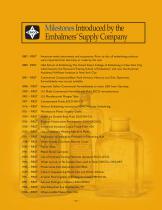
Milestones Introduced by the Embalmers’ Supply Company 1887– FiRST American-made instruments and accessories. Prior to this, all embalming products were imported from Germany or made by the user. USA School of Embalming, The United States College of Embalming in New york City, which became the Renouard Training School of Embalmers’ and now the American Academy, McAllister institute in New york City. Commercial Compound-Base Fluid (Arsenic, Mercury and Zinc: optimum), Formaldehyde was not yet available. imported Gallon Commercial Formaldehyde to enter USA from Germany. U.S. Made Commercial Formaldehyde...
Open the catalog to page 6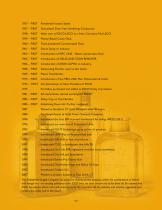
Powdered incision Sealer. Granulated Dust Free Hardening Compound. Make over of ESCo-LECo to a Non Corrosive NU-LECo. Phenol Based Cavity Fluid. Tried powdered Concentrated Fluid. Silicon Spray to industry. introduction of EPiC LiNE – Better penetration fluid. introduction of DRUG AND STAiN REMoVER introduction of ARoN ALPHA to industry. Desiccating Powder used at skin banks. Plastic Fluid Bottle. introduction of the PRo LiNE. Max. Penetration & Color. 1975 – FiRST 4th Generation as New President of ESCo 1975 Porti-Boy purchased and added to ESCo family of products. 5th Generation started working...
Open the catalog to page 7
he ESCo family of Drainage Chemicals, (Pre-inject) is the premium chemical in the industry. All are formulated to promote, aid, and increase blood drainage from the case by chemical action rather than physical forcing of the blood.They are non-coagulative under all conditions and non-astringent to the smallest of vessels. They are designed to sequester Calcium in the blood whether the blood is liquid, or semi-liquid. They will not adversely affect the corpuscles, blood vascular system, or any Arterial fluids. They are isotonically balanced to break up clots, as well as, lubricate and dilate the...
Open the catalog to page 8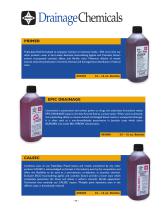
DrainageChemicals PrIMEr Triple-base fluid formulated to sequester Calcium at maximum levels—50% more than any other product—even in hard water. Exclusive incarnadining Agents and Cosmetic factors achieve unsurpassed cosmetic effects and life-like color. Maximum dilation of vessels ensures extensive penetration of arterial chemical and homogeneous distribution of natural color. EPIC DrAInAgE Unmatched in penetration and solvent power on drugs, the triple-base formulation makes EPiC DRAiNAGE equal to the best Arterial fluid as a preservative. When used as directed, the outstanding ability to remove...
Open the catalog to page 9
DrainageChemicals SOFnEr The original and still most powerful blood liquefying and mineral sequestering agent in the industry. Sequesters Calcium and other metallic ions which cause clotting. Sofner will eliminate all problems of astringency, distribution, clot formation, streaking, or splotching. Used on arteriosclerotic cases, drainage will be more than expected. Thrombosis and apoplexy cases will embalm as easily as the normal case. DrUg & STAIn rEMOVEr The fastest solvent of drug discolorations and physiological stain on the market. Combined with Drainage chemical it will remove the severe...
Open the catalog to page 10
he ESCo/GoLDCREST Arterials offer the embalmer the greatest flexibility of any fluid available. The extensive range of Arterials allows the embalmer to get the desired result regardless of condition of the case. All of the fluids are slightly alkaline and have exceptional germ-killing properties, an unparalleled ability to cross-link with protein, low astringency to blood vessels, and the integumentary layers, and an extraordinary diffusion of life-like tissue color. Minimum application of cosmetics, if at all, is the rule when using ESCo/GoLD CREST Arterials.
Open the catalog to page 11All Embalmers Supply Company catalogs and technical brochures
 Porti-Boy®
1 Page
- Solvent reagent
- Surgery forceps
- Grasping forceps
- Positioning pillow
- Unisex medical clothing
- Wound care
- Cannula
- Histology reagent
- Human scissors
- Stainless steel forceps
- White medical clothing
- Straight forceps
- Dye reagent kit
- Medical gloves
- Blue medical clothing
- Surgical scissors
- Clinical chemistry reagent kit
- Disposable medical clothing
- Sealing forceps