
- Catalogs
- ESW Vision
- A NEW THERAPEUTIC SOLUTION AVAILABLE

A NEW THERAPEUTIC SOLUTION AVAILABLE

A NEW THERAPEUTIC SOLUTION AVAILABLE
This document discusses a new therapeutic solution for Dry Eye Syndrome, a condition affecting approximately 20% of the population, particularly with age. The syndrome is primarily caused by a deficiency in the Meibomian glands, leading to insufficient tear production and excessive evaporation.
Structure and Role of Tear Film
The tear film consists of an aqueous layer secreted by lacrimal glands and a lipid layer by Meibomian glands. Its primary roles are to protect the cornea from drying and infection and to maintain optical comfort.
Causes of Dry Eye Syndrome
Key causes include age, screen use, pollution, medical treatments, eye surgery, hormonal imbalances, and nutritional deficiencies (e.g., Omega 3). These factors can lead to reduced blinking, gland dysfunction, and inflammation.
Symptoms
Symptoms are categorized into visible (e.g., redness, crusting) and felt symptoms (e.g., gritty sensation, photophobia, decreased visual acuity).
Therapeutic Solutions
Palliative Solutions: These include hygiene measures, artificial tears, eye drops with active molecules, and lacrimal plugs to provide temporary relief.
Curative Solutions: A new device offers a lasting solution by stimulating Meibomian glands through specific light flashes, showing effectiveness in 85% of cases with effects lasting over three years for 60% of patients.
Procedure and Results
The treatment involves 3-4 short, painless sessions over 75 days. Clinical studies show significant improvement in symptoms like ocular dryness and foreign body sensation.
Contraindications
Contraindications include the use of photosensitizing medications and certain dermatological conditions. A health form is required before each session.
Conclusion
This new therapeutic solution addresses the root causes of Dry Eye Syndrome, offering a promising option for long-term relief.
Catalog excerpts
DRY EYE SYNDROME An increasingly common condition
Open the catalog to page 1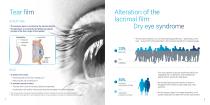
STRUCTURE ' The aqueous layer is secreted by the lacrimal glands. 1 The lipid layer is secreted by the Meibomian glands (located at the free margin of the eyelids). Lacrymal Film -Mucous layer i- Aqueous layor Meibomian Glands Conjunctival Goblet Cells Alteration of the lacrimal film: Dry eye syndrome • The dry-eye syndrome is a common pathology affecting - depending on the area - around 20% of the population with increased symptoms in advanced age. 20% DRY EYE ^ 80% NORMAL ROLE ■ To protect the cornea: - Preventing the cornea from drying out (1). - Reducing the risk of infection (2). ■ To maintain...
Open the catalog to page 2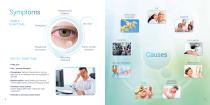
Symptoms ‘VISIBLE’ SYMPTOMS INFECTIONS/ ALLERGIES Paradoxical lacrimation THE FELT SYMPTOMS • Gritty eyes Micro corneal ulceration Recurring infections MEDICAL TREATMENT • Pain / burning sensation • hotophobia: feeling of discomfort in strong P light (sun) or for example from car headlights in the dark • Blepharospasm: eyelid blinking can become increasingly frequent, without bringing any relief HORMONAL IMBALANCES • Decreased visual activity Screen reading difficulties, driving by night, watching TV • Difficulty on wearing contact
Open the catalog to page 3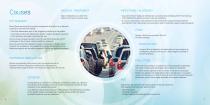
MEDICAL TREATMENT INFECTIONS / ALLERGIES Many medications can harm the • Any phenomenon leading to inflammatory process will potentially alter the functioning ability of the eye to produce tears. of the Meibomian glands and lead to dry eye syndrome. EYE SURGERY A vicious circle follows: The alteration of the lacrimal film induced will promote the persistence of the inflammatory process and a lack of protection against external agents. Nerve fibres are one of the cornea's components that allow us to feel and respond to lacrimal flow fragility: • If the film deteriorates, pain is felt, triggering...
Open the catalog to page 4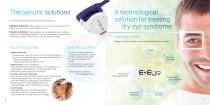
Therapeutic solutions Palliative solutions: these solutions do not heal, but simply relieve the patient. Their use must therefore be permanent. A technological solution for treating dry eye syndrome Curative solutions: these solutions provide a lasting or even definitive solution to the pathological problem. They are administered punctually and their frequency often depends on the patient’s age and lifestyle. There are traditionally two types of therapeutic solutions: is a device that deliver, very short and specific flashes of light. PALLIATIVE SOLUTIONS • Hygiene measures – These are very important...
Open the catalog to page 5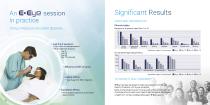
An session in practice TOTALLY PAINLESS AND SHORT SESSIONS Significant Results WHAT ARE THE RESULTS ? Clinical studies Perceptions of patients, rated from 1 to 10. 10 – Only a few minutes per session – Short treatment protocol: Day 0 Day 15 Day 45 Day 75 (optional) Ocular dryness Foreign body sensation * Significant margin of improvement. Blurred vision Clinical percentage measurements. 100% 75% 50% Vascularization * Hyperkeratosis* * Significant margin of improvement. • Lasting effects: – Over 3 years for 60% of patients • Cumulative effects: – he long lasting results is due to more T sessions...
Open the catalog to page 6
your dry eye care partner
Open the catalog to page 7All ESW Vision catalogs and technical brochures
 Tear film
8 Pages
