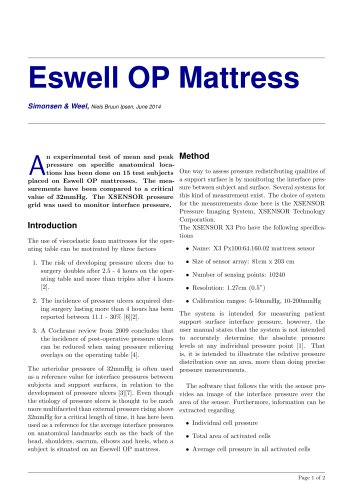
Lejringsbog Danish

Lejringsbog Danish
The document highlights the significance of proper patient positioning to prevent pressure ulcers and other injuries during medical procedures. It is based on guidelines from the National Pressure Ulcer Advisory Panel (NPUAP) and the European Pressure Ulcer Advisory Panel (EPUAP), aiming to enhance patient comfort and reduce complications through effective positioning techniques.
Pressure ulcers are costly both economically and in terms of patient well-being. Approximately 20-25% of hospitalized patients develop pressure ulcers, with treatment costs averaging 200,000 DKK per patient annually. Human costs include pain, infection, and social isolation, with severe cases potentially leading to death.
Pressure ulcers are localized skin injuries caused by impaired blood flow due to pressure or shear. They can develop within 1.5 hours in vulnerable patients and are categorized into four stages based on severity, from redness in intact skin to full tissue loss involving muscle and bone.
Risk factors include immobility, advanced age, poor nutrition, and certain medical conditions. Prevention strategies involve using pressure-distributing mattresses and cushions, maintaining good hygiene, and regularly inspecting the skin for changes.
Shear injuries occur when tissue layers slide against each other, often during patient repositioning. Friction injuries result from skin rubbing against surfaces. Both can be prevented by proper lifting techniques and using aids like sliding sheets.
Nerve injuries can occur due to prolonged pressure on specific body parts. Prevention involves careful positioning and using appropriate support equipment.
The guide details various positioning techniques, such as supine, prone, and lateral positions, and the use of specialized mattresses and cushions to distribute pressure evenly.
The guide aims to spread awareness about the importance of proper positioning to enhance patient comfort and reduce the incidence of positioning-related complications. It is intended for healthcare professionals involved in patient care during medical procedures.
The document highlights that pressure ulcers can develop due to tissue friction during patient movement, especially in areas where skin is close to bone protrusions. It emphasizes the use of sliding sheets to reposition patients in bed to prevent shear and friction injuries.
Nerve damage is defined as the material change or destruction of nerve structure, leading to functional disturbances. Causes include ischemic, thermal, chemical, and mechanical trauma. Prevention involves minimizing pressure and stretch on nerves, using proper positioning techniques, and monitoring for symptoms.
Specific nerves like the ulnar, radial, peroneal, and tibial nerves are at risk of compression, leading to pain, sensory disturbances, and muscle paralysis. Preventive measures include avoiding pressure on specific body parts and ensuring proper limb positioning.
Seddon's classification describes nerve injuries as neurapraxia (temporary paralysis), axonotmesis (axon disruption), and neurotmesis (nerve destruction). Prevention focuses on short-term positioning, awareness of patient-specific risks, and using pressure-distributing mattresses.
The document also addresses contractures and thrombosis as potential injuries from improper positioning. Prevention includes joint movement exercises, use of support stockings, and early patient mobilization.
These stockings are crucial for thrombosis prevention during hospitalization. They come in various compression levels and are designed for comfort and effectiveness, with features like antibacterial threads and inspection openings.
Emphasizes the importance of using transfer aids to reduce friction and shear during patient movement. Regular skin checks and proper anatomical positioning are recommended to prevent pressure sores.
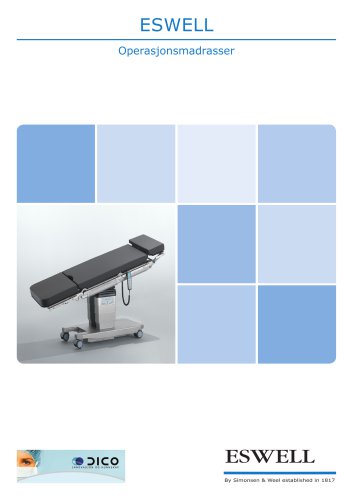
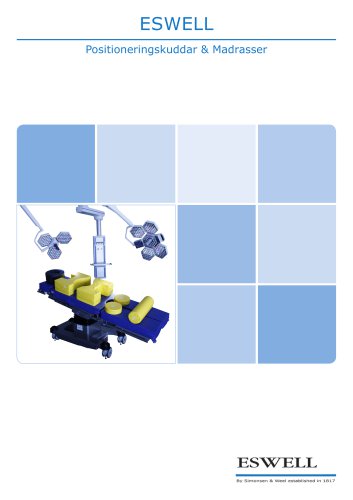
The document discusses the importance of using appropriate positioning equipment, such as ESWELL mattresses and cushions, which are designed to distribute pressure and enhance patient comfort.
Describes various ESWELL products, including static and dynamic pressure-distributing mattresses, antibacterial materials, and custom-made cushions and mattresses. These products aim to prevent pressure sores and provide optimal patient support.
Simonsen & Weel offers cushions for chairs and wheelchairs in four sizes and two quality levels, suitable for patients weighing up to or over 120 kg. Options include cushions with or without zippers and anti-slip covers, which are beneficial for use on operating tables or stretchers.
The Trans-Slide Tri-Clean is designed to assist in patient transfers, reducing friction and the risk of injury. It is durable, washable at high temperatures, and easy to use, saving time and effort for caregivers.
Proper positioning is crucial to prevent pressure sores and nerve damage in immobile patients. Guidelines include avoiding pressure transfer from one area to another and ensuring the patient is on a pressure-distributing surface. Specific positioning techniques are detailed for supine, prone, lateral, extension, and GU positions, with attention to avoiding pressure on vulnerable areas.
Simonsen & Weel offers courses on patient positioning techniques, allowing healthcare professionals to learn and practice effective methods to prevent positioning injuries.
Orders and inquiries can be made via phone, email, or fax. Standard products ordered before 4 PM are shipped the same day.
Screening tools like the Ad Hoc system and Braden scale are used to identify patients at risk of pressure ulcers, guiding preventive measures. Regular repositioning is recommended to alleviate pressure.
Proper nutrition is essential for improving the patient's overall condition and ensuring a faster and less complicated recovery. All patients should be screened for nutritional risk, and it is important to assess their nutritional needs, order the appropriate diet, monitor nutritional efforts, and rescreen regularly. Proteins are essential for preventing pressure ulcers, especially in high-risk patients. During illness, protein needs are higher, and supplementation with protein drinks and protein-rich diets may be necessary.
Simonsen & Weel offers the XSENSOR pressure mapping system, which measures and illustrates pressure on a mattress. It helps identify areas of the body exposed to high pressure in different positioning scenarios. The colors on the mapping system indicate pressure levels, with blue shades showing low pressure and red shades indicating high, uncomfortable pressure that can reduce blood circulation. Positioning cushions are recommended to reduce pressure on vulnerable areas.
Simonsen & Weel is Denmark's oldest supplier of healthcare equipment, founded in 1817. They offer products from leading global manufacturers in surgical equipment, hospital furnishings, medical technology, compression stockings, and nutritional products. The company has around 50 employees, primarily product specialists and consultants, covering Denmark, the Faroe Islands, and Greenland. Simonsen & Weel focuses on collaborating with leading manufacturers to strengthen their position as a preferred partner in the healthcare sector.
Catalog excerpts
Grundbog i lejring Det betaler sig at forebygge tryksår
Open the catalog to page 1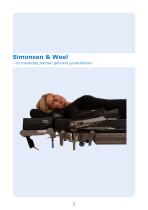
Simonsen & Weel - en troværdig partner gennem generationer
Open the catalog to page 2
Forord Korrekt lejring er altafgørende for en patients ve og vel. Hensigtsmæssig lejring øger patientens komfort under operation og nedsætter samtidig patientens risiko for at udvikle nerve- og vævsskader betydeligt. Korrekt lejring giver ikke alene mere sikkerhed og effektivitet, det gør også ofte arbejdet for plejepersonalet lettere og mere skånsomt. Nærværende lejringsguide tager udgangspunkt i de nye retningslinjer, som er udviklet i samarbejdet mellem det amerikanske National Pressure Ulcer Advisory Panel (NPUAP) og det europæiske European Pressure Ulcer Advisory Panel (EPUAP) i år 2009....
Open the catalog to page 3
Indhold Lejringsskader - tryksår og økonomi De økonomiske omkostninger ved tryksår 7 De menneskelige omkostninger ved tryksår 8 Definition på tryksår 9 Opståen af tryksår 10 Særligt udsatte områder 10 Tryksår i forskellige kategorier 11 Risikofaktorer 12 Forebyggelse af Tryksår 13 Lejringsskader - shear og friktionsskader Lejringsskader - nerveskader Lejringsskader - andre typer lejringsskader Korrekt forflytnings- og lejringsudstyr Korrekt lejring Definition på shear og friktionsskader Opståen af shear og friktionsskader Særligt udsatte områder Risikogrupper / risikosituationer Forebyggelse...
Open the catalog to page 4
Indhold Buglejring 40 Illustration af korrekt buglejring 41 Sidelejring 42 Illustration af korrekt sidelejring 43 Extensionslejring 44 Illustration af korrekt extensionslejring 45 GU-lejring 46 Illustration af korrekt GU-lejring 47 Kontaktinformationer 50 Referencer & bilag Referencer Bilag 1 - Tryksårsscreening Bilag 1 - Tryksårsscreening Bilag 2 - Braden-skala Bilag 2 - Braden-skala Bilag 3 - Ernæring Bilag 4 - Måletæppe
Open the catalog to page 5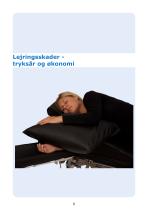
Lejringsskader tryksår og økonomi
Open the catalog to page 6
De økonomiske omkostninger ved tryksår Omkostningerne ved et tryksår er kostelig på både et menneskeligt og økonomisk plan. Flere undersøgelser viser at 20-25 % af indlagte patienter får tryksår. Prisen for behandling af kategori 3 og 4 tryksår er i gennemsnit på 200.000 kr. pr. patient per år, hvoraf 90 % af udgifterne går til plejepersonaleressourcer. En nylig undersøgelse af patienter på 10 hospitaler i Danmark har chokerende afsløret, at næsten 1/3 af patienterne havde en vis form for tryksår. Mange tryksår bliver ikke opdaget i tide og udvikler sig til at kræve behandling og koster således...
Open the catalog to page 7
De menneskelige omkostninger ved tryksår Syge, gamle og immobile personer er mest tryksårstruede. Tryksår på svage patienter kan være livstruende, eller de kan betyde amputation af en fod eller et ben, hvis såret ikke aflastes og behandles korrekt i tide. Den menneskelige pris er: • begrænset aktivitet social isolation En nylig amerikansk undersøgelse anslår, at udviklingen af tryksår multiplicerer dødelighedniveauet med en faktor på fem for svækkede patienter. Risikoscreening af patienter er derfor nødvendig - se screeningsskema bilag 1 og 2.
Open the catalog to page 8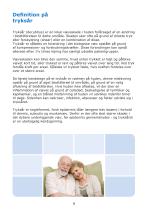
Definition på tryksår Tryksår (decubitus) er en lokal vævsskade i huden forårsaget af en ændring i blodtilførelsen til dette område. Skaden sker ofte på grund af direkte tryk eller forskydning (shear) eller en kombination af disse. Tryksår er således en forandring i det biologiske væv opstået på grund af kompressions- og forskydningskræfter. Disse forandringer kan opstå allerede efter 1½ times lejring hos særligt udsatte patientgrupper. Vævsskaden kan blive den samme, hvad enten trykket er højt og påføres vævet kort tid, eller trykket er lavt og påføres vævet over lang tid. Ved tryk forstås kraft...
Open the catalog to page 9
Opståen af tryksår Tryksår opstår, når væv trykkes mellem knogle og underlag, som følge af direkte tryk eller shear. Når vævet bliver trykket, bliver blodcirkulationen det pågældende sted dårlig, idet blodkarrene enten afklemmes eller rives over, og derved tilføres vævscellerne ingen eller kun ringe næring. Når ilttilførelsen nedsættes eller standses helt, ophobes affaldsstoffer og kuldioxid, og vævet går til grunde. Beskadigelsen bliver mere og mere alvorlig, jo længere og kraftigere trykket virker på huden. Særligt udsatte områder Tryksår kan udvikle sig ethvert sted på kroppen - men opstår...
Open the catalog to page 10
Tryksår i forskellige kategorier Tryksår kan inddeles i fire forskellige kategorier afhængig af, hvor omfattende de er: Kategori 1 - rødme i intakt hud (bleger ikke ved tryk) Trykspor ses som et tydeligt rødt, let hævet mærke på huden. Denne rødmen forsvinder ikke ved fingertryk eller ved totalaflastning, da blodcirkulationen er ødelagt. Begyndende vævsskade med aseptisk inflammationsreaktion. Tilstanden er reversibel - ved øjeblikkelig trykaflastning kan vævet komme sig igen, og en forværring kan således forhindres. Kategori 2 - let hudtab eller bullaedannelse (vabel) Ses som et overfladisk...
Open the catalog to page 11
Mennesker, som ikke af egen kraft er i stand til at forandre deres kropsposition for dermed at sørge for en rettidig trykaflastning, er i farezonen for at udvikle vævsskader. Således er patienter, som er helt eller delvist lammede, alvorligt syge, kraftløse, bevidsthedsforstyrrede eller i narkose særligt udsatte. Risikoen for at udvikle tryksår afhænger ligeledes af den enkelte patients resistens overfor tryk. nedsat hudbarriere (eksempelvis på grund af inkontinens og sved eller nedsat elastisitet ved dehydrering) hypotension (for eksempel perifer iskæmi eller i forbindelse med operation) nedsat...
Open the catalog to page 12All Eswell catalogs and technical brochures
 Test of positioning pads
6 Pages
 ESWELL Leiringsputer Norwegian
16 Pages
 Positioning guide English
60 Pages