- Catalogs
- Fischer Connectors
- Technical Specifications Volume 1


Technical Specifications Volume 1

Technical Specifications Volume 1
General Information: The document provides an overview of connectors, detailing product specifications and cable assemblies. It covers materials such as brass, stainless steel, Alulite, plastic, and disposable options.
Fischer Core Series:
- Brass: Highlights multipole low and high voltage, coaxial options, triax, mixed coax, and high voltage configurations. Accessories and tooling are discussed.
- Stainless Steel: Emphasizes durability and resistance to corrosion.
- Alulite: Noted for lightweight properties and suitability for various applications.
- Plastic: Focuses on cost-effectiveness and versatility.
- Disposable: Emphasizes use in temporary applications.
Connector Overview: Details configurations and applications, including resistance to corrosion, ease of handling, and modularity. Covers locking mechanisms like push-pull, quick-release, and screw-locking.
Sealing Categories and IP Ratings: Explains the IP classification system, detailing protection levels against solids and liquids. Products are tested to IP68 and IP69 standards.
Materials and Attributes: Lists materials used in connectors, such as chromium-plated brass, aluminum, stainless steel, and various plastics, along with ideal temperature ranges and attributes.
Voltage and Current Specifications: Defines test voltage, operating voltage, and breakdown voltage, with recommendations for common applications. Current rating and derating curves are provided based on IEC standards.
Conclusion: Provides comprehensive technical specifications for Fischer Connectors' products, ensuring users can select the appropriate connector based on material, sealing, and electrical requirements.
Current and Temperature Considerations: Maximum permissible current is determined by derating the basic curve by a factor of 0.8. Temperature rise caused by the current must be added to the ambient temperature, not exceeding the upper temperature limit of the materials.
Data Transmission Principles: Key parameters include return loss, insertion loss, crosstalk, and noise. Optimizing impedance involves contact diameter, interaxial contact distance, contact form factor, and dielectric constant. Minimizing crosstalk requires careful geometrical distribution of contacts.
Challenges in Data Transmission: Signal distortion can occur due to return loss, insertion loss, crosstalk, and noise.
Data Protocols: Provide normative values for data transmission parameters, ensuring system components work together for optimized data transmission. High-speed protocols include USB, Ethernet, and standard protocols for audio and video transmission.
Contacts and Accessories: Various contact types are available, including solder, PCB, crimp, fiber optic butt-joint, and stamped contacts.
Cable Assemblies: Offers integrated connectivity solutions, including high-performance rugged and submersible cable assemblies for defense and marine markets, silicone overmolded solutions for medical applications, and custom cable harnesses.
Custom Overmolding: Provides a wide range of custom overmolding options, including thermoplastic and silicone overmolds for various series and applications.
Locking Systems: Describes different locking mechanisms including push-pull automatic locking, quick-release plugs, tamperproof plugs, friction plugs, and lanyard plugs.
Sealing and Design: Connectors are available with different sealing levels, such as IP50 and IP68, and design styles including front-projecting, rear-projecting, and cable-mounted.
Connector Sizes and Cable Diameters: Outlines the relationship between connector sizes and compatible cable diameters.
Part Numbering System: A comprehensive guide is provided for building part numbers based on body style, size, polarity, contact configuration, and additional options.
Contact Configurations: Detailed tables list contact configurations for various voltage types and applications.
Accessories and Tooling: Mentions available accessories and tooling, such as protective sleeves, crimping tools, and cable bend reliefs.
Specifications: Connectors are available in multiple sizes with specific dimensions and torque values provided for each size.
Body Styles: Describes different body styles such as straight, right-angle, flush, front-projecting, and bulkhead feedthrough.
Protection and Sealing: Offers protection levels up to IP68, with options for unsealed (IP50) and hermetic sealing.
Contacts and Housing: Supports crimp, solder, and PCB contact configurations. Housing color options include natural chrome and anthracite.
Accessories: Various accessories are available, including cable clamp sets, sealing caps, spacers, color-coded washers, grounding washers, and locking washers.
Technical Dimensions: Detailed technical dimensions are provided for each size and body style.
Recommendations: Recommends using thread locking adhesive to secure cable clamp nuts and emphasizes the need for testing to determine exact torque values.
Housing Colors & Cable Bend Reliefs: Connectors are available in natural chrome with a red guide mark or non-reflective anthracite with a white guide mark.
Technical Specifications: Options include housing color, contact block material, contact type, and keying codes.
Contact Types for Panel Mounted Connectors: Describes the standard and PCB contact options for front and rear-mounted connectors.
Design and Accessories: Includes options for receptacles with nickel-plated bodies, EPDM interface O-rings, and decorative nuts.
Cable Clamp Sets: Offers robust cable clamp sets for excellent cable retention and strain relief.
Sections:
- Low Voltage Connectors: Covers specifications for low voltage coax connectors, including body styles, protection levels, locking systems, contact types, housing colors, and cabling options.
- High Voltage Connectors: Likely mirrors the structure of the low voltage section, focusing on high voltage applications.
- Technical Dimensions: Provides detailed measurements for various connector sizes.
- Body Styles and Assembly: Outlines different body styles for cable-mounted and panel-mounted connectors.
- Receptacles and Plugs: Specifications for receptacles and plugs are detailed.
Key Recommendations: Emphasizes the importance of conducting tests to evaluate exact torque values.
Body Styles: Outlines various body styles for both high voltage and triaxial connectors.
Protection Levels: Available in unsealed (IP50) and sealed configurations up to IP68.
Contacts: Supports crimp, solder, and PCB contact types.
Housing Colors: Options include natural chrome and anthracite.
Assembly and Accessories: Connectors can be front or rear-mounted, with a range of accessories available.
Technical Dimensions: Provides comprehensive technical dimensions for different connector sizes.
Electrical and Contact Configurations: Details pin layouts, contact types, insulating materials, cable groups, contact diameters, impedance, test voltages, and current ratings.
Recommendations: Suggests using specific tools for contact insertion and securing cable clamp nuts with thread locking adhesive.
Electrical & Contact Configurations: Outlines various contact types, insulating materials, and cable groups.
Body Styles: Available in multiple body styles, including cable-mounted and panel-mounted options.
Technical Dimensions: Detailed dimensions are provided for various sizes.
Accessories & Tooling: Lists available accessories such as cable bend reliefs, protective sleeves, and sealing caps.
Recommendations: Advises using recommended cables and considering factors like temperature rise and material limits.
Specifications:
- Materials: Components are made from materials like SantopreneTM TPV, stainless steel, brass, aluminium, and various plastics.
- Dimensions: All dimensions are provided in millimeters.
- Part Numbers: Each accessory and tool is associated with a specific part number.
Procedures:
- Crimping: Instructions are provided for attaching crimp ferrules and lugs.
- Assembly: Tools for assembling and disassembling contacts are detailed.
Standards and Recommendations:
- Crimping Tools: Precision crimp tools are recommended.
- Material Recommendations: Specific materials are recommended for different applications.
Accessories:
- Soft Caps: Available for plugs and receptacles.
- Metal Caps: Provide additional protection and sealing.
- Spacers and Washers: Various sizes and materials are available.
Tooling:
- Spanners and Nut Drivers: Various sizes and materials are available.
- Crimping Tools: Tools for coaxial cables and precision crimping are detailed.
Specifications: Sealed up to IP68, offering high protection against dust and water.
Body Styles and Housing: Different body styles such as straight, right-angle, and bulkhead feedthrough.
Technical Dimensions: Detailed dimensions are provided for each series.
Contact Types: Describes solder, crimp, and PCB contacts.
Electrical Configurations: Supports standard "A" polarity and inverted "Z" polarity.
Accessories: Various accessories are available, including cable clamp sets, sealing caps, and protective sleeves.
Recommendations: Recommends using thread locking adhesive for securing cable clamp nuts.
Tools for Crimp Contacts:
- Insertion Tools: Designed for inserting male and female removable crimp contacts.
- Extraction Tools: Used for extracting crimp contacts.
Materials and Surface Treatments:
- Metal Parts: Include stainless steel and brass components.
- Insulators and Sealing: Made from high-performance engineering plastics.
Technical Specifications:
- Sealing Performance: Various levels of sealing, including IP50, IP68, and hermetic sealing.
- Operating Temperature: Different components have specific operating temperature ranges.
- Corrosion and Radiation Resistance: Tested for salt mist corrosion resistance and radiation resistance.
Electrical Data:
- Contact Resistance: Varies by contact size.
- Insulation Resistance: Greater than 1010Ω.
Fischer Core Series Alulite:
- Key Features: Lightweight, rugged, highly configurable.
- Body Styles: Includes cable mounted and panel mounted options.
- Part Numbering: Detailed configurator for selecting the appropriate connector.
Conclusion: Provides comprehensive technical details for selecting and using Fischer connectors and tools.
Part Numbering: Detailed system indicating materials, styles, sealing levels, and series numbers.
Technical Specifications: Lists various series with detailed specifications.
Electrical & Contact Configurations: Specific configurations with details on pin layouts, number of contacts, and insulating materials.
Tooling for Crimp Contacts: Describes the tooling required for crimp contacts.
Key Considerations: Advises on potential variations in color batches and the need for testing certain wire sizes.
Specifications: Outlines various series of cable clamp sets.
Procedures: Instructions for using crimp tools, vices, or pliers.
Standards and Norms: Adheres to various international standards.
Recommendations: Recommends using Fischer Core Series Brass or Stainless Steel for marine or corrosive environments.
Technical Information: Detailed mechanical and environmental data.
Accessories: Lists various accessories with part numbers and material specifications.
Key Data from Tables: Provides comprehensive data on cable clamp sets.
Key Features: Available in various body styles with a push-pull locking system.
Technical Specifications: Made from materials such as PEI, PEEK, and TPE.
Part Numbering: Includes details on body style, contact type, insulator material, body color, contact configuration, and standard options.
Electrical & Contact Configurations: Provides detailed information on pin layouts, number of contacts, contact types, insulating materials, and test voltages.
Accessories: Various cable clamp sets and sealing caps are available.
Environmental & Mechanical Data: Designed to endure 5,000 mating cycles.
Specifications: Lists various cable clamp sets with specific outer diameter ranges.
Procedures and Standards: Outlines the sealing ratings for single and two-piece shells.
Product Features: Key features include sterilizability, color-coding, lightweight design, and shock resistance.
Updates and Revisions: Includes a section on updates, detailing changes in product configurations.
Contact Information: Provides contact details for Fischer Connectors' headquarters and regional offices.
Catalog excerpts
TECHNICAL SPECIFICATIONS VOLUME 1 BRASS STAINLESS STEEL ALULITE PLASTIC DISPOSABLE
Open the catalog to page 1
FISCHER CORE SERIES DISPOSABLE
Open the catalog to page 2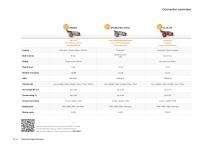
Connector overview STAINLESS STEEL HIGH CORROSION RESISTANCE EASY DECONTAMINATION EASY HANDLING HIGHLY CONFIGURABLE Push-pull / Quick-release / Friction Push-pull / Quick-release Chrome over Nickel Chrome over Nickel Low voltage / High voltage / Coax / Triax / Hybrid Low voltage / High voltage / Coax / Triax Low voltage / High voltage / Coax / Triax Sealing level Mating cycles Locking Shell material Plating Plug Ø [mm] Number of contacts AWG Contact type Contact termination Technical specifications for our Fischer UltiMate™ Series, Fischer FiberOptic Series, Fischer MiniMax™ Series and Fischer...
Open the catalog to page 3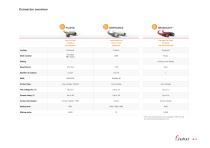
Connector overview Chrome over Nickel Crimp / Solder Sealing level Mating cycles Locking Shell material Plating Plug Ø [mm] Number of contacts AWG Contact type Contact termination Technical specifications only available in PDF format on www.fischerconnectors.com
Open the catalog to page 4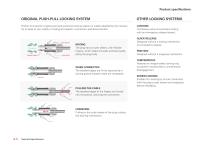
Product specifications ORIGINAL PUSH-PULL LOCKING SYSTEM OTHER LOCKING SYSTEMS Fischer Connectors’ original push-pull automatic locking system is widely adopted by the industry for its ease of use, safety of mating and speed in connection and disconnection. LANYARD Combines push-pull automatic locking with an emergency release lanyard. outer sleeve Receptacle Receptacle flexible fingers Receptacle Receptacle outer sleeve outer outer sleeve sleeve Plug Plug flexible fingers plug body flexible flexible fingers fingers groove groove MATING The plug has an outer sleeve, with flexible fingers, which...
Open the catalog to page 5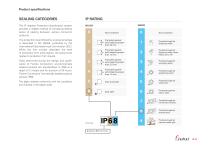
Product specifications SEALING CATEGORIES The IP (Ingress Protection) classification system provides a reliable method of comparing relative levels of sealing between various connector products. The protection level offered by a typical envelope is described in IEC 60529, published by the International Electrotechnical Commission (IEC). While the first number describes the level of protection from solid objects, the second one relates to protection from liquids. The digits indicate conformity with the conditions summarized in the tables aside. Protected against solid objects greater than 50 mm...
Open the catalog to page 6
Product specifications O-rings COMMONLY USED SEALING LEVELS IP50 indoor unexposed applications IP68 watertight sealing Hermetic sealing Each requires different sealing levels and, therefore, different connector solutions. IP50 INDOOR / UNEXPOSED APPLICATIONS Typically for indoor or industrial applications, the required sealing level is IP50, since the device needs to be protected against dust but not exposed to water. The IP50 rating can be improved with additional accessories like boots or protective sleeves. IP68 WATERTIGHT SEALING Typically for applications requiring outdoor use where they...
Open the catalog to page 7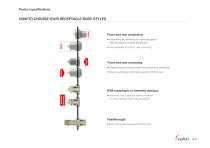
Product specifications HOW TO CHOOSE YOUR RECEPTACLE BODY STYLES Front and rear projecting Depending on whether you need the space saving inside or outside the device Also available in front or rear mounting Front and rear mounting Depending on how you need to process your assembly Rear mounting is commonly used for PCB mount SEALING MATERIAL IP68 watertight or hermetic designs Hermetic has a specific sealing material for best sealing under high pressures Feedthrough Hermetic panel bulkhead feedthrough
Open the catalog to page 8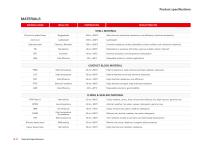
Product specifications MATERIALS MATERIAL NAME MAIN ATTRIBUTES SHELL MATERIAL Chromium-plated brass Salt mist and mechanical resistance, cost efficiency, electrical conductivity Stainless steel Cleaning / Radiation Corrosion resistance, surface cleanability, nuclear radiation and mechanical resistance Sterilization in autoclave, EtO, Cidex, gamma radiation, Steris®, Sterrad® Electrical insulation, low temperature manipulation Cost efficiency Disposable solutions, medical applications CONTACT BLOCK MATERIAL PEEK High temperature High temperature, high chemical and high radiation resistance High...
Open the catalog to page 9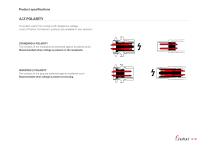
Product specifications A/Z POLARITY To protect users from contact with dangerous voltage, most of Fischer Connectors’ products are available in two versions : STANDARD A POLARITY The contacts of the receptacle are protected against accidental touch. Recommended when voltage is present on the receptacle. INVERTED Z POLARITY The contacts of the plug are protected against accidental touch. Recommended when voltage is present on the plug.
Open the catalog to page 10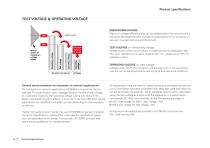
Product specifications TEST VOLTAGE & OPERATING VOLTAGE Operating voltage Operating voltage Creepage distance & airgap Test voltage Typical scatter of breakdown voltage values Breakdown voltage General recommendation for connectors in common applications For connectors in common applications, IEC60664 is in particular recommended. This specification uses creepage distance instead of test voltage as a calculation basis for the operating voltage, taking into account the above-mentioned long-term effects. It is similar to German VDE 0110; typical applications are classified in insulation groups...
Open the catalog to page 11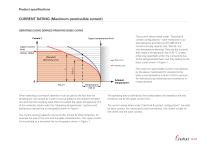
Product specifications CURRENT RATING (Maximum permissible current) DERATING CURVE DERIVED FROM THE BASIC CURVE Current l Upper temperature limit Upper current limit (wires, cable) (Derated) Operating area Basic curve The current values listed under “Electrical & contact configurations” were measured in our test laboratory according to IEC 60512-5-2: Current-carrying capacity test, Test 5b: Current-temperature derating. They are the currents that create a temperature rise of 40 °C (unless otherwise specified) within the connectors due to the self-generated heat, and they belong to the basic curve...
Open the catalog to page 12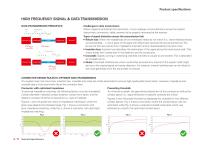
Product specifications HIGH FREQUENCY SIGNAL & DATA TRANSMISSION INPUT Challenges in data transmission When a signal is emitted at the transmitter, it must undergo minimal distortion across the system (transmitter, connectors, cable, receiver) to be properly recovered at the receiver. DATA TRANSMISSION PRINCIPLES Types of signal distortion across the transmission link: Return loss: When the impedances of two interfaced media do not match (i.e., transmitter/connector, connector/cable, ...), some parts of the signal will reflect back towards the source and be lost. The amount of this loss comes...
Open the catalog to page 13All Fischer Connectors catalogs and technical brochures
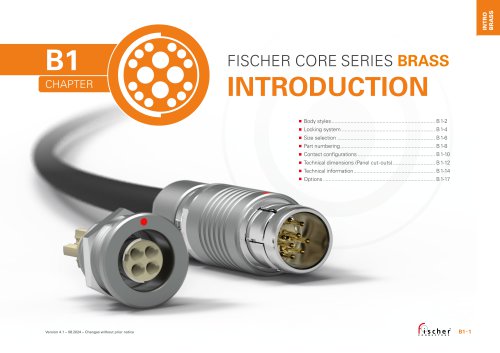 Fischer Core Series Brass
178 Pages
 Fischer Core Series Plastic
20 Pages
 Fischer Core Series Broadcast
29 Pages
 Fischer Core Series Alulite™
32 Pages
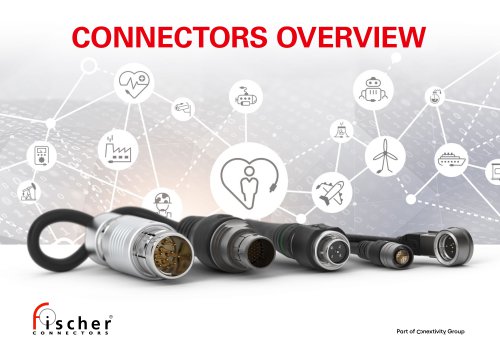 Connectors Overview
2 Pages
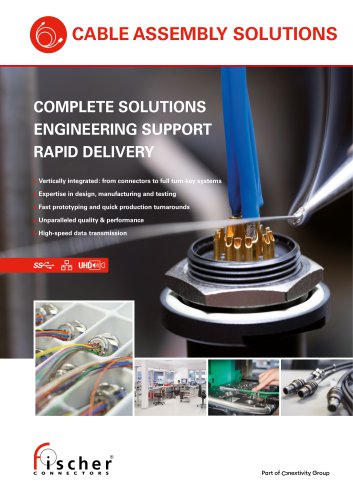 Cable Assembly Solutions
4 Pages
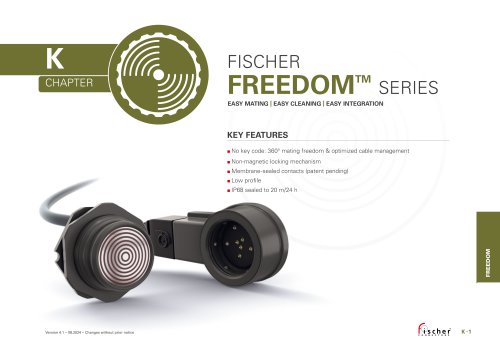 Fischer Freedom™ Series
18 Pages
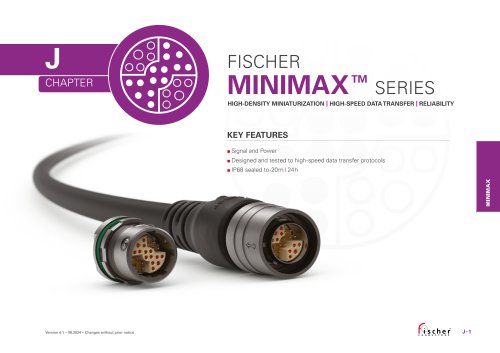 Fischer MiniMax™ Series
27 Pages
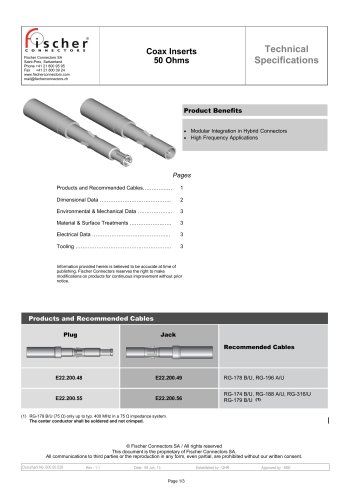 Coax Inserts 50 Ohms
3 Pages
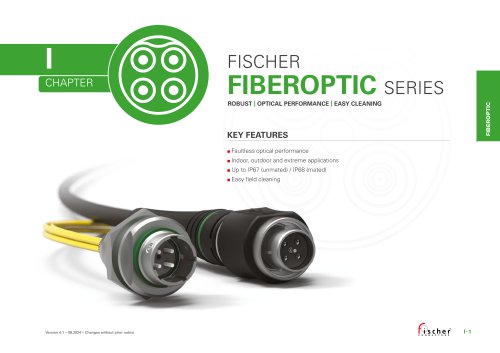 Fischer FiberOptic Series
32 Pages
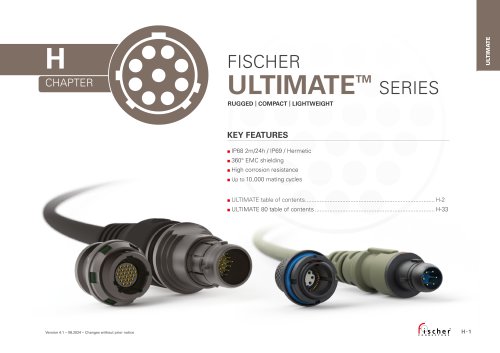 Fischer UltiMate™ Series
45 Pages
 Technical Specifications Volume 2
148 Pages