
- Catalogs
- Frisenette ApS
- frisenette-labsupplies

frisenette-labsupplies

frisenette-labsupplies
This document is the latest edition of the DELTALAB catalogue, celebrating the company's 40th anniversary. DELTALAB is a leading manufacturer of laboratory consumables, known for its high-quality products and compliance with international standards. The catalogue showcases a wide range of products designed to meet the needs of laboratories worldwide.
DELTALAB adheres to ISO 13485 and UNE-EN ISO 9001 standards, ensuring quality management systems for medical devices and regulatory compliance. The CE mark is crucial for products affecting human health, ensuring they meet safety and health requirements.
DELTALAB focuses on Class I and Class IIa medical devices, including low-risk invasive devices like tongue depressors and moderate-risk devices like swabs. In Vitro Diagnostic Devices (IVD) and Personal Protective Equipment (PPE) are also covered.
Goods are shipped at the purchaser's risk, and orders must meet minimum quantity requirements. DELTALAB retains ownership until full payment is received. Claims must be made within 60 days, and returns are only accepted for issues caused by DELTALAB.
The catalogue includes detailed technical data on product dimensions, capacities, and resistances. It advises testing products under expected conditions of use and offers samples upon request.
The catalogue is organized into sections covering various laboratory needs, including microbiology, molecular biology, haematology, histology, sampling, tubes, liquid handling, storage, and more.
A comprehensive table provides information on the chemical resistance of various materials used in DELTALAB products, helping users select appropriate materials for their specific applications.
The document outlines various types of swabs and transport media used for microbiological sample collection and transport. These include swabs made from materials such as aluminium, cotton, viscose, polystyrene, and polyester. Each swab type is designed for specific applications, such as nasopharyngeal, ocular, or pediatric uses. The swabs are certified to be free from human DNA, DNAsa, and RNAsa, and are sterilized by ethylene oxide or radiation.
Swabs are supplied in polypropylene tubes that protect samples during transport to laboratories. The tubes are labeled with essential information such as code, description, lot number, and expiry date. The document also describes the packaging and labeling system, which includes tamper-evident seals and space for recording collection details.
The document details various transport media, including Amies, Stuart, Cary Blair, and media for viruses and Chlamydia. Each media type is designed to maintain the viability of specific microorganisms during transport. The media are supplied in liquid form and are suitable for direct extensions on slides. They are sterilized by radiation and have specific expiry dates.
The swabs and transport media comply with various directives and standards, including the CE marking for medical devices and in vitro diagnostics. The document references the CLSI M40-A2 standard for microbiology transport systems.
The document recommends using specific swabs and media for different types of samples and microorganisms. It highlights the importance of using the correct media to ensure sample viability and reliability during transport.
- The swabs and media are designed for compatibility with molecular diagnostic techniques and automated sample streaking equipment.
- The packaging is environmentally friendly and designed for easy recycling.
- The document emphasizes the importance of maintaining sample integrity and preventing cross-contamination during transport.
Some codes are not available for sale in Italy, and there are minimum order quantities for certain products.
1. Swab Kits: These kits are used for diagnostic techniques by quantitative PCR and are sterilized by radiation. They include standard and nasopharyngeal flocked swabs with specific codes, shelf life of 30 months, and are not available for sale in Italy.
2. Enrichment Media: Includes Selenite, Thioglycolat, and LIM Broth, each with specific applications and shelf lives.
3. Surface and Meat Sampling Kits: Designed for specific sampling needs, sterilized by radiation.
4. Petri Dishes: Available in various sizes and configurations, suitable for automatic filling machines.
5. Microtitre Plates: Standard 96 well-plates available in different well shapes for various applications.
6. CryoInstant Preservation System: Used for storing microbiological cultures, includes cryovials with porous beads and cryopreservative-added broth.
7. Accessories: Includes Petri Dish Baskets and Racks, Contact Plates, and more.
Tubes and plates are made of autoclavable polypropylene, certified RNAse, DNAse, and pyrogen free. They are available in various configurations, including strips of 8 or 12 tubes with attached caps, suitable for Real Time PCR. The tubes are designed to prevent cross-contamination and ensure reliable quantification.
Real Time PCR, also known as Quantitative PCR (QPCR), is highlighted for its efficiency in providing real-time results during DNA amplification. The use of opaque white wells and tubes is recommended to avoid crosstalk and ensure accurate quantification.
All products adhere to SBS standards for dimensions and are compatible with various thermal cyclers and sequencers. The plates and tubes are designed for optimal thermal transfer and are suitable for both standard and Real Time PCR.
Use opaque white tubes for Real Time PCR to prevent crosstalk. The use of adhesive sealing films is advised to minimize contamination risks during ELISA or PCR processes.
- 0.2 ml PCR tubes are available in strips with different cap configurations, each with specific case quantities, weights, and volumes.
- 96-well plates are available in various designs, including skirted, semi-skirted, and low profile, each with specific dimensions and capacities.
Ensure the use of certified RNAse, DNAse, and pyrogen-free materials to maintain sample integrity. The choice of tube or plate configuration should be based on the specific requirements of the PCR process being conducted.
Adhesive films are designed to prevent sample evaporation and are thermostable from -70°C to 95°C. They are RNAse and DNAse free, and DMSO resistant. Recommended to use with a sealing roller for a perfect seal. Aluminium sealing foil is ideal for PCR work and is pierceable for easy sample access. PCR sealing mats are made from non-reactive rubber, ensuring a secure seal during PCR cycling.
96 square well plates are made of medical-grade polypropylene, suitable for temperatures from -90°C to 121°C. They are certified free from RNase, DNase, DNA, and PCR inhibitors. 96 round well plates have a 1.2 ml capacity and are also made of medical-grade polypropylene.
Sample storage systems include racks with 96 tubes, suitable for robotic applications and multichannel pipetting systems. They are autoclavable and free from DNAse, RNAse, and PCR inhibitors.
Blood collection tubes are individually identified for traceability and comply with various ISO standards. They have different expiry dates depending on the type of anticoagulant used.
Glucose solutions for oral administration are used for diagnostic tests related to glucose metabolism. They are designed for patient acceptance and tolerance.
Charts indicate that serum tubes with clot accelerators and gel serum separators improve clotting speed and serum volume compared to glass tubes.
Ensure a 30-minute standing time for coagulation before centrifugation to avoid abnormal assay results and poor serum quality due to haemolysis. Handle blood samples gently to prevent agitation and set centrifuge to a maximum of 1,500 xg.
Available in 15 ml bottles, suitable for 5 ml of blood. Contains lithium heparin and phenylmercury acetate, with a 24-month expiry. Prepared according to ISO 6710.
Thrombocyte counting kit and osmotic brittleness test kits are available with full instructions. Reticulocyte staining kit allows easy identification of erythrocytes.
Available with or without heparin, in lengths of 70 or 75 mm. Comply with ISO 12772 standards.
Various eosin solutions available, with danger symbols indicating hazardous materials. Fast stain kits for blood extensions are also provided.
Disposable cuvettes for visible spectral range assays, with special UV grade options for accuracy. Supplied in dust-proof boxes.
Various models available for different laboratory equipment, made of polystyrene or HDPE. Includes scintillation vials and beakers for cell counters.
Includes paraffin with low DMSO content, histology moulds, metal trays, and tissue embedding sponges. Cassettes and lids for biopsy samples are also available.
- Cryovials: Available in five colors for easy identification, with a shelf life of 48 months. They are autoclave sterile and can withstand temperatures as low as -100 ºC.
- Microtubes: Made of polypropylene, suitable for extreme temperatures (-190 ºC to +121 ºC), and available in transparent or UV-resistant brown. They are certified RNAse, DNAse, and pyrogen-free.
- Caps: Made of polypropylene with a silicone O-ring for leakproof sealing. Available with or without an attachment loop.
- Containers: Various sizes and materials (polystyrene, polypropylene) with features like tamper-evident rings and boric acid preservatives for urine samples.
- Sample Handling: Instructions for inoculating cryovials, freezing, and reproducing strains using beads.
- Cap Usage: Caps should be securely fastened to ensure leakproof storage, with tamper-evident features indicating if opened.
- Use color-coded inserts for additional classification and identification of samples.
- Ensure proper sealing of containers to maintain sample integrity during storage and transport.
- Case Quantities and Weights: Detailed for each product type, ensuring users can plan storage and handling logistics effectively.
- Temperature and Centrifugation Limits: Provided for each product to ensure safe usage under specified conditions.
- Polystyrene Containers: Available in aseptic and sterile options, with capacities ranging from 60 ml to 150 ml. Standard cap color is red. Dimensions and case details are provided for each model.
- Polypropylene Containers: Offered in various configurations, including labeled, aseptic, and individually wrapped sterile options. Designed for pneumatic transport with biflex caps. Dimensions and case details are specified.
- Graduated Containers: Made of transparent polypropylene with molded graduations for precise measurement. Available in 60 ml and 150 ml sizes, with red polyethylene caps.
- Specialty Containers: Includes blue containers for photosensitive samples and 200 ml graduated containers with dual measurement systems.
- Sample Transfer Process: Detailed steps for transferring samples using vacuum systems to ensure hygiene and prevent contamination.
- Urine Collection System: Designed for efficient space use in labs, with options for custom designs and boric acid inclusion.
- EUROTUBO® Containers: Leakproof containers meeting UNE-EN 14401 standards for closure effectiveness, suitable for histology samples.
- Disposable Cups: For general sample collection, available in polypropylene and polystyrene.
- Fast Read Plates: For urinary sediment cell count, designed to reduce cell overlap and improve accuracy.
- Containers are available in various materials, including polystyrene and polypropylene, with options for sterilization by radiation.
- Graduated containers provide precise measurement capabilities, essential for accurate sample analysis.
- Specialized containers are available for pneumatic transport and photosensitive samples.
- Tip Types: The document lists multiple types of pipette tips, including universal tips, macro tips, and specialized tips for different volume ranges (e.g., 5-200 µl, 100-1,000 µl, 1-5 ml).
- Compatibility: Tips are compatible with a wide range of pipette brands such as Gilson®, Eppendorf®, Biohit®, Finnpipette®, and others.
- Material and Sterility: Tips are made from polypropylene, often autoclavable up to 121 ºC, and available in sterile and non-sterile versions. Many are RNAse, DNAse, and pyrogen-free.
- Bulk and Rack Options: Tips are available in bulk or in racks, with minimum sale units specified (e.g., 1 bag).
- Case Quantities and Weights: Detailed information on case quantities, weights, and volumes is provided for each product.
- Reservoirs: Various pipetting reservoirs are described, including single and double-sided options, with specifications on sterility and dimensions.
- Pipettes: The document details single and multichannel pipettes, highlighting features like digital volume setting, ceramic pistons, and ergonomic designs.
- Colour Coding: Tips are color-coded for easy identification of features like sterility and material safety.
- Advanced Features: Some pipettes include advanced features such as HyperBlow systems for improved efficiency and corrosion-resistant materials.
- Micropipettes: Made from transparent, inert, low-density polyethylene, suitable for freezing in liquid nitrogen. Volumetric tolerance is ±10%.
- Handrop Stepper: A single-channel stepper capable of dispensing up to 40 different volumes and 48 doses, compatible with tips ranging from 1 µl to 5 ml.
- Graduated Pipettes: Made from polyethylene, available in sterile and non-sterile versions, with volumetric tolerance of ±10%.
- General Purpose Pipettes: Made from transparent polyethylene, with sterile options available, and a volumetric tolerance of ±10%.
- Extra Long Pipettes: Made from transparent polyethylene, with a volumetric tolerance of ±10%.
- Pipetting Bulbs: Made of rubber, designed to avoid mouth pipetting and contamination risks. Can be cleaned and autoclaved.
- Pipette Pumps: Designed for fast and efficient pipetting with one-handed operation, resistant to acids and alkalis.
- Polycarbonate Racks: Suitable for ultra-low temperature storage, autoclavable, and compatible with liquid nitrogen immersion.
- Polystyrene Racks: Designed for cryovials, stackable, and include a vial picker for easy removal.
- Use appropriate pipette models based on the required volume and sterility needs.
- Ensure compatibility of pipette tips with the dispensing equipment.
- Follow cleaning and sterilization guidelines to maintain equipment integrity.
- Plastic and Aluminium Racks: These racks are stackable, have an alpha-numerical index for sample location, and are suitable for specific tube sizes. They are supplied encased and interlocked, wrapped in protective film.
- Stainless Steel Racks: Various racks are available for different tube diameters, each with specific dimensions, capacity, weight, and volume. They are designed for optimal sample storage and organization.
- Sample Storage Solutions: Includes racks for containers of various diameters, bottle carriers, baskets with folding handles, and instrument trays. These are made of stainless steel and designed for durability and convenience.
- Wilmut System Products: Offers a range of cryopreservation solutions, including tubes and cryoboxes made of high-quality polypropylene. These products are designed for maximum space optimization and traceability, with various accessories available.
- Accessories and Tools: Includes caps, pickers, cappers, and decappers designed to complement the Wilmut system products, ensuring ease of use and compatibility.
- Racks and baskets are made of durable materials like stainless steel and polypropylene, ensuring longevity and resistance to harsh conditions.
- Products are designed for specific laboratory needs, such as sample storage, transport, and organization.
- Wilmut system products offer advanced features like 2D datamatrix codes for traceability and are compatible with liquid handling robots.
Cardboard waste containers are designed for the disposal of group II solid and semi-solid waste. They feature a polyethylene bag and can be incinerated without toxic emissions. Two models are available, both with a 50-liter capacity, but differing in thickness and closure mechanisms. They comply with UN ADR and French Standard NFX 30 507.
Waste is classified into four types: Type I (municipal waste), Type II (non-specific medical waste), Type III (specific health risk waste), and Type IV (waste with special hygiene and environmental requirements).
These tapes are used to indicate successful sterilization by changing color. They are available for ethylene oxide gas, dry heat, and steam sterilization, with specific exposure requirements for each method.
These pads contain 70% isopropyl alcohol and are used for antiseptic cleaning. They are supplied in aluminum bags.
These bags are made of polypropylene and are resistant to high temperatures. They feature biohazard symbols and are available in various sizes.
Made of soda glass, these bottles are autoclavable and suitable for chemical reagents and culture media. They can be frozen and have a drip ring to prevent spills.
Pipetting bulbs are made of rubber and are used to avoid mouth pipetting. Pipette pumps are available in various sizes and are designed for efficient pipetting.
Made of polycarbonate, these glasses protect against UV rays and conform to EN standards. They are available in two models, one of which can be worn over corrective glasses.
This bottle is made of polyethylene and features an eyecup for gentle eye washing. It is supplied empty and has instructions in multiple languages.
These bottles are made of polyethylene and are available in various designs, including integral and wide-mouth versions. They are resistant to acids and bases and feature ribbed caps for easy handling.
Made from high-quality wood, these depressors are smooth and splinter-free. They can be used for medical and non-medical purposes.
This document provides detailed specifications and descriptions for various laboratory and medical products, including tongue depressors, absorbent paper, filter paper, urine collection bottles, bed pans, safety gloves, measuring cylinders, volumetric flasks, Erlenmeyer flasks, graduated beakers, funnels, and sedimentation cones.
Made of polystyrene, these tongue depressors are cream-colored, odorless, and taste-free, with smooth rounded edges. They are more flexible than wood depressors and feature a ribbed finger rest for easy handling. Available in non-sterile and sterile versions, with sterile models supplied with instructions for use.
This 125 g/m2 absorbent paper features two layers: a cellulose layer for liquid absorption and a polyethylene layer for waterproofing. It is suitable for laboratory trays, pathological anatomy labs, seed germination, and spillage recovery.
Made from high-quality cellulose fibers, this filter paper offers good humidity resistance and high absorption capacity. It is used for laboratory worktop protection, filtering operations, labware sterilization, and pharmaceutical product preparation.
These polyethylene bottles are designed for male urine collection, featuring a 110 mm handle and graduations up to 1,000 ml. They are sterilizable by ethylene oxide and supplied individually wrapped.
Made of white polypropylene, these bed pans are designed for disabled individuals, featuring rounded edges for comfort and an L-shaped handle for better handling. They are autoclavable and machine washable.
Available in nitrile, vinyl, and latex, these gloves provide protection for medical and laboratory use. Nitrile gloves are powder-free, non-sterile, and highly resistant. Vinyl gloves are transparent and latex-free, while latex gloves are available in powder-free and pre-powdered versions.
Made of polypropylene and TPX, these measuring cylinders and flasks are autoclavable and comply with ISO 6706 and BS 5404 standards. They are available in various capacities and dimensions.
These beakers are made of TPX and polypropylene, offering high chemical and temperature resistance. They are autoclavable and comply with ISO 6706 and BS 5404 standards.
Available in various materials such as polypropylene and TPX, these funnels are designed for different laboratory applications, including high-speed filtration and powder handling.
Made of SAN, this cone features moulded graduations according to DIN standards and is resistant to temperatures from -20 ºC to 85 ºC.
1. Burette Clamps: Made of autoclavable polypropylene, suitable for rods Ø 8 to 14 mm, with stainless steel center arm and rubber pads. Available for 1 or 2 burettes.
2. Rectangular Base for Burettes: Autoclavable polypropylene with chromium plated steel rod, available with central or off-center hole.
3. Funnel Holders: Double holder for funnels 25 mm to 170 mm, suitable for rods Ø 8 to 14 mm.
4. Pipette Stand: Made of polypropylene, holds up to 28 pipettes, with a rounded base and circular stand.
5. Rotary Pipette Stand: Holds 94 pipettes, made of autoclavable polypropylene, with rotating discs.
6. Vacuum Pump: Polypropylene material, excellent suction capacity, autoclavable, with non-return valve.
7. Flask Weight Ring: Vinyl covered, high chemical resistance, improves stability of Erlenmeyer flasks.
8. Pipette and Burette Rinsing Set: Made of polyethylene and polypropylene, holds pipettes and burettes up to 60 cm.
9. Drying Racks: Available in PVC coated steel wire and high impact polystyrene, suitable for various labware.
10. Laboratory Spatulas and Measuring Scoops: Made of polystyrene and polypropylene, suitable for alimentary use.
11. PVC Pipette Tray: Resistant to temperatures from –20 ºC to 80 ºC, with ergonomic design.
12. Antiacid and High Impact Polystyrene Trays: Suitable for various lab applications, resistant to specific temperature ranges.
13. Weighing Dishes: Available in hexagonal, squared, and rhomboid shapes, made of polystyrene, suitable for microwave.
14. Wash Bottles: Made of polyethylene, available in various capacities and colors, with ribbed caps for better handling.
15. Silicone Tubing and Sheets: Reinforced and medical grade options, non-toxic, suitable for high temperatures and alimentary use.
- Ensure proper fitting and compatibility of clamps and holders with rods and labware.
- Follow assembly instructions for pipette stands and ensure secure placement.
- Use appropriate rinsing sets for safe and efficient cleaning of pipettes and burettes.
- Utilize drying racks and trays to organize and protect labware.
- Adhere to recommended temperature ranges for materials to maintain integrity and safety.
- Ensure proper handling and storage of wash bottles and tubing to prevent contamination and leaks.
Material: Autoclavable acetal. These clamps are resistant to distortion, rust, and corrosion. They offer multiple positions for flow control, ranging from fully open to completely closed. Available for tubes of 3.2 to 11 mm and 11 to 19 mm.
Material: Polypropylene, autoclavable. Includes 'T', 'Y', '+', and straight connectors, each designed for specific tubing diameters. They are lightweight and come in various configurations to fit different tubing sizes.
Designed to hold tubing or thermometers on the edge of beakers or vessels. Made from polycarbonate and polypropylene, they are autoclavable and available for different tubing and thermometer sizes.
Material: Polypropylene and high-density polyethylene. Ideal for low-pressure liquids and gases, featuring a smooth turning action without lubricants.
Material: Polyethylene. Useful for connecting rubber or plastic tubing of varying diameters. Composed of two parts that fit tightly together.
Material: Polypropylene, autoclavable. Operates under a maximum pressure of 2 bar and a minimum of 0.07 bar at 20°C.
Material: SAN. Provides visual indication of flow through the rotation of a red ball. Suitable for connecting tubes of different diameters.
Available in various shapes and sizes, including micro, cylindrical, octagonal, triangular, and ovoid. Each type is suited for specific applications, such as dissolving solids or stirring in irregular containers.
Polypropylene coated with a magnetic tip for easy removal of stirrer magnets from vessels.
Includes one-hand mechanical timers and digital timers with multiple memory settings. Digital timers come with instructions in multiple languages.
Includes a variety of jars, beakers, and containers made from polyethylene and polypropylene. Features include wide mouths, tamper-evident seals, and suitability for alimentary use. Available in various sizes and configurations for laboratory and industrial applications.
Catalog excerpts

Your needs, our innovations
Open the catalog to page 1
E-MAIL: General: [email protected] Marketing: [email protected] MAIL: Plaza de la Verneda, 1 (Pol. Ind. La Llana) P.O. BOX 195 08191 RUBÍ (BARCELONA) SPAIN WEB: www.deltalab.
Open the catalog to page 2
Dear customers, distributors, suppliers and friends, It is a great honour to open with these lines the new edition of the DELTALAB catalogue. This year, DELTALAB celebrates its 40th anniversary and we do so with renewed expectations, proud of a job well done during all these years contributing to the development of the laboratory market. Our mission is always to design, manufacture and distribute laboratory products of the highest quality, in strict compliance with all standards, and meeting the needs of each one of our clients. This gives our brand the distinction of specialization and allows...
Open the catalog to page 3
UNE-EN ISO 9001 Quality management systems. Requirements. UNE-EN ISO 13485 Medical devices. Quality management systems. Requirements for regulatory purposes.
Open the catalog to page 4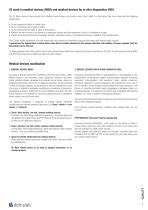
CE mark in medical devices (MDD) and medical devices for in vitro diagnostics (IVD) The CE Mark concerns those products that, affecting human beings, may involve a risk to their health. For that reason they must comply with the following requirements: • Do not compromise health or clinical status. • Do not compromise user’s health or safety. • Do not compromise the health or safety of third persons. • Minimize the risk of errors of use thanks to its ergonomic features and the environment in which it is intended to be used. • It takes into account the technical knowledge, expertise, experience,...
Open the catalog to page 5
Sales conditions • Goods are shipped at the purchaser’s risk and on the purchaser’s account. • Goods are considered delivered, and at the responsibility of the purchaser, from their shipment from our warehouses. Any problem of transport or other is therefore the entire responsibility of the purchaser from that moment. • MINIMUM ORDERING QUANTITY (per total order) according to our price list. • MINIMUM ORDER QUANTITY (per product): In those products indicated, it is possible to acquire minor quantities from the standard selling unit. In those cases, a surcharge is applied in order to cover the...
Open the catalog to page 6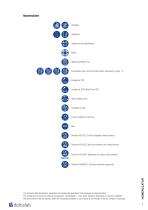
Stackable Graduated Alphanumerical Identification Floats DNAse and RNAse free Autoclavable (see more information about autoclaving in page 11) Suitable for PCR Suitable for QPCR (Real Time PCR) High resistance tube Packaged in bags Product suitable for food use New Directive 98/79/EC (in Vitro Diagnostic medical device) Directive 93/42/EEC (low and moderate risk medical device) Directive 93/42/EEC (Moderate risk, sterile medical device) Directive 89/686/EEC (Personal protective equipment) The technical data (dimensions, capacities and resistances) specified in this catalogue are approximated....
Open the catalog to page 7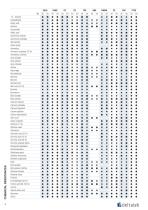
PELD PEHD PP PS TPX ABS PMMA PC PVC PTFE Acetaldehyde •X•■•XXX•XXXXX■X■X•• Acetic acid ••••••■■••XXXX•■•■•• Acetone ■X••••XX••■■XXXXXX•• Acrylonitrile ••••■XXXXX XXXXXX** Adipic acid •••••••••• •••••■•• Aluminium chloride •••••••••• ••XXB^BB Aluminium hydroxide ••••••■■•■ ■■■¥•••• Allyl alcohol •••••••■•■ XX^^^XB* Amino acids •••••••••• •••••• Ammoniac ••••••■XBB ••XX^^BB Ammonic hydroxide (30 %) ••••••■X•••■••XX•■•• Ammonium chloride ••••••••••••■■■■•■•• Amyl acetate ■X•■■XXX•■ ••XXXXBB Amyl alcohol ••••••■■•• ••■■•• Amyl...
Open the catalog to page 10
PELD PEHD PP PS TPX ABS PMMA PC PVC PTFE Hexane Hydrofluoric acid (40 %) •••••••••• XXXXBX^^ Hydrofluoric acid (70 %) •X*B«BXX«B XXXXXXBB Hydrogen peroxide (35%) ••••••••••XXXXBBBBBB Iodine XXXXBBBXBB XXBXXXBB Isobutyl alcohol ••••••BBBB BXBBBBBB Isopropyl alcohol ••••••BBBB BXBBBBBB Isopropyl benzene BXBBBXXXXX XXXXXXBB Lactic acid ••••••••••••BXBBBBBB Mercurous chloride •••••••BBB ••••XX** Mercury •••••••••• •••••••• Methyl acetate BXBBIBXXllXX X X X X • • Methyl alcohol IBIlllBXllBXXXIBIBll Methyl propyl ketone...
Open the catalog to page 11
* Poor resistance to strong oxidant acids ** Chemical resistances of plastics are detailed in a specific table *There are special blends of PP like those from our cryovials, which are able to withstand up to -196 °C.
Open the catalog to page 12
STERILISATION METHODS STERILE A STERILIZATION TYPE: in this case the parts are not sterilized at the end of its manufacture process since is the process by itself which is able to obtain a sterile product. This is because the entire process from injection of different plastic components to the assembly is protected by a sterile atmosphere, thanks to the cowling of the entire installation and the placement of laminar flows that create an overpressure sterile air inside the facilities. The sterilization indicator labels are small round stickers that change their color when the material is properly...
Open the catalog to page 13All Frisenette ApS catalogs and technical brochures
 Cleanroom
236 Pages
 Laboratory Filtration Products
97 Pages
 Vials and caps 2017
68 Pages
 Medical and Laboratory Supplies
216 Pages
 VISOCOLOR® Fish
1 Page

Archived catalogs
 advantec_laboratory_filtration
97 Pages
