

Genedrive® HCV ID Kit
Genedrive® HCV ID Kit
Catalog excerpts

Genedrive® HCV ID Kit ID-HCV-03 Hepatitis C Virus Qualitative Kit For the most up to date version of this document, please visit www.genedrive.com IMPORTANT: Please read these instructions prior to using this kit. Each kit contains reagents and materials for use on the Genedrive instrument only. Use on third party equipment is not supported. Terms & Abbreviations Table of contents 2 2 maximum serum concentration that a drug achieves in a specified compartment or test area of the body after the drug has been administrated and before the administration of a second dose. deoxyribonucleic acid Materials required but not supplied Storage and shelf life Operating conditions Specimen collection, handling and storage Human Immunodeficiency virus human T-lymphotropic virus, type I human T-lymphotropic virus, type II Internal positive control Performance characteristics polymerase chain reaction 15 Clinical Performance Studies ribonucleic acid real time polymerase chain reaction melt temperature untranslated region World Health Organisation Test procedure Test results Quality controls Analytical Performance Studies Quick reference guide Manufacturer details Intellectual properties Ethylenediaminetetraacetic acid
Open the catalog to page 1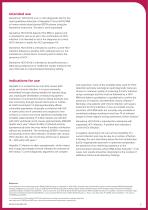
Intended use Genedrive® HCV ID Kit is an in vitro diagnostic test for the rapid qualitative detection of Hepatitis C Virus (HCV) RNA in human whole blood derived EDTA plasma using the Genedrive instrument. The test is semi-automated. Genedrive HCV ID Kit detects HCV RNA in plasma and is intended for use as an aid in the confirmation of HCV infection. It is intended to aid in the diagnosis of current HCV infection in adults for HCV genotypes 1-6. Genedrive HCV ID Kit is intended to confirm current HCV infection following a positive HCV antibody test, it is not intended as a blood donor screening...
Open the catalog to page 2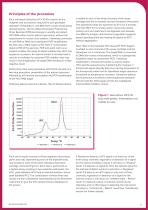
Principles of the procedure Each individual Genedrive HCV ID Kit contains all the reagents and accessories required for pan-genotype detection of Hepatitis C viral RNA from human whole blood derived plasma. The kit utilises proprietary Polymerase Chain Reaction (PCR) technology to amplify and detect HCV RNA within human plasma specimens, without the requirement for nucleic acid isolation. Following conversion of viral RNA to DNA and subsequent PCR amplification, the test uses a 91bp region of the HCV 5’ untranslated region (UTR) of the genome. PCR end-point melt curve analysis enables the assay...
Open the catalog to page 3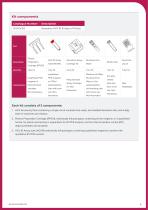
Kit components Catalogue Number Plasma Description Genedrive Assay Nuclease Free Lyophilised Lyophilised PCR reagents in tube with push Minimum of 240µl Polycarbonate Assay Cartridge lid. NonHazardous Nuclease Free Water in 2ml polypropylene, self-standing tube with screw cap. Non-Hazardous Empty Tube 2ml plain skirted tube with blue screw Each kit consists of 3 components: 1. HCV Accessory Pack containing a single vial of nuclease free water, two labelled Genedrive lids, and empty tube for specimen pre-dilution. 2. Plasma Preparation Cartridge (PPC01), individually foil-packaged, containing...
Open the catalog to page 4
Materials required but not supplied Storage and shelf life Genedrive HCV ID Kit is designed for use in conjunction with the Genedrive instrument (GD-001-HCV) running Genedrive HCV software (version 2.0.0). Use with any third party PCR equipment and/or reagents is not supported. Please refer to the Genedrive User Manual for details on the specific operation of the Genedrive instrument. Genedrive HCV ID Kit should be stored between 2°C to 30°C. The expiry date for each Genedrive HCV ID Kit is identified on the kit label. Expired kits must not be used. Calibrated pipettes are required to dispense...
Open the catalog to page 5
Specimen collection, handling and storage Genedrive HCV ID Kit is intended for use on 30µl of fresh human whole blood derived plasma in either K2 or K3 EDTA anticoagulant. Blood specimens must be collected in commercially available vacutainers. The use of alternative containers may result in a false negative test result. For optimum performance, plasma should be separated immediately, however, internal studies have shown freshly separated EDTA plasma is suitable for use for up to 72 hours if stored at room temperature (20°C) or at 2-8°C. Freshly collected whole blood anticoagulated with EDTA...
Open the catalog to page 6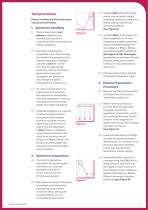
Test procedure 2.3 Transfer 30µL of plasma to the empty tube provided using a calibrated pipette and single-use RNase, DNase-free aerosol resistant pipette tip (see Figure 2). Failure to follow the IFU could cause inaccurate test results. 1. Specimen handling 1.1 Plasma specimens must always be labelled and handled with care and in accordance with local health and safety regulations. 1.2 Specimen handling and preparation up to and including the addition of specimen to the Plasma Preparation Cartridge channels, must be carried out using the appropriate protective clothing. Protective gloves should...
Open the catalog to page 7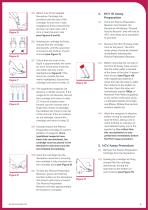
3.5 Attach one of the labelled Genedrive Cartridge lids provided onto the top of the cartridge. Ensure this is fully engaged by firmly pressing the lid down on each side until a click is heard at each side (see Figures 5 and 6). 4.1 Once the Plasma Preparation Reaction has finished, the Genedrive will display “Paused, Hold to Resume” and will hold at 42°C until ready to be prompted to proceed. 3.6 Holding the cartridge lid firmly, sharply flick the cartridge downwards, until the specimen is forced to the bottom of each channel (see Figure 7). 3.7 Check that the level of the liquid is approximately...
Open the catalog to page 8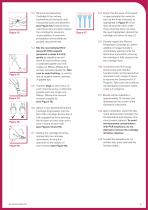
5.3 Remove the Genedrive Cartridge lid by rocking backwards and forwards until it becomes loose and detaches (see Figure 12). Dispose of the used lid as clinical waste. Inspect the cartridge for presence of precipitates. If extensive precipitates and turbidity are present, discard the test. 5.4 Mix the reconstituted HCV Assay RT-PCR reagents (prepared in steps 4.2-4.4) gently by pipetting up and down at least 10 times using a calibrated pipette and new single-use RNase, DNase-free aerosol resistant pipette tip. Take care to avoid frothing, as well as loss of reagent volume retained in pipette...
Open the catalog to page 9All Genedrive catalogs and technical brochures
 Genedrive® COV19-ID Kit
20 Pages
 Genedrive® 96 SARS-CoV-2 Kit
32 Pages
 Genedrive®
3 Pages
- Detection kit
- Molecular detection kit
- Respiratory disease assay kit
- Clinical detection kit
- COVID-19 assay kit
- PCR system
- Laboratory assay kit
- Nasopharyngeal detection kit
- Genetic detection kit
- Coronavirus assay kit
- Compact PCR machine
- PCR machine with touchscreen
- Liver disease test kit
- Hepatitis C virus test kit
- Hepatitis C detection kit
- Digital thermal cycler