
- Catalogs
- Globus Medical
- Discover the SHIELD™ VCF System

Discover the SHIELD™ VCF System

Discover the SHIELD™ VCF System
This document provides educational information about the SHIELD™ VCF System, a minimally invasive treatment for vertebral compression fractures (VCFs). It emphasizes the importance of consulting with a physician to determine the suitability of this treatment.
Understanding Vertebral Compression Fractures (VCF)
VCFs are common in individuals with osteoporosis, affecting millions annually, particularly postmenopausal women. These fractures can significantly impact quality of life, causing pain and functional decline.
Causes of VCF
VCFs occur when the vertebral body collapses, often due to osteoporosis or trauma. Even minor activities can cause fractures in those with severe osteoporosis.
Symptoms
Symptoms include sudden back pain, reduced mobility, height loss, deformity, and increased risk of future fractures.
Treatment – Vertebral Augmentation
Vertebral Augmentation, including kyphoplasty and vertebroplasty, is a minimally invasive procedure to stabilize fractures. The SHIELD™ System uses advanced technology to direct cement flow and stabilize the vertebra.
Procedure Details
Before the procedure, imaging tests are conducted to assess the fracture. The procedure involves creating a cavity in the vertebra and filling it with cement to stabilize the fracture. It can be performed under local or general anesthesia.
Recovery Expectations
Recovery typically takes 2-4 weeks, with many patients returning to normal activities. Compliance with post-surgical instructions is crucial for a satisfactory outcome.
Benefits and Risks
The procedure may reduce back pain and stabilize fractures, but it carries risks such as cement leakage and infection. Patients should discuss potential complications with their physician.
Contraindications and Precautions
Contraindications include infections, certain diseases, and pregnancy. Complications can include embolism, vascular injury, and more. Patients should consult their surgeon for detailed information.
Catalog excerpts
Patient Education \lgea therapies Discover the SHIELD™ VCF System A minimally invasive treatment for vertebral compression fractures A Division of Globus Medical Interventions for Life
Open the catalog to page 1
4 Understanding Vertebral Compression Fractures (VCF) 10 Treatment - Vertebral Augmentation 11 Before Your Procedure 12 During Your Procedure 14 After Your Procedure 14 What Should You Expect with Your Recovery 15 Benefits and Risks 16 Contraindications, Complications, Warnings and Precautions
Open the catalog to page 2
SHIELD™ A minimally invasive treatment for Vertebral Compression Fractures Patient Information This brochure will help you understand more about: • General conditions of the spine • Information about the surgical treatment • What to expect from surgery The decision to receive medical treatment is individualized to the patient and the patient’s symptoms. The information presented within this brochure may not apply to your condition, treatment or its outcome, as surgical techniques vary and complications can occur. It is important to discuss the viability of this procedure with your physician to...
Open the catalog to page 3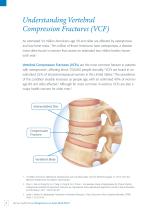
Understanding Vertebral Compression Fractures (VCF) A n estimated 54 million Americans age 50 and older are affected by osteoporosis and low bone mass.1 Ten million of those Americans have osteoporosis, a disease more often found in women that causes an estimated two million broken bones each year.1 Vertebral Compression Fractures (VCFs) are the most common fracture in patients with osteoporosis2, affecting about 750,000 people annually.2 VCFs are found in an estimated 25% of all postmenopausal women in the United States.3 The prevalence of this condition steadily increases as people age, with...
Open the catalog to page 4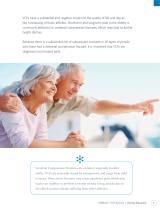
VCFs have a substantial and negative impact on the quality of life and day-today functioning of those afflicted. Short-term and long-term pain in the elderly is commonly attributed to vertebral compression fractures, which may lead to further health decline. Because there is a substantial risk of subsequent fractures in all types of people who have had a vertebral compression fracture, it is important that VCFs are diagnosed and treated early. Vertebral Compression Fractures are common, especially in older adults. VCFs are primarily caused by osteoporosis, and range from mild to severe. More...
Open the catalog to page 5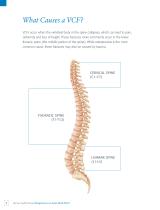
What Causes a VCF? VCFs occur when the vertebral body in the spine collapses, which can lead to pain, deformity and loss of height. These fractures more commonly occur in the lower thoracic spine (the middle portion of the spine). While osteoporosis is the most common cause, these fractures may also be caused by trauma. Do You Suffer from Osteoporosis and Acute Back Pain?
Open the catalog to page 6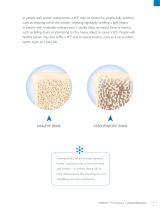
In people with severe osteoporosis, a VCF may be caused by simple daily activities, such as stepping out of the shower, sneezing vigorously or lifting a light object. In people with moderate osteoporosis, it usually takes increased force or trauma, such as falling down or attempting to lift a heavy object to cause a VCF. People with healthy spines may also suffer a VCF due to severe trauma, such as a car accident, sports injury or a hard fall. Healthy bone Osteoporotic bone Osteoporosis, which means “porous bones”, causes bones to become weak and brittle — so brittle that a fall or even mild...
Open the catalog to page 7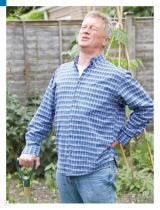
SSSmWSa& imiiwmNimiKSJJSI j»»filwi«iiiunimnM,'»'5 ' mr ^.|fi n n n« vh it« h*a‘\*5^2H W '*ffi ilHMIII«IIMH||H#'S' ?I j WW’ijlMBII*Bf|M8!|<!VPCA l’^wni«*R«iju3c^ v ■<n*j ■
Open the catalog to page 8
VCFs caused by osteoporosis and other pathologies may impact quality of life. The following effects of sustaining a VCF may occur: • Sudden onset of back pain • Increase of pain intensity while standing or walking • Decrease in pain intensity while lying on the back • Limited spinal mobility • Eventual height loss • Eventual deformity and disability • Reduced mobility, loss of balance and increased risk of falls • Reduced lung function • Reduced physical activity and increased bed rest • Chronic back pain and fatigue • Decreased quality of life • Increased risk of future fracture • Increased...
Open the catalog to page 9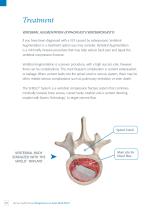
Treatment Vertebral Augmentation (Kyphoplasty/Vertebroplasty) If you have been diagnosed with a VCF caused by osteoporosis, Vertebral Augmentation is a treatment option you may consider. Vertebral Augmentation is a minimally invasive procedure that may help reduce back pain and repair the vertebral compression fracture. Vertebral Augmentation is a proven procedure, with a high success rate, however there can be complications. The most frequent complication is cement extravasation, or leakage. When cement leaks into the spinal canal or venous system, there may be other, related serious complications...
Open the catalog to page 10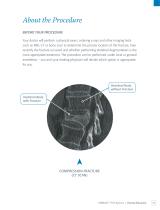
About the Procedure before your procedure Your doctor will perform a physical exam, ordering x-rays and other imaging tests such as MRI, CT or bone scan to determine the precise location of the fracture, how recently the fracture occurred and whether performing Vertebral Augmentation is the most appropriate treatment. The procedure can be performed under local or general anesthesia – you and your treating physician will decide which option is appropriate for you. Vertebral Body without Fracture Vertebral Body with Fracture Compression Fracture (CT Scan) SHIELD™ VCF System | Patient Education
Open the catalog to page 11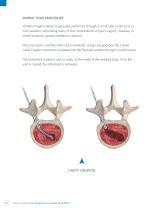
during your procedure Vertebral Augmentation is generally performed through a small tube under local or mild sedation, eliminating many of the complications of open surgery. However, in some situations, general sedation is advised. First, your back is numbed with a local anesthetic. Using x-ray guidance, the Curved Cavity Creation instrument is inserted into the fractured vertebra through a small incision. The instrument creates a void, or cavity, on the inside of the vertebral body. Once the void is created, the instrument is removed. Cavity Creation Do You Suffer from Osteoporosis and Acute...
Open the catalog to page 12All Globus Medical catalogs and technical brochures
 POSTERIOR CERVICAL FUSION
12 Pages
 ExcelsiusGPS
12 Pages
 CERVICAL LAMINOPLASTY
14 Pages
 Discover the AFFIRM™ VCF System
20 Pages
 SECURE-C®
24 Pages
 ACDF
ACDF16 Pages
 TLIF patient brochure
12 Pages
 SI-LOK™
12 Pages
 TRANSITION
12 Pages
 complete bone graft
1 Page
 SP-Fix
12 Pages
 SECURE®-C
24 Pages
 Adolescent Idiopathic Scoliosis
16 Pages
 ADULT SCOLIOSIS
16 Pages
 MIS LLIF
16 Pages
 MIS TLIF
12 Pages
 MONUMENT
2 Pages
 CREO AMP® Threaded
1 Page
 CREO MCS?
2 Pages
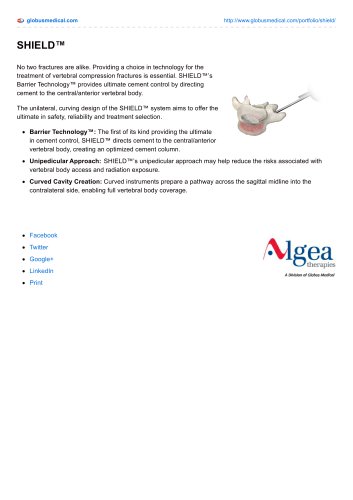 SHIELD?
1 Page
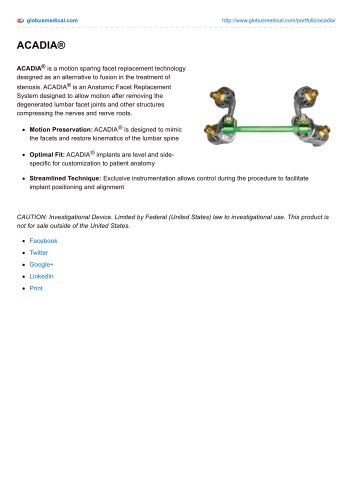 ACADIA®
1 Page
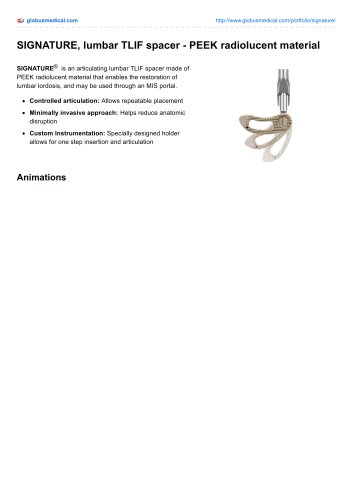 SIGNATURE®
1 Page
 TRUSS®
1 Page
 XPand®-R
1 Page
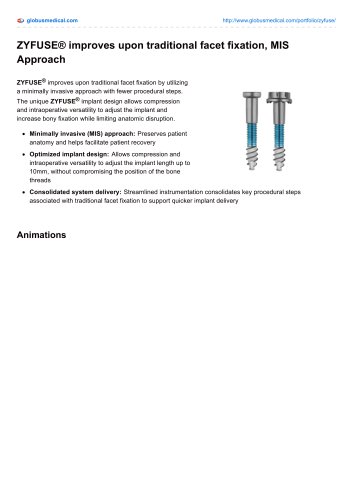 ZYFUSE®
1 Page
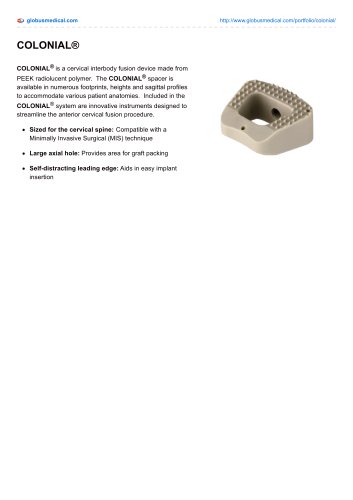 COLONIAL®
1 Page
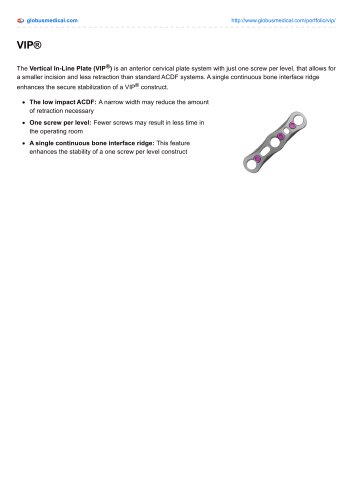 VIP®
VIP®1 Page
 PROVIDENCE?
1 Page
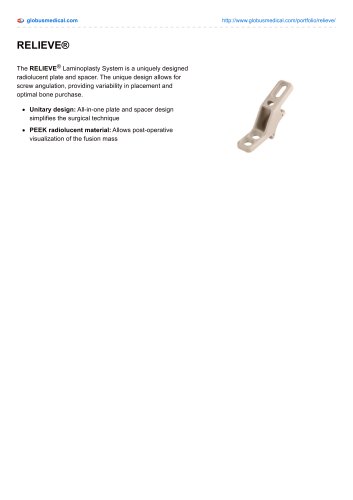 RELIEVE®
1 Page
 ASSURE®
1 Page
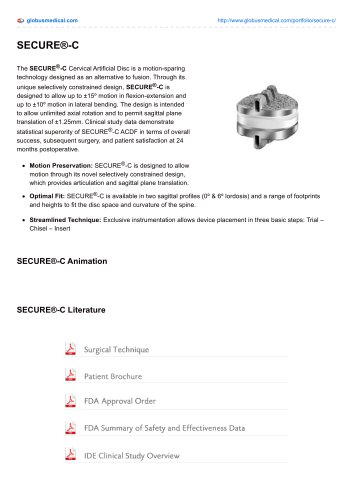 SECURE®-C
2 Pages
 COALITION®
1 Page
 CAPITOL?
1 Page
 LATIS
LATIS3 Pages
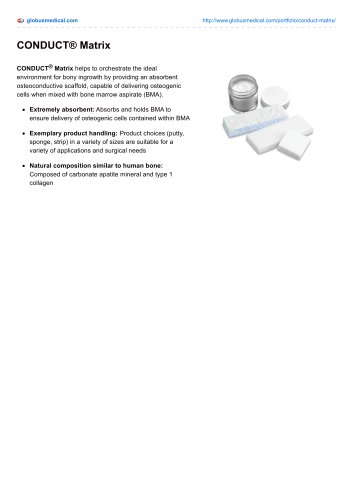 CONDUCT® Matrix
1 Page
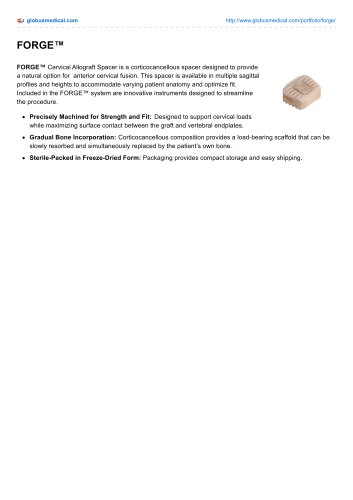 FORGE?
1 Page
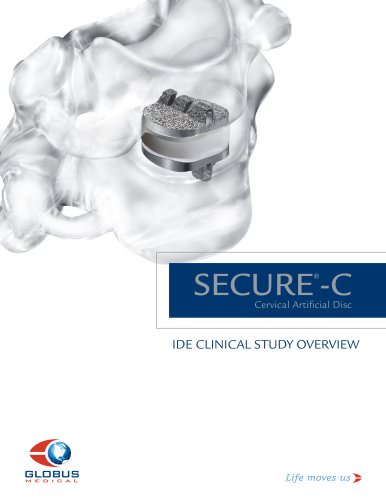
 SECURE®-C technical overview
12 Pages




- Bone plate
- Compression plate
- Metallic compression plate
- Locking compression plate
- Retractor
- Orthopedic surgery instrument kit
- Distal compression plate
- Interbody fusion cage
- Surgical retractor
- Biopsy needle
- Proximal compression plate
- Forearm compression plate
- Medial compression plate
- PEEK interbody fusion cage
- External fixation system
- Femoral stem
- Adult external fixation system
- Humerus compression plate
- Radius compression plate
- Lumbar interbody fusion cage