
- Catalogs
- Guangzhou Yeecon Medical Equipment Industrial
- Wireless sEMG System


Wireless sEMG System
1 /1Page
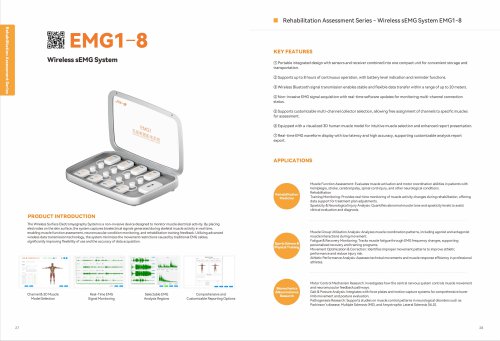
Wireless sEMG System
1 /1Page
Catalog excerpts
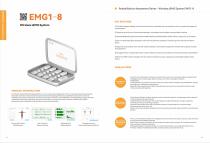
Rehabilitation Assessment Series - Wireless sEMG System EMGI -8 Rehabilitation Assessment Series Wireless sEMG System KEY FEATURES © Portable integrated design with sensors and receiver combined into one compact unit for convenient storage and transportation. ©Supports up to 8 hours of continuous operation, with battery level indication and reminder functions. ©Wireless Bluetooth signal transmission enables stable and flexible data transfer within a range of up to 20 meters. © Non-invasive EMG signal acquisition with real-time software updates for monitoring multi-channel connection status. ©Supports customizable multi-channel collector selection, allowing free assignment of channels to specific muscles for assessment. ® Equipped with a visualized 3D human muscle model for intuitive muscle selection and enhanced report presentation. © Real-time EMG waveform display with low latency and high accuracy, supporting customizable analysis report export. APPLICATIONS Rehabilitation Medicine Muscle Function Assessment: Evaluates muscle activation and motor coordination abilities in patients with hemiplegia, stroke, cerebral palsy, spinal cord injury, and other neurological conditions. Training Monitoring: Provides real-time monitoring of muscle activity changes during rehabilitation, offering data support for treatment plan adjustments. Spasticity & Neurological Injury Analysis: Quantifies abnormal muscle tone and spasticity levels to assist clinical evaluation and diagnosis. PRODUCT INTRODUCTION The Wireless Surface Electromyography System is a non-invasive device designed to monitor muscle electrical activity. By placing electrodes on the skin surface, the system captures bioelectrical signals generated during skeletal muscle activity in real time, enabling muscle function assessment, neuromuscular condition monitoring, and rehabilitation training feedback. Utilizing advanced wireless data transmission technology, the system minimizes the movement restrictions caused by traditional EMG cables, significantly improving flexibility of use and the accuracy of data acquisition. Sports Science « Physical Training Muscle Group Utilization Analysis: Analyzes muscle coordination patterns, including agonist and antagonist muscle interactions during movement. Fatigue & Recovery Monitoring: Tracks muscle fatigue through EMG frequency changes, supporting personalized recovery and training programs. Movement Optimization & Correction: Identifies improper movement patterns to improve athletic performance and reduce injury risk. Athletic Performance Analysis: Assesses technical movements and muscle response efficiency in professional athletes. Channel & 3D Muscle Model Selection Real-Time EMG Signal Monitoring Analysis Regions Customizable Reporting Options Biomechanics &Neuroscience Research Motor Control Mechanism Research: Investigates how the central nervous system controls muscle movement and neuromuscular feedback pathways. Gait & Posture Analysis: Integrates with force plates and motion capture systems for comprehensive lower limb movement and posture evaluation. Pathogenesis Research: Supports studies on muscle control patterns in neurological disorders such as Parkinson’s disease, Multiple Sclerosis (MS), and Amyotrophic Lateral Sclerosis (ALS).
Open the catalog to page 1All Guangzhou Yeecon Medical Equipment Industrial catalogs and technical brochures
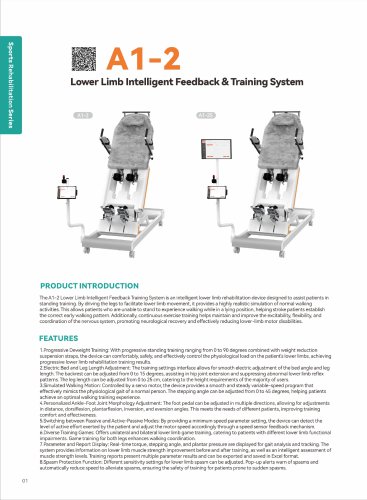 A1-2
A1-22 Pages
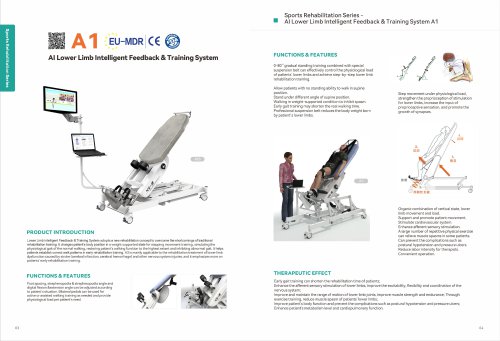 A1
A11 Page
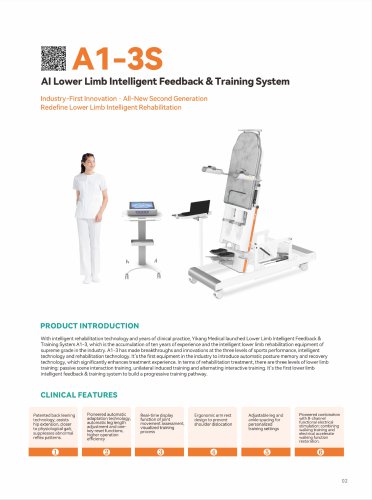 A1-3
A1-31 Page
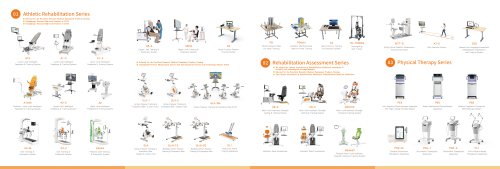 Catalog
2 Pages
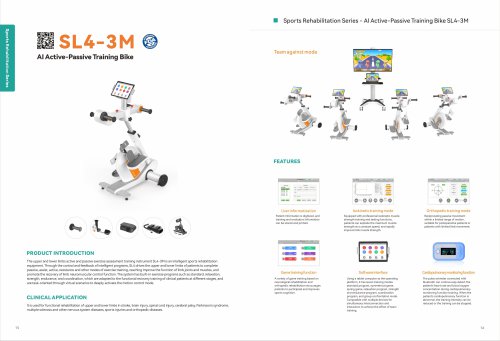
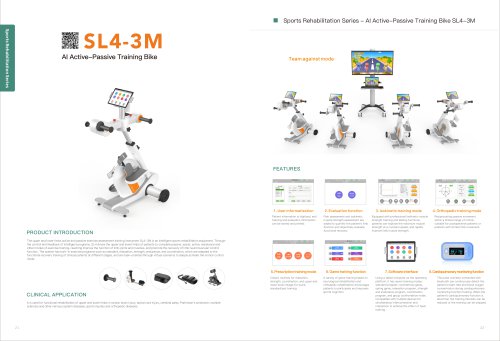 Yeecon SL4-3M Rehab Bike
1 Page
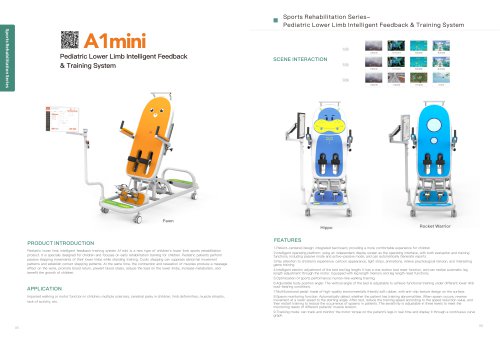 Yeecon A1mini Tilt Table
1 Page
- Hospital bed
- Yeecon examination table
- Inclinable bed
- Height-adjustable examination couch
- Electric examination couch
- Examination table with adjustable backrest
- 2 sections examination table
- Medical bed
- Manual treatment table
- Yeecon electric stimulator
- 3 sections examination table
- Patient lifter
- Gray treatment table
- Phototherapy lamp
- Electric patient lift
- Yeecon physiotherapy examination table
- Reclining examination couch
- Fixed-height treatment table
- TENS physiotherapy
- Adult treatment table