
- Catalogs
- Guangzhou Yeecon Medical Equipment Industrial
- Yeecon A8-2 Isokinetic System


Yeecon A8-2 Isokinetic System
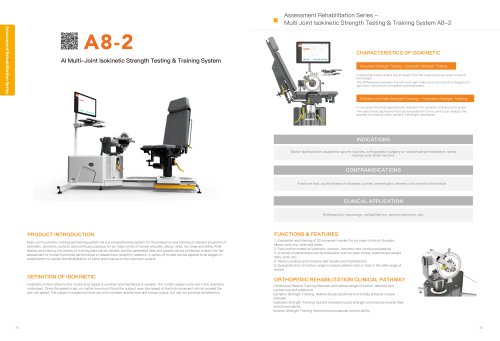
Yeecon A8-2 Isokinetic System
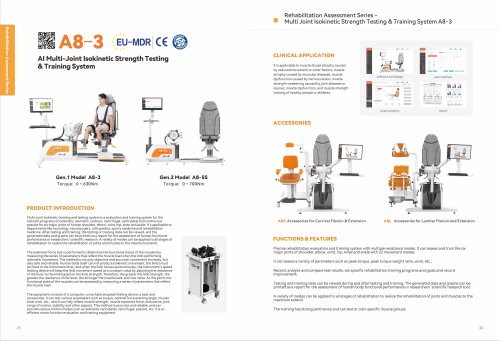
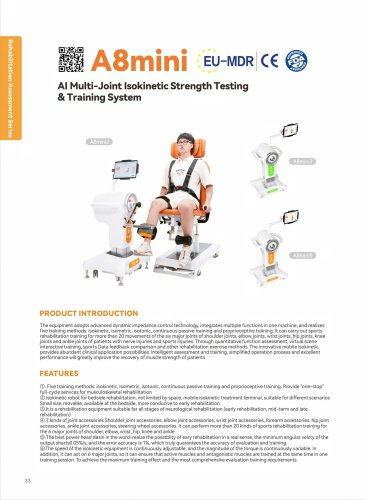
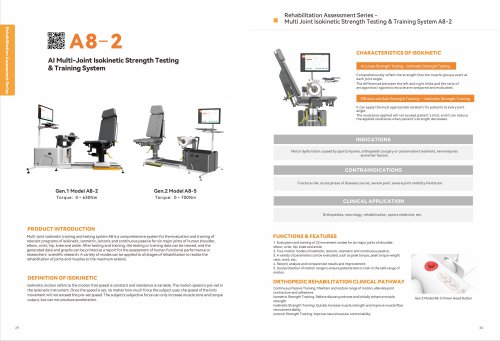
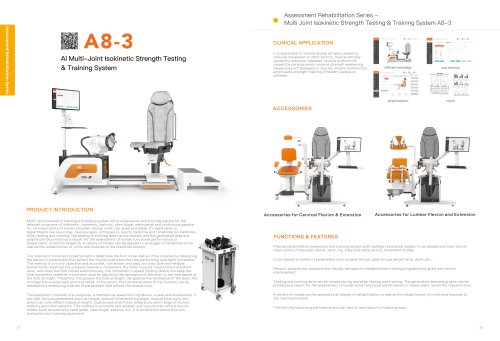
The AI Multi-Joint Isokinetic Strength Testing & Training System A8 is designed for comprehensive evaluation and training of isokinetic, isometric, isotonic, and continuous passive movements across six major joints: shoulder, elbow, wrist, hip, knee, and ankle. It provides data and reports for assessing human functional performance and supports rehabilitation at all stages.
Definition of Isokinetic
Isokinetic motion involves constant speed with variable resistance. The system maintains a pre-set speed regardless of the force applied by the subject, enhancing muscle tone and torque output without acceleration.
Assessment and Rehabilitation
The system evaluates muscle strength at various joint angles, compares limb differences, and assesses muscle ratios. It ensures efficient and safe strength training by adjusting resistance according to the patient's capacity.
Indications and Contraindications
Indications include motor dysfunction from sports injuries, surgeries, or nerve injuries. Contraindications include fracture risk, acute disease phases, severe pain, and joint mobility limitations. Applicable fields are orthopedics, neurology, rehabilitation, and sports medicine.
Functions & Features
1. Evaluates and trains 22 movement modes for six major joints.
2. Supports isokinetic, isotonic, isometric, and continuous passive motion modes.
3. Evaluates parameters like peak torque and work.
4. Records, analyzes, and compares test results.
5. Provides dual protection for safe motion range.
Orthopedic Rehabilitation Clinical Pathway
Continuous Passive Training maintains and restores motion range, alleviating joint contracture and adhesions. Isometric Strength Training relieves disuse syndrome and enhances muscle strength. Isokinetic Strength Training increases muscle strength and fiber recruitment. Isotonic Strength Training improves neuromuscular control.
Catalog excerpts
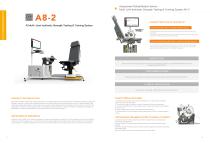
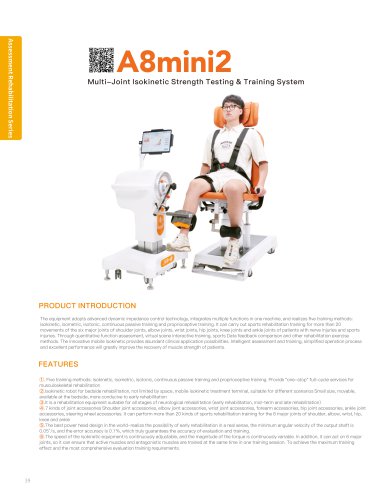
Assessment Rehabilitation Series Multi Joint Isokinetic Strength Testing & Training System A8-2 AssessmentRehabilitationSeries AI Multi-Joint Isokinetic Strength Testing & Training System Accurate Strength Testing - Isokinetic Strength Testing Comprehensively reflect the strength that the muscle groups exert at each joint angle. The differences between the left and right limbs and the ratio of antagonistic/ agonistic muscle are compared and evaluated. Efficient and Safe Strength Training — Isokinetic Strength Training It can apply the most appropriate resistant for patients at every joint angle. The resistance applied will not exceed patient’s limit, and it can reduce the applied resistance when patient’s strength decreases. INDICATIONS Motor dysfunction caused by sports injuries, orthopaedic surgery or conservative treatment, nerve injuries and other factors. CONTRAINDICATIONS Fracture risk; acute phase of disease course; severe pain; severe joint mobility limitation. CLINICAL APPLICATION Orthopedics, neurology, rehabilitation, sports medicine, etc. PRODUCT INTRODUCTION Multi-joint isokinetic training and testing system A8 is a comprehensive system for the evaluation and training of relevant programs of isokinetic, isometric, isotonic and continuous passive for six major joints of human shoulder, elbow, wrist, hip, knee and ankle. After testing and training, the testing or training data can be viewed, and the generated data and graphs can be printed as a report for the assessment of human functional performance or researchersʼ scientific research. A variety of modes can be applied to all stages of rehabilitation to realize the rehabilitation of joints and muscles to the maximum extend. DEFINITION OF ISOKINETIC Isokinetic motion refers to the motion that speed is constant and resistance is variable. The motion speed is pre-set in the isokinetic instrument. Once the speed is set, no matter how much force the subject uses, the speed of the limb movement will not exceed the pre-set speed. The subject's subjective force can only increase muscle tone and torque output, but can not produce acceleration. FUNCTIONS & FEATURES 1. Evaluation and training of 22 movement modes for six major joints of shoulder, elbow, wrist, hip, knee and ankle; 2. Four motion modes of isokinetic, isotonic, isometric and continuous passive; 3. A variety of parameters can be evaluated, such as peak torque, peak torque weight ratio, work, etc.; 4. Record, analyze and compare test results and improvement; 5. Dual protection of motion range to ensure patients test or train in the safe range of motion. ORTHOPEDIC REHABILITATION CLINICAL PATHWAY Continuous Passive Training: Maintain and restore range of motion, alleviate joint contracture and adhesions. Isometric Strength Training: Relieve disuse syndrome and initially enhance muscle strength. Isokinetic Strength Training: Quickly increase muscle strength and improve muscle fiber recruitment ability. Isotonic Strength Training: Improve neuromuscular control ability.
Open the catalog to page 1All Guangzhou Yeecon Medical Equipment Industrial catalogs and technical brochures
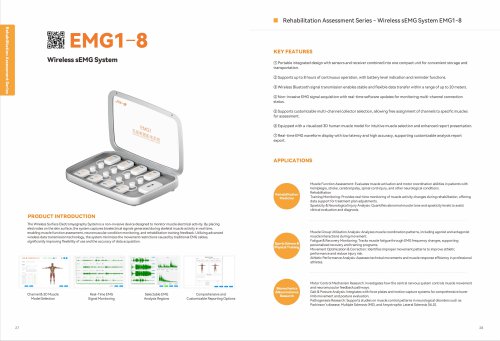 Wireless sEMG System
1 Page
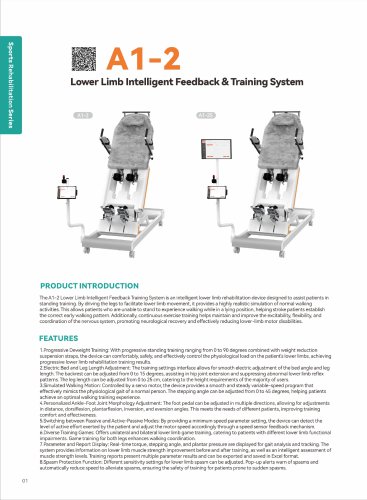 A1-2
A1-22 Pages
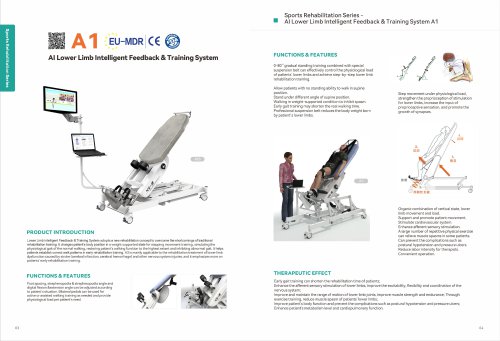 A1
A11 Page
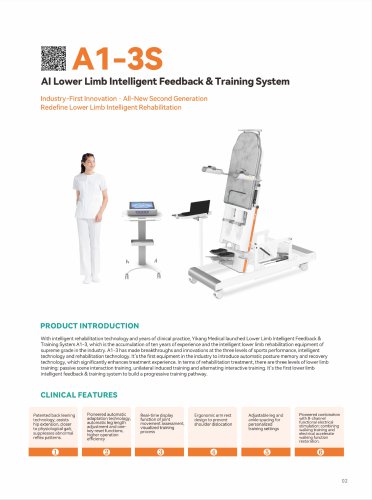 A1-3
A1-31 Page
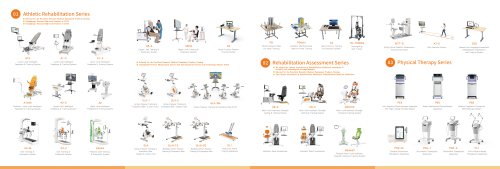 Catalog
2 Pages
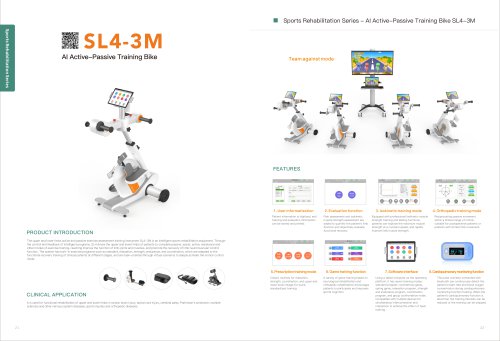 Yeecon SL4-3M Rehab Bike
1 Page
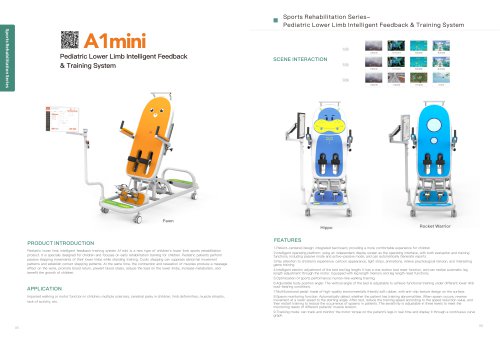 Yeecon A1mini Tilt Table
1 Page
- Hospital bed
- Yeecon examination table
- Inclinable bed
- Height-adjustable examination couch
- Electric examination couch
- Examination table with adjustable backrest
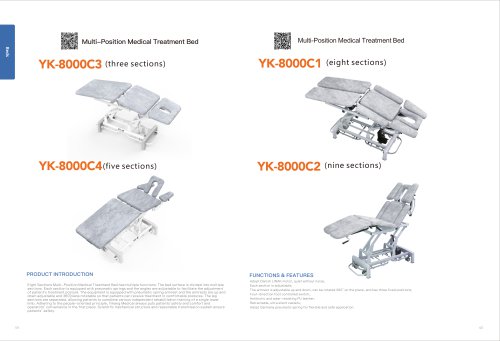
- 2 sections examination table
- Medical bed
- Manual treatment table
- Yeecon electric stimulator
- 3 sections examination table
- Patient lifter
- Gray treatment table
- Phototherapy lamp
- Electric patient lift
- Yeecon physiotherapy examination table
- Reclining examination couch
- Fixed-height treatment table
- TENS physiotherapy
- Adult treatment table