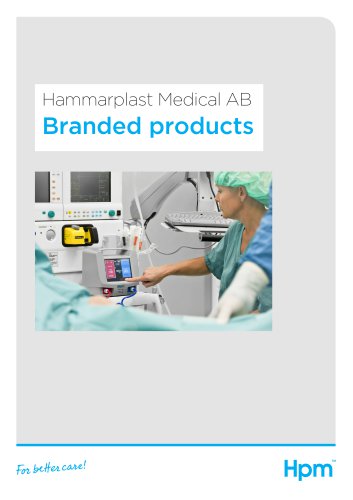
- Catalogs
- Hammarplast medical
- Contamination Risk

Contamination Risk
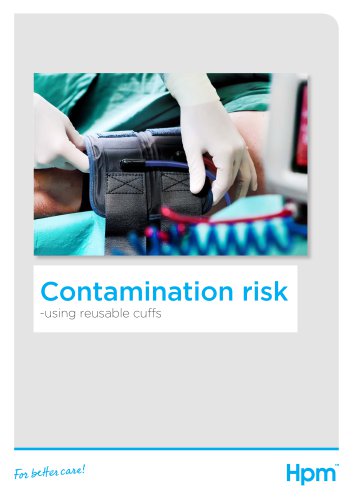
Contamination Risk
Reusable cuffs used in surgeries, particularly in orthopedic procedures like knee replacements, pose a contamination risk. These cuffs are often inadequately cleaned, leading to potential infections. The document highlights the importance of using sterile, disposable cuffs to reduce surgical site infections (SSIs).
Orthopedic surgeries often require a bloodless field, achieved using a Tourniquet-system with pressure cuffs. In Sweden, reusable cuffs are common, but their proximity to surgical sites increases infection risks, especially in procedures like fracture surgery and arthroscopy.
Current cleaning practices for reusable cuffs are insufficient, with studies showing bacterial growth on these cuffs. Proper cleaning involves sterilization, thorough washing, and drying, which is time-consuming and costly.
HAIs, including SSIs, are a significant concern globally, causing morbidity, mortality, and economic burdens. The document emphasizes the need for stringent hygiene practices to prevent these infections, especially given the rise of antibiotic-resistant bacteria.
Effective infection prevention involves pre- and intraoperative care, including skin disinfection, use of prophylactic antibiotics, and maintaining sterile environments. Advanced ventilation systems like laminar air flow (LAF) can further reduce airborne infection risks.
The document concludes that using sterile, disposable cuffs could significantly reduce SSIs, saving time, money, and reducing patient suffering. It stresses the importance of addressing the weakest links in infection control to improve overall healthcare outcomes.
Catalog excerpts
Contamination risk -using reusable cuffs
Open the catalog to page 1
Contamination risk using reusable cuffs Surgery of extremity in bloodless field Many orthopedic procedures, such as knee replacement surgery and anterior cruciate ligament reconstruction, etc., is usually preformed in a so called ”bloodless field”. Bloodless field, in this type of surgery, is created by use of a Tourniquet-system. This system creates and maintains the surgery site bloodless by use of a pressure cuff. In Sweden are reusable cuffs most often used, which are available both as single and double cuffs. After each operation, the cuffs are wiped with alcohol, coiled and stored on a...
Open the catalog to page 2
Time consuming, but more correctly, cleaning of reusable cuffs If the cuff is autoclavable it should be sterilized and autoclaved between each patient. The reusable cuff shall be cleaned properly between each surgical procedure in lukewarm water and an approved disinfectant. Scrub with a soft brush if necessary. The cuff should then be rinsed thoroughly because cleaning solution residue may cause skin irritation. All tubing should be cleaned, rinsed, and dried between patients and before storage, water in the ports contributes to microbial growth. The bladder should be thoroughly dried to avoid...
Open the catalog to page 3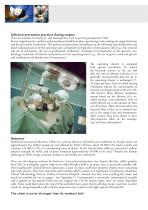
Infection prevention practices during surgery There are routines for both pre- and intraoperative care to prevent postoperative SSIs. In any surgical practice, policies and procedures should be in place, pertaining to the making of a surgical incision and the prevention of infection. This policies and procedures should govern the following: skin disinfection and hand washing practices of the operating team, preoperative preparation of the patient’s skin (e.g., hair removal and use of antiseptics), the use of prophylactic antibiotics, techniques for preparation of the operative site, dressings,...
Open the catalog to page 4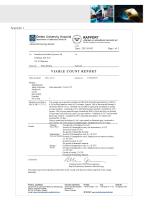
gfglOrebro University Hospital .^^o RAPPORT Department of Laboratory Medicine % W g utfardad av ackrediterat laboratorium aK™SrTY IT**' REPORT issued by an Accredited Laboratory Clinical Microbiology Section ,M, To Scandinavian Medical Systems AB To Your ref: Peter Westrin Your ref: VIABLE COUNT REPORT Ster no/date Smal manschett / Single cuff The sample was aseptically divided and after that rinsed through shaking in 1000 ml 0,1% buffered peptone water for 30 minutes. Approx. 500 ml were passed through a membrane filter 0,45 urn. The filter was divided in equal parts and placed on tryptic soy...
Open the catalog to page 5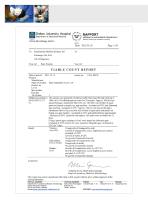
|§|6rebro University Hospital REPORT KsSi Department of Laboratory Medicine o z utfardad av ackrediterat laboratorium 6R=COWCLWTY IREPORT issued by an Accredited Laboratory Clinical Microbiology Section B5] To Scandinavian Medical Systems AB To Your ref: Peter Westrin Your ref: VIABLE COUNT REPORT Name of product Bred manschett/ Double cuff Ster no/date The sample was aseptically divided and after that rinsed through shaking in 1000 ml 0,1% buffered peptone water for 30 minutes. Approx. 500 ml were passed through a membrane filter 0,45 um. The filter was divided in equal parts and placed on tryptic...
Open the catalog to page 6
Literature: 1. Örebro University Hospital, Department of Laboratory Medicine, Viable count report, Access no: 11544-00575 and 11544-00576 2. www.tourniquet.org 3. Barnett, T. E. (2007). The not-so-hidden costs of surgical site infections. AORN Journal, 86, (2), 249-258 4. Poulsen KB, Bremmelgaard A, Sorensen AI, Raahave D, Petersen JV. Estimated costs of postoperative wound infections. A case control study of marginal hospital and several security costs. Epidemiol Infect 1994;113:285-95 5. Barnard BM. Fighting surgical site infections. Infect Control Today (2002) 6. Smittskyddsinstitutet (2010)...
Open the catalog to page 7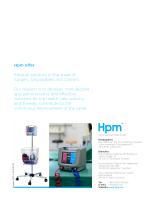
Hpm offer Medical solutions in the areas of Surgery, Disposables and Custom. Our mission is to develop, manufacture and sell innovative and effective solutions for the health care industry and thereby contribute to the continuous improvement of the same. Hammarplast Medical AB AB Hammarplast Medical Headquaters Box 2069, SE-351 02 Lidköping, Sweden Visiting address: Kartåsgatan 8 SE-531 40 Lidköping Branches Hammarplast Medical AB, Bredaryd Västra Vägen 10 SE-330 10 Bredaryd, Sweden Hammarplast Medical AB, Hägersten Västberga Allé 36B SE-126 30 Hägersten, Sweden Hammarplast Medical AS, Tallinn...
Open the catalog to page 8All Hammarplast medical catalogs and technical brochures
 Tray for narrow measures
1 Page
 Ear Speculum
4 Pages
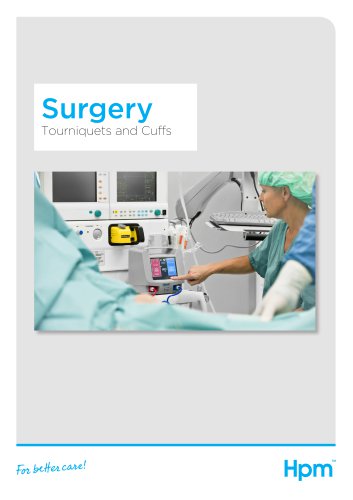 Surgery product brochure
12 Pages
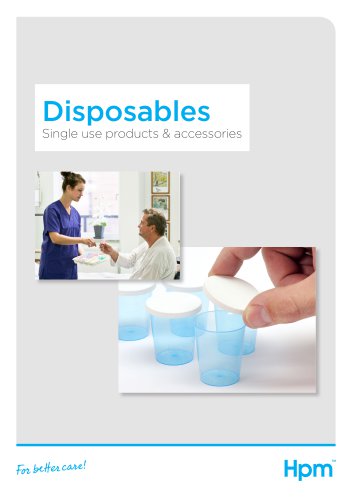 Disposables product brochure
8 Pages