
- Catalogs
- Hammarplast medical
- Using Hpm roll-on cuff in Varicose Vein Surgery

Using Hpm roll-on cuff in Varicose Vein Surgery

Using Hpm roll-on cuff in Varicose Vein Surgery
The use of tourniquets in varicose vein surgery dates back to 1965, initially using orthopaedic pneumatic cuffs. The development of the roll-on cuff by Löfqvist in 1988 marked a significant improvement, providing a relatively bloodless field suitable for varicose vein surgery.
Technique
The Hpm™ roll-on cuffs, available in various sizes, are applied before surgery to achieve a bloodless field. The cuff is inflated to 120 mmHg, allowing for comfortable removal of side branches without bleeding. Post-operation, a compression bandage is applied, and the cuff is removed after limb elevation to prevent bleeding.
Results and Complications
Between 1995 and 2009, 13,775 procedures were performed using the Hpm™ roll-on cuff, with no major intraoperative complications. The incidence of symptomatic deep vein thrombosis was 0.05%. Postoperative bleeding and haematoma were less frequent compared to other techniques.
Use in German Vascular Centers
From 2001 to 2005, 19.4% of varicose vein surgeries in Germany used the bloodless technique. The technique is particularly prevalent in centers with high operation rates.
Use in Obese Patients
Obesity complicates varicose vein surgery due to increased bleeding and haematoma. A new 'big cuff' for larger thigh circumferences has been used successfully since 2005, allowing for bloodless surgery in obese patients.
Discussion
The use of tourniquets in varicose vein surgery is debated, but studies show reduced blood loss and haematoma. The bloodless technique offers treatment comfort, especially in cases of severe varicosis and obesity. The technique requires careful postoperative compression therapy.
Conclusions
Adhering to operation standards ensures the safe use of Hpm™ roll-on cuffs, even in obese patients. Proper maintenance of the cuffs is crucial to prevent complications. The technique reduces material costs and improves aesthetic outcomes.
Catalog excerpts

Using Hpm™ roll-on cuff in varicose vein surgery Experience of 13 775 procedures Author: Hans-Joachim Hermanns, MD
Open the catalog to page 1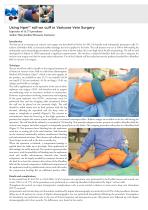
Using Hpm™ roll-on cuff in Varicose Vein Surgery Experience of 13,775 procedures Author: Hans Joachim Hermanns (Germany) Introduction The first use of a tourniquet in varicose vein surgery was described by Fischer in 1965. He initially used orthopaedic pneumatic cuffs. To achieve a bloodless field, an Esmarch rubber bandage had to be applied to the limb. The cuff pressure was set at 300 to 400 mmHg for orthopaedic and traumatology procedures; according to what is known today, this is too high and is locally traumatising. The roll-on cuff developed by Löfqvist in 1988 represented a significant...
Open the catalog to page 2
Postoperative bleeding complications and development of haematoma occurred more seldom in patients who underwent surgery in a bloodless field than with other techniques (e.g. cryo-stripping). The results are based on an analysis of 1,780 patient survey forms recorded as part of a benchmarking project by the Association of Office-Based Vascular Surgeons (ANG). Postoperative haematoma symptoms were given an average grade of 2.89 (range 1-6) in the case of operations in the bloodless technique. In contrast, the grade for cryo-stripping was 3.47. Use of tourniquet in German vascular centers If the...
Open the catalog to page 3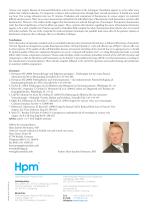
varicose vein surgery. Because of increased fibrinolytic activity after release of the tourniquet, thrombosis appears to occur rather more seldom than without ischaemia. It is important to observe short ischaemia times through short and safe procedures. It should not exceed one hour. Our average ischaemia time was 32 minutes. Evaluation and comparison of haematomas in venous surgery are extremely difficult and inaccurate. There are no exact measurement methods for the individual types of haematoma (canal haematoma, extensive skin haematomas). However, a few studies clearly suggest that haematomas...
Open the catalog to page 4All Hammarplast medical catalogs and technical brochures
 Tray for narrow measures
1 Page
 Ear Speculum
4 Pages
 Contamination Risk
8 Pages
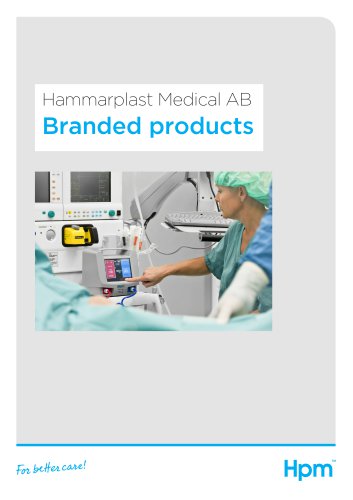
 Surgery product brochure
12 Pages
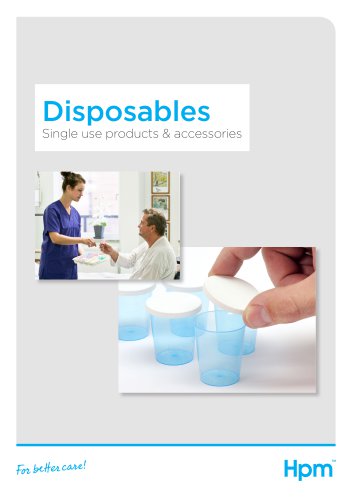 Disposables product brochure
8 Pages
- Positioning pillow
- Speculum
- Blood pressure cuff
- Sphygmomanometer
- Aneroid sphygmomanometer
- 1-tube cuff
- Single-use speculum
- 2-tube cuff
- Wedge-shaped pillow
- Disposable cuff
- Hand-held sphygmomanometer
- Perforated tray
- Washable cuff
- Pill crusher
- Ear speculum
- Pneumatic tourniquet cuff
- Silicone cuff
- Autoclavable cuff
- Medication tray