
- Catalogs
- Hangzhou Antigenne Technology Co. Ltd
- Rapid avian influenza test SaberVet AIV Ag

- Company
- Products
- Catalogs
- News & Trends
- Exhibitions
Rapid avian influenza test SaberVet AIV Ag
Rapid avian influenza test SaberVet AIV Ag
Catalog excerpts
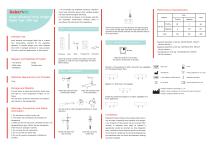
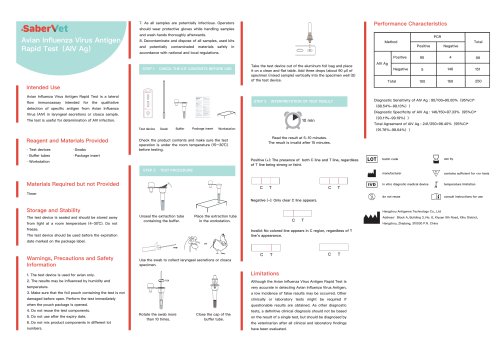
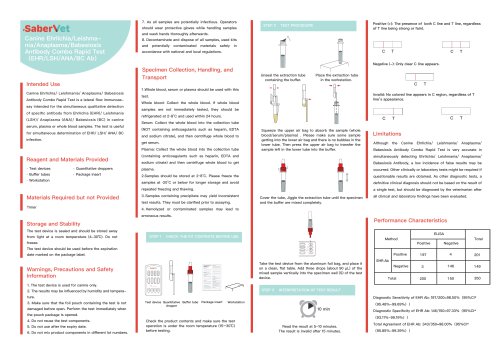
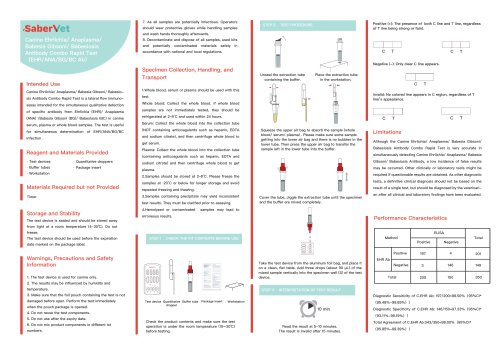
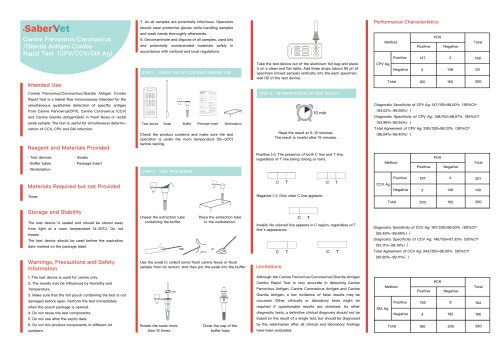
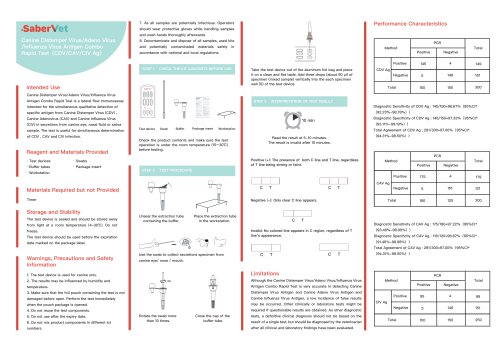
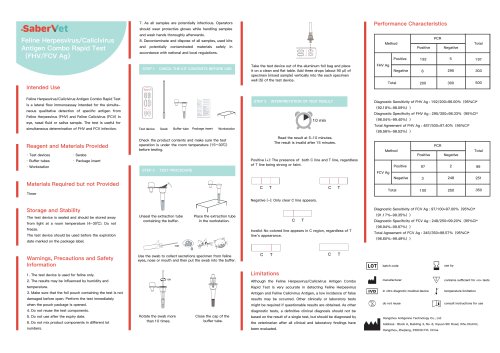
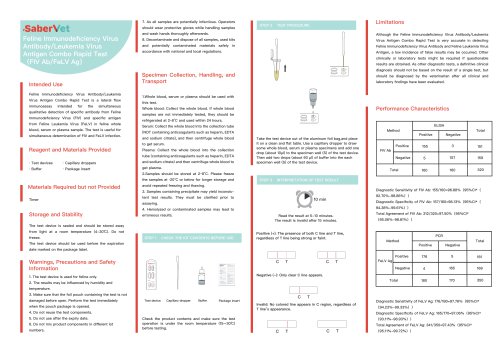
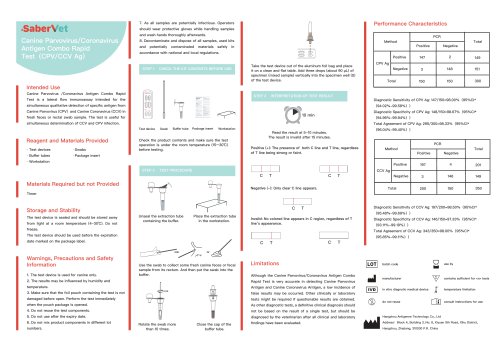
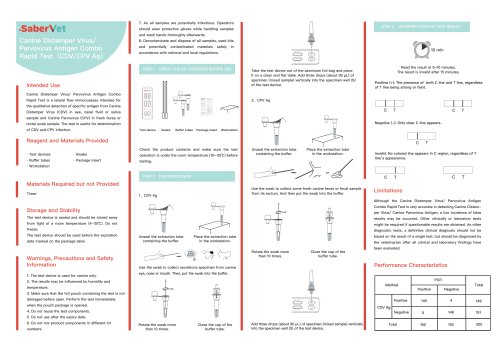
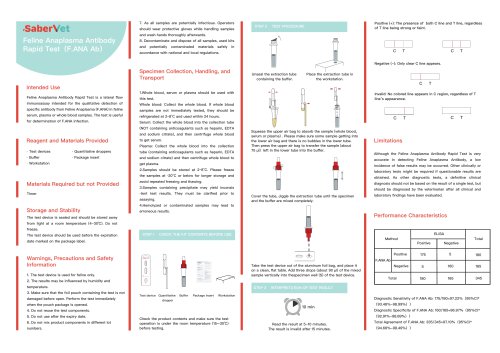
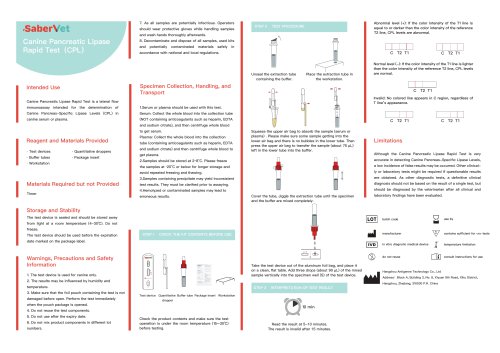
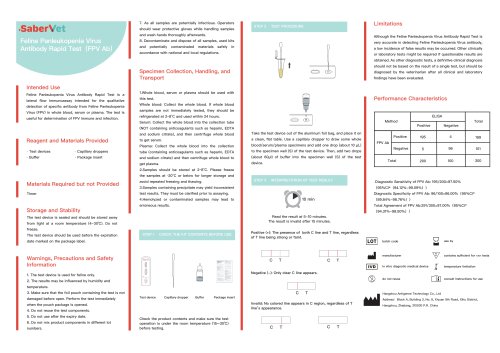
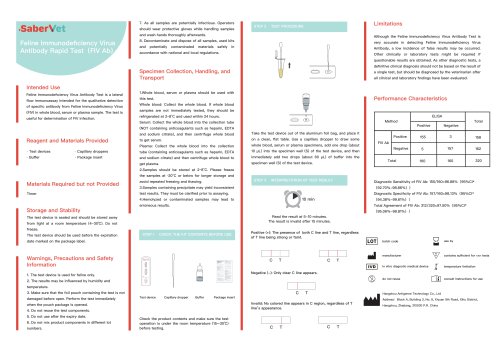
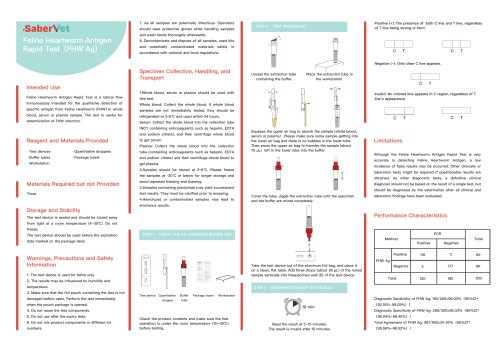
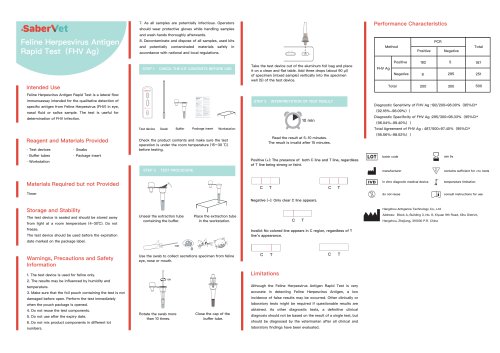
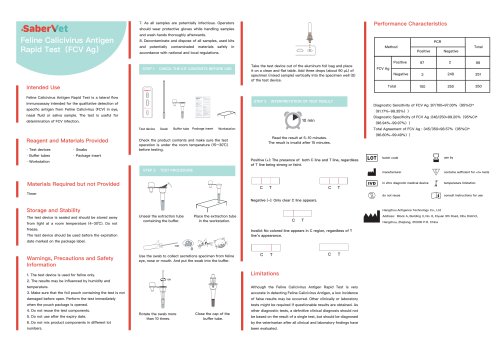
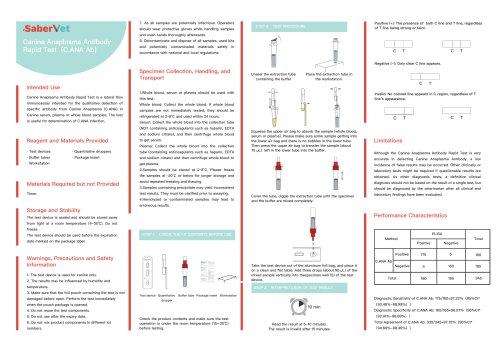
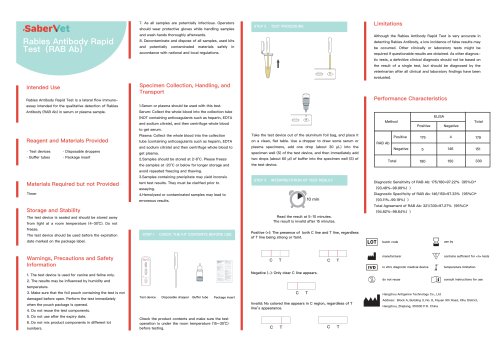
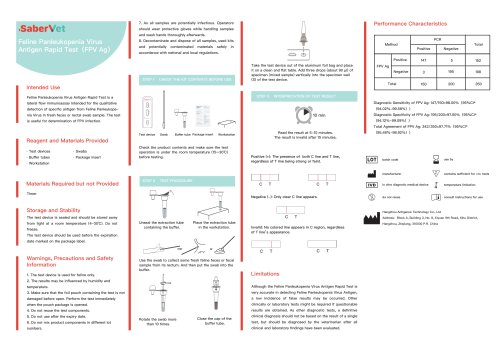
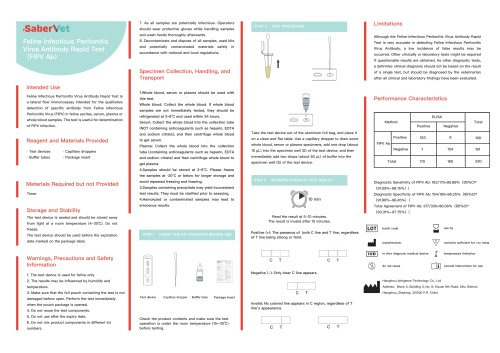
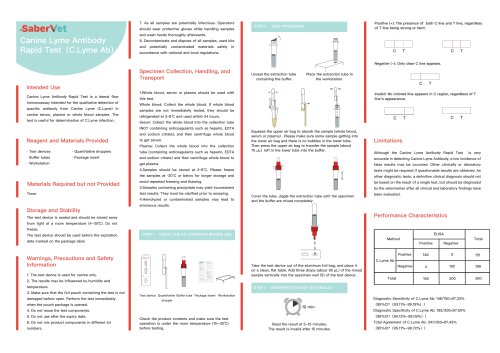
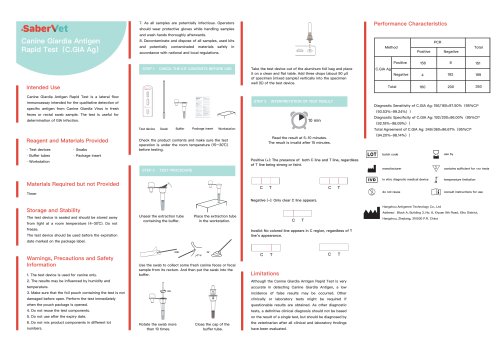
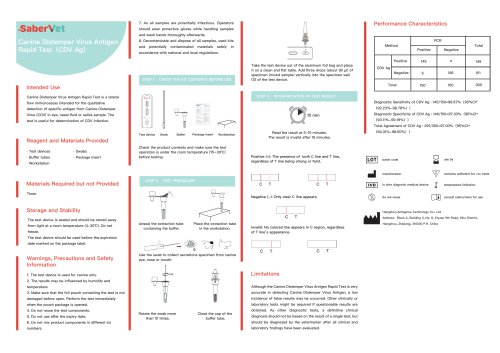
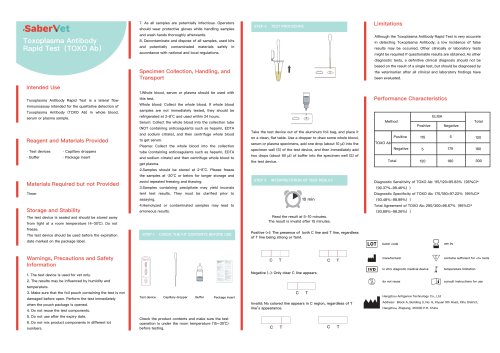
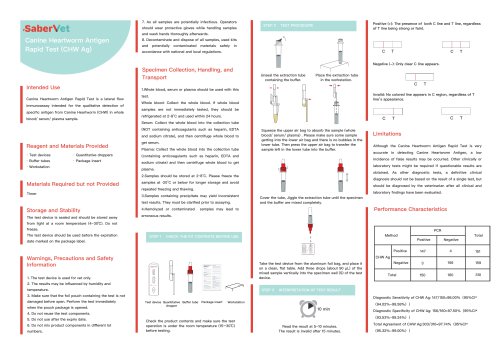
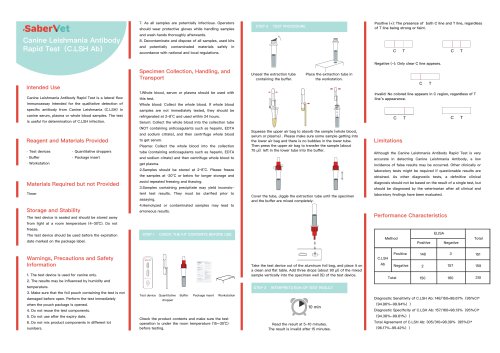
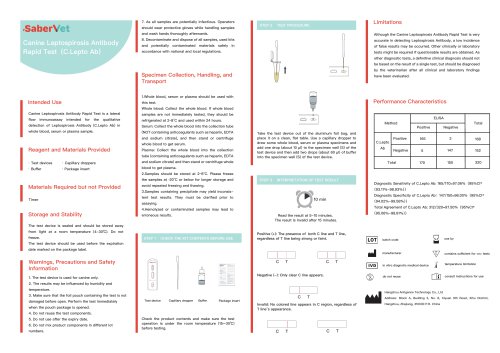
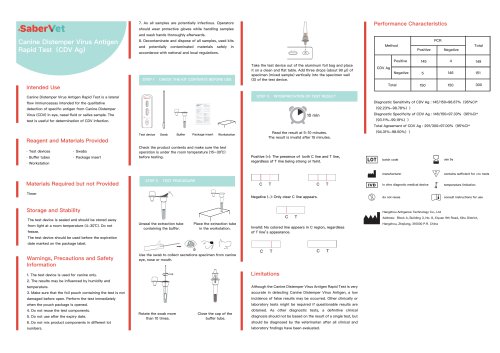
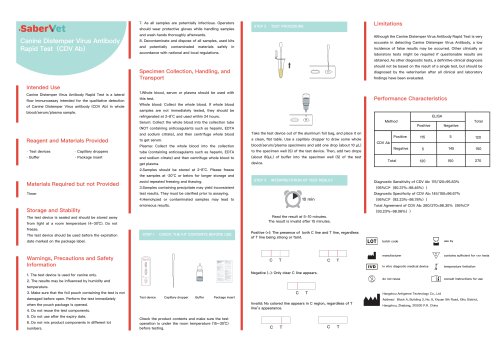
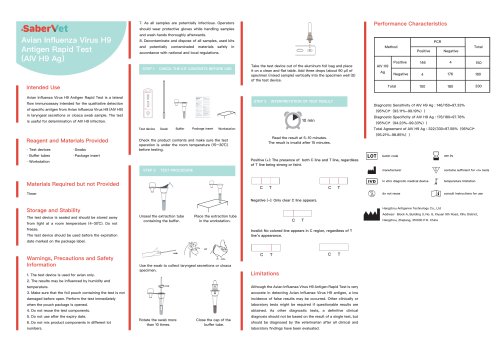
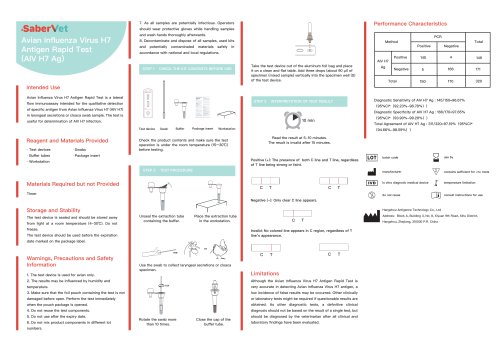
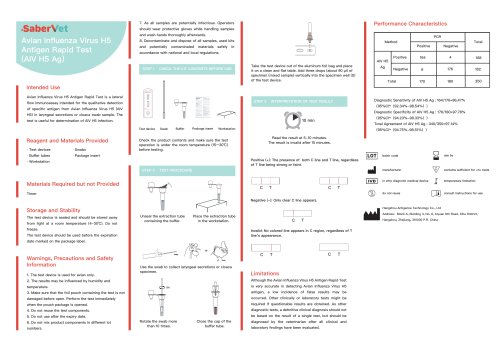
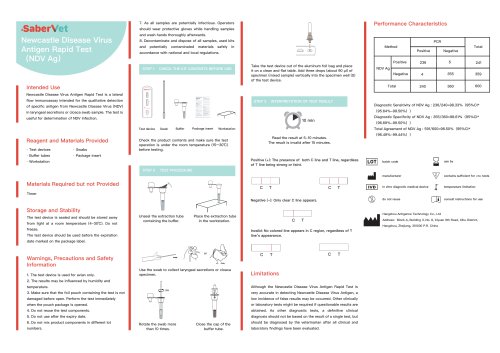
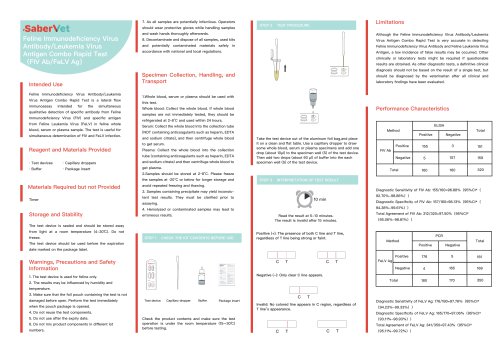
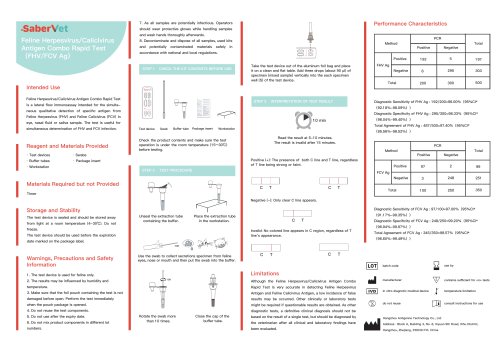
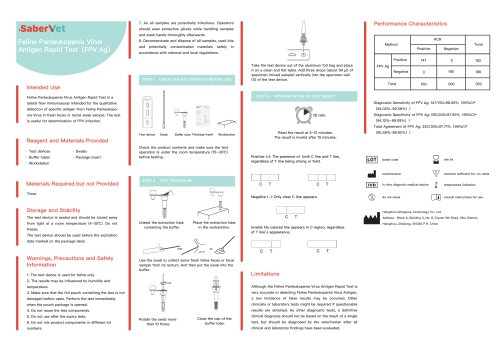
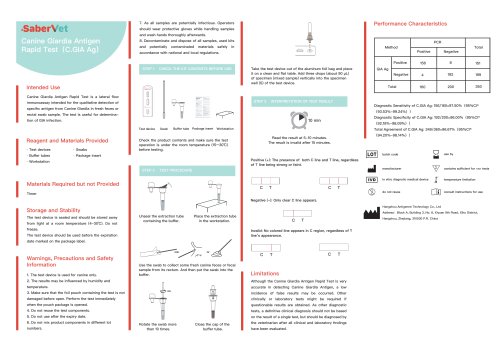
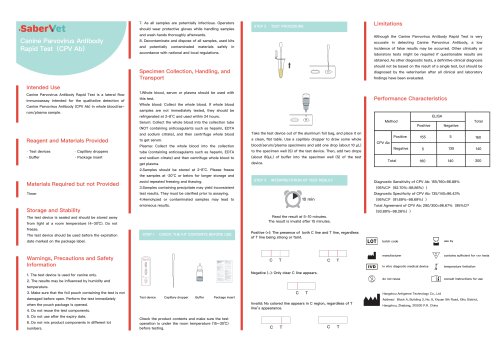
Avian Influenza Virus Antigen Rapid Test(AIV Ag) Intended Use Avian Influenza Virus Antigen Rapid Test is a lateral flow immunoassay intended for the qualitative detection of specific antigen from Avian Influenza Virus (AIV) in laryngeal secretions or cloaca sample. The test is useful for determination of AIV infection. Reagent and Materials Provided • Test devices -Swabs • Buffer tubes -Package insert Materials Required but not Provided The test device is sealed and should be stored away from light at a room temperature (4-30°C). Do not freeze. The test device should be used before the expiration date marked on the package label. Warnings, Precautions and Safety Information 1. The test device is used for avian only. 2. The results may be influenced by humidity and temperature. 3. Make sure that the foil pouch containing the test is not damaged before open. Perform the test immediately when the pouch package is opened. 4. Do not reuse the test components. 5. Do not use after the expiry date. 6. Do not mix product components in different lot numbers. 7. As all samples are potentially infectious. Operators should wear protective gloves while handling samples and wash hands thoroughly afterwards. 8. Decontaminate and dispose of all samples, used kits and potentially contaminated materials safely in accordance with national and local regulations. STEP 1 CHECK THE KIT CONTENTS BEFORE USE Check the product contents and make sure the test operation is under the room temperature (15—30C) before testing. STEP 2 TEST PROCEDURE Take the test device out of the aluminum foil bag and place it on a clean and flat table. Add three drops (about 90 ql) of specimen (mixed sample) vertically into the specimen well (S) of the test device. STEP 3 INTERPRETATION OF TEST RESULT Read the result at 5-10 minutes. The result is invalid after 15 minutes. Positive (+): The presence of both C line and T line, regardless of T line being strong or faint. Negative (-): Only clear C line appears. Unseal the extraction tube containing the buffer. Place the extraction tube in the workstation. Use the swab to collect laryngeal secretions or cloaca specimen. Invalid: No colored line appears in C region, regardless of T line’s appearance. Rotate the swab more than 10 times. Close the cap of the buffer tube. Although the Avian Influenza Virus Antigen Rapid Test is very accurate in detecting Avian Influenza Virus Antigen, a low incidence of false results may be occurred. Other clinically or laboratory tests might be required if questionable results are obtained. As other diagnostic tests, a definitive clinical diagnosis should not be based on the result of a single test, but should be diagnosed by the veterinarian after all clinical and laboratory findings have been evaluated. Performance Characteristics batch code in vitro diagnotic medical device contains sufficient for <n> tests temperature limitation
Open the catalog to page 1All Hangzhou Antigenne Technology Co. Ltd catalogs and technical brochures
 Sabervet PAG
1 Page
 Sabervet C.Pepsin
1 Page
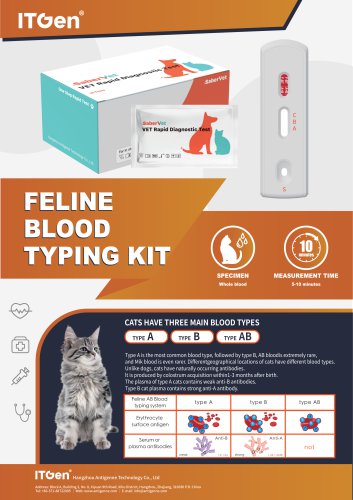 Sabervet FBT Test
1 Page
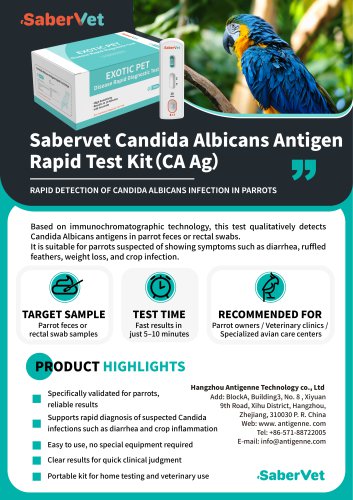 赛博-CA Ag白色念珠菌
1 Page
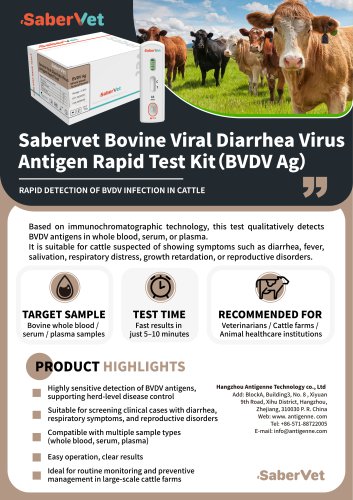 赛博-BVDV Ag宣传彩页
1 Page
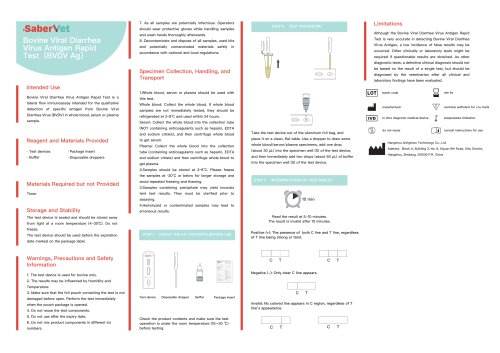 BVDV Ag
1 Page
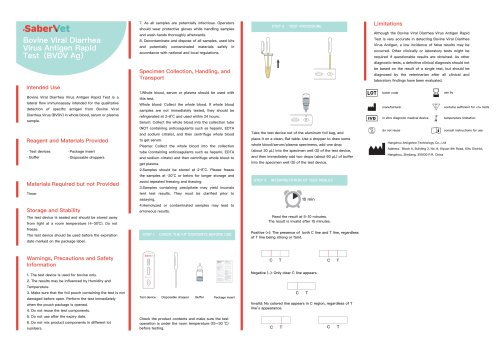 BVDV Ag
1 Page
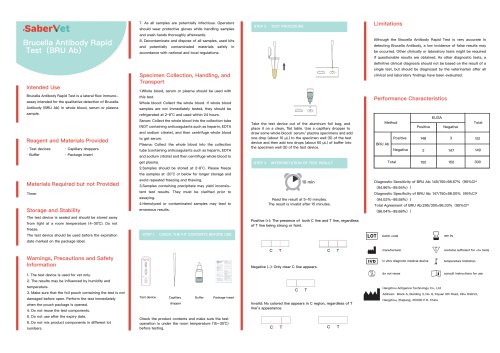 BRU Ab
1 Page
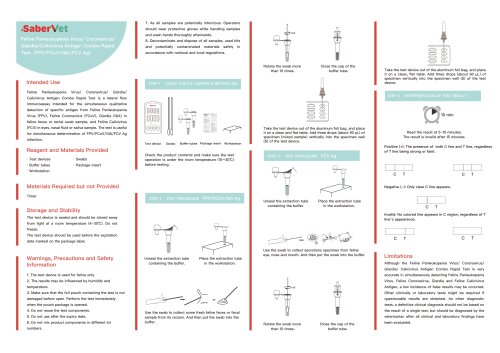 FPV FCoV GIA FCV Ag
2 Pages
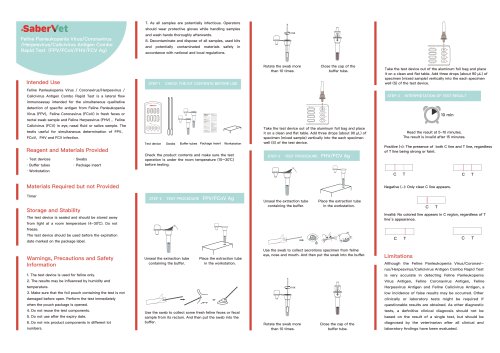 FPV FCoV FHV FCV Ag
2 Pages
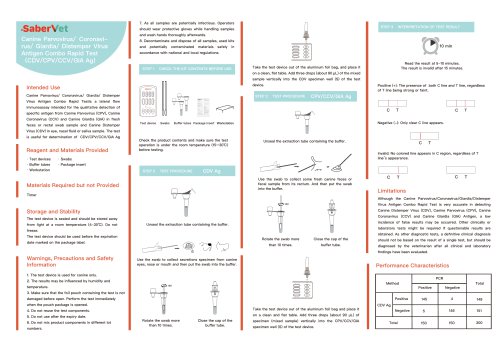 CDV CPV CCV GIA Ag
2 Pages
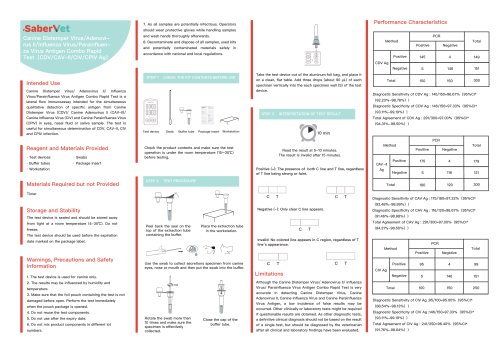 CDV CAV-II CIV CPIV Ag
2 Pages
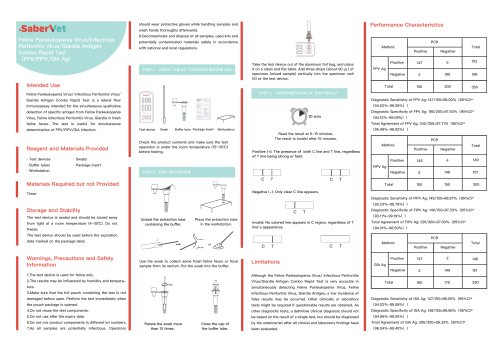 FPV FIPV GIA Ag
2 Pages
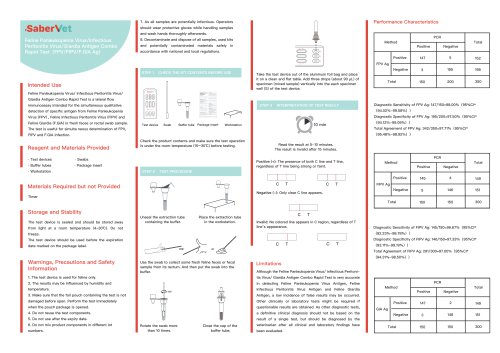 FPV FIPV F.GIA Ag
2 Pages
 FPV FHV FCV Ab
2 Pages
 FPV FCoV FIPV Ag
2 Pages
 FIV Ab FeLV Ag FCoV Ab
2 Pages
 FeLV Ag FIV TOXO Ab
2 Pages
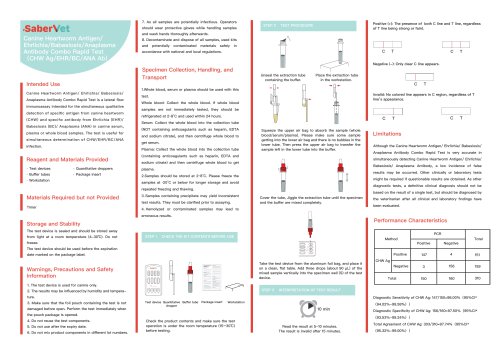
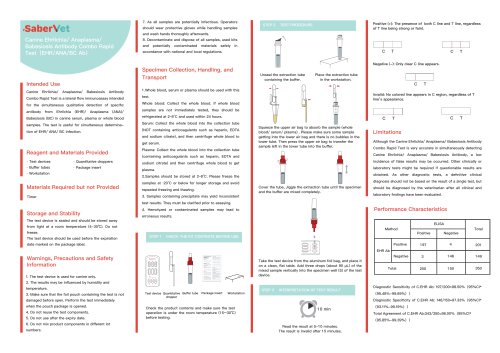
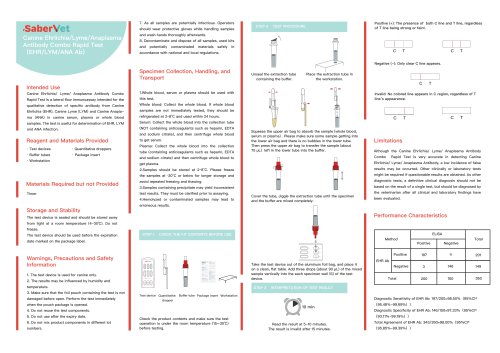
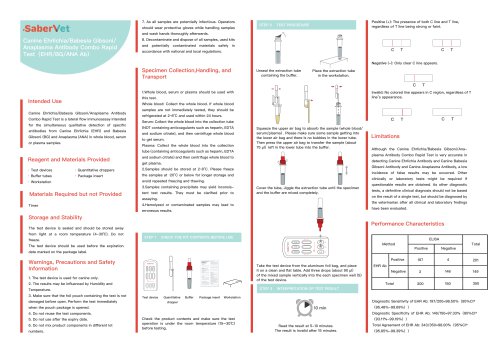
 CHW Ag EHR ANA Ab
2 Pages
 CDV CPV ICH Ab
2 Pages
 FPV GIA Ag
1 Page
 CDV CPV Ag
1 Page
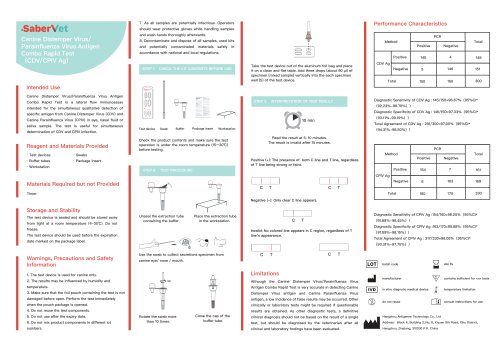 CDV CPIV Ag
1 Page
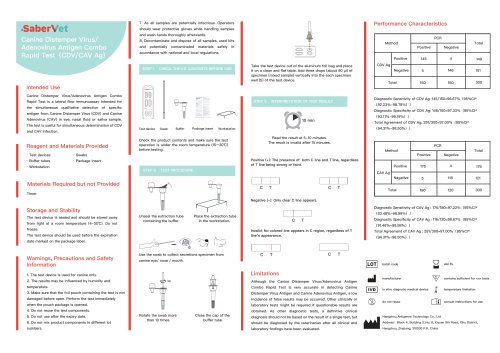 CDV CAV Ag
1 Page
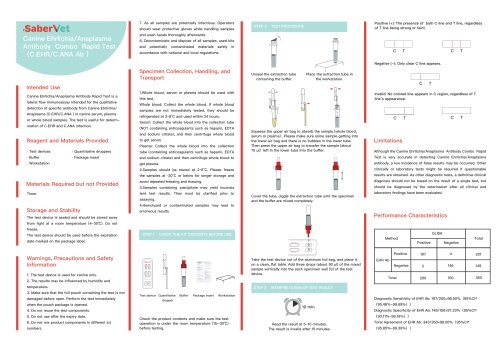 C.EHR C.ANA Ab
1 Page
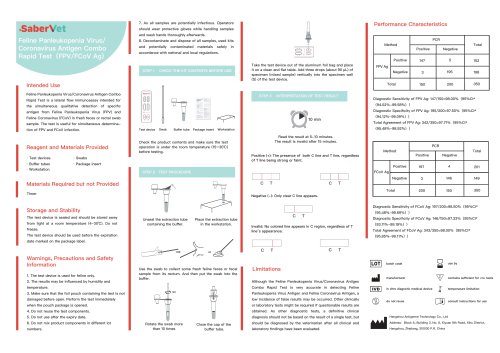 FPV FCoV Ag
1 Page
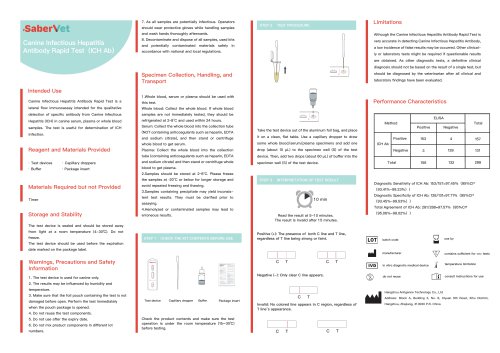 ICH Ab
1 Page
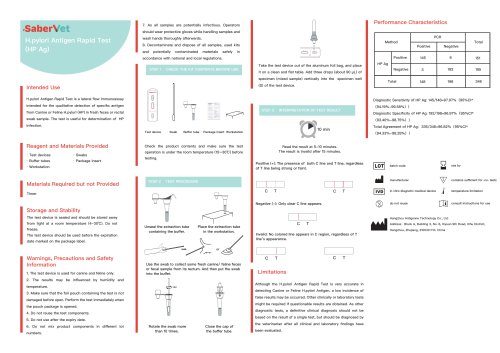 HP Ag
HP Ag1 Page
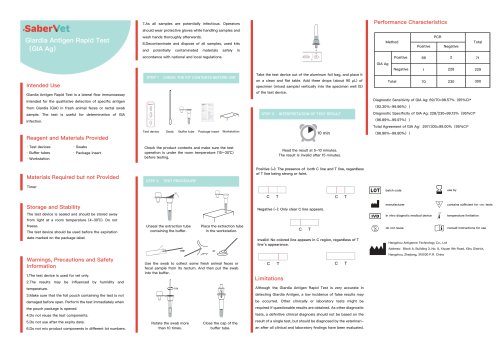 GIA Ag
1 Page
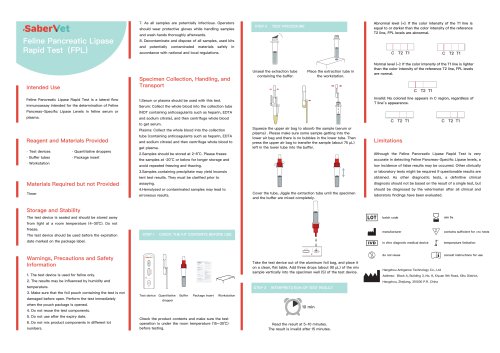 FPL
FPL1 Page
 FHV Ab
1 Page
 FCV Ab
1 Page
 FCoV Ab
1 Page
 F.IgE
F.IgE1 Page
 F-BT A+B
1 Page
 CRV Ag
1 Page
 CAV Ag
1 Page
 C.IgE
C.IgE1 Page
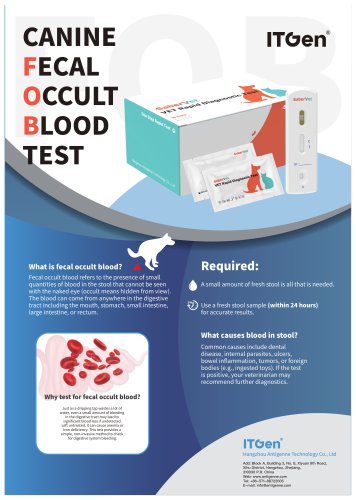
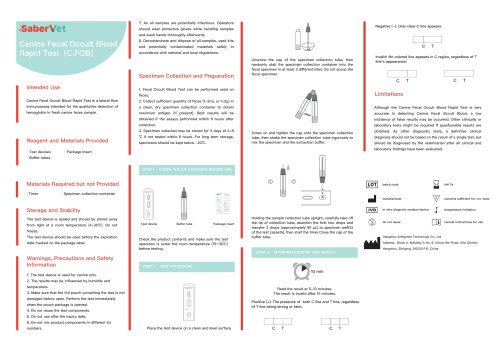 C.FOB
C.FOB1 Page
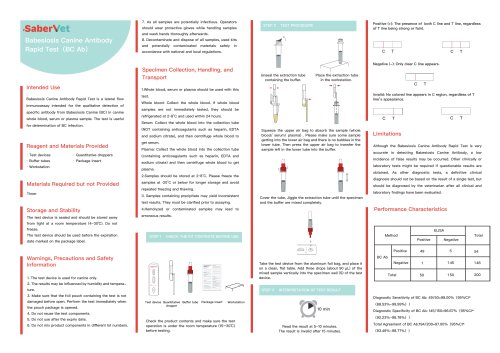 BC Ab
BC Ab1 Page
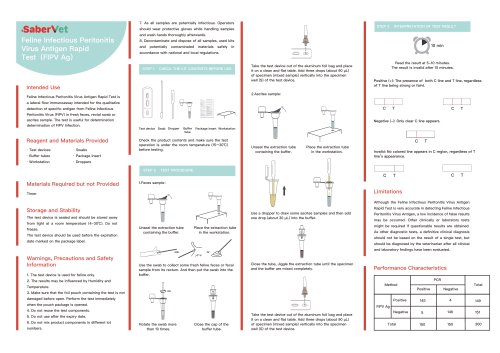 FIPV Ag
1 Page
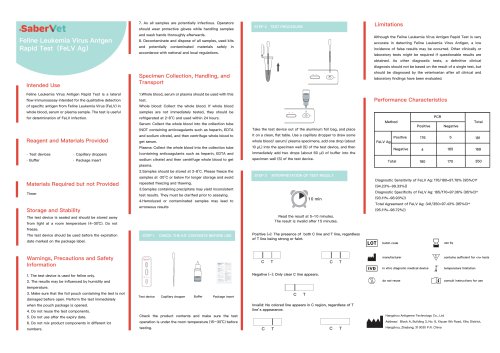 FeLV Ag
1 Page
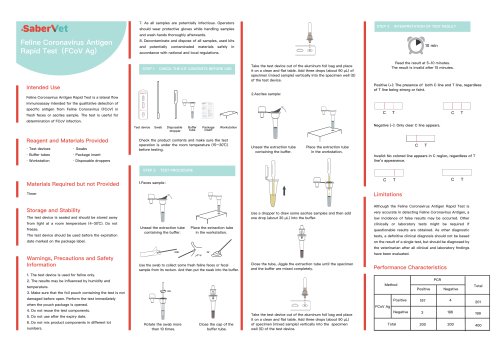 FCoV Ag
1 Page
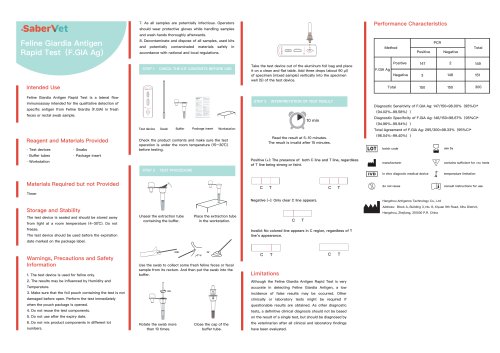 F.GIA Ag
1 Page
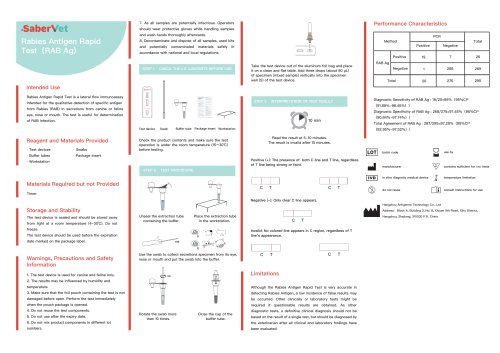 RAB Ag
1 Page
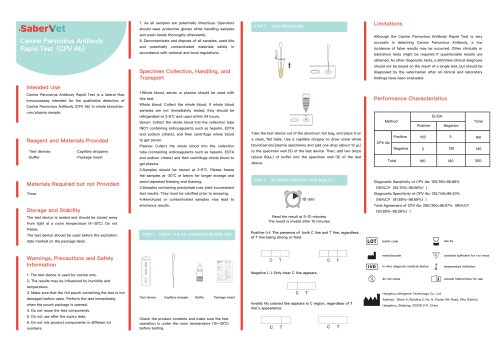 CPV Ab
1 Page
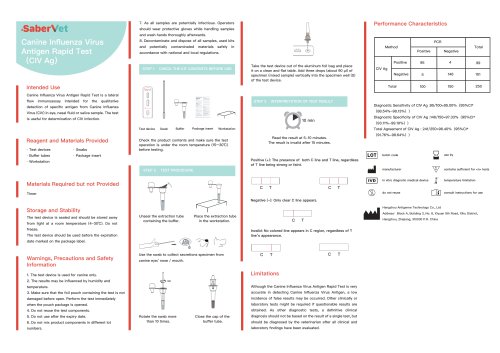 CIV Ag
1 Page
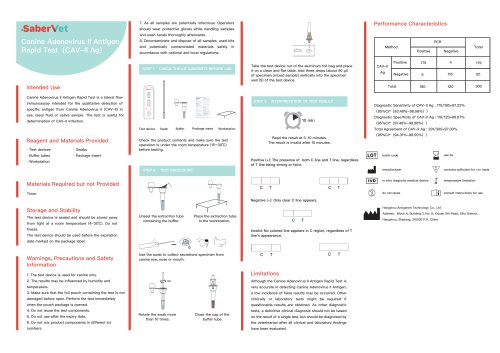 CAV-II Ag
1 Page
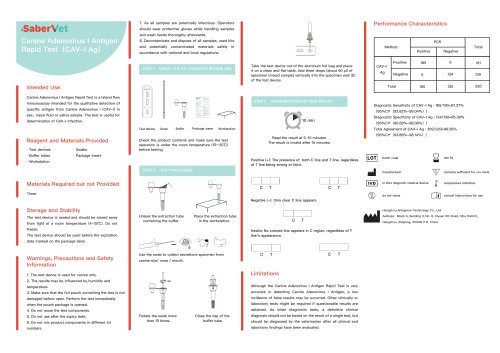 CAV-I Ag
1 Page
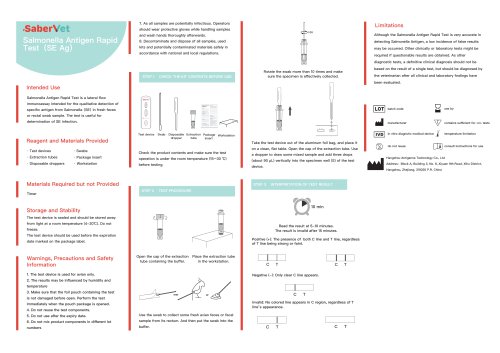 SE Ag
SE Ag1 Page
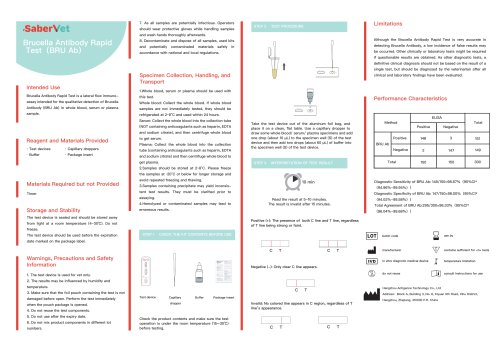 BRU Ab
1 Page
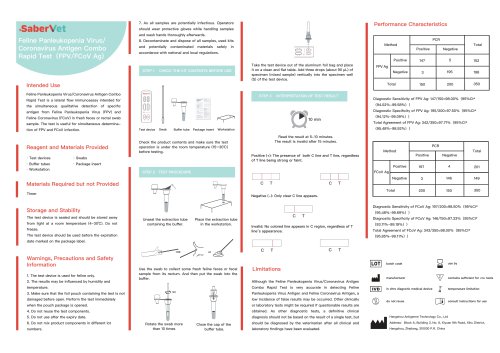 FPV/FCoV Ag
1 Page
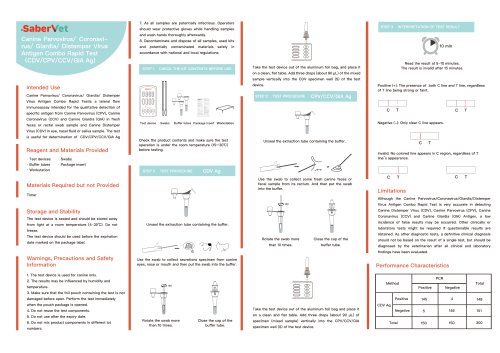 CDV CPV CCV GIA Ag
2 Pages
 ITGen catalog
28 Pages
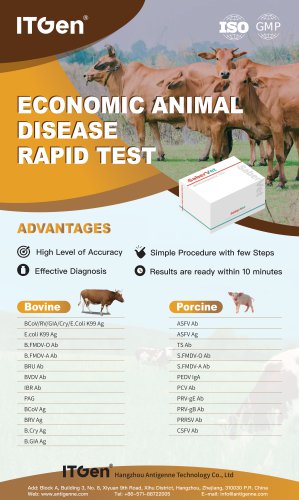 Livestock catalog
1 Page
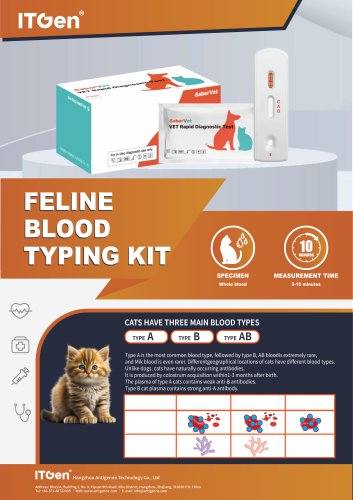 FELINE BLOOD TYPING KIT
1 Page
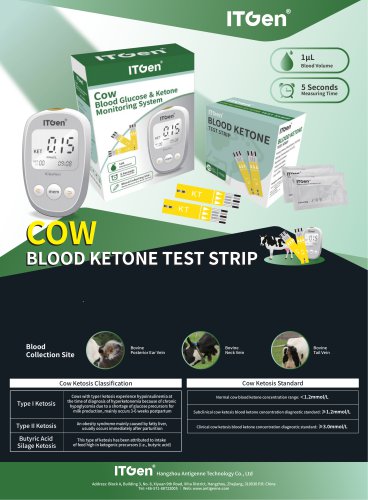 COW BLOOD KETONE TEST STRIP
2 Pages
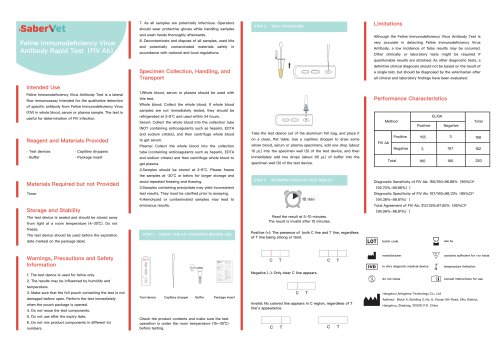
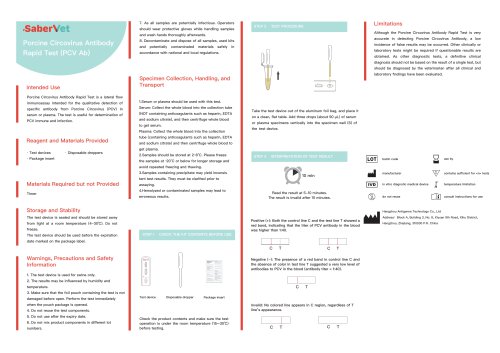
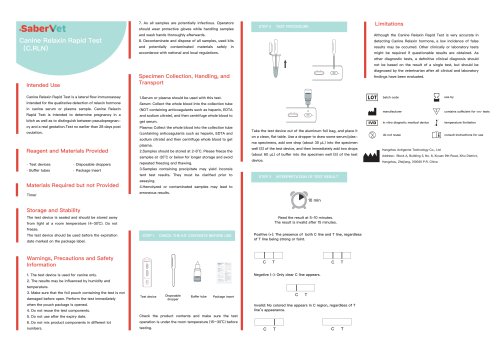
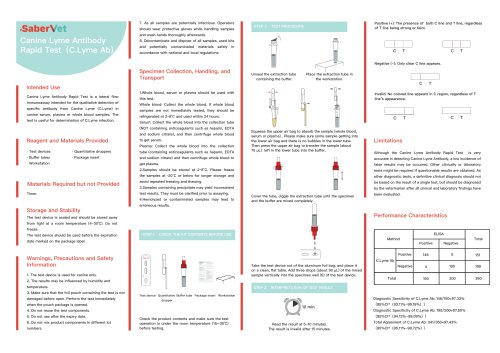
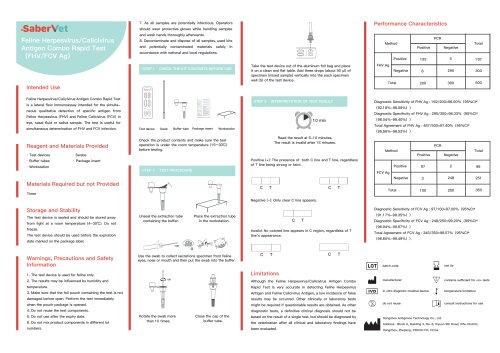
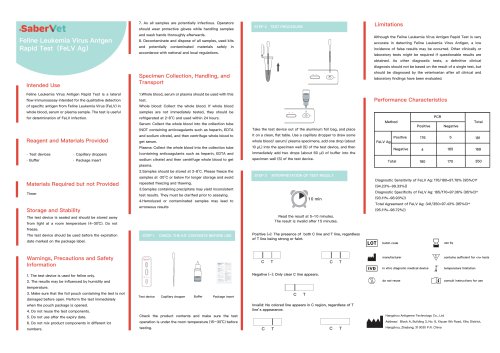
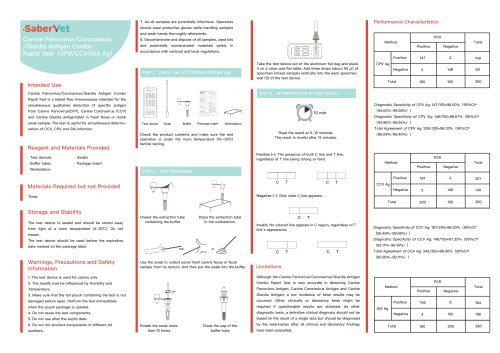
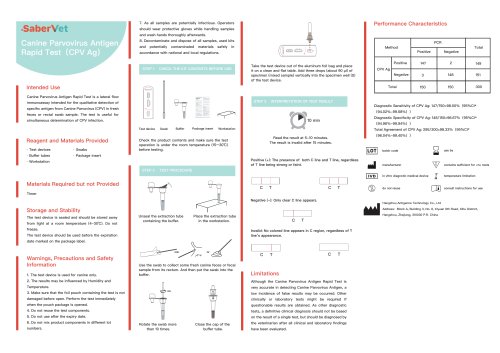
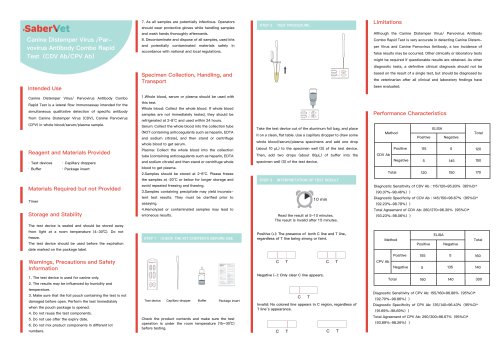
- Detection kit
- Blood detection kit
- Serum detection kit
- Immunoassay detection kit
- Rapid chromatographic immunoassay test
- Plasma detection kit
- Blood rapid screening test
- Cassette rapid test
- Immunoassay rapid diagnostic test
- Rapid serum test
- Rapid plasma test
- Rapid virus test
- Thermometer
- Rapid whole blood test
- Rapid infectious disease test
- Optical test kit
- Digital thermometer
- Cassette detection kit
- Rapid respiratory disease test
- Urine rapid diagnostic test