
- Catalogs
- HBD Additive Manufacturing
- HBD 350(SHOE MOLD)


- Company
- Products
- Catalogs
- News & Trends
- Exhibitions
HBD 350(SHOE MOLD)

HBD 350(SHOE MOLD)
Metal 3D printing technology offers significant advantages in shoe mold manufacturing, including the ability to create complex geometries and internal structures, rapid manufacturing cycles, lightweight designs, and reduced waste and costs. This technology also provides flexibility and customization for personalized and small-batch production needs.
Traditional methods involve multiple steps such as design preparation, CNC machining, and casting, which are more time-consuming and wasteful compared to the streamlined process of metal 3D printing.
- Forming Size: 325mm×325mm×400mm
- Laser Power: 500W×2 / 500W×3
- Layer Thickness: 30μm-100μm
- Scanning Speed: ≤10000mm/s
- Materials: Stainless steel, Cobalt-chrome alloy, Titanium alloy, etc.
- Oxygen Content: ≤100PPM
- Typical Accuracy: 0.05-0.2mm
- Weight: 2400KG
- External Dimensions: 3340mm×2030mm×2300mm
- Circulation Purification System
- Powder Collection Module
- Equipment Control System
- Intelligent Powder Recoating and Feeding Module
Shanghai Hanbang United 3D Tech Co., Ltd. is a global leader in LPBF equipment development and manufacturing, with over 200 patents and installations in over 25 countries. The company is recognized for its innovation, quality, and tailored solutions for various industries including aerospace, dental, and automotive.
Catalog excerpts

HBD 350 HIGH PRODUCTIVITY SYSTEM METAL AM SOLUTION FOR SHOE MOLD
Open the catalog to page 1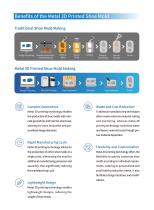
Benefits of the Metal 3D Printed Shoe Mold Traditional Shoe Mold Making Si Design Preparing Wooden/Wax Mold CNC Machining Silicone Mold Plaster Mold Reverse Machining Texture Process Metal 3D Printed Shoe Mold Making Design Preparing Heat Treatment Complex Geometries Waste and Cost Reduction the production of shoe molds with intri- often involve extensive material cutting Metal �D printing technology enables cate geometries and internal structures, allowing for more innovative and personalized design elements. Rapid Manufacturing Cycle Traditional manufacturing techniques and machining, whereas...
Open the catalog to page 2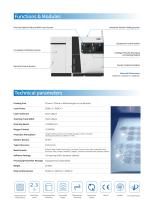
Functions & Modules Precision Optical Path and Multi-Laser System Automatic Powder Feeding System Equipment Control System Circulation Purification System Intelligent Powder Recoating and Feeding Module Powder Collection Module Electrical Control System Technical parameters Forming Size 325mm×325mm×400mm(height incl. build plate) Layer Thickness Laser Power Scanning Track Width Scanning Speed Oxygen Content Integral sealed, automatic monitoring of oxygen content, recycling cleaning and collection coefficient ≥ 99%. Protective Atmosphere Relative Density Metal Powder Stainless steel, Cobalt-chrome...
Open the catalog to page 3
Application in shoe mold manufacturing HBD boasts a diverse network of partners and clients across the global HBD is driving innovation and global expansion in LPBF Global leader Cutting-edge solutions Recognized globally for developing and manufacturing LPBF equipment, with over 200 patents and prestigious certifications. Continuous improvement and technological advancements to keep customers ahead. Email: [email protected] Acclaimed metal 3D printing machines installed in 25+ countries, offering advanced capabilities. Customized metal additive manufacturing solutions for aerospace, dental, orthopedic,...
Open the catalog to page 4All HBD Additive Manufacturing catalogs and technical brochures
 HBD 1000
4 Pages
 HBD E500
2 Pages
 HBD-200D
2 Pages
 HBD-200
3 Pages
 HBD-150D
2 Pages
 HBD-150
4 Pages
 Tungsten application
2 Pages
 Medical application
5 Pages

