
- Catalogs
- Hingmed Medical
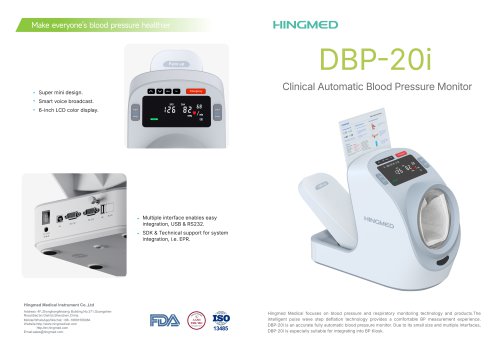
- DBP-20i for Self Blood Pressure Measurement According to the Universal Protocol ISO81060-2 2018


- Company
- Products
- Catalogs
- News & Trends
- Exhibitions
DBP-20i for Self Blood Pressure Measurement According to the Universal Protocol ISO81060-2 2018
DBP-20i for Self Blood Pressure Measurement According to the Universal Protocol ISO81060-2 2018
Catalog excerpts
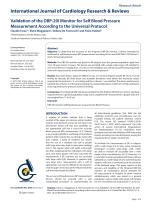
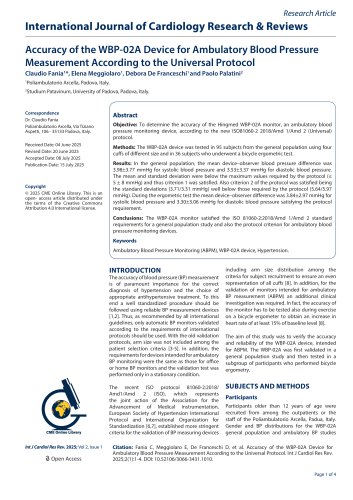
Research Article International Journal of Cardiology Research & Reviews Validation of the DBP-20I Monitor for Self Blood Pressure Measurement According to the Universal Protocol Claudio Fania1*, Elena Meggiolaro1, Debora De Franceschi1 and Paolo Palatini2 Poliambulatorio Arcella, Padova, Italy. Studium Patavinum, University of Padova, Padova, Italy. Correspondence Dr. Claudio Fania Poliambulatorio Arcella, Via Tiziano Aspetti, 106 - 35133 Padova, Italy. Received Date: 03 June 2025 Revised Date: 01 July 2025 Accepted Date: 12 July 2025 Publication Date: 20 July 2025 Copyright © 2025 CME Online Library. This is an open- access article distributed under the terms of the Creative Commons Attribution 4.0 International license. Abstract Objective: To determine the accuracy of the Hingmed DBP-20i monitor, a device intended for oscillometric self blood pressure (BP) measurement according to the new ISO81060-2 2018/Amd 1/ Amd 2 (Universal) protocol. Methods: The DBP-20i monitor was tested in 90 subjects from the general population aged from 19 to 78 years (mean 41 years). The device was provided with a single wide-range cuff suitable for arm circumferences ranging from 17 to 42 cm. The validation was carried out performing sequential same-arm measurements strictly following the universal protocol. Results: The mean device–observer difference was 3.71±3.44 mmHg for systolic BP and 3.21±3.54 mmHg for diastolic BP. Both mean and standard deviations were below the maximum values required by the protocol (≤ 5 ± 8 mmHg) and thus criterion 1 was satisfied. The device performance satisfied also criterion 2 of the protocol being the standard deviations (3.38/3.45 mmHg) well below those required by the protocol (5.83/6.03 mmHg). Conclusions: The Hingmed DBP-20i device satisfied the ISO 81060-2:2018/Amd 1/Amd 2 standard requirements for a general population study and is suitable for BP measurement in people with arm size ranging from 17 to 42 cm. Keywords DBP-20I monitor, Self blood pressure measurement, Blood Pressure. INTRODUCTION A number of studies indicate that a large number of the upper arm devices sold in medical markets and electronic stores do not report any information about cuff size and suitability [1]. Yet, appropriate cuff size is crucial for accurate blood pressure (BP) measurement [2,3]. Obesity is an emerging problem worldwide [4] and obese patients often require the use of large-sized cuffs [5,6]. Indeed, a body of evidence has shown that the use of a standard size cuff in people with large arms may lead to inaccurate readings [2,3,7]. The regular adult cuff width and length are often inappropriate for individuals with large arms and many people will have inaccurate BP measurement if BP monitors are not provided with large cuffs [8,9]. However, in patients with very large arms, measurement with a cuff of appropriate size may be difficult in the presence of short upper-arms because the elbow end of the cuff may extend past the elbow. The accuracy of blood pressure (BP) measurement devices should be assessed with a well standardized procedure as recommended by Int J Cardiol Res Rev. 2025; Vol 2, Issue 1 Open Access all international guidelines [5,6]. With the old validation protocols arm circumference was not included among the patient selection criteria [10]. The recent ISO protocol 81060-2:2018/ Amd1/Amd 2 (ISO), which represents the joint action of several International Organizations for Standardization [11,12], established more stringent criteria for the validation of BP measuring devices including arm size distribution among the requirements for subject recruitment. To facilitate the measurement of BP in subjects with a wide range of arm sizes, some companies developed so-called wide-range cuffs which are able to measure BP accurately over a wide range of arm circumferences [9,13]. However, it is crucial that monitors provided with these cuffs are validated on a wide range of arm sizes testing also subjects with arm circumferences at the extremes of the declared range. This paper reports on the accuracy and reliability of the Hingmed DBP-20i monitor, an oscillometric device intended for BP measurement in hospital or other medical establishments, which was tested in a general population using a single wide-range cuff suitable for arm circumferences ranging from 17 to 42 cm. Citation: Fania C, Meggiolaro E, De Franceschi D, et al. Validation of the DBP-20I Monitor for Self Blood Pressure Measurement According to the Universal Protocol. Int J Cardiol Res Rev. 2025;2(1):1-4. DOI: 10.52106/3066-3431.1011. Page 1
Open the catalog to page 1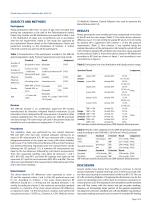
Claudio Fania, et al. Int J Cardiol Res Rev. 2025; 2(1) Study participants older than 12 years of age were recruited from among the outpatients or the staff of the Poliambulatorio Arcella, Padua, Italy. Gender and BP distributions are reported in table 1 and 2. The distribution of upper arm circumference was in accordance with the ISO requirements (Table 2). The study was approved by the Institutional Review Board of the Poliambulatorio Arcella and performed according to the Declaration of Helsinki. A written informed consent was given by all the participants. 19 (MedCalc Software, Ostend, Belgium)...
Open the catalog to page 2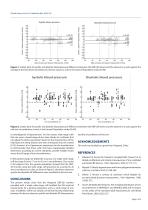
Claudio Fania, et al. Int J Cardiol Res Rev. 2025; 2(1) Systolic blood pressure Mean of device and observer measurement, mmHg Figure 1: Scatter plots of systolic and diastolic blood pressure differences between the DBP-20i device and the observers (y-axis) against the average of the test device and observer pressure values (x-axis) in the General Population study (N=90). to overdiagnosis of hypertension. For this reason, wide-range cuffs that can cover a broad range of arm sizes, thanks to a software that can adjust the device parameters based on the characteristics of the individual arm being...
Open the catalog to page 3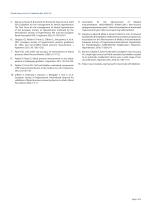
Claudio Fania, et al. Int J Cardiol Res Rev. 2025; 2(1) 5. Mancia G, Kreutz R, Brunstrom M, Burnier M, Grassi G, et al. 2023 ESH Guidelines for the management of arterial hypertension The Task Force for the management of arterial hypertension of the European Society of Hypertension: Endorsed by the International Society of Hypertension ISH and the European Renal Association ERA. J Hypertens 2023; 41:1874-2071. 6. Stergiou GS, Palatini P, Parati G, O'Brien E, Januszewicz A, et al. 2021 European Society of Hypertension practice guidelines for office and out-of-office blood pressure measurement....
Open the catalog to page 4All Hingmed Medical catalogs and technical brochures
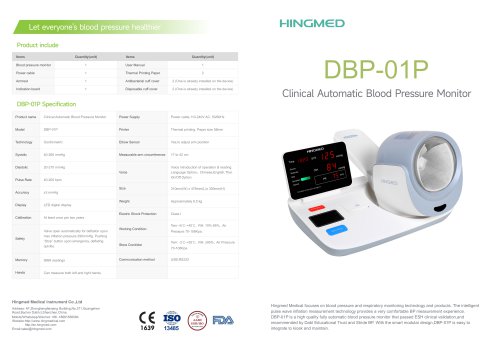 Hingmed DBP-01P Pass FDA
2 Pages
 ABPM software
39 Pages
 Hingmed Profile and Catalog
26 Pages
 Hingmed ABPM ABP-03
7 Pages
 ABP-03
2 Pages



- Analysis software
- Blood pressure monitor
- Automatic blood pressure monitor
- Tablet computer software
- Windows software
- Blood pressure monitor with adult cuff
- Electronic ventilator
- Oscillometric blood pressure monitor
- Hospital software
- Non-invasive ventilator
- Automated software
- Ventilator with touch screen
- Portable ventilator
- Blood pressure monitor with built-in cuff
- Emergency ventilator
- Intensive care ventilator
- CPAP ventilator
- Blood pressure monitor with rechargeable battery
- Cardiology software
- Data analysis software